Can Shared Scooters Actually Make Money?
Ask about Knowledge at Wharton
Episode Description
ABOUT THE EPISODE Shared scooters and bikes are everywhere, but how does the business actually work, and can these companies become profitable?
Gad Allon, Wharton Professor of Operations, Information and Decisions, breaks down the economics of companies like Lime, from pricing and utilization to city regulations and the challenges of scaling across urban markets. The conversation also explores why Lime has pulled ahead of competitors, how cities are shaping the industry, and whether shared scooters can become a lasting part of the future of urban transportation.
ABOUT THE PODCAST This Week in Business features interviews with Wharton faculty about the latest news, fascinating trends, and issues impacting both consumers and the business world. Episodes are recorded at the Wharton School and published twice per week.
----- The Wharton School of the University of Pennsylvania is committed to sharing its intellectual capital through Knowledge at Wharton, the school’s online business analysis journal.
Launched in 1999, Knowledge at Wharton offers free access to:
- Articles, podcasts, and videos highlighting Wharton faculty research and analysis of current business trends - Interviews with book authors from Wharton School Press - In-depth series of curated content like Wharton Executive Education’s Nano Tools for Leaders - A searchable database of more than 10,000 articles covering all aspects of business - A weekly newsletter that delivers Knowledge at Wharton insights directly to your inbox
Visit the Knowledge at Wharton homepage: https://whr.tn/3qUpSBE Subscribe to the Knowledge at Wharton YouTube channel: https://whr.tn/3DEAgAU
Read the full transcriptHide the full transcript
- Modes of transportation have obviously changed in the last decade or two in many big cities.
- You see more and more bikes and scooters across various cities around the world,
- so that people have an option other than a car to try and get from one point to the other.
- But it's an interesting business model as well, and a pleasure to be joined by Gad Allon,
- Wharton professor who looks at this and joins us now to take a look at the business model
- and how it works. Gad, great to have you back with us. Thanks for a couple of moments today.
- Hi, Dan. Great to be here back. So I guess that for people who don't necessarily think about it,
- what is, how does the business model work for a company that owns bikes and scooters?
- Yeah, so it's an interesting model because they, as you said, they own them. It's unlike,
- many people tend to think on this, compare many times between these and Uber or something like
- that. These friends own these, and usually it depends. Different models can be slightly
- different, but usually you, some places you have a subscription, but in any way you are
- picking them from one location, dropping them in another location, and you pay per trip,
- sometimes per distance, sometimes just per use. There are multiple models. There are those that
- are dockless and there are those that are docked. Dockless meaning that you can pick them up wherever
- you want, you drop whenever you want to take a picture of where they are, or you put your mobile
- and lock them and that's it. And those are docked where you need to pick them up from a place where
- they're docked and drop them in another place. Clearly, there are many, many advantages of each
- one, but they're, as you said, extremely available, make it really easy to go around.
- But it's interesting because several years ago, there was an explosion of these,
- which resulted in a very strong love-hate, a polarized response for many people,
- including cities. So, for example, I can get deeper, but Paris disallowed, and you're not
- allowed to have any ride share, any sort of like scooter firm in Paris, for example.
- But for many cities, they're making the adjustment because even without the bikes and the scooters,
- you still had lots of people who were using a bike to get around the city anyway.
- And so they've added bike lanes, which makes it a lot easier for that mode of transportation to work.
- Yes, right. So bike lanes are great, but you have to remember these scooters are driving
- faster usually, many times, not always, but usually. Second thing, many people use them
- when they're on the go, in a rush, in which case they drop them. And so you saw different acts of
- vandalism in San Francisco against them because people would just be angry that they are lying
- in the middle of the street. There's a place where I sound like I run in San Francisco at night
- and I see some lights and I don't know where I'm running towards until I realize I just like
- dropped a scooter somewhere. So they're very convenient and clearly not as, I mean, you don't
- interfere with the day-to-day of most districts, I would say, or cars, but there's still an
- additional layer that was really not resolved by most cities. Many cities did resolve them,
- but not most cities. You spoke about one of the companies in an article with The Guardian
- about Lime, and Lime is an interesting business because of the fact that it has the support of Uber
- in various cities around the world. Yes. So Uber realized that, and I think you see it,
- if I'll tie into that also, Waymo. Waymo is not, of course, not owned by Uber, but Uber is
- an investor and a big supporter of Lime, but Uber tried to be the one point for any transportation.
- So they want to say, if you want a person, we'll bring a person. In some cities, they might say,
- we'll actually allow you to find the nearest Lime, and in some cities, we'll also allow you
- to actually get potentially a Waymo. So Uber is definitely a big supporter of Lime, and I think
- at this point, I don't think Lime would have been, could have IPO without that support of Uber,
- or at least the prospect of the firm moving forward is due to the support by Uber.
- On average, how many units of bikes or scooters are these companies putting in towns, and how
- do they gauge when to expand? That, I would think, would be the challenge for them.
- The numbers vary a lot, and I don't really have a concrete number for the major cities.
- It's usually in the thousands, but actually, there is an interesting statistic. I work with a different
- firm. I cannot mention, I don't work with Lime, but I work with another firm, a European firm,
- and we have their data across many different cities, European cities. And Europe, as an entity, has a love-hate relationship with scooters in the following
- sense. On one side, they want to reduce mobility by cars when trips are for fewer than a mile or
- two miles. At the same time, they put more and more restrictions on riders. So they put, for
- example, they want to reduce the number. Once in a while, they put caps, they require helmets, and
- they require docking. And so what we see is many different variations across cities, but one thing
- is actually quite interesting. As you add or reduce the number of scooters, one thing remains constant,
- which is their utilization. So people adjust their behavior to the number of scooters. If there are
- scooters available, they use them. If they're not available, they don't use them. They find other
- means of transportation, but we don't see that the firm adds more scooters. And because of that, we
- see lower utilization or higher utilization. It's sort of like an interesting relationship, which
- means to me at least some people view it as their commuter option. Some people use it more as an
- addition to what exists, but it's almost like I can walk, I can take that, or I can take a cab and
- let me just choose whatever is available. But people will not get out of their way to actually
- get these. Well, and you also mentioned that, you know, how they approach the use of that service
- is interesting as well, because there's a subscription model, there's a pay-by-the-minute
- model. And I guess with pay-by-minute, that's when you have the opportunity to see people
- actually dropping it in one location and not worrying about it instead of like taking it to a
- bike rack. Yeah, so I think there was a study that was done on bicycles, not on scooters.
- And they've seen that people are very sensitive to even walking to the next station or dropping
- into the next station. So when it comes to these additional modes of transportation, people really
- are very finicky in terms of options and the nuisance and friction, primarily because these
- are not common. At this point, they're not ingrained in the day, but if you own a bike, that's
- great. But if not, and you now need to compute if that's going to be there or not, if I need to
- drive five more minutes, and because of that, be late to my subway station, I think people are
- reluctant to use these, and it has significant implications for overall usage. You mentioned that
- Lime specifically, in some towns, may even have basically a version of a monopoly, where it's
- harder for other companies to kind of work into that marketplace. Yeah, so that's the thing was
- really where Lime was actually, I would say, realized over time that you have to work with the cities.
- And cities also realized that if they want to have a shared space, like their bike lanes and overall sidewalks, they need to work with these friends as well. And so more and more
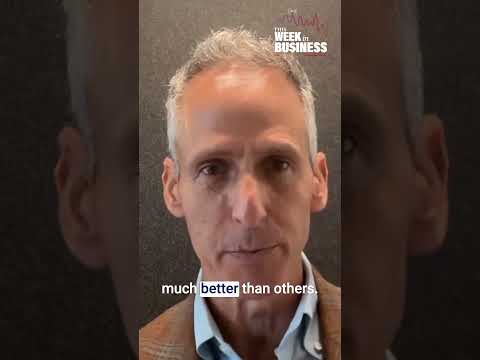
- cities started issuing quotas and work, and Lime was just doing that much, much better than others.
- So they were petitioning to these, working with cities closely, and in some sense, I think
- they indeed managed to convince the city to be essentially a local monopoly. But that was part of
- their playbook. Now, you have to remember, several years ago, we had many of these. Now we have very few.
- We have Lime in the US, we have Voy in Europe, we have a few that are playing. And part of that was
- because initially it was an explosion, then cities climbed down, and now we see those who actually
- managed to survive in that space actually become profitable, which was really a question for many,
- many, many years, or at least close to profitability, if I'll say. What do you think is the future then
- of these companies like Lime moving forward? I think, you know, within the urban realm, I think
- we want to see fewer cars. We want to be able to actually have the ability to also choose the
- right transportation for the right weather, right? New York is different than LA, different than
- Chicago, both in the geography. And so, like I would say, choosing the right city, making also
- one thing we have to remember, these bikes went through multiple transformation. They're much more
- robust now than they were initially. That was another innovation that Lime have gone through.
- And so, I think I definitely view them as something quite useful in overall the fabric
- of the city, if you will. But that requires developing a culture around them. Where do you
- drop them? Where do you pick them up? How do you treat them? How do you make sure that they don't
- become a nuisance? How to also make sure that the right people use them and they don't become a
- threat to overall pedestrians? Because many ways actually are that you're more likely to be hit on
- the sidewalk by that than by a car because of how many of them drive. Because we never really
- develop the culture to deal with the technology. Gad, great to talk to you. Thanks for your time
- and your insight. All the best. Always great to be here, Dan. Thank you. Gad Allon, who's a professor
- of operations information and decisions here at the Wharton School.
Brief Summary
Gad Allon discusses bike and scooter business models, city regulations, and the future of urban transportation.
Key points
- The Rise of Bikes and Scooters. Cities are adapting to the increasing presence of bikes and scooters as alternatives to cars.
- Lime's Unique Business Model. Gad Allon explains how Lime's business model works and its relationship with cities.
- Future of Urban Transportation. Gad Allon shares insights on the future of transportation companies like Lime in urban settings.
Episode highlights
- Lime's Unique Business ModelGad Allon explains how Lime's business model works and its relationship with cities.“Lime was just doing that much, much better than others.”7:56Sep 9, 2026
- Future of Urban TransportationGad Allon shares insights on the future of transportation companies like Lime in urban settings.“We want to see fewer cars.”8:41Sep 9, 2026