Super Bowl Ads 2025: Marketing Strategies & AI’s Role in Advertising
Ask about Knowledge at Wharton
Episode Description
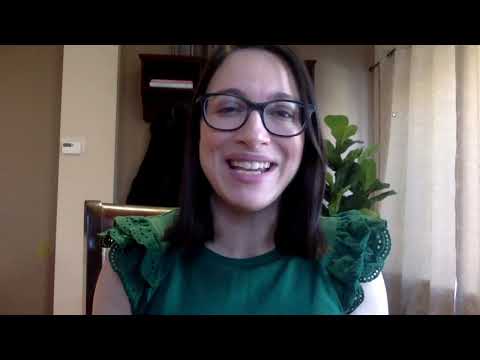
Wharton marketing professor Patti Williams discusses Super Bowl advertising strategies, the impact of AI in marketing, and how brands use celebrity endorsements and social media engagement to maximize ROI. She explores the cost of Super Bowl ads, the role of emotional storytelling in commercials, and why companies invest millions in Super Bowl marketing campaigns. The conversation also highlights trending Super Bowl ads 2024, consumer reactions, and the evolving digital landscape of advertising.
#SuperBowl #ads #superbowlads #SuperBowl2024 #CelebrityEndorsements #SuperBowlCommercials ----- The Wharton School of the University of Pennsylvania is committed to sharing its intellectual capital through Knowledge at Wharton, the school’s online business analysis journal.
Launched in 1999, Knowledge at Wharton offers free access to:
- Articles, podcasts, and videos highlighting Wharton faculty research and analysis of current business trends - Interviews with book authors from Wharton School Press - In-depth series of curated content like Wharton Executive Education’s Nano Tools for Leaders - A searchable database of more than 10,000 articles covering all aspects of business - A weekly newsletter that delivers Knowledge at Wharton insights directly to your inbox
Visit the Knowledge at Wharton homepage: https://whr.tn/3qUpSBE Subscribe to the Knowledge at Wharton YouTube channel: https://whr.tn/3DEAgAU
Read the full transcriptHide the full transcript
- Dan Loney: Well, the big game, otherwise known by most people as the Super Bowl, is something that draws the attention of millions
- upon millions of people, both here in the United States and around the globe. But it has also become a very important
- advertising component for companies as well. Companies expect numerous eyeballs watching that last pro football
- game of the year, but they're looking to try and connect with the consumer. But the process of actually getting to that point
- and making those decisions is quite the challenge. How they go about it, and what should they be thinking about? Well, we
- discuss that and more with Wharton's Patti Williams, who's Professor of Marketing and Vice Dean of Executive Education here
- at Wharton. Great to see you again. Patti Williams: So nice to be here. So when I think about this idea of the connection of the
- advertising component with— with the football game, I think a lot of people normally associate going back to 1984
- with the Apple spot, correct? I —so at least that's— I think in popular culture, when the
- Super Bowl became a thing. You know, I think there were always Super Bowl ads before that. I'm sure advertisers were spending
- time and money making great Super Bowl ads, but I think that ad really showed them the outsized impact that just the
- right ad in that context could actually have. It is amazing, though, to see how much— when you think about
- this event— that it's not just a football game. I mean, it has become— the importance of the commercials and people watching
- them and— and wanting to see what they are, in— for many people, is just as important. - Just as important.
- In fact, I was looking at <i>Adweek</i> earlier, and I think I saw a little quote that said, "At <i>Ad Week</i>, the Super
- Bowl is our Super Bowl. So companies know that they're gonna have the eyeballs. But
- what are they looking for beyond the eyeballs? Yeah. Well, maybe— let me just step back and say the eyeballs for
- one second, right? They're forecasting that this year's ratings will be somewhere between 115 and 120 million people
- tuning in. That gives you, even with an $8 million 30-second ad, something like a $71 cost per 1000, which is
- expensive, but not outrageously expensive, right? The price is a lot, but the viewership is— it's really the only mass audience
- that's left in the United States, in many ways. And not only is it a mass audience— so you're going to get, you know,
- roughly 115 or 120 million people, two-fifths of them, in recent surveys, have said they tune in just to watch
- the ads. You know, that's 10s of millions of people who are there just to watch the ads. And even those who say they're going to—
- you know, they're tuning in primarily for the game— go birds— you know, maybe they're tuning in with a little extra
- engagement and interest around those ads. They're not using the ads as an opportunity to get up and walk out of the room quite
- as much. And so they get this deeply engaged audience that is at scale, and I think, an opportunity to really show the
- world who they are and why they could be— why the brands could be beneficial or meaningful to that audience.
- So if we're seeing ad buy rates like $8 million for a spot, I would imagine there's a— there's a point where the company has to
- say, "Okay, maybe it's too much for us." They will make that call. But it still feels like there are a lot of companies
- where they haven't reached that plateau yet. No, and it goes up every single year. And you see many of the
- same companies returning year after year after year, right? If you see a Super Bowl, and there's not multiple Budweiser
- ads, there aren't Doritos ads— at this point, I think we've come to expect GoDaddy. Not only are they making that decision once,
- but they're making that decision year over year over year. - Yeah. So what— the type of ad that they want to bring forward, I guess,
- depends on the company. Maybe some dynamics of what's going on in culture right now. Is that correct? - Yeah,
- I think that's right. And if you— you look at the— you know, what's worked well in the Super Bowl over time, maybe as well as what
- you tend to see, I would say you tend to see a few— for the most part, they're light-hearted, with some exceptions. They are
- aligned with culture. And one big way companies do that is by bringing in celebrities. You get the extra oomph of the eyeballs
- and the interest that they bring, but it also immediately aligns you with culture in some way. Humor is super important,
- right? You're going to see lots of funny ads. People are looking to laugh at the ads in the Super Bowl, and hopefully companies
- will actually deliver, though it's harder to do that than it seems like it should be. Once in a while you get ads that I would
- describe as moving. Maybe those P and G, "Thanks, Mom" ads, you know, in the years of the Olympics. I hear that Budweiser
- has the Clydesdales back this year, and people are saying it's an amazing ad, and it has a little bit of that moving, you
- know, Americana that they're so well known for. You get a lot of animals doing dumb things, right? And once in a while, you
- get an ad that's really a little more informational. I think about the original WeatherTech ads telling people who they
- were and what WeatherTech actually was. - Yeah. So there's not one right formula to getting the perfect Super
- Bowl spot, to getting that hook. - No, there's not one right formula, I don't think. I mean, the breakout
- ads tend to be funny or tend to be moving, I think. So you see advertisers pushing and dialing up the emotional components in
- particular, because I think people are looking for that emotional engagement in the moment. - We're
- in a time where certainly AI is a conversation piece for so many right now, and it's being talked about in the world of
- advertising. Are we there right now, or soon we'll be there, where some of these ads are probably going to lean heavily
- on AI? I think we're probably already there, but most of these advertisers seem to be keeping their use of AI a little bit
- behind the scenes, in part because I think they know users aren't quite sure how they feel about it. The talent in ads
- really isn't sure how they feel about it. So again, I saw— I think it was— it was either— I think was <i>Ad Age</i>. They contacted
- 39 advertisers. 31 of them said they had no AI in their ads or declined to answer. So, you know, maybe they are. It's
- pretty clear some are using it. And I think Google, in particular, which is doing this interesting thing. They're
- launching 50 regional ads, one for every state. And they are saying "We used Google Gemini in the ideation stage, maybe in the
- image creation process." So some are being very upfront about it, and I think some are doing it a little bit behind the scenes. - Do
- you have a favorite that stands out? I mean, maybe that's like asking you your— you know, who your favorite child is. But—
- but, I mean, there's so many great ads that we've seen over the course of the year. - Yeah.
- I'm always a sucker for the Budweiser Clydesdale ads. I think they're just great. My— probably my favorite Super Bowl
- ad of all time is actually a Snickers ad. And it was— I think it was in the 2010 Super Bowl. Betty White was in the ad. - Okay.
- And I just think that ad hit the right notes on humor, hit the right notes around the brand. You know, "You're not you when
- you're hungry, you might turn into Betty White at the last moment," right? It just was, I think, a standout, because it
- was a well executed little 30-second spot that really sat in the sweet spot of who they wanted to be as a brand
- and how they wanted to show up. But the story of doing these ads is usually— and correct me
- if I'm wrong— you're tying it into some other campaign that that company is bringing forward. And so it's just part
- of the overall process, correct? It depends. For some, the Super Bowl is where you launch a new
- campaign. Maybe it's the big platform to, you know, set out who you're going to be and how you want to show up in the
- future. For some, I would say there's a campaign of ads at the Super Bowl, but not necessarily do those Super Bowl ads sit
- within a bigger campaign. Doritos has had a competition for years. So there is a campaign. You can compete to
- create the Doritos ad. But those Doritos ads don't really sit right next to the rest of the ads
- that Doritos is running the rest of the year. So what do companies expect then, on the back end after the
- game, after the spot runs that first time? - Well, I'm going to say they actually start expecting things before the game
- even runs. They are running their teasers, and they are hoping they're getting engagement. And people watching
- the teasers are watching the ads before the ads even begin, hopefully picking them up on social media, starting to maybe
- be intrigued by what the real ad is going to look like, or starting to learn a little bit about the brand. They're
- definitely going to be watching social media during the— during the Super Bowl. Are the ads being shared on social media?
- What's the reaction to those ads? Immediately afterward, they're going to do everything from looking at just
- likeability—do people say they liked the ad or they didn't like the ad, to looking at maybe long term ROI. Maybe even doing
- neuroimaging studies in response to the ads. They're looking at all of those things. And I think one of the big things they're
- looking at in a lot of these CPG companies is, they're trying to show the ads aren't just for their consumers. They're showing
- their retailers how much energy and commitment they have behind their products and what they're doing to drive traffic to the
- stores. And so I think you're going to see them looking for things like sales of these products or traffic in the stores.
- But the component of social media brings the unique dynamic of that in-time reality of
- people either tweeting or Instagraming or whatever platform it is, about the spot. I'm sure there are
- probably even people that, you know, take video on their phone of the spot so they can— they can loop it again. And it's
- changed the dynamics of how quickly companies are seeing that return on investment, that— that connection with the consumer.
- Absolutely. And they're relying on immediate amplification. You and I are going to do their work for them
- and help them get more than $8 million worth of value from it. I think that's right. And you
- see some brands who are going to try to time something that they're going to launch on social media to right around,
- right before, during or right after their ad actually shows. And the ad might even drive you to social media or it's going to
- pop up in your feed at the same moment, and they're going to hope that you might interact. Maybe you're going to click
- through and buy or click through and learn at the same time. But because this is a one— once a year event, it puts more
- emphasis on the message that's being delivered, how you deliver it, the connection with the consumer, more so than the World
- Series, or the NCAA Tournament, or, you know, a premiere of a show on— on— on— on a TV channel. It has separated itself
- from everything else kind of in the media landscape. Yeah. There just aren't this many viewers. Even, you know, in
- the Final Four or anything like that. And certainly not as broad an audience, right? You get people who wouldn't normally be
- watching a football game tuning in and watching this game. So it's— you're— not only is it at scale, but it's a breadth of
- audience and a depth of audience at scale. And there's a lot at risk. I think that's right. You even see some that have thought
- they were going to advertise and they pulled out because they thought it was too risky, right? State Farm decided, in the wake
- of the fires and the insurance premiums going up and so on, that this wasn't a good time. And it felt too risky to follow through with
- the— you know, ad they presumably already filmed and spent a lot of money on. Yeah. Patti, great to see you again. Thanks very much.
- My pleasure, Dan. - Thank you. Patti Williams, Professor of Marketing and Vice Dean of Executive Education
- here at the Wharton School.
Brief Summary
Patti Williams discusses Super Bowl advertising trends, audience engagement, and the role of AI in marketing strategies.
Key points
- The Super Bowl's Advertising Impact. The Super Bowl has become a crucial advertising event, drawing millions of viewers worldwide.
- The Evolution of Super Bowl Ads. Super Bowl ads have transformed into cultural phenomena, often more anticipated than the game itself.
- Celebrity Influence in Ads. Brands leverage celebrities to connect with audiences and enhance ad engagement.
Episode highlights
- The Super Bowl's Advertising ImpactThe Super Bowl has become a crucial advertising event, drawing millions of viewers worldwide.“Companies expect numerous eyeballs watching that last pro football game of the year.”0:16Feb 7, 2025
- The Evolution of Super Bowl AdsSuper Bowl ads have transformed into cultural phenomena, often more anticipated than the game itself.“The importance of the commercials... for many people, is just as important.”1:25Feb 7, 2025
- Celebrity Influence in AdsBrands leverage celebrities to connect with audiences and enhance ad engagement.“Bringing in celebrities... aligns you with culture in some way.”4:10Feb 7, 2025