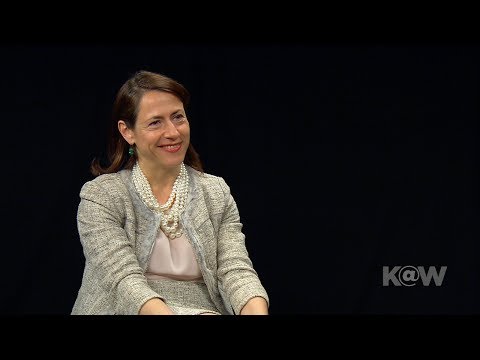
Career Success Advice from Betty Liu – Sharing CEO Insights with Adam Grant
Ask about Knowledge at Wharton
Episode Description
KNOWLEDGE AT WHARTON ARCHIVES: Bloomberg news anchor Betty Liu has often been asked by young people how she gained such career success. In trying to provide answers, she realized she had her own questions about how to continue to advance her career. Those questions ultimately led her to reach out to CEOs from some of the most successful companies for their thoughts on what it takes to succeed. Wharton management professor Adam Grant recently talked with Liu about her new book, which grew out of this process, Work Smarts: What CEOs Say You Need to Know to Get Ahead. In this interview, Liu shares insights from some of those she spoke with, including JPMorgan’s Jamie Dimon, AOL’s Susan Lyne and Berkshire Hathaway’s Warren Buffett.
More on this interview: https://knowledge.wharton.upenn.edu/article/ceos-career-success/
#careersuccess #ceo #careeradvice 📂 Leadership
Read the full transcriptHide the full transcript
- I'm Adam Grant Wharton Professor I'm here with Betty Lou who's a Bloomberg anchor you may know her from Betty in
- the loop also a penelon and she's the author of the new book work smarts giving advice from CEOs on what it
- really takes to succeed in your career and get ahead Betty welcome hi thank you Adam great to great to be here I'm just
- thrilled to have a chance to reverse our roles and put you in the hot seat today
- vice versa I know I I can't believe I am in the hot seat so uh so be nice to me Adam I'll do my best so why are you here
- what motivated you to write this book you know it was for a lot of people during the uh
- during the last few uh few years there have been I've had several people when I've been at um conferences when I've
- been at events I've people come up to me young people mostly you know people from
- college who've said you know Betty you're so successful please give me some advice about what I can do with my
- career and I got enough of those questions that I started to think to myself there must be this there is this
- great need and I'm sure you see it all the time Adam of young people who want to get career advice they want some
- Direction but what was funny was that while they were asking me these questions I kept saying to myself gee I
- have the same questions I want to know what to do with my career I don't feel all that successful you know I still
- want to know how these very basic questions how to make your boss happy how to ask for a raise um you know how
- how to how to stand out how to shine and so I thought you know if I I still have
- these questions in the middle of my career then other people must have those same questions so who do I ask then and
- so then I began to think well the best people to ask are the people who are at the top or at the very top of their
- careers and those would be the CEOs that I talk to every day on our program on Bloomberg so all of that kind of gel
- together and then it came into uh into a proposal with my with my agent and we and we put it together and tend it to
- the publisher but in any case so so that's kind of the Genesis of of why I thought hey you know let me let me write
- this book I'm sure others must have the same questions yeah I certainly do and and you got to
- talk to many interesting people in the business world what were the most surprising insights that you got well
- first of all I was very surprised at the number of people who said yes to the interview I thought you know some people
- might might not want to reveal you know all the dirty secrets on how they got ahead um but but the the second thing
- was was how um Frank people were about their struggles you know um Jamie Diamond the the CEO of JP Morgan the
- chairman of CEO was really um open about his you know his essentially fight with
- Sandy W his mentor at City group and it got to the point where Sandy eventually fired him and that was a huge
- controversy during the time when it was happening and I was I guess enough years
- have passed that that Jamie felt like he could talk about it but he was really very open about um you know about that
- moment in his life and he said look he went home he told his daughters I got fired and he said for the first time it
- was really strange to go from 90 m per hour hour to zero um and that was the same thing you know with other CEOs
- about the mistakes they made um Susan line at AOL you know she said I made the huge mistake that I thought just because
- it was a great idea it's a great business and that and that's failed spectacularly so I was just surprised at
- how people were just very honest about and genuine about about their failures and is that easy to do because
- they're now back on the top or have they been this way all along you know I think
- it's easier because you're back on the top it's obviously a lot harder if you're still in that position but I also
- felt that they were being that that that they would have mentioned it anyway or that or that it's a part of their fabric
- of of who they are you know and felt like I felt like many of them many of them did feel that the mistakes that
- they've made were just as important as the successes that you have and in fact maybe probably even more important you
- know I'm sure many who are watching this or you know you and me like we've all learn from our mistakes and in fact you
- know there's that saying right that you can't feel happiness without some sadness so it's almost like you can't
- feel that success if you don't have those failures too so how do you actually think about then taking that
- into sort of everyday life right is is the lesson to fail more often is it to try to figure out okay reduce the number
- of failures yeah so how do you how do you make those actually productive or or learning opportunities based on what you
- learned from the the folks you spoke with well a lot of it is attitude right I mean you know the problem that that
- the the the issue that people have is that you know people fail all the time I mean you know I can even point to this
- book project and and the number of the number of book proposals I've had out there outweighs the number of books that
- I've actually written by you know 10 fold so you know for every success there's about 10 a dozen failures behind
- that um so how so it's a great question how do you you know how do you how do you take that then into your everyday
- life is you know what I found it's really all about much of is it about attitude you know
- how do you bounce back it's almost like how you bounce back is more important than than the failure itself and so if
- you bounce back if you if you have that positive attitude which Adam I know you you are a perennial Optimist as well if
- you have that kind of attitude um it it can mean such a difference to the path of your career versus you know versus
- being taken down by it and wallowing that in that mistake so I know it sounds kind of um panish or or whatever but uh
- but there's just evidence time and time again um you know there was a there was a one piece of research I read in this
- book that that I read for this book um and it had to do with this uh this author of the luck factor and he did
- this whole I don't know if you know about this experiment but he basically to long story short he tried to find out
- why some people lucky and why are some people unlucky and he did this experiment where he put two PE people in
- a coffee shop um and he rigged one person to be a millionaire you know one person was a quote unquote millionaire
- and he put f a 5 pound he bu in Britain so he put a 5B note right out the right outside the coffee shop and he had one
- person who was considered himself lucky go through the exact same experience as a person who thought of herself as
- unlucky so basically that person who was lucky found the 5B note went into the coffee shop bought a cup of coffee sat
- next to the millionaire struck up a conversation and they had a great the beginnings of a great relationship the
- person who was unlucky walked by the 5B note just like unq went into the coffee shop bought her coffee sat next to the
- millionaire and did not say a word to the millionaire and left the coffee shop and said you know and didn't do anything
- and so when you look at those two instances who who's lucky and who's unlucky and who makes their luck and who
- doesn't and who misses the luck so it really is a many ways about about your attitude about how you behave in life is
- there a a sort of counterintuitive piece of advice that you picked up through this
- process that's a great question um I don't know about counterintuitive but there was a great piece of um Insight
- that Sam zel the the Real Estate Mogul um from Chicago that he he said to me that really made me rethink about what a
- big organization is really about he said to me look as an entrepreneur um you know I need as much
- information as possible in a big Corporation people use information as currency so they trade it they the more
- information a person has the more power that person has in a big organization but he said in a small company or an
- entrepreneurial environment if you're keeping a a piece of information away from me then you're damage then you're
- damaging my own company um because I need to make decisions you know quickly and I need to make them with as much
- information as possible so he told me a story about a woman that he hired from a
- major corporation he said she was an overachiever uh he said she was you know she had she was a star all the way
- through her career came into his organization nine months later nine months later he fired her and he said
- it's because she used the same practice of using information as currency and when he told me that I thought gez how
- many big companies have I worked for where I have seen that happen I have done the same thing you know I take I
- have done the committed the same crime of of using information to get information from other people and using
- information and hoarding it so that I have the power you know over the colleagues that I work with and and I
- thought geez that is such a great that is such a great observation and I need to check myself and make sure I'm not
- doing something like that because organizations talk about transparency but it's the execution of it that really
- obviously matters yeah I think it's it's something we've all faced and you know I think
- about my own experiences of you know you come across a piece of knowledge that seems to be unique do you basically use
- it for your own benefit or do you try to figure out how to share it for some kind
- of collective gain well yes because J samit uh who is a founder of this company called uu it's like a Skype
- Skype like um company he said to me we were sitting at for coffee and talking about this book and I was doing an
- interview for the book and he said I said what about your because he's a perennial entrepreneur he's a perennial
- uh startup guy he's like started up you know a dozen companies I said what about
- ideas you know what you know do you how do you how do you come up with ideas and
- when you come up with ideas what do you do with them he says your everybody every person's job is to make sure that
- if they have an idea not to hoard it but to give that idea to everybody else and
- I said but you know people say I have an idea and I want to keep it and I don't want anybody to know about it he said no
- your job is to kill your idea he said beat it up find every single way why that idea is a bad idea and what you
- come out with at the end is the actual idea so when he told me that I thought wow like you know everyone has a
- different reaction they all think they have to you know keep their idea Secret and you know only release it at a time
- that they feel like it's it's you know it's the proper time but he was saying absolutely not just broadcast it out he
- said because part of the reason is that everybody H many people have great ideas
- but very few actually follow up on them so that's you know if you're the rare person who follows up you're way ahead
- of the game it reminds me of some some research by Dunbar and colleagues who found that successful microbiology Labs
- that produced a lot of patents and groundbreaking Innovations actually had this Norm of just tearing each other's
- ideas apart and you almost couldn't get through a day without having your idea dissected and destroyed but it was for
- ultimately the benefit of of new discoveries right exactly that's exactly the same idea you're like wait a minute
- where did this come from where did this come from well I I'm curious you know there there's just a fascinating sort of
- cast of characters in this book and if you think through the different interviews that you did are there one or
- two people who stand out as the most interesting well you know S I mean Sam zel I think is is a fascinating
- character himself and Warren Buffett of course you know I've interviewed him you
- know about a dozen times so far in my career and he's he's always uh you know very very interesting but
- um you know you know it's almost like trying to pick from like your you know because
- they were actually all um really really interesting but um Jamie Diamond I thought was you know this was during
- right at the height of the London whale uh Fiasco and I had a little bit of a curiosity to to just see you know did he
- have more stress lines on his face was he you know just a little bit more down from everything and he was true to form
- you know I mean he knew he would had to be on but he was he was very you know sort of still Jamie Diamond still you
- know I'm G to get through this and I'm going to get this company through this uh Bob Ben Moshe actually was a really
- interesting interview and and you know I'd always heard all these stories about him and you know that he's kind of a you
- know quirky guy and you he came out of he was had a Vineyard in Croatia and he came out of retirement to take over AIG
- um and he you know called I don't know if you remember the the famous line where he when he came out of retirement
- he you know he had said something to the effect of I'm going to take over AIG I'm
- going to bring this company back to life and I don't care what those crazies in Washington think of me and those crazies
- in Washington got pretty pissed off at them and uh you know didn't like didn't like what he said about them but um he
- was he I just thought he was very interesting CU he had a lot of um insights about what it was like to be
- you know to be not poor but almost on the brink of bankruptcy when he was younger when his father passed away so
- just I know I'm rambling here with with some of these stories but they were all they I took nuggets from all of them and
- just applied them to my life well I guess on the subject of applying some of these ideas to your life you said you
- were surprised that so many people actually said yes to these interviews and and one thing that that I wonder
- about is if you didn't have the the history and the relationship with them if you weren't at bloom ber what can we
- learn from a successful journalist about how to actually get access to somebody whose ideas are so important well you
- know it's funny you mention that Adam because you know yes the Bloomberg platform helps and yes you know the fact
- that I've been in this career for so long also helps but you know I want to I want part of my motivation in a way for
- the for a book like this is I want to let people know that access to people like Jamie Diamond and Warren Buffett
- and Bob B Moshe and Sally CR it's really not that hard I mean any of your students if they tried hard enough uh
- would be able to get a response from any of these people uh you it's accessibility it's being able to go to
- them with the right question and the right proposal and any one of them would be accessible to to anybody and that was
- kind of what I wanted to that was kind of a motiv a motivation for the book that you know here's here's the access
- but you yourself can get that access if you try and you just apply your you know
- your energy to it tell us how good ideas um good questions um hard work to find their prop their
- correct con contact info um I do believe in the you know Six Degrees of Separation you can always find somebody
- who knows someone who knows someone who knows that person um and I think that kind of skill is so important in
- whatever profession you are whether it is journalism or you're an entrepreneur or you're a banker you're you know a
- professor you know so um but once you get in the door it's important to really think carefully how do you approach that
- person what's a compelling what's your compelling um you know opening to them and I you know people people for
- instance they email me you know um and if if there's a big difference between emailing me because they've read
- something that I've written or or that I did on on my show or they're you know seeking some sort of um guidance or
- advice versus you know hi my name is such and such and could you help me with something there's such a big difference
- I'm sure Adam you get tons of emails like that too and there are differences you know to there there's different
- approaches and some are more effective than others yeah I think there's there's no doubt about that no doubt about that
- well I you know I think it's interesting that you were sort of encouraged to write a book on Career advice that you
- would offer and then you turned to other people and and curated their advice right but if you do look back on your
- own career and think about how your view of what it takes to succeed has changed
- over the past few years what what do you know now that you hadn't perhaps thought
- about before that's a great question um you know I've always I mean I you know I always I've I've always known
- that you know my parents taught me you have to work hard you have to work hard um you have to uh uh you know uh know
- your stuff do your research and so when I started when I left college and I started out that was kind of my you know
- my focus work you know work hard do all your research you know your your you everything that you whatever work that
- you do is going to rise it's going to rise to the Top If it's good work no matter what um so that was kind of that
- was my focus when I graduated in my 20s but as I've gotten older and older you know I start to realize that it's much
- more that now my career is yes all about that but also I've learned that relationships really matter that being
- likable really matters that um giving giving is almost more important than it is you know T and it always is but
- taking that you know that there is really um you know that that that all that those things are also almost just
- as important and maybe even more so than just being a a really you know a really
- excellent writer or really you know great show host um so I've kind of I guess you could say matured you know in
- my view Through The Years where you know I had sort of this very narrow kind of view of like what what how how do I get
- successful how do I be successful so now it's more about you know what about the
- people around me and how do I you know how do I lift them up so that then I will also be lifted up how do I become
- you know how do I make sure I'm every day adding to them how do I give to them so they'll give back to me you know
- those sorts of things I'm start I'm learning now as I get as I get older well needless to say I'm I'm a huge fan
- of that particular message I know yes and in in closing if you know if you think about the different ways that that
- you try to help or give back to others is is there a favorite that stands out well
- um I always you know I I always I always hope that when I'm on on the program and
- I'm you know doing my interviews or um I'm you know uh essentially you know reporting information I'm always hoping
- that I'm teaching somebody something that I'm always that I'm giving them information that they couldn't have
- gotten before anywhere else or that it's analysis that they that they couldn't have gotten uh you know anywhere else so
- I always I always hope I'm I'm doing that on a you know inter person an interpersonal level um I just try to
- Mentor as many as many people as I can you know young people who who come up to me and say you know I would like to be
- in television or I would like to do journalism or or or many of them come up to me and say what should I do um so i'
- I'd love to do more of that and I and I think you know as I as I continue and with this book that I'm hoping that I
- get to BR part pars you know parse out some of that information and be able to distribute that to to to other people so
- that hopefully you know a light clicks for them or something clicks for them in their heads and it changes the way they
- they view their careers I'm I'm looking forward to watching that and again congratulations on the launch of work
- thank you Adam thank you very much
Brief Summary
Betty Lou shares CEO career advice and insights on success and failure in her new book "Work Smarts."
Key points
- Betty Lou's Career Insights. Betty Lou shares her journey and the motivation behind her new book, 'Work Smarts'.
- The Importance of Failures. CEOs share their struggles and the lessons learned from failures, emphasizing their value.
- Accessing Influential Figures. Betty discusses how anyone can access influential figures with the right approach.
- Sharing Unique Insights. The speaker hopes to provide information that is unique and transformative for others.
- Mentoring the Next Generation. The speaker expresses a desire to mentor young people entering journalism and television.
Episode highlights
- Betty Lou's Career InsightsBetty Lou shares her journey and the motivation behind her new book, 'Work Smarts'.“There must be this great need for career advice.”0:28Apr 7, 2014
- The Importance of FailuresCEOs share their struggles and the lessons learned from failures, emphasizing their value.“Mistakes are just as important as successes.”3:52Apr 7, 2014
- Accessing Influential FiguresBetty discusses how anyone can access influential figures with the right approach.“Access to people like Jamie Dimon isn’t that hard.”13:25Apr 7, 2014
- Sharing Unique InsightsThe speaker hopes to provide information that is unique and transformative for others.“I always hope I'm giving them information they couldn't have gotten before.”18:23Apr 7, 2014
- Mentoring the Next GenerationThe speaker expresses a desire to mentor young people entering journalism and television.“I just try to mentor as many people as I can.”18:44Apr 7, 2014