Election Marketing: Are Brands Playing It Safe?
Ask about Knowledge at Wharton
Episode Description
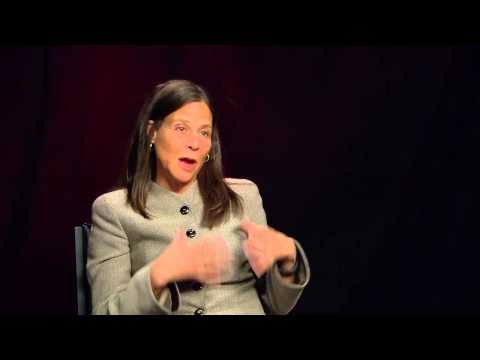
EPISODE OVERVIEW In this two-part episode, Wharton’s Americus Reeds navigates the turbulent waters of marketing and branding in a highly charged election cycle. This episode is part of a series on the “Business of Elections.”
PODCAST OVERVIEW Every day, business scholars answer pressing questions in their research - but what do their insights mean for you? In this podcast, Wharton faculty dive into what inspired their studies and how their findings resonate with the world today. Learn how research insights translate into knowledge you can use, with host Dan Loney.
Learn more at http://whr.tn/rippleeffect.
#marketing #brandvalues #branding #brandidentity ----- The Wharton School of the University of Pennsylvania is committed to sharing its intellectual capital through Knowledge at Wharton, the school’s online business analysis journal.
Launched in 1999, Knowledge at Wharton offers free access to:
- Articles, podcasts, and videos highlighting Wharton faculty research and analysis of current business trends - Interviews with book authors from Wharton School Press - In-depth series of curated content like Wharton Executive Education’s Nano Tools for Leaders - A searchable database of more than 10,000 articles covering all aspects of business - A weekly newsletter that delivers Knowledge at Wharton insights directly to your inbox
Visit the Knowledge at Wharton homepage: https://whr.tn/3qUpSBE Subscribe to the Knowledge at Wharton YouTube channel: https://whr.tn/3DEAgAU
Read the full transcriptHide the full transcript
- Americus Reed: And it's an interesting point, Dan. You're 100 percent correct. There are at least three reactions that we notice in the
- marketplace. One is to say nothing and say, listen, to your point, I'm not going to get involved in any of this. Another
- is to say kind of an approach that is to elevate. So for example, you might see a brand, product, service or
- organization come out and say, "Hey, it's important to vote," without saying anything else beyond that. Then you have
- the companies that are willing to come out and say, "Listen, this is our response. We are aligning with a particular
- political ideological viewpoint and/or political party, and here's why." Dan Loney: Welcome
- to the Ripple Effect, the podcast that takes you on a journey through the minds of Wharton faculty. I'm your host,
- Dan Loney, and in each episode, we'll be diving deep into the inspiration behind the groundbreaking research that
- Wharton professors have conducted, and exploring how their findings resonate with the world today. Loney: Well, we have
- talked so much about how brand is so important for companies these days. So how does this impact the decision process
- around advertising for firms, especially around this time of the year, when politics are at the forefront of so many
- conversations? Pleasure to be joined by Americus Reed, Wharton, Marketing Professor here in our studio. Great to see you again.
- - It's great to be back, my friend. - I know that companies don't like to directly advertise
- with a politician or such, but obviously there are elements that impact them. How do at least companies think about
- their advertising at this time of the year, when you have so much conversation about politics? - It's
- a great question, Dan. I think that, from my point of view, the framework is this. The framework says, why are we doing this if
- we're going to dip our toe into trying to make a connection with political affiliation of some sort? And the idea is that, you
- know, when competition gets very stiff, you have to have some other way to differentiate yourself, because you don't want
- to have a race to who's going to have the best set of features, because that's a question of who's got the better mouse trap.
- Sometimes what you want to do is, I'm going to put a little bit of additional stuff here that signals value, signals
- something that I think is more identity based, and politics has a really nice component that allows that sort of connection.
- So the decision calculus is to say, I'm -- I have to be willing to lose some people to the extent that I'm making a strong, full
- throated connection with any kind of political party or political ideology. But the thought is that I may lose some,
- but the people I gain are going to be so much more loyal, net net, because they're going to be connecting with me on something
- that's inside. And so that connection will create, in theory, a much deeper sense of loyalty.
- - But there are -- it feels like there are a lot of companies and CEOs and executives that are almost fearful of that right
- now. They don't want to offend anybody. They would rather stay back, let the politics play out, and at least just be there to
- serve the consumer, you know, in whatever fashion that they need to. -Yeah, and it's an interesting point, Dan. You're
- 100 percent correct. There are at least three reactions that we notice in the marketplace. One is to say nothing and say, listen, to
- your point, I'm not going to get involved in any of this. Another is to say, kind of an approach that is to elevate. So, for
- example, you might -- you might see a brand, product, service or organization come out and say, "Hey, it's important to vote,"
- without saying anything else beyond that. Then you have the companies that are willing to come out and say, "Listen,
- this is our response. We are aligning with a particular political ideological viewpoint and/or political party, and
- here's why." And I think it's that third category that's really risky, but potentially has a huge payoff. - But
- if you go that route, seemingly, and you can see this out there with certain companies, they have gotten to a point where
- they have no fear of making that alignment, because they believe it is -- as you said before, it is a core connection that they want
- to make with that segment of the population. - That's correct. And so marketing is about segmentation, targeting,
- positioning, messaging. And so like anything else, there are very few instances where you see a mass market approach. You see
- tailoring. So it fits in well with the ideology of marketing itself. But I do agree. I think that companies that say we're
- going to go in, and that's the rule, Dan, if you're going to do it, you got to go all in. You got to go all in. And so --
- and you got to live and die by whatever -- whatever the consequences of doing that is. And so, but there is this huge
- payoff that you can observe with respect to this long term loyalty, and just the idea that, you know what, we're going to
- take a stand as a company. - What's the challenge, then, in making that final determination of which way
- to go, especially if you're a publicly traded company, you've got to answer to a board of directors as
- well. 100 percent. Multiple audiences, multiple constituencies. I think that it has to start from the top down. And the c-suite
- basically has to make this decision of, these are our value -- these are our values, and we're going to live and die by
- these values. And I think that there are certain companies that -- and the other thing that's a really important point here, Dan,
- that you made me just think of just now, it's also related to your footprint. Like, what is your history in this
- space? So if you were -- if you were Ben and Jerry's and you've always sort of been dipping your toe in making some kind of
- political or ideological statement, that's fine. You've got the track record. But for those that are making that
- decision to do this for the first time, they better think very carefully about that, and they better be ready for backlash.
- - Right, and the other component is, is that not only do you have people out there who will give you a backlash for making a statement
- like that, but you also have the social component, which we know is out there right now. If you don't make a statement, people
- will give you the backlash. So there's a little bit of, you can't win whichever way you go. - That's 100 percent
- correct. It's -- it's very, very tricky. It's, you're walking the razor's edge here. And I think you're 100 percent correct,
- Dan. I think the big question that is inherent in this comment you just made is the question of, when social media starts
- reacting, when do you panic? When do you -- and that's my point. It's like you've got to say, we're in now, for better or for
- worse. I think the worst thing you can do is to go into a particular political ideological viewpoint, let's say DEI, let's
- say, you know, affiliation with voters rights or reproductive rights or something, some particular issue that has
- nothing to do with your business model. And then you have to walk it back, because social media is putting you on blast and
- basically yelling at you, and there's a lot of digital outrage going on. So the question is, don't panic. You have to go back
- to your values. This is what we stand for. This is what we do. And you live and die by that. - And
- that's the component that, realistically, you go back 15, 20 years, that was not in the formula that a lot of these
- companies had to deal with. And now this is the adjustment that all these firms are having to make right now. - 100 percent. And
- I think the other important point that you're pointing to, which is, why are we seeing more and more of this? One reason,
- Dan, is that the leaders of these companies, the c-suite, who are these people, and where are they coming from? Where they're
- younger people who are evolving as business leaders in the context of thinking about the social impact, the corporate
- social responsibility, the moral ethics of what it is that they're doing. And so they're walking into the c-suite with
- these values salient to them, because they've been thinking about these things. What do I stand for? What's my legacy? And
- all of these things. And those things intrude in the decision making in the boardroom that affects how these brands,
- product, services and organizations end up messaging around these political and ideological viewpoints.
- - So I started this all off by talking and using the word brand, which has seemingly been, I think, something that so many
- companies have focused more on in the last several years. So how much then does that thought process, a brand, have to factor
- in when you think about a company and the success that it has or the potential failure that it has, in knowing that the
- brand could have a significant impact? - Yeah, that's a great point. I think what's going on here is that
- there has been an explicit decision to say that we're going to define our brand, at least in some part, vis a vis these
- issues. And so if you're a Levi's, for example, you might say, "Listen, you know, we're going to take a stand on
- some issue, let's say. Has nothing to do with how we make the jeans, but someone's made the decision that we want to
- make that part of our brand." Just like Ben and Jerry's, it's like, they -- there's milk, cream and sugar in there,
- but there's also this other stuff that they're putting in there. And the whole idea is that, if -- you know, they're
- basically philanthropists and social activists who make ice cream. So they're like, "Listen, if you're eating my ice cream,
- you're affirming some part of who you are." And that's a very powerful aspect, because if competitors show up and say,
- "Hey, I've got a better tasting ice cream or it's cheaper," you will, as a loyalist to Ben and Jerry's, will say, "No, thank
- you, because you're asking me to change who I am and not just switch a product." Does that make sense? So that's part of the
- brand in some -- in some respects. - So there has been probably an element of this attached to
- companies for a long period of time. It just hasn't received the publicity on that it has in the -- like
- certainly, corporations give to different charities, different organizations, have connections. Obviously, we know that, you
- know, a variety of different executives give donations to politicians all the time. But now, going back to
- something we said before, all of this is kind of laid out on the table, and there is no kind of, you know, under the radar, you
- know, scenario to this. - That's 100 percent. I love that point, Dan, because it points to
- something that's changed that is affecting all of this, and that's the idea, you said it, social media allows every single
- individual to be a point of contact in real time for brands, products, and services and organizations. And so they're
- out there documenting and interacting with brands, co- creating brands, and putting information out there in social
- media. And so from that point of view, they're involved in this entire process, and they're helping shape that brand. And so
- they're out there, they can put you on blast in a half a second. So, you know, if you're a Bud Light or a Target, or you're
- making these kinds of decisions, you have to understand that this is the -- this is the consequence of this, because consumers are
- part of this conversation now. And so, you know, that's an important sort of control you have to give up as a brand if
- you're going to dip your toe into these kinds of things. - So the Bud Light case, obviously, I think, is kind of an interesting one,
- because I don't think many people were expecting that type of a campaign from a company like Bud Light, but they also
- probably weren't expecting to see the reaction there was. And so then the interesting thing becomes the next step by the
- company of how they earn that trust back with the general public, not just a segment of the population. - That's
- exactly right, and that's really hard, Dan, because again, the idea of backtracking, walking back, and basically saying --
- almost saying, "Hey, I made a mistake doing this," is much worse than just going full throated and saying, like, "This is what
- we stand for.And, you know, take it or leave it." There's a kind of consistency argument there. And so, you know, I think
- the big issue is that, like, how do you come back from these sorts of things if they blow up in your face? And it's really
- hard, because what we often observe is that you make it worse for both sides. So you end up making both sides not like
- you, because you're trying to serve two masters, and that's a mistake. - We're talking with Wharton Marketing Professor Americus Reed. So in
- your conversations with students then in the last few years, what are they telling you about how they view a lot of
- this? Because they are the decision makers, 10, 20, 30 years down the road. - I love that question, Dan. They are the decision makers. They
- also are going to be the people in the c-suite, to your point, and they're thinking about this. They tell me all the time.
- That's one big difference. I've been at the Wharton School for 25 years. When I first started here, there was very little
- discussion of legacy impact. It was all about, let's go to Wall Street and make -- Wall Street and make a lot of money. Now
- it's very different. It's like, what's my -- what is my moral? What am I going to do? What are my values? What's my why, to use
- Simon Sinekian terms. And then thinking all about this kind of stuff. So I'm seeing that as well. I'm also seeing a lot of
- students tell me, Dan, that, you know, if it comes down to two choices, and they're pretty much the same, that this could be the
- difference between -- between choosing a particular product over another. Because it's sort of like, hey, there's an
- ideological connection here. This represents my values. I can reaffirm my values. So I'm going to choose this thing over this
- other this other thing that's quite similar. - And so then that I would assume plays out in kind of the
- political realm as well, which I guess, to a degree, goes into that tribalism we see play out in politics right now. - It's
- 100 percent correct. And I think that it's -- the political piece is very difficult, to your point, Dan, because you're literally
- making decision of, if you're going to go into this, you're basically saying, I'm willing to alienate half the
- population in the United States. And so you better be -- you better have done that analysis to say, you know your customer
- well enough, and this is something that's pretty important to them in terms of expressing these values and so
- on. I'm going to go back quickly to your point that you said about the notion that consumers are involved in this process and
- there's open transparency. This is huge. And I love that point, Dan, because consumers now can -- there are websites where
- you can go and look at all these companies. Where are they making their donations? So -- right? So you want to -- it's all out there.
- So if you're going to do this, you have to be super consistent with respect to not only your history, but like, where's your
- money going, all of these resources that are getting deployed potentially to these different political PACs and/or,
- you know, donation opportunities. All that's going to be observable by the consumer. And the worst thing
- that you can do is to be caught where you are, --where it's inferred that you're basically doing this as a kind of a cash
- grab, just rather than something that's authentic. - So then being upfront about your beliefs, and the CEO's
- beliefs, and the c-suite's beliefs, that does have a connection to how the company is perceived? - 100 percent,
- 100 percent. Here's the other thing that's interesting, to your point, Dan, and there's some early research on this that
- shows that if you don't say anything, compared to taking a stance on something, the other side who's mad at you for taking
- a stance actually respects you a little bit more than not having said anything. Because it's almost like, you know, you're at
- least -- you're allowing me to make a decision about, do I want to affiliate and align with you or not. So you actually get
- a little bit of credit for doing this if that makes sense. - And to a degree, at least you're having the conversation
- about it. You're saying, here's what I believe in, here's why I believe in it, and this is why. Let's have a conversation about
- it, which is something I think a lot of people would say we don't have enough of in today's world.
- - That's 100 percent correct. And I think, you know, you're pointing to something that's important, which has made -- this is why it's
- such a hornet's nest, because I think the current political environment is so tribalistically stuck in an echo
- chamber and, like, everyone's mad at each other, everyone's outraged. It's hard to have these conversations on policy
- and discussions and debates, because it's immediate -- the tribe. If you're on that side, you're evil. If you're in my
- group, we love you. And so, you know -- and everything is interpreted through that lens. So this is tricky from a branding and
- messaging point of view, because you're stepping into that, and if you're going to do that, you better understand what the
- consequences are. - Thanks for tuning in to part one of our special two episode series with Wharton Professor Americus Reed on branding and
- elections. We hope you found the discussion insightful and engaging. Don't forget to join us next week for part two, where
- we'll dive in deeper. Until then, stay curious and keep learning. See you in the next episode. Thank you for listening
- to the Ripple Effect. We hope you found this episode informative and engaging. Don't forget to subscribe and leave us
- a review so that we can continue to bring you the best insight from the Wharton School.
Brief Summary
Americus Reed discusses branding strategies for companies amid political climates and consumer expectations for corporate social responsibility.
Key points
- The Ripple Effect Podcast. Join Dan Loney as he explores branding and political affiliations with Wharton Professor Americus Reed.
- Navigating Political Stances. Companies face backlash whether they take a stance or remain silent on political issues.
- The Role of Social Media. Social media has transformed how consumers interact with brands and their political statements.
- The Importance of Brand Values. Today's consumers prioritize brands that align with their values and beliefs.
Episode highlights
- The Ripple Effect PodcastJoin Dan Loney as he explores branding and political affiliations with Wharton Professor Americus Reed.“Welcome to the Ripple Effect, the podcast that takes you on a journey through the minds of Wharton faculty.”0:34Oct 22, 2024
- Navigating Political StancesCompanies face backlash whether they take a stance or remain silent on political issues.“You can't win whichever way you go.”5:52Oct 22, 2024
- The Role of Social MediaSocial media has transformed how consumers interact with brands and their political statements.“Consumers are part of this conversation now.”10:34Oct 22, 2024
- The Importance of Brand ValuesToday's consumers prioritize brands that align with their values and beliefs.“This could be the difference between choosing a particular product over another.”12:39Oct 22, 2024