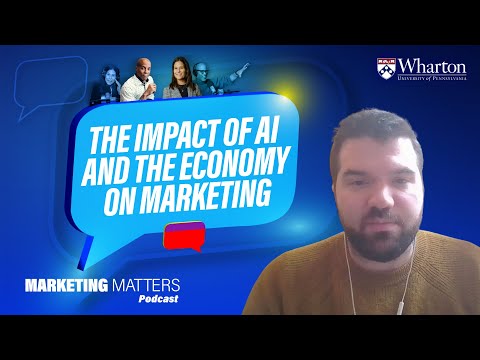
How AI, Consumer Shifts, and Cultural Marketing Are Reshaping the Future of Brands
Ask about Knowledge at Wharton
Episode Description
ABOUT THE EPISODE Marketing Dive Reporter Peter Adams talks about how AI, economic pressure, and cultural shifts are reshaping modern marketing. He explains how shifting income dynamics are requiring brands to link affordability with sustained loyalty, and how changing life milestones are disrupting traditional customer acquisition patterns. He also discusses how AI is influencing both consumer decision-making and agency models, giving large retailers an advantage as shopping assistants and automated tools become more embedded in everyday buying. The episode highlights how cultural relevance now depends on rapid, brand-aligned reactions to social moments, and why companies like Kraft Heinz, PepsiCo, and Walmart are adjusting their creative strategies to stay competitive.
ABOUT THE PODCAST Marketing Matters is hosted by Wharton marketing professors Barbara Kahn and Americus Reed. Each week they discuss marketing and advertising trends, consumer behavior, data and analytics, the latest in retail marketing, brand-building, and much more with their expert guests. Episodes are recorded at the Wharton School.
#MarketingTrends #ConsumerBehavior #AIMarketing #BrandStrategy #Retail #CulturalMarketing ----- The Wharton School of the University of Pennsylvania is committed to sharing its intellectual capital through Knowledge at Wharton, the school’s online business analysis journal.
Launched in 1999, Knowledge at Wharton offers free access to:
- Articles, podcasts, and videos highlighting Wharton faculty research and analysis of current business trends - Interviews with book authors from Wharton School Press - In-depth series of curated content like Wharton Executive Education’s Nano Tools for Leaders - A searchable database of more than 10,000 articles covering all aspects of business - A weekly newsletter that delivers Knowledge at Wharton insights directly to your inbox
Visit the Knowledge at Wharton homepage: https://whr.tn/3qUpSBE Subscribe to the Knowledge at Wharton YouTube channel: https://whr.tn/3DEAgAU
Read the full transcriptHide the full transcript
- Hello and welcome. You're listening to Marketing Matters on the Wharton podcast network. This is our weekly podcast
- where we analyze the latest in marketing, advertising, customer behavior, branding, new product
- launches, retail specialties. I'm Barbara Khan, the Patty and JH Baker Professor of Marketing, and my co-host,
- Professor Americus Reed, is out of town today, so I'm doing it by myself, which is sad. However, I am welcoming a
- terrific guest, a person we've had before, and who knows quite a lot about everything that's happening in
- marketing. So, it's very exciting to have him here. So, I'd like to say hello to Peter Adams, who's the
- dive. Hello, Peter. >> Hi, Barbara. Thanks so much for having me on and I'm happy to be on the show
- now that it's in a podcast format. >> Yeah, it should be fun. Um, we we put it out to our huge Wharton Network and all
- Wharton Network friends. So, we have a very intelligent, interested audience who are very concerned about the latest
- things in marketing. And that's what's great to talk to you about because you often talk about marketing trends and
- you talk about how marketers are adapting to um or adapting to economic shifts to AI to changing consumer
- behavior and all those kind of topics. And of course, you also talk about state-of-the-art new marketing
- campaigns, the holiday campaigns that every marketing reporter seems to have to do at this time of year. Uh what's
- happening in holiday marketing? But before we get to that, I know that you recently went to um a conference
- sponsored I think by or it was called advertising week conference or something like that. I forget exactly what it's
- called. War something like that. >> Uh advertising week in New York. Yes. >> Oh, okay. That's a pretty descriptive
- name. [laughter] So, advertising week in New York. And you get like some pretty high up marketers discussing some of the
- latest trends. And so I thought maybe we'd start there. Um and you can maybe tell us some of the things that you've
- talked about in thinking about what's going on in marketing. >> Yeah. So for advertising week um you
- know it was an interesting time for the conference to happen. Uh obviously there's quite a bit of uncertainty
- affecting uh multiple aspects of the industry right now with uh tariffs with the conference landing right as holidays
- are ramping up and then you know on an individual company basis there's quite a bit of consolidation uh advertising week
- draws a lot of folks from the ad agency world and is actually in the same office
- space as some of the IPG agencies which are getting acquired by um Omnicom. So uh a little bit of a harried conference
- this year. I think people are a little jumpy uh but also very well attended which I think speaks to the fact that
- people are looking for uh kind of guidance and how >> and networking for the next job.
- [laughter] >> Sure. Definitely. I mean I mean you've seen um just in the past few months the
- number of layoffs uh some of them affecting marketing uh pretty intensely. Um, so yeah, definitely
- uh a lot of interesting off-site happening to complement the main sort of agenda that's put on by advertising week
- itself. Um, and yeah, many of the typical topics you would expect as well. Uh, AI, uh, creator and influencer
- marketing. I moderated a panel that was about uh local marketing strategies but ended up actually intersecting with a
- couple of those topics as well because that is another area uh that is being uh disrupted and evolving very quickly
- right now. >> So there's a couple big themes that maybe we can dig into a little bit that
- I saw in some of your writing. One of them was this interesting idea, you know, on the vanishing middle class. So
- and I've seen a little as some some changes on that too. It seems like the rich are getting richer and the poorer
- are getting poorer and there's nothing in the middle and obviously a lot of marketing is being generated to those,
- you know, 1% rich people. So, you're seeing a lot of emphasis on new luxury and things like that. Um, but how does
- that affect in general? Not everybody's going to be able to focus on the 1%. So,
- how does what's what's the big effect of this vanishing middle class? Yeah, I mean it's it's for for years or for
- decades, uh marketing, broad-based marketing has focused on, you know, the middle class folks, uh people who can be
- regular repeat purchasers. You think of categories like packaged goods, stuff like that. Um even stuff like more
- premium food and beverage brands. This has always been a big opportunity, but as you pointed out, there's been um some
- research that was put together by War. Uh also other companies like McKenzie have sort of identified some of these
- patterns where uh it's just an increasingly bifurcated bifurcated market. That's a fun thing to say out
- loud. Um but yeah, there's there's incredibly welloff people uh who have, you know, continued to prop up the
- economy. If you look at the share of how consumer spending hasn't maybe tapered off as much as some people expected it
- to given tariffs and things like that, a decent amount of it is propelled by um you know very welloff upper middle class
- uh and higher uh consumers. But yeah, then there's the other end of the spectrum and um it affects marketing
- strategies because marketers now need to factor value and affordability into their
- messaging more even if they aren't necessarily budget brands. They have to acknowledge that things that used to be
- maybe regular or repeat purchases are are maybe a little bit of an extra ask. I mean, you think about categories like
- groceries. That's where a lot of people express the most frustration with prices
- rising. Um, but it also changes what these researchers call kind of consumer milestones. I mean, fewer people are
- buying a house or having kids. Conventionally, those events happening is a big spending trigger for brands.
- They go, "This is now an opportunity for us." But if those people are no longer doing that, and they're no longer doing
- that in greater numbers with young consumers, that poses a real problem. Yeah, the housing market is particularly
- interesting. People have a little bit of golden handcuffs because they a lot of them bought property or starter houses
- when the loans were really cheap and they're locked in. They can't get that loan again. And so they're kind of
- locked in and I think that's stagnating the housing market a little too. Then of
- course on the other end there's these people who have just way too much money. And so some of the industry that's
- developing around that ultra luxury is is an interesting kind of marketing situation. And I I'm looking a little
- bit about that and like branded residences and use of of luxury brand names on condominiums like MercedesBenz
- or Aston Martin condos [clears throat] and this idea that's really catering to the super wealthy but that's a very very
- small percentage of the overall population. So not clearly not what's driving most marketing. Um, and so I
- guess you know along the lines of what you're saying is if you if the marketers are going after not the ultra wealthy
- but every you know the other the other part and they're focusing on value. What's your take on what that does to
- loyalty? Um, you know, I mean, a lot of what we're talking about when we talk about marketing in our marketing classes
- now is the importance of customer lifetime value and building picking the right customers and then, you know, like
- subscription models and retaining customers and things like that. But if you're really focusing on price and
- value, that's almost the antithesis of loyalty in some sense, unless they're making some of this value contingent on
- relationship. >> Yeah. it it the I mean I think the loyalty question is it gets challenged a
- lot. Um I I think depending on the category marketers now have the benefit of having a lot more granular data. Um
- you think about um places like retail and um even restaurant uh QSR brands, you know, they've they've had loyalty as
- part of a playbook for a while, but especially now with some of these factors we're talking about knowing when
- people are buying them, what's pushing them to buy, and being able to leverage that um to not only inform
- their own marketing strategies, but in the case of retail, now monetizing those capabilities to sell to other brands
- that are also struggling with the same problems. retail media networks. >> Yeah, exactly. Um, but the loyalty
- thing, I I read an interesting report from this agency called Razerfish the other day and it goes back to that sort
- of milestone um question we were talking about uh just now. Uh there's a really interesting insight there in there. I
- forget the specific share of consumers, but the consumers were basically saying,
- I would rather receive these sort of bespoke promotions that recognize frustrating points in life. like if I
- take a redeye flight, I want early check-in at a hotel. And I would prefer that over getting an upgrade to the
- suite on my honeymoon. So again, you think of honeymoon, that is a traditional consumer milestone, things
- that marketers maybe try to usually add a little more white glove service around, but more people are kind of
- saying, you know, there's so many aspects of day-to-day life that are frustrating. If you can alleviate that
- in any way, that fosters loyalty. Um, and yeah, I know, you know, pricing and value and promotions are seen as sort of
- lowhanging fruit in the loyalty space right now, but I do think there are a lot of loyalty strategies kind of being
- driven on deal right now. Um, yeah. >> Yeah. My problem is whenever you do it on deal that just I don't know but you
- know I don't think of it I think of that as a fight to the bottom and typically you want to build it more on what you
- were saying earlier understanding what the customer is buying looking at data and then maybe alleviating pain points
- as you suggested or maybe finding new opportunities to delight whichever way but still it is contingent on
- understanding the data and that brings us to another big issue that you wrote about and I'm sure was discussed a lot
- is how AI is changing both customer behavior and marketing response and to your initial point like jobs and things
- like that. So I mean maybe you can speak to each one of those buckets. First one
- that I'm interested in is I don't know how much they talked about from the customer point of view, but not only are
- marketers using AI to look at the data to build the models that you're talking about and to identify some of those
- opportunities, you know, to customize to a customer, but a customer is now looking to AI to tell them what to buy.
- And was there any conversation on how that's changing customer decision making this focus on you know chachi bt to help
- you make a decision on what to buy >> to the extent that everyone is obsessed with the sort of the agentic question um
- right now you know definitely is a word that was top of mind during a lot of the
- AI talks at advertising week and continues to be as people start to think ahead to the holidays in 2026. I mean,
- you know, Amazon and their earnings boasting about how much their assistant is being used. Um, you know, it only
- went national, I think, within the past, you know, year or so. Uh, but, you know,
- they've got the muscle to kind of push people towards features like that. And Walmart, you know, the biggest retailer
- in the traditional sense, also working with, you know, the chat GBTs of the world to develop similar capabilities.
- Um, and yeah, I mean I think for marketers thinking in the long term, you know, it's a potentially exciting
- channel. Um, but you know, for right now it's, you know, sort of the large companies with the capabilities to
- invest in this stuff will probably have the first mover advantage. Um, and for others who don't have the
- sophistication, um, you know, it it'll potentially sort of, uh, be a disadvantage in some ways.
- you know, Amazon has already eaten up so much share of e-commerce and things like
- that by just being the most technologically sophisticated and convenient. You know, do they further
- grab more share if they've got the best shopping assistant or what have you. >> Yeah. I mean, your answer to the
- question, you you flipped the question to what I asked, but in answering your question, you probably answered it also.
- I was thinking about how it changed the um actually the mindset of the consumer.
- But what you're suggesting is these agents really exist for some of the big players. And so clearly they're going to
- be programmed to give the big players more advantage. So uh perhaps what's happening is the more you depend on
- these agents, the more you kind of narrow the playing field because only the big guys are having
- them. I guess that's what you were saying. Um I was just wondering like if it changes how I make decisions. Do
- people just listen to what the agents say and do that and then so there so that who has the agents really are is
- going to frame where purchases are being made? I guess that's what your answer was. And do you believe that? I think
- consumers I mean you know there's still areas where AI falls short but purely anecdotally know that um yeah people
- when they're struggling to think of something like a holiday gift idea will prompt chap GBT like this person likes X
- and Y what's a sort of you know a potentially surprising or thoughtful gift I could get them that that that's
- how people plan uh you know everything from vacations now and yeah holidays for sure. Um I'm not sure you know like the
- the adoption of these uh individual chatouts kind of at the consumer level is quite high and um continues to be
- very engaged and you know just speaking from personal experience right now every
- year my family does a secret Santa uh drawing through a platform that also doubles as serving gift recommendations.
- And I noticed for the first time this year it has an AI thing. So if you're drawing up a wish list for your secret
- Santa, it'll you can plug some prompts in and it'll recommend them to you. So um it's definitely informing Yeah.
- consumer shopping behavior. >> Yeah. Yeah. And so therefore, the people who control those agents and control
- those platforms are obviously doing it in their own best interest. And so you're going to see the big get bigger
- in that kind of thing because the smaller ones can't afford it. Um, so the other thing that people are talking
- about with AI and it sounds like, you know, was a topic there was how much it's replacing jobs or how much at these
- advertising um, agencies or whatever these marketing situations, a lot of the work that used to be done by people is
- now being done by AI. Was that a concern or >> I I mean I think that the idea that AI
- is wholesale replacing roles at agencies is um you know maybe a little overstated
- sometimes. Uh there's no doubt that you know agencies are investing very heavily
- in this but I read an interesting article the other day that was talking about this AI washing. Um obviously the
- economy is not in a very good spot right now. ad agencies in particular, the publicly traded holding companies have
- not been a in a good spot for a long time. I mean, they're financially mostly financially pretty distressed companies
- that are now looking to break apart and sell stuff off. Um, you know, I think if
- they can sell their layoff story as, you know, AI is replacing jobs, it looks better for them um in public. But the
- the thing that's more interesting for me with the agencies is how it's starting to switch up how they approach their
- services models. Um, so WPP, the largest ad agency, um, last month introduced this new offering where basically,
- uh, the their clients don't even need to hire an agency anymore. They can basically just make use of WPP's AI
- technology for their campaigns. So, um, they've gotten a lot of questions. Does this cannibalize agency work? You're
- basically saying, you don't need to hire people anymore. You can just borrow our
- tech. Um, and it'll be interesting to see if sort of their competitors also adopt this. Um, cuz it's the type of
- thing that, yeah, definitely disrupts sort of the traditional agency model, but might also be kind of necessary as
- this is what clients are sort of demanding and they value the ability to have technology partners who can help
- them execute their marketing. >> Yeah. Well, that'll be interesting. Well, given that we have you now and it
- is Christmas, I see that you have written on a number of these new holiday stories and what's happening. So, we
- might as well dig in and see if there's anything interesting. Let me This one isn't a holiday story, but I'm since you
- wrote about it, let me just ask. Pepsi has been changing all their logos. I mean, every year there's a new logo
- change for them. Last year was Mountain Dew. This year they overdid their corporate branding. Did you have a
- takeaway on like how important that is or like you know I know they think it's important they spend a lot of a lot of
- time on it but did did what was your reaction to the importance of overhauling this and
- what you know I don't know what what did you take of that when you wrote that article?
- >> Yeah I mean they're a business that's under quite a lot of pressure right now.
- um they have an activist uh investor campaign that they're sort of contending with that's pushing them to shed some
- lower performing aspects of the business. And you know it's right there in the name PepsiCo. Pepsi for a long
- time was you know kind of the big focus. They're a food and beverage company but
- Pepsi is the flagship and at least when it comes to traditional full sugar Pepsi
- is a brand that has been in pretty serious decline in recent years. has dropped in just a few years from being
- the number two soda in the US to number four. Um, and the PepsiCo corporate branding for a long time sort of
- mirrored the Pepsi branding. It was similar color schemes and sort of visual motifs, but this new overhaul
- um moves Azure. It is the most dramatic change away from that yet. So, um, what they're trying to do is highlight we're
- not just Pepsi. We own 500 brands and we own cool new growing brands. I mean, they recently acquired Ciiete, uh, the
- Mexican food company. Uh, they bought Poppy, which is obviously their big response to this prebiotic cola
- disruption. Um, so this overhaul is sort of, yeah, positioning them as more than
- just Pepsi and being a kind of well-rounded food and beverage business. Uh, and yeah, the the visual identity
- looks nothing like what they've done before. >> Nothing. Yeah, I'm just looking at it
- now. I mean, I know we're not showing it, but it is radically different from the past where it really did focus on
- Pepsi and and what that meant. And now it's, you know, the red and blue is gone. It's more like uh natural colors,
- organic kind of feel, definitely to food and well, we'll see how that happens. And now Todd Kaplan used to be at Pepsi,
- but then he moved to Craft, I think. >> And I think you wrote an article about that, too. Did you write something about
- Craft? I thought I saw something on that. >> Yeah, he he had a big presence at advertising week. Um, and was
- >> he's a cool guy. We had him on the podcast and like I don't know why he left Pepsi. I don't know what but he had
- been at Pepsi for a really long time and I I guess he left a few years ago for the opportunity at Craft. So yeah, what
- was your take from what he's been doing? Uh well so his talk at advertising week
- touched on a thing that I think is affecting a lot of legacy marketers right now is um he has always been a big
- champion or I shouldn't say always but in recent years has been a very big champion of this idea of um you know
- thinking past traditional media strategies toward earned media. Um you know how do you get your brands being
- talked about in culture in ways that extend beyond paid advertising. And so basically in his first you know year
- plus at craft he has been um just sort of peppering uh the industry with like these little and large activations that
- are very kind of culturally oriented. Um Hines Mustard did a collaboration with Mustard the DJ behind the Kendrick Lamar
- songs. Um, and so he spoke at advertising week just sort of about how to identify those moments and kind of
- keep pace with the sort of churn of mostly social mediadriven content. You know, these memes emerge overnight and
- it presents brands a small window of opportunity to kind of go viral and attach themselves to those. Um, but you
- know, how do you identify them? How do you make the most of them and make sure they're the right fit for your brand?
- Was a lot of what he was talking about. And this is a change we see taking hold all across the board of this kind of
- pivot away from traditional kind of paid national advertising to this very socially uh organic contentoriented
- approach. Um and it's led to some interesting results for sure. I mean Craft Hinds has um you know managed to
- keep its brands a little more on the pulse of culture. Uh but you know the larger business obviously um you know is
- struggling with what a lot of other kind of large packaged foods companies are right now. Yeah, that's an interesting
- thing. Um because it it's a different tool set than than people have. And it sounds like he's somebody who has the
- traditional one and is in the new world because now you're looking for these cultural moments. You got to do them
- fast because they they change. So you don't have a lot of time to test everything. And if you don't do it
- through the lens of your brand, you can get into trouble. I mean the famous one a couple years ago was Bud Light and
- Target and all of them. they responded to something that would seemed perhaps in the on the drawing board to be a
- no-brainer and then they release it and they get this really negative response and see a huge effect on sales like it's
- not small effects on this and yet if you're doing that kind of marketing where you're looking for the cultural
- moment or the opportunity I could imagine it's it's tough to know at really quickly whether or not it's
- the right move for your brand to discuss it. Uh, so you I guess you have to have
- some kind of blueprint as to what is in the brand's DNA and what isn't and things like that. Did he talk about
- something along those lines like how to know it and how to know it fast? >> Yeah, I mean I think I I think you've
- kind of you know I don't know how much you know a specific criteria is employed but I think yeah very much understanding
- the sort of brand values and where they come from. Does this make sense with our
- narrative? Um, and you know, this is a case where, you know, we just talked a little bit about how agencies are being
- disrupted, but this is a case where kind of like partners can help. Um, there was
- a separate talk I went to that was with PepsiCo and their CMO was saying or their beverages CMO was saying, um, you
- know, we've got some of the most experienced marketers, the most talented marketers, but we don't get the
- algorithms like our agency does. So they've developed this new partnership model where they've put their social
- agency much closer to their internal teams to kind of keep a pulse on these things that we're talking about, making
- sure they're aligned with the brand values and things like that, but also that they can be reactive in the way
- that we're talking about. So it's definitely causing a lot of these traditional large marketing
- organizations to kind of switch up how they think about everything from agencies to CMO roles and things like
- that as well. You know, you think about like these companies that are great and then all of a sudden they make a misstep
- like a Dolingo or something like that was like that everybody thought they were terrific and then I forgot what it
- was but they made some misstep. And so I would imagine part of what you're doing
- with this is not only learning to figure out which ones you respond to and which
- ones you don't and then when you do, how you make sure it's through the brand's lens, but you got to also figure what do
- you do when you made a mistake? How fast do you get out of it? you know, because
- it is a very fast window. So, if you make the mistake quickly and maybe own it quickly, it might go you might not
- have to deal with it for too long. Yeah. I mean, it's like anything else. I I think the decision-m needs to be um
- fast, but unfortunately, you know, we were just talking about the cultural relevance brands can find in
- responding quickly to social stuff. I mean, social stuff can also quickly bury brands. I mean, uh, good example of this
- recently was Cracker Barrel, uh, >> made a fairly innocuous update to their logo. There's been a good deal of
- reporting, including in the Wall Street Journal about how basically, you know, even bots sort of seized on this as a
- contentious topic, and they're still trying to kind of claw their way out of something that I I've never really
- understood why that was such a flash point. I mean, you can say what you want about the logo, but I didn't think it
- should be as controversial as it ended up being. So, um, yeah, I think staying really reactive and being able to pivot
- quickly is super important. Not waiting weeks on it, not going through, you know, multiple different agencies and
- crisis PR firms, you know, you got to kind of maybe go with your gut a little bit more on some of this stuff. Um, you
- know, the Duolinga case is one of these things where I think the leaderships at the company just sort of misread the
- rumor and AI. Um, you know, they started talking so much about AI and how great AI is. And um the thing people loved
- about their marketing was it's you know it was very focused on their mascot but it was very human in a way. It was very
- humorous. It was their mascot reacting to things in culture. And then for the the company leadership to say AI is all
- that matters and and things like that. I think you know there's a it's a really testy sub subject still. Um
- >> and uh yeah was obviously very alienating to some of their user base. >> Yeah. I mean it's interesting how this
- but anyway let's end. And I know we don't have that much time left, but it is Christmas. So, let's go to the
- biggest retailer and the story you wrote on Walmart and the Grinch. Uh, what was
- your take on all of that? >> Yes. So, Walmart for the past couple years um has really embraced uh this
- very pop culture forward messaging strategy. I mean, last year for the holidays, they ran an ad that featured,
- you know, Gilmore Girls and all these kind of famous uh sort of seasonal touchstones. And this year they're kind
- of returning to a similar playbook, but focusing on one kind of cultural property, which is the Grinch. And
- they've basically built this whole kind of world where they're tying um kind of their product assortment and services
- into the world of the Dr. Seuss uh Dr. Dr. Seuss is how the Grinch Stole Christmas. And um they've recently
- updated it. Walton Gogggins, who previously appeared in their ads that they started running this summer, is now
- playing the Grinch. So, um, you know, I think in times like this, we we we were having the conversation earlier about
- like kind of value and promotions, what a weird holiday period it is, um, and and why that, you know, could
- potentially lead more people to kind of focus on on messages of value. But, you know, Walmart is historically known for
- value, but they're leaning into a very kind of storytelling first approach, which I think might actually end up
- working pretty well for them. I think people are looking for a sense of escapism uh and nostalgia. Um and it
- gives them a chance to also, you know, they they are highlighting their product assortment as well. But I think it's a
- pretty savvy campaign. >> It's so funny because it's like that sounds so much like traditional
- marketing, you know, going to Dr. Seuss and the Grinch and Christmas and nostalgia. I mean, those are things we
- were teaching 25 years ago. So you start from culturally forward and AI and social media and you end up with Walmart
- and the Grinch. Kind of interesting what happens in marketing. Anyway, we are out
- of time. So Peter, thank you so much for joining us today. And where can listeners go to read up with your
- stories and keeping up with the times? >> Sure. Uh you can always check out uh marketingdive.com.
- Uh we also have a daily newsletter and two weekly newsletters focused on agencies and mobile marketing. Uh, and I
- post about my stuff on LinkedIn as well. So, uh, give me a look there. >> Thanks a lot. Thank you. That's all we
- have time for today. I'd like to thank our producers, Dion Simkins and Marissa Remma. And thank you all for listening.
- We'll be back next week. Till then, this has been Marketing Matters on the Wharton Podcast Network. I'm Barbara
- Khan here without America's Reed.
Brief Summary
Peter Adams discusses marketing trends, AI's impact, and Walmart's holiday campaign featuring the Grinch.
Key points
- The Vanishing Middle Class. Marketing strategies are shifting as the middle class disappears, impacting consumer behavior.
- AI's Role in Marketing. AI is transforming how consumers make decisions and how marketers respond.
- Walmart's Grinch Campaign. Walmart embraces pop culture with a Grinch-themed holiday campaign, blending nostalgia and value messaging.
Episode highlights
- The Vanishing Middle ClassMarketing strategies are shifting as the middle class disappears, impacting consumer behavior.“The rich are getting richer and the poorer are getting poorer.”4:03Nov 24, 2025
- AI's Role in MarketingAI is transforming how consumers make decisions and how marketers respond.“AI is changing both customer behavior and marketing response.”10:21Nov 24, 2025
- Walmart's Grinch CampaignWalmart embraces pop culture with a Grinch-themed holiday campaign, blending nostalgia and value messaging.“It's a pretty savvy campaign.”27:15Nov 24, 2025