How Brands Won Big at the World Cup
Ask about Knowledge at Wharton
Episode Description
ABOUT THE EPISODE The best World Cup marketing did not depend on a logo inside the stadium.
Americus Reed, The Whitney M. Young Jr. Professor of Marketing at Wharton and co-host of Marketing Matters, explains how brands created cultural relevance and earned media throughout the tournament.
From viral visits to iconic American brands to inventive in-game advertising and Spanish-language campaigns, Reed breaks down how marketers can move beyond selling and become part of the moments consumers want to share.
ABOUT THE PODCAST This Week in Business features interviews with Wharton faculty about the latest news, fascinating trends, and issues impacting both consumers and the business world. Episodes are recorded at the Wharton School and published twice per week.
----- The Wharton School of the University of Pennsylvania is committed to sharing its intellectual capital through Knowledge at Wharton, the school’s online business analysis journal.
Launched in 1999, Knowledge at Wharton offers free access to:
- Articles, podcasts, and videos highlighting Wharton faculty research and analysis of current business trends - Interviews with book authors from Wharton School Press - In-depth series of curated content like Wharton Executive Education’s Nano Tools for Leaders - A searchable database of more than 10,000 articles covering all aspects of business - A weekly newsletter that delivers Knowledge at Wharton insights directly to your inbox
Visit the Knowledge at Wharton homepage: https://whr.tn/3qUpSBE Subscribe to the Knowledge at Wharton YouTube channel: https://whr.tn/3DEAgAU
Read the full transcriptHide the full transcript
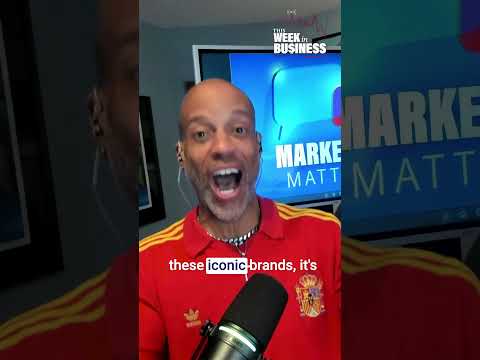
- Well, the world cup is now complete. And as you can see from our guests, America's read marketing professor and the hip hop
- prof, the Spaniards won the world cup. Carrying the pride of Madrid right there.
- But nonetheless, we're here to talk about the world cup from a different perspective today, from
- a marketing perspective and pleasure, as we just mentioned to have America's read marketing professor for
- the Wharton school joining us and also co -host of marketing matters every week on the
- Wharton podcast network. Uh, it was a great event. I don't think there's much doubt about that
- on the field. How was it in your mind from a marketing perspective off the field?
- I love that question, Dan. You know, we talked about this before the world cup every four years is an opportunity
- to basically go to a series of super bowls. I mean, it is incredible because this is
- when the world comes together to celebrate the world's most popular sport. And it's an opportunity to have so much
- going on in terms of products, brands, services, and organizations. And, you know, this year's world cup was
- an incredible display of business opportunities of consumers in the marketplace, connecting with each other and
- their teams and really coming in, Dan, to get a little bit of a taste of this Americana culture.
- And so it was a big event and just so much happening with respect to just a lot of energy and a lot of
- excitement and a lot of immersion in the cultural moments that defined this year's world cup
- tournament. And so it was an incredible event to watch just as a marketer, because I'm watching
- all of this unfold out in real time. And so when you talk about that, it drew me in immediately to not necessarily how
- marketing was impacting the games of the broadcast, but what we saw in social media with
- the connection of people from overseas coming to America for the first time and going to
- all of these different places, restaurants that, you know, we know on a daily basis, the
- waffle house, uh, Bucky's got a big play, you know, so many of these other companies
- got this level of marketing that they probably didn't expect to get, but they certainly got
- from, from Europeans. This is a great point, Dan, that you make, because this is the, this is the
- power, I think this is the exclamation point that says, this is why brand matters, because
- if you're working on developing the equity of the brand, you have the opportunity to create
- something deeper than just the logo. And you said it, it's exactly what happened.
- So when people, we take these brands for granted, Bass Pro Shops, Bucky's waffle house, you
- said it. And it's like, when people come to experience our culture and they find these iconic brands,
- it's an incredible moment. Why? Because they're going to take out their cell phone.
- They're going to take a picture of it. They're going to hashtag, they're going to share
- it. They're going to repost. And it's very, very clear that these brands that were able to develop an iconic level
- of connection with Americana culture were also able to say, hey, we're going to actually be
- a part of the conversation. We have permission to be a part of the narrative that all of these foreign visitors
- share with their other friends and family members and so on. And we're going to get that boost in
- terms of all of that authentic equity around Americana culture, and we didn't have to pay
- for it. So it's an incredible thing, like you said. All right. A couple of the other stories that I
- wanted to touch on, one being the deodorant company that made the smart play of putting
- a logo in the armpit of referees jerseys so that when a referee would hold his arm up for like an offsides or a
- foul or something, you would see the logo of the deodorant company in the armpit.
- I mean, that's, that's genius, isn't it? That's 100% genius. And this is the, this is why Mark,
- this is why I love marketing. You said it, Dan. I love marketing because marketing is the interface
- of the right brain and the left brain. It's not just how to figure out how to do the work in terms of segmentation,
- targeting, positioning, and messaging. It's how to execute on it at the highest level of creativity.
- And that's exactly what we saw in that example that you played, because it's like, who,
- I mean, that's incredible to think about, let me be a part of that moment where the referee is involved in actually having some
- kind of impact on an important part of the game and eyeballs, the tension is there,
- people are watching and then the referee raises the yellow card or the red card and
- there's your brand. And it's so, it's just so wildly creative. And what's interesting about that, Dan, is because
- it's so creative, because it's so authentic, because it's so interesting, because it's so relevant, just
- like what you did with me, we're going to share that story over and over and over again.
- And here we are once again, in that beautiful world of earned media. What did you make of, and I noticed
- this a few times, of companies running Spanish language commercials on English speaking networks?
- Uh, you know, I mean, obviously they saw something there that they thought would be a
- great connection. It's a hundred percent correct. And again, it's the, it's the, this is
- what is very important about this. The great marketing is able to diagnose where
- the culturally relevant moments are. And so when you look at Telemundo, for example, you're seeing, I mean, yes.
- I mean, I got to say, Dan, it's like, my Spanish is not awesome. I'm working on it, but I got to
- say, when you watch the Spanish, it's just, it lands on you so differently. And so go, I mean, just go through
- the whole thing, right? It's just like being a part of that is just, it's another level of connecting with
- the kinetic energy that is part of this atmosphere, part of this moment of immersion that
- really has power. And so again, it's a, it's a very powerful and creative way to tap into the
- language that also unlocks all of this cultural relevancy for consumers as well.
- What did you make of some of the companies who are sponsors of the stadiums? Obviously not having the ability to have their
- logo seen during the world cup, because that's how FIFA operates, but they were able to
- kind of start this wave on social media, Levi's being maybe the most notable, this wave
- of, okay, we're not going to advertise there, but we know that shape of our logo
- is going to be distinctive and it's going to carry in a different campaign outside of
- the world cup. I mean, that's another perfect example that you identify here as well, Dan.
- I love that example. Why? Because once again, it's telling us this is the power.
- If you can come up with the iconic imagery, not just the logo, but the meaning system that's behind it, like a Levi's, then
- what happens is even if you don't actually see it, you feel what it stands for. And so again, another beautiful opportunity to say,
- Hey, you know, you want to push us out or we're not going to be able to necessarily participate in the traditional sponsorship kind
- of context for whatever reasons, well, we've got a plan B because we're able to, even
- in that context, still stand out in the crowd, even though we're hiding in some senses,
- we're still able to still get some of that equity and that attention and that connection
- and interestingness. But again, people talking about this, this got shared all over the place on the official
- Instagram posts, uh, of, of Levi's. I mean, they immediately changed sort of the,
- the avatar picture. I mean, everyone was talking about this. And again, when people are sharing and sharing
- and sharing, what's happening is that you're, you're getting that earned media and you didn't pay
- a dime for it. So that's a beautiful thing in terms of what marketing is supposed to be all about.
- And it just continues to show the power of social media in this day and age. And what seemingly correct me if I'm wrong,
- is continuing to be something that's going to grow and grow and grow as we move forward here.
- It's a hundred percent correct. It's social media is now the new lens where consumers participate with brands in the cultural
- moment to create equity. And so this is only going to intensify in the future when you layer on top
- AI and the tools that are associated with being able to take now social media and
- amplify and create almost limitlessly with respect to intelligence being a commodity.
- Now, it's going to be absolutely incredible to watch Dan in the future in terms of
- inviting these consumers in to actually create marketing and do the marketing with us in real
- time. Anything that you saw throughout the tournament that was somewhat of a learning experience for advertisers
- that you think we're going to see in future ad campaigns moving forward? Yeah, absolutely.
- I think the smart, savvy marketers are going to basically take the tape and break it
- down and try to analyze it and diagnose where are the big moments during these matches
- where I can be a part of the narrative. And I think there's going to be some common knowledge that gets extracted from all of
- this to think about, OK, where are these flashpoints where I, as a product service brand
- organization, can be a part of not trying to just create transaction and sell, sell, sell,
- but trying to be a part of a moment to create a cultural connection and a relationship, which then ultimately ends in a transaction.
- Americus, it was a fun tournament. I know you're celebrating Spain, but you know
- what? They played a great game and it was a fantastic tournament for marketing. There's no question about it.
- And I look forward to seeing this again coming up in the next few years. Me too, Dan.
- It was a great pleasure and always fun to chat with you. Americus Reid, marketing professor here at the Wharton
- School and also co-host of the Marketing Matters Show on the Wharton Podcast Network.
Brief Summary
Marketing professor Americus Reid analyzes World Cup branding strategies and cultural connections for companies like Levi's and Waffle House.
Key points
- World Cup Marketing Insights. Exploring the unique marketing opportunities presented during the World Cup.
- Creative Advertising Strategies. Innovative marketing tactics that captured attention during the tournament.
- The Power of Social Media. How social media is reshaping brand-consumer interactions.
Episode highlights
- World Cup Marketing InsightsExploring the unique marketing opportunities presented during the World Cup.“This year's world cup was an incredible display of business opportunities.”1:07Jul 22, 2026
- Creative Advertising StrategiesInnovative marketing tactics that captured attention during the tournament.“That's 100% genius.”4:02Jul 22, 2026
- The Power of Social MediaHow social media is reshaping brand-consumer interactions.“Social media is now the new lens where consumers participate with brands.”8:01Jul 22, 2026