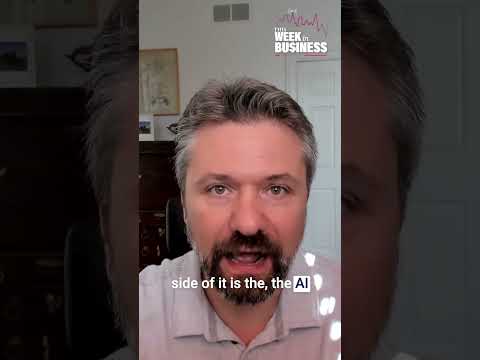
Jeremy Siegel Analyzes Tariffs, AI, and the Fed’s Next Move
Ask about Knowledge at Wharton
Episode Description
ABOUT THE EPISODE Wharton Emeritus Professor Jeremy Siegel joins Dan Loney on June 26, 2025, to discuss recent market movements in response to global uncertainty, including easing tensions between Israel and Iran and their impact on oil prices. Siegel analyzes the potential effects of upcoming U.S. tariffs, suggesting that markets have largely priced in a 10% baseline tax. He explores how adversity may accelerate corporate adoption of AI to offset cost pressures and explains why he believes the Federal Reserve should not tighten monetary policy in response to tariff-driven inflation. The conversation also covers expectations for rate cuts, GDP trends, and the outlook for the second half of 2025.
ABOUT THE PODCAST The Wharton Business Daily podcast features interviews with top business leaders, innovators, and renowned Wharton faculty about the latest news, fascinating trends, and issues impacting both consumers and the business world. Episodes are recorded at the Wharton School.
#MarketOutlook #InterestRates #Tariffs2025 #FederalReserve #Inflation #StockMarket ----- The Wharton School of the University of Pennsylvania is committed to sharing its intellectual capital through Knowledge at Wharton, the school’s online business analysis journal.
Launched in 1999, Knowledge at Wharton offers free access to:
- Articles, podcasts, and videos highlighting Wharton faculty research and analysis of current business trends - Interviews with book authors from Wharton School Press - In-depth series of curated content like Wharton Executive Education’s Nano Tools for Leaders - A searchable database of more than 10,000 articles covering all aspects of business - A weekly newsletter that delivers Knowledge at Wharton insights directly to your inbox
Visit the Knowledge at Wharton homepage: https://whr.tn/3qUpSBE Subscribe to the Knowledge at Wharton YouTube channel: https://whr.tn/3DEAgAU
Read the full transcriptHide the full transcript
- Dan Loney: Well, we know that the markets do not like uncertainty, and certainly we have seen a lot of that play out in recent
- months, especially on the global front. But just how are the markets responding to all of this latest action? Pleasure to
- be joined by Wharton Emeritus Professor of Finance, Jeremy Siegel. Hi, Jeremy, how are you, sir?
- I'm fine. Dan, good to be on your program. Thank you, sir. All right. So give us your thoughts, as all of
- this has played out over the last few weeks, and how Wall Street has kind of reacted to it.
- Yeah. Well, there's— there's a number of things going on. A— and I say apparent, because the final chapter in Iran and Israel
- has certainly not been written, and whether it will ever be completely written, we don't know. But at least at this point,
- on that side, as we see oil drop down to pre-Israeli strike levels, low levels, that risk seems to have gone way down,
- certainly in the short run, of a spike in oil prices. The market likes that. And the market likes, certainly, the prospects that,
- you know, some— some peace or reconciliation can happen in the Mideast. So that— that is a positive development. The
- big thing is, on the the tariff front— yes, we are approaching those so-called July 2 or July 9, whatever you want to say,
- deadlines for potential reimposition of the so-called Liberation Day tariffs. The market doesn't think it's gonna happen.
- The market thinks that basically, any country that is going to start at least presenting some plan is going to
- be given an extension. The market has also decided that it could live with a 10% general tax and a 30% tax on China.
- Doesn't like it. It'd prefer not to have it. And, of course, I— you know, what would— say, you know, 50% on aluminum, and there
- are some on cars— doesn't like those, but it could live with that. - Right. And is the 10% kind of already baked in at this point?
- I think the 10% is baked in. It doesn't— it would be really very surprising to me, although not impossible, that
- that minimum will last at least through the Trump administration, which we're talking about, you know, three
- plus years. So I think that is baked in. Now again, if, if—if inflation becomes more, if people are convinced
- the tariffs are bad, you know, he may have to adjust that, you know, may have to wait until the midterms. You know, we— a year
- from November to do that. But pretty much right now, I think the 10% is— is the— is baked in. Why the— why is the
- stock market within a hair's breadth of all time highs? Because it thinks that, despite the hurdle of the tariff, that—
- that they can overcome much of the harm that that's done. Maybe not all, but much of it. You know, there's the old saying,
- invention is the— necessity is mother of invention. Yeah. Or I would say, adver— it's basically, adversity is what can cause
- invention. Adversity is the mother of invention. And where does where— where, I think, the market sees is a more serious
- usage of AI. Now, you know, AI— we all know about the AI firms and all the promise and the hype. The truth is, is that most
- firms have not used it anywhere near to the extent they could, to cut costs. Now they're going to be forced to. You know— you
- know, just like, you know, these podcasts, these Zooms. What happened during Covid. You know, I mean, Zoom existed before
- Covid, no one used it. Then it was forced to use it. Now we use it and, you know, we use it extensively. There are many
- other things that, you know, force you into positions which you actually find might be useful. The terrorists can force them
- into positions where, you know what? They go to a lot of their thing and say, "Listen, you either need to be more
- productive or, you know, I have to say, we have to let you off. Because, you know, with these higher prices, our margins are
- being squeezed, and we have to work everywhere we can to restore the margins." So that is what I believe is— is in the
- minds of investors as to why that risk of profits may not be damaged as much as Wall Street originally thought, and why not—
- inflation may not be as much— as bad as they thought, and may— maybe GDP not be as bad. Now, again, I don't like tariffs.
- They're— they're a sales tax. They're really like a sales tax. And if we consider the 10% sales tax, so almost like a value
- added tax of 10%, but just on imported goods. And I particularly don't like, you know, 50% tariffs. They just
- protect— protect inefficient industries. It's not a good economic idea. Nonetheless, the dynamics of potential and AI
- potential to lowering cost is such that, in my opinion, the market is looking beyond that, and then to an extension of the
- Trump tax cuts and a lighter regulatory touch. How important, then, is the second half of this year to
- understanding just what— you know, because there's— seemingly it's a lot of conversation about what's going to happen with the
- economy. Fed Chair Powell kind of holding, you know, for right now, whether we're going to see rate cuts in the second half of the
- year, because he wants to see the impact from the tariffs. It feels like the next six months are going to really, potentially,
- give us a little bit more knowledge to see what we might see play out as we go into 2026 as well.
- Yeah, absolutely. I mean, first of all, you know, most of goods are still being sold out of the inventories that
- were bought pre-tariff. But that— and the third quarter, those— those inventories are basically down. So they're going to have
- to make efficiency gains or raise prices. And— and in many cases, they got to raise prices. You can't have efficiency gains of
- 25, 50%. So there will be prices. We'll have to see how the economy does respond. You know, it's my firm belief that the Fed
- should not raise because of tariffs and the inflation that it causes. It's like, you know, if I said that, you know,
- the government decided on a national sales tax of 10%, and eliminated, let's say, the income tax, or reduced it, should
- that mean that the Fed should tighten policy, just because we know that the price of consumer goods'll go up, even though
- there'll be more income for consumers to buy those goods? The answer is no. You should only really tighten when
- inflation is caused by too much demand. In my— I don't see that coming. So I'm in the camp of definitely loosening. I don't
- know if they will. We have several Fed speakers that are now even talking about a July cut. I think that, truthfully,
- Powell is on the fence. And we still have, you know, four or five weeks of data before that happens. And we will look at it
- to see a signs of slowdown. There already has been slowdowns. I mean, GDP is distorted. You know, maybe 4%
- this quarter, or 3/8. But it was minus the first quarter. You average the two, you get two. That's not
- terrible, but it is lower than the two and a half to three that we averaged last year. You know, it isn't like it's— in other
- words, going gangbusters. And the trend is— is potentially down in the third quarter, when all this
- excess buying and pre-buying and selling out of inventories washes out, we do see that— that true effect. I do
- think the Fed will be lowering those rates. The question is, will they do it in time to prevent a real slowdown? I don't
- think there's going to be a recession from this, but a real slowdown. And if it stays at 10%, there'll be a slowdown. Then, you
- look at the 2026, no more— if there's no more tariffs, if, you know, other productivity factors come into play, it could be a
- good year, still, for stocks. Jeremy, great to talk with you today. Thanks very much for your
- time. Look forward to chatting with you again soon. Thank you, Dan. Thank you. Jeremy Siegel, who is a Wharton Emeritus
- Professor of Finance.
Brief Summary
Jeremy Siegel discusses market reactions to global uncertainties, tariffs, and AI's impact on productivity and future economic outlooks.
Key points
- Market Reactions to Global Uncertainty. Jeremy Siegel analyzes how Wall Street is responding to geopolitical tensions and tariffs.
- The Impact of Tariffs. Siegel explains how the market is adapting to potential tariffs and their implications.
- Future Economic Predictions. Siegel shares insights on the economy's trajectory and the Fed's potential actions.
Episode highlights
- Market Reactions to Global UncertaintyJeremy Siegel analyzes how Wall Street is responding to geopolitical tensions and tariffs.“The market likes the prospects that some peace or reconciliation can happen in the Mideast.”1:12Jun 27, 2025
- The Impact of TariffsSiegel explains how the market is adapting to potential tariffs and their implications.“The market has also decided that it could live with a 10% general tax and a 30% tax on China.”1:58Jun 27, 2025
- Future Economic PredictionsSiegel shares insights on the economy's trajectory and the Fed's potential actions.“I don’t think there’s going to be a recession from this, but a real slowdown.”8:48Jun 27, 2025