Why AI Won’t Replace Human Innovation, It Will Change It
Ask about Knowledge at Wharton
Episode Description
ABOUT THE EPISODE AI is transforming the workplace, but does that mean human creativity is becoming less important?
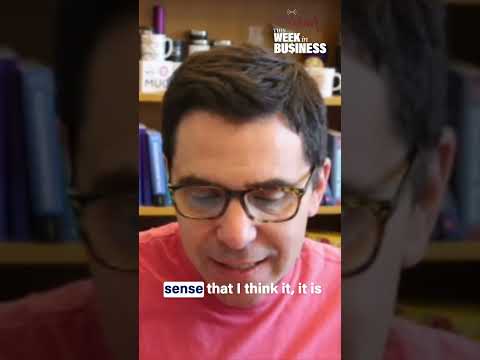
Henning Piezunka, Associate Professor of Management at the Wharton School, explains why AI may actually increase the value of human creativity and collective intelligence. He explores how AI can help organizations generate ideas, improve decisions, accelerate innovation, and strengthen learning while still relying on human judgment. He also examines AI’s role in replacing tasks, augmenting employees, and creating a lasting competitive advantage when paired with human expertise.
ABOUT THE PODCAST This Week in Business features interviews with Wharton faculty about the latest news, fascinating trends, and issues impacting both consumers and the business world. Episodes are recorded at the Wharton School and published twice per week.
----- The Wharton School of the University of Pennsylvania is committed to sharing its intellectual capital through Knowledge at Wharton, the school’s online business analysis journal.
Launched in 1999, Knowledge at Wharton offers free access to:
- Articles, podcasts, and videos highlighting Wharton faculty research and analysis of current business trends - Interviews with book authors from Wharton School Press - In-depth series of curated content like Wharton Executive Education’s Nano Tools for Leaders - A searchable database of more than 10,000 articles covering all aspects of business - A weekly newsletter that delivers Knowledge at Wharton insights directly to your inbox
Visit the Knowledge at Wharton homepage: https://whr.tn/3qUpSBE Subscribe to the Knowledge at Wharton YouTube channel: https://whr.tn/3DEAgAU
Read the full transcriptHide the full transcript
- We know that artificial intelligence is becoming a greater component for companies in all different areas.
- One of the things we're seeing is that companies we use AI are seeing higher level
- of profits and they're being able to do so where man hours are coming down. Now usually when you talk about man hours,
- you're talking about employees who in many cases are helping to deliver the next set of
- ideas for the firm to help it grow. So with lower numbers of man hours, it brings up the question of where those ideas
- are coming from. And what about the idea of collective intelligence as companies come together?
- Pleasure to be joined by Henning Piazunka, who is associate professor of management here at the
- Wharton School. Henning, great to talk to you again. How are you, sir? Thanks for having me, Dan.
- I'm doing great. Thank you. I think it's interesting that because of this, this component of collective intelligence is being brought
- forward. Let's take a deeper dive, if you can, on what kind of is brought forward with
- collective intelligence and how important it is to firms these days. Look, collective, I think it's so good of
- you kind of to raise this at this point in time, because in many ways, usually like people think about like, oh, there's AI
- and then there's collective intelligence. But I think one of the beauties about AI is really that it's a way to
- tap into everyone's collective intelligence, right? Before this, if I had like a problem
- on like I wanted to program something, I would ask my neighbor, right? And these days, I kind of open up
- Cloud or I open up ChatGPT or so or whatever. And I can basically tap into the experience
- of all these people who have ever coded up something, right? Everything which is kind of somehow been coded
- up. So in many ways, for me, AI is like really a way to access kind of collective intelligence.
- The general idea is always like, you see, like this goes back a long time, information
- is distributed and we want to have some way to tap into this information. Now, some stuff is coded up that we
- can actually tap into by searching the internet or by kind of leveraging an LLM or
- so, right? And some stuff is not coded up and we still need human beings for that.
- How does this impact the push forward by many firms around the innovation that they want
- to bring forward? And has it forced them to change some of their patterns in terms of maybe how
- they're crowdsourcing some of these ideas? Oh, absolutely. You see, like I think this makes a
- tremendous difference. You see, again, it's not either or, it's very often and you see like one of
- the things that has happened, you continue to kind of tap into the potential of these
- employees, kind of really to kind of push forward like new ideas. But what is AI has really changed, you
- see like in the past, if you had actually an idea, you may say like, okay, this idea I have in my head, but
- now I may actually die in my head, right? I may not even have to bother to talk with anyone.
- These days, I might actually open up an LLM and say like, you know what, let me kind of code this up, right?
- I have very quickly, I can very quickly go from idea to implementation. So in many ways, it actually surfaces these
- ideas, right? So you see, like in a funny way, we saw the same thing with like internet
- platforms and stuff like this, right? So you see, if 25 years ago, you had the idea of an e-commerce business,
- you would have said like, okay, maybe I buy a server, maybe I kind of hire design firm to create a website and stuff
- like this. And nowadays you would say like, okay, let me go on like Shopify and I got
- the website up within like 45 minutes and I'm selling stuff if I have something good
- to sell. And AI is a little bit different. It's a little bit similar. I have an idea and very quickly I
- go from having this idea to implementation. I think a big question is always down
- like, will it completely replace like human crowdsourcing or so? And that is something which remains to be
- seen. I strongly believe it won't do this fully, but it will take out a lot of these kinds of things.
- Well, and so that somewhat plays into the concept of how the relationship of human beings
- to AI is going to continue to grow and move companies forward because many people believe
- that you're still going to have to have an important human component in order to continue
- to drive the growth or the innovation that you're looking for. It can't just be 100% AI.
- Look, I think we are all in one of the greatest experiments of human history and
- figuring this out. I doubt that there will be humans around for a very long time who are operating
- with this. So it's not easy like, okay, click and now we are out of the loop completely.
- But you see, the way I like to think about this is there are basically three roles that AI can play.
- In some ways, AI basically just replaces you or it substitutes you. So it used to be done by human,
- now it's man-made AI. And we all start experiencing these kinds of things. Sometimes we don't call a call center anymore,
- but we're actually reaching in an AI, which actually guides us through things. And in some cases, we may be terribly
- annoyed by this, but in other cases, we're absolutely grateful for it. We needed some IT advice and we were
- hoping somebody from the IT department actually responds to us. And these days we open up some kind
- of gen AI and say like, okay, how do I figure this out on my computer? And I got the answer within a few
- seconds. So that's kind of the substitution effect. And in many ways, this is like really
- great. It's not by the way, just like an app substitution effect. You see, you have to think like we
- often talk about like, okay, will AI actually replace like a consulting company?
- But the key thing about it is most companies were never able to afford a consulting
- company. So it's not as if like McKinsey, Bain, BCG were helping like the small business owner
- around the corner. But now the small business owner around the corner can actually access maybe not the same
- quality of advice, but can get pretty good strategic advice about their business.
- So that's kind of, you see, like you can think about this as substitution. It's like the same kind of task, but
- suddenly kind of these markets are actually like growing in terms of like advice.
- The other thing is, look, it's an augmenting effect. You do the task, it's a human AI
- collaboration, and you now become better in that task, right? Like you have somebody who does this with
- me. I still design my slides, but because of AI, I get like much faster data and
- stuff like this. And then there's the third category. You know, AI is also a fantastic training
- tool, right? So imagine you go into like a job interview, okay? And in the past, you may have kind
- of trained this with like some fellow student or so, but now we have like having
- AI tools kind of popping up where you can actually say like, you say, like, for example, I have this experiment.
- If somebody's interested, shoot me an email, where we actually kind of use an online software
- to train people for the next job interview, okay? And so you can do this as often
- as you want. So the AI actually becomes like a training tool. It doesn't replace you.
- It doesn't augment you within the particular interview, but it really helps to train you for
- that interview. But the more that people know about and use AI, the more benefit, especially if you're
- an entrepreneur, you know, building a startup, the more you know about AI, the more you
- can build, the better off it will be because you will see more of these ideas coming to the forefront and being able to
- support your business and make it better. You're absolutely spot on. Look, the big question, I think, which is
- always discussed in the media is like, okay, will AI replace humans? For the individual decision maker, like for the
- person who kind of tries to perform in the economy, the question is very often more
- like the inside is more, you know what, people who use AI will outcompete people who
- do not use AI. So this is like one of the most powerful tools we ever had. And you better get on top of these
- things. And that, and being able to compete at a better level, obviously makes your profitability better
- on your business down the road. No question about it. Of course, you need to watch a little
- bit, how much you kind of spend on the AI investments, right? This is like a big debate.
- You had this on this podcast a few times, right? Like how much are we in a bubble?
- How much, how much money is actually spent on this, right? So you can't lose track of the economics.
- But obviously the idea is to make investments that result in product and process innovations.
- Does that concern you as we build all of this out, that the investment component, which
- is so big from so many companies can have some level of long-term detrimental effect?
- It's not a terribly concern of mine, but you see, like, I'm also at the same time, kind of sure it will happen.
- This is a new technology. We're in the process of figuring this out, right? And so this is like an enormous exploration
- exercise, which takes place on a society level and which takes place on a firm level.
- And you know, this old saying by Henry Ford, right? Like 50% of my advertising money kind
- of goes out. I'm not sure if this is Henry Ford, but you know, this managerial saying like 50
- % of my advertising money goes out of the window. I just don't know which 50%. And my expectation would be a lot of
- technology investments are actually of the same nature. Like a lot of the money you spend
- is actually kind of wasted at this point, but you do not know which half of the money is spent.
- I think the key thing that a lot of kind of companies are really need to figure out is how do you actually organize
- your company? How do you manage? You see, like, how do you actually change control systems?
- How do you actually kind of change like the span of control and stuff like this when you're actually dealing more and more with
- AI agents? That is something where I'm almost more concerned. It's not really just like, oh, how much
- money should we spend, but how do we adjust our organizational structure, our incentive system?
- How do we build a company that to a large degree is building or leveraging AI? Henning, great to talk to you as always.
- Thanks very much for your time today. Thank you so much. Good to see you, Dan. Good to see you as well.
- Henning Piazunka, who's Associate Professor of Management here at the Wharton School.
Brief Summary
Henning Piazunka discusses AI's role in business innovation and the importance of collective intelligence for competitive advantage.
Key points
- The Rise of AI in Business. Companies using AI are seeing higher profits and reduced man hours, raising questions about idea generation.
- Collective Intelligence and AI. AI is transforming how companies tap into collective intelligence, enhancing innovation.
- The Future of Human-AI Collaboration. The relationship between humans and AI is evolving, with implications for innovation and competition.
Episode highlights
- The Rise of AI in BusinessCompanies using AI are seeing higher profits and reduced man hours, raising questions about idea generation.“Where are those ideas coming from?”0:29Aug 5, 2026
- Collective Intelligence and AIAI is transforming how companies tap into collective intelligence, enhancing innovation.“AI is really a way to access kind of collective intelligence.”1:47Aug 5, 2026
- The Future of Human-AI CollaborationThe relationship between humans and AI is evolving, with implications for innovation and competition.“Will AI completely replace human crowdsourcing?”3:41Aug 5, 2026