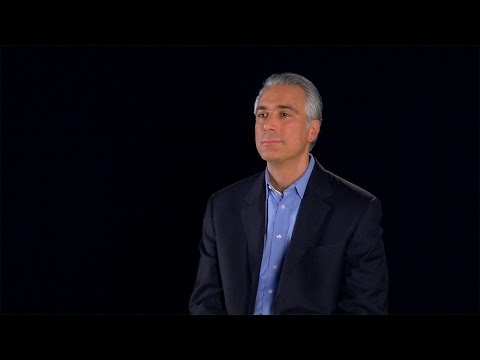
2008 Financial Crisis: Former Citi CEO Vikram Pandit on the Difficult Recovery Ahead
Ask about Knowledge at Wharton
Episode Description
KNOWLEDGE@WHARTON ARCHIVES: As negotiators in Washington struggled to devise a plan to rescue Wall Street and avert a global financial catastrophe, Citigroup CEO Vikram Pandit noted during an interview at Wharton last week that even with government intervention, global financial markets will need years to recover. More on this interview: https://knowledge.wharton.upenn.edu/article/in-the-eye-of-the-storm-citi-ceo-vikram-pandit-sees-a-difficult-recovery-ahead/
#wallstreet #banking #marketanalysis 📂 Leadership 🏷️ Great Recession
Read the full transcriptHide the full transcript
- [Music] this podcast is brought to you by knowledge at Wharton please visit knowledge Wharton upendi d you for more
- information so Vikram o want to thank you for coming and in particular for coming this week
- and a particular for coming today no less in that this has been the week that was and today I think most people if
- you've looked at the web you realize that Congress has indeed apparently come up with a deal they're walking over to
- the White House I think as we speak to talk that through so I'm going to begin with a couple questions if you don't
- mind about the world of the last couple weeks financial services and then we'll probably get a bit more personal but to
- use a kind of a metaphor here it's probably felt like a perfect storm the last couple weeks maybe the last several
- months you've been at the eye of the storm what do you think speaking broadly here
- what do you think went wrong and once we get that work through what do you think
- we're going to need to put in place to ensure this scale of systemic risk is not going to be looking at us in the
- eyes as it has over the last maybe better part of a year year and a half so what happened what do we need to do how
- much time do I have haha take the time you need this is the big question that's good well look first of all I appreciate
- all of you being here it's great to see so many bright young faces your alumni have done great things for
- us a city and and we hope many of you would consider what they've done as being something that you aspire to and
- we hope to see many of you at city in the future I also want to say that exactly what
- professors said here we've been through a very interesting time I just want to make sure you all know that you have
- been great at picking exactly the right time to be in school this is a perfect time to be doing what
- you're doing and I'm hoping by the time you all get out we'll be on the other side of this but there is there are many
- different ways that coming at this and I don't think there are any easy answers in terms of what happened why we got
- here and how we're going to think about the architecture of the financial system
- going forward you've got to put all this in context if you really think about where we are in the u.s. we have a lot
- of imbalances many of those are not new but some of them are and we think about imbalances there's a housing imbalance
- it's just too much housing compared to the demand and it's not clear exactly when and how the housing market clears
- where the prices stop there is a consumption saving imbalance everybody thought they were saving
- because their housing prices were going up well they're no longer are and the the US consumer has to start saving at
- some point when you look at the financial system around the world they got over levered
- over a period of time they have to figure out how to deliver themselves and the last point which i
- think is also important why all this has happening here there's a lot of growth elsewhere in the world and the world's
- trying to figure out how to grow without causing inflation each of these four are
- very important rebalancing cycles that we're going to have to get right as a country any one
- of these would be incredibly difficult to get through but to have all four happen at the same time it's quite
- important and quite interesting because it's quite a challenge and how do these things all rebounce you all are students
- of finance and economics usually what happens is the marketplace figures out exactly how to make all of these things
- rebalance so you get from here to there and the reality is that with these four things happening at the same time that's
- a lot of stress on the markets you're expecting the markets to clear a lot of information which is very hard for it to
- do and a result of that is kind of some of the things you saw last week markets breaking down not being able to from
- here to there in some place now how'd it's important because this is by the way for all of you here it is a good
- time to be in school because this is a challenge it's going to take some wild for us to get out of this and and and
- I'm hoping we don't go through a couple of weeks like we just went through its while we don't mind working weekends
- it's it's something to be working 18 days straight so I'm hoping we don't go through the
- same kind of events we saw but the fact is there are a lot of challenges ahead of us and we need to be very realistic
- about it how do we get here how did all of us get here how did the industry get here you know that's difficult I'll tell
- you a couple different perspectives on this the starting point was really post 9-11
- it's important point in time because that's the last time when we had some concerns about the economy what was
- going to happen and and the result of that was a lot of monetary stimulus into this market you all know what that means
- the Federal Reserve Bank started printing money and and the impact of all of that was interest rates coming down
- that was also a point in time when there were a lot of foreign surpluses because
- of exports and whether it was sovereign wealth funds whether it was foreign central banks there was a huge
- demand for fixed income paper and you could never get enough yield and as a result of that the engineers on
- Wall Street started figuring out what do we do how do we satisfy this demand for
- yield and what they did as a result of that was they looked at all the paper and assets that were around and figured
- out you could actually take this we can securitize it slice and dice them into pieces sell them provide good yields to
- the other side and work I was beautiful and by the way that's exactly how capital markets should work you all
- understand is finance majors and and and business school students arbitrage is the key part of what gets markets going
- that arbitrage was incredibly important a lot of demand for high fixed income yield and you securitize paper to
- provide that healed that part was good but Wall Street ran out of inventory of paper so what happens let's go create
- some new paper and that's when the housing industry started taking off because you needed to create new
- mortgages so that you had enough inventory to create securitizations to sell the yield to the other side that
- was the beginning of the housing price cycled housing prices going up so far so good now you see keep going
- and say okay now what happened and how far did it go we all know it went a very long time there couple of things that
- were really important though that got everybody sort of out of kilter usually when these
- bubbles happen it's almost always because of the fact that you missed the forest for the trees and the way this
- cycle people miss forest for the trees they relied on the rating agencies the paper coming up with triple-a
- triple-a paper and think about that if you are a risk manager you say this is a triple a piece of paper and say to
- stress it how bad can it be I'm not so sure too many people would say it could go to zero I
- can understand it can go down but there are not too many people in any risk management area that's going to say it's
- going to go down to zero so that was the first thing the second thing that everybody relied on is wild this
- securitisation and this paper was made to satisfy the fixed income demand out there this paper was distributed widely
- the risk was distributor so back a year ago in July when all this started people
- were pretty relaxed about it says you know what this risk I know there's risk but it's fully distributed
- each one of us owns three dollars fifty cents of this so what's the big deal okay we can take the losses move the
- other major surprise was that 15 to 20 large financial institutions owned basically all the risk
- now you know so the reason why we are here today is in many ways the fact that a large group of people missed the
- forest for the trees it's not that they weren't managing risk correctly they were but how do you how do you think
- about risking the trip lay bond it's very hard to figure out what that is it's not that they weren't thinking well
- you know I want to make sure these things are priced correctly they were but they assumed everything was fully
- distributed you'd make very different assumptions if you thought 15 people owned all the risk and the net result of
- all of that is that through everything that happened the real shock of the financial system was that the banking
- industry as a result did not have enough capital to cover the losses that we're coming through and the result of that is
- what you're seeing in the markets today and lack of lending by banks it is a mad fervour to say if i am to over
- levered as a bank how do i sell assets to delever and in that cycle of what happens is you get to the kind of
- strains and stresses that occurred over the last couple of weeks where people say well hell you know if these
- financial institutions have taken losses and they have to deliver i am not so sure I want to own their stock or their
- bonds I don't know whether it's profilin and it creates a little bit of panic so
- that's what happened now it was important for me to share that with you I can do this in sound bites by the way
- very well as well but you are all students of Finance and I wanted you to sort of understand sort of piece by
- piece what came together I don't know if you're ever going to stop this forest for trees problem and I'm not so sure
- that's an objective ever you know no risk means no business so the reality is that it's not about renewing the risk of
- having these kind of things happen it's about trying to find some balance and optimizing and finding a financial
- system architecture that can help you deal with these things so you don't get to the kind of stages we got to one
- thing we all have to keep in mind is that the architecture of the regulatory architecture of the US was set in the
- first 30 years of the last century and there were changes to it but not enough the regulatory architecture of the
- country was said in the first 30 years now the principles have change but the technology has changed a lot and so a
- big part of what we have to do is redo the regulatory architecture of the US financial market and when you think
- about that it's going to have to be as comprehensive as it was following the 20s of the last century and what
- happened in the thirties the 33 act 34 act 35 act and on and on and on that's where we're headed towards not now right
- now we've got to deal with what's going on today how we get out of it how we get
- to the other side as I said we still have a lot of challenges but there will be enough people thinking about this
- there will be enough dialogue on what is that financial services architecture that we want that's probably the best
- answer to how we're going to make sure that we have the ability to see the forest for the trees because the
- regulatory architecture and the regulators have the best ability to do that let me pick up a net and ask about
- the next 12 months Congress looks like it's going to act at the markets up today
- to paraphrase Winston Churchill is this the end of the beginning or the beginning of the end what do you see
- coming up next 12 to 18 months [Music] the interesting thing about what we talked about earlier all these
- imbalances that are out there we know the system has to deal with them and get to the other side
- the other side is by the way beautiful place it's gorgeous you know you've got growth
- inflation balanced you got housing stabilized everybody saves money there plenty of jobs you know it's a wonderful
- place and what economists can never tell you is what is the path you're going to
- take from here to there and we all know that what we're going through there probably
- not too many good pets but there are a lot of ok paths but there are some they're really bad and we saw one of
- those in the last couple of weeks and so you know the the real question keeps coming back how are we going to
- rebalance this and let's you know let's think about that for a second housing needs to find a bottom well how is it
- going to find a bottom if it turns out the banks are not lending to people who want to buy homes or mortgages it's an
- important point the US consumer needs to start saving well how's the US consumer
- are going to do that when the housing prices are going down and frankly we're going through an unemployment cycle and
- unfortunately I don't think we're done on that banks need to deleverage well how are they going to do that when they
- are levered about ten to twenty percent more than they should be where is that going
- to come from how is that going to happen you know if you give them two years they
- can earn enough to r into the leverage but in the meantime not one loan gets me so I mean you have a lot of issues that
- are out there that you have to work through now so when you think about all of those I think that you have to think
- about the markets in two different part one is what's going to happen to the real economy which is unemployment
- gdp growth etc and what's going to happen to the financial markets I would think that most people who look at
- what's going on would come to a realization that the economic news is likely to get worse
- it's a real possibility and our best guess is it's going to be something that's challenging probably through at
- least the middle of next year maybe all the way through the end of next year and
- we'll have to see exactly what that means the other side of that is what happens to the financial markets and
- and there is these are markets that are going to be continually volatile again because they understand we're putting a
- lot of strain on the markets to clear these imbalances and so you're going to have a lot of volatility over the next
- next few quarters but suffice it to say that it is not an issue that's gone unnoticed the best
- thing I saw was last Thursday night you had the the leader the leadership of the
- house leadership of the Senate you had the SEC you had the Treasury secretary you had Bernanke fed you had the
- Republicans you had the Democrats you had them all come together and saying this is an issue that's a national issue
- and we're not going to let the financial system get damaged along the way that's a
- positive and so the answer to where we're going to be in the next 12 to 18 months is
- one where we have to recognize that going to be economic challenges the markets may be volatile but the real
- answer to where we're going to be is going to depend on policy responses that you get out of Washington that's
- probably a single biggest driver that's going to tell you where we're going to be in 12 to 18 Vikram let me bring the
- the issues here closer to home city in many on many metrics is the biggest bank in the world
- 300,000 employees plus and in a sense you've been through your own earthquake if I can mix my metaphors here in that
- fanny a new ownership Freddie new ownership AIG in a sense new ownership Lehman gone barragan
- Merrill acquired just think about your landscape at City now for a few minutes as the world as your competitive
- landscape has romantically changed probably as big a set of changes as you've ever experienced
- what you're thinking what a city have to do what's the restructuring you may be thinking about you know
- the first point I make is that if on january first somebody told you these are the things that are going to happen
- how many people would have predicted that in here like zero okay it tells you what kind of volatile environment were
- in and so this is a time of uncertainty which is which which in itself is something new
- this is a once in a many generation event so watch it learn from it it's it's it's a lesson we're going to leave
- for a future generation make sure they understand exactly what can go wrong how you deal with it and all of that and I'm
- sure case studies and textbooks are we were written on it here keep plenty of our finest faculty busy for for a period
- of time now nobody could have predicted what we've gone through nobody but it was
- very clear to us at City when we looked at it with a new management team end of last year very end of last year as we
- saw what we saw around the world and we see a lot because we are in 109 countries we see a lot of data there's
- no other institution that has as much information as we do in terms of what's going on in the world economies outside
- of the capital markets maybe the US government we probably have the largest store of information we saw a lot of
- this and it was very clear to us that while early on we had our challenges and people said look at City look at those
- losses we're almost completely convinced by the time we're done nobody was going to be
- spared so how do you get ready and it's it's a question of how do you get ready for a perfect storm now again we didn't
- predict it but we had a high degree of probability in our mind that something was going to happen which was completely
- unconventional to just standard thinking the first thing we had to do coming in was to say okay survival is the game
- well what do you need to do and that's what you do when you go into perfect storm and so we raised as of now we
- raised about 60 billion dollars of capital that's a lot of money that's more money than most banks have
- as capital in the world that was step number one raised a lot of capital make sure you're extremely well
- capitalized because you cannot rely on financial markets to provide your funding at the time of need number one
- number two make sure that when you look at it by the way every bank you know what does a bank to bank banks take
- deposits and they put them to work they take deposits put them to work they can be mortgages etc etc make sure that
- you are well funded you have not only enough equity and cap but you have enough long-term debt long-term funding
- everything up and down and you put it to work in the right way so we had the financials down very very clearly and
- that was really important and by the way I mean that is of enormous value when you look at where we
- are today versus where we were about six seven eight months ago believe it or not
- through everything that happened in the last couple of weeks we were definitely a pillar of strength in the world
- markets we had money coming in like the quality versus a lot of the other institutions on the street the other
- thing we decided was it's not only capital is there something wrong with the business model what do we need to do
- how do we need to look at it and it became pretty clear to us the business model is relatively straightforward
- we're back we take deposits we put them to work so the question is where do you want to take deposits and where do you
- want to put them to work now we know that if you take deposits in Houston and put them to work in houston real estate
- that's not a great idea because we've seen what's happening you so you got your are too young to know this but but
- but there are cycles that you have them that said that is just not the right thing to do the best model is you take
- deposits in every form around the world from all kinds of people retail high-net-worth corporations and put them
- to work everywhere anywhere around the world that's the dominant model and so what we said is well that model is very
- clear that's a global universal bank and frankly we were almost all there anyway
- we had a few more hobbies in addition to that so we said let's clean out all the
- hobbies get rid of the hobbies focus on the core that's the core and once you think about it back that way you say
- have a great treasury function have a great risk management function make sure you have diversified deposits and
- diversified places where he put to work that's the core of the bank very very simple it was the dominant model and and
- in in May which was about five months after the new management team got in we took a
- group of people sell-side analysts newspaper reporters investors through that and said you know
- our core strategy is simple we are a bank but we happen to be unique because we're the only global universal bank we
- can raise money in 109 countries and put them to put it to work in hundred nine countries and that's an extremely
- valuable strategy well number of things were written on it my most favorite statement was in a
- magazine or say the main ninth event where City talked about its strategy was devoid of any Content that
- was my most favorite word in terms of what people talked about now this is important because what has come true
- over the last two weeks is that if you want to be a financial services company you cannot be a monoline as easily as
- you were before you cannot be in the risk-taking business and have funding in the wholesale market it's very difficult
- the last two just became a bank I'm getting no more questions about the model anymore from anybody which is
- which I think there's anything to be thankful for that's great but so we've been executing against that model in a
- very very steady weight that's our model we're a global universal Bank in 109 countries we take deposits from
- corporations high net worth and retail and we put them to work in cards in our sales and trading business and
- proprietary investments and we run that as well as we can and and we I don't know of any other company that has the
- kind of model we do our challenges as I said to all our people and all the investors were never the strategic
- aspects of the assets we owned we came into this market not following the basic principle of raised deposits everywhere
- and put them to work in a diversified way unfortunately we came in raising deposits everywhere and putting it to
- work mostly against us real estate the other lesson you learn from all of these things is anytime anything goes wrong
- and you lose money there's almost always because you have a concentrated position
- in something diversification is these is is really at the heart art of any risk management
- that you're talking about concentration we came and concentrated into this market concentrated in real estate
- concentrated for that matter in against the US consumer we had a large long US consumer position which is why we had to
- take and and we had to go through the financial losses now unfortunately we're not alone because the world is long the
- US consumer however you look at it the world is long the US consumer its crew of the other banks we figured out Lehman
- was long the US consumer okay I mean they're all long the US consumer that Chinese stock your bottles down fifty
- percent well that's the US consumer okay doesn't matter the world is along the US
- consumer there's some risks you just can't get rid of but i think you know it's sort of interesting perspective to
- say that when you run a bank you want to be not concentrated and it's probably the one lesson that everybody's going to
- take away from this as well which is the good old diversification mechanism of managing risk is a wonderful way of
- making sure you survive and you do well through through through everything that's happened so as far as city is
- concerned you know our strategy is set we have a structure against the strategy I've
- spent a lot of time making sure I have the right leadership group that's working with me for all of you who think
- about management leadership by the way leadership management is a team sport and you have to have the right team
- we've done that we have against that a growth strategy that says most of growth is outside of the US
- thirty-five percent of cities and the emerging markets which makes it the single largest financial services
- company in the emerging markets it's a great place to be by the way we've been there for more than a hundred years
- we've been there when it wasn't cool to be global or cool to be in the emerging markets we've been there in Calcutta
- since 1902 and Shanghai since 1902 Yokohama Mexico City Philippines doesn't matter we've been there for more than a
- hundred years and so we are going to drive this global tea the last part of the city strategy is
- relatively simple and it is not new as a matter of fact it's been the cornerstone
- of the company for 200 years that we've been around and every one of the leaders
- of the company has talked about that which is to say the core strategy of city has always been to bring in the
- most talented people and to develop them train them give them opportunities to grow so they can drive the company to
- the next level and that goes back at City for 200 years and when you look at the street and look at people everybody
- talks about these things by the way nowadays but you go back we were ahead of the curve at least 50 years in terms
- of thinking about what our core competitive advantage was the core competitive advantage was the people and
- how we selected them how we brought them in and what they did for the company so
- that's city through all that's going to happen here over the next few months etc
- you know I want to assure all of you that we are on campus in the same way we always have been on campus we need you
- okay we need what you can bring to us if we need your talents and we need it in 109 countries
- speaking of talent let me begin to make this a bit more personal we're going to open this up in about 10 minutes
- PhD out of Columbia you were investment banking at Morgan Stanley you run a hedge fund private equity and now you
- run an enormous enterprise only a two part question here what's the common thread as you have led whether private
- equity hedge fund investment banking and now an enormous universal bank what are
- some of the common capacities if you will that it really cut across all those areas that have helped you do what you
- do second side of that though is how is it different at City from leading a hedge fund private equity fund and
- investment banking back at Morgan Stanley I guess the common thread is I haven't
- been able to keep a job just keep moving just keep moving you know it's a there is it's always hard to look back
- and figure out exactly what happened and why it happened and what was the cause all of that it's almost fruitless to
- think about that the basic basic concept of doing well to me is you've got to go with something you
- like to do you have to do that it's it's all find your passion and go after it and if you don't know what it is find a
- place that'll help you find your passion so that's the first thing and and you know having spent all those years
- getting degrees granted from a lesser institution than this don't tell anybody about that
- lumpy is a great school yeah but you know it is absolutely clear I love finance I do love economics and was very
- clear to do that the other thing that's very clear is is that when you think about what group you want to join what
- company you want to join where you want to go it almost always comes down to two
- things one do you like the people and two is this an environment where you can learn and invest in yourself so the
- second common thread is keep learning this is by the way not the end of your learning it's just the beginning I
- guarantee you that once you leave here that's when you're learning truly starts i'm not saying you're not learning great
- things i'm just saying that this is when you get prepared to to or get the skills
- to know how to learn so that's the second threat which is that you know if you really want to enjoy what you're
- doing you had to keep investing in yourself and learning and find a company where you like the people and where the
- company allows you to invest in yourself and then that's it don't worry about your career what you're doing if you do
- that correctly it's going to lead you to the right spot over time and that's the
- chaos here by the way of careers but it work but there's something there that works I keep telling our people the
- younger ones saying that you know you're here because we want you to learn we want you to invest in yourself
- half our profits today come from areas we were not in five years ago how do you teach somebody that how do you train
- somebody for saying you're an expert in this business in financial markets more than anywhere else if you really are
- good at this and figure out how to make money it gets arbitrage de way they're very fast-moving markets so how do you
- teach yourself how do you train somebody you know how do you learn how do you invest in yourself for knowing that
- whatever I'm doing today may not exist in five years and and how do you teach yourself to saying
- that I'm going to make sure I go from here to the next and the next or find the next etc
- that's one of the beauties of the financial services industry some of the beauties of Wall Street that you have
- that many institutions with that culture that allow you to think about things that way and
- and I you know despite all the changes that are occurring that will still remain the common theme which is as I
- tell my people you're here you're doing things that's great but fundamental time
- you're doing when you're younger is you're investing yourself you're learning and we're paying you we're
- paying you to educate yourself what a wonderful like excellent good I've got one final what
- amounts to a very personal question I actually have done in one of your predecessors offices and I don't know if
- you're in the same office that Sandy Weill had but it was a wonderful time I can't afford his office ok there is it
- different it was a quite an office one but you're probably overlooking park ave they're just a couple words for us all
- what does it feel like to get off the elevator 2nd floor is that where you are third floor third floor third floor
- elevator there you are these days probably early in the morning what to like to walk into the office what gives
- you a high during the day and what's the tougher part of a typical day and maybe
- we got to go back before the last couple weeks so take it before the crisis and maybe just add a word if you wouldn't
- mind about what life has been like in the office very personally over the last two weeks like
- well in a lot of questions in there let me see you know again the life to me is is
- relatively straightforward if you don't enjoy waking up in the morning and say I
- really want to go to work you shouldn't be doing what you're doing and a lot of us over time will earn the
- right to say stop enough I don't enjoy that well that's not where I am so the bottom line is when you get into that
- door you have to go in saying i'm looking forward to everything that i'm going to do today and and that's what I
- think about when I go in and that makes a lot of sense because I feel privileged
- to be part of an organization that's 200 years old part of an organization that have saved many countries around the
- world by providing and funding and advice to the right time I'll come back to a story about that
- just three weeks ago privileged in the sense we have 350,000 very talented people around the world
- who are serving our clients and privilege to say that I can be part of any policy
- mechanism or any agenda that has to do with making sure the financial markets work well all of those things are great
- and you've got a with those kind of attributes you have to walk in feeling very privileged in what you're doing but
- you also walk in with a great sense of responsibility and burden when you do that because you have to add to the
- legacy of people who brought you here and created this company and brought it to what it is today so
- I cannot tell you there is any typical day there isn't for me the one thing that is X laclere is no way I could do
- what I'm doing without the team that is around me and it's the broader scale 350,000 people but it's a smaller group
- than that that works with me constantly day in day out and a lot of the fun and excitement is about interacting with
- them interacting with the people that we have in the last couple of weeks haven't
- been different and hasn't been they haven't been different because again you know you walk in not knowing
- what's going on and it was pretty clear in the last couple of weeks but also almost the entire 18 days was spent with
- a group of people constantly talking to each other constantly dealing with the central banks around the world
- regulators around the world finance ministries around the world government officials around the world try to get a
- handle of what is happening where around the world trying to know exactly what is
- the information flow telling you trying to know exactly what advice can you give
- to the central bankers to say this is what you need to do for this to happen and what value and thought leadership
- can you provide as one thing so everything is going on to Wall Street to Washington say let's
- look at these things this way because this is better for the financial system no part of what we went through has been
- exciting necessarily it has been challenging but I've got to say that there is occasionally a thrill of
- acceleration when you come up with an idea that says this is what we should do and it was great to do to have had the
- ability to be part of that discussion let me end with one thing it's really interesting we have a great operation in
- Kenya we've been there for number of years about this is about four or five weeks
- back something happened where it turned out that for whatever reason the banking
- system was overloaded and the central bank could have handled the overlord so we stepped in literally acted
- essentially like the central bank for eight whole days it's a fascinating story because it
- tells you the power of city around the world many of the countries were in where the backend of many central banks
- were the backend of many financial systems we see flows like nobody else last week every day we traded six
- trillion dollars of flows through City just imagine trading six trillion dollars of flows without errors
- making sure everything goes to the right place and there are many times it could
- have stopped and we were there to make sure that every bank new and in every central bank around the world knew where
- the pressure points are and what needed to get done it was an exciting couple of weeks what
- can I say for more information please visit knowledge wharton upenn dot edu [Music]
Brief Summary
Vikram Pandit discusses financial turmoil, systemic risks, and Citigroup's strategies for recovery and future stability.
Key points
- The Eye of the Storm. Vikram discusses the recent financial turmoil and its implications for the future.
- A Call for Regulatory Change. The need for a comprehensive overhaul of the regulatory architecture is emphasized.
- Navigating Financial Imbalances. The conversation shifts to the systemic risks and necessary actions to stabilize the economy.
- The Importance of Diversification. Diversification is crucial for effective risk management in banking.
- Passion in Your Career. Finding and pursuing your passion is essential for a fulfilling career.
- Citi's Global Influence. Citi's operations showcase its significant role in global finance.
Episode highlights
- The Eye of the StormVikram discusses the recent financial turmoil and its implications for the future.“It’s probably felt like a perfect storm.”0:48Oct 1, 2008
- A Call for Regulatory ChangeThe need for a comprehensive overhaul of the regulatory architecture is emphasized.“We have to redo the regulatory architecture of the US financial market.”11:03Oct 1, 2008
- Navigating Financial ImbalancesThe conversation shifts to the systemic risks and necessary actions to stabilize the economy.“How do we rebalance this?”13:09Oct 1, 2008
- The Importance of DiversificationDiversification is crucial for effective risk management in banking.“Diversification is really at the heart of any risk management.”24:14Oct 1, 2008
- Passion in Your CareerFinding and pursuing your passion is essential for a fulfilling career.“Find your passion and go after it.”29:03Oct 1, 2008
- Citi's Global InfluenceCiti's operations showcase its significant role in global finance.“It's fascinating to see the power of Citi around the world.”37:31Oct 1, 2008
Tension
60/ 100Some tension