2025 Workplace Trends to Watch: How Work Is Changing
Ask about Knowledge at Wharton
Episode Description
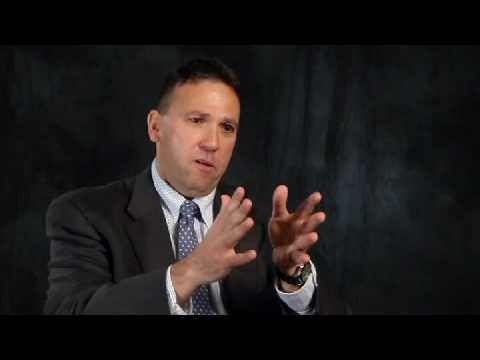
The Wharton School management professor Peter Cappelli, Director of Wharton's Center for Human Resources, joins Wharton Business Daily to forecast 2025 workplace trends based on what took place in 2024. Topics covered include the labor market, remote work and hybrid work, return-to-office policies, employee turnover, work-life balance and company culture, the use of AI in the workplace, and expectations for the Trump administration.
Wharton Business Daily airs Monday-Friday from 10 AM - 12 PM ET on SiriusXM Channel 132, featuring emerging trends, top business leaders & Wharton’s renowned professors. Learn more: http://whr.tn/businessdaily
----- The Wharton School of the University of Pennsylvania is committed to sharing its intellectual capital through Knowledge at Wharton, the school’s online business analysis journal.
Launched in 1999, Knowledge at Wharton offers free access to:
- Articles, podcasts, and videos highlighting Wharton faculty research and analysis of current business trends - Interviews with book authors from Wharton School Press - In-depth series of curated content like Wharton Executive Education’s Nano Tools for Leaders - A searchable database of more than 10,000 articles covering all aspects of business - A weekly newsletter that delivers Knowledge at Wharton insights directly to your inbox
Visit the Knowledge at Wharton homepage: https://whr.tn/3qUpSBE Subscribe to the Knowledge at Wharton YouTube channel: https://whr.tn/3DEAgAU
Read the full transcriptHide the full transcript
- Dan Loney: Well, the world of work certainly has seen some unique changes in the last few years. Remote work obviously being one
- of the bigger ones. But you also have technology like AI becoming a more important component in our jobs as well. So where do we
- stand right now as we're coming towards the end of 2024, and what would we consider as we head into 2025? Pleasure to be joined
- here in studio by Peter Cappelli, Management Professor here at the Wharton School, and also Director of the Center for Human
- Resources. Great to see you again. How are you? Peter Cappelli: Thank you. I'm hanging in there.
- How are you viewing, then, work and the workplace right now? You know, I— I don't know who first said this. So let's just,
- if we can't think of it, it'll just credit it to me— that the future looks like the past, only more so. And what that means is,
- don't expect, you know, enormous changes overnight in anything. And that if you want to bet where things are going to be in
- a few years, you look at the trends which are already underway. And they're likely to continue. So if you go out a few
- years, it could look like a big change. If you're in the middle of it, it doesn't feel like quite so much, you know? I think,
- you know, the biggest change for people has actually been the tight job market. So, post- pandemic. And more than
- technology or— maybe remote work is up there. But you know, having gone through generations, from 1973 through to 2017, the
- unemployment rate in the US fell below 4% only once in more than 40 years. And so we grew up in that period. It was a lousy job
- market. - Yeah. - For 40 years. And since 2018 it's been 4%— below 4% effectively every year. - Yeah.
- And that is a real sea change, right? That there— you have more choices. People can quit and go
- someplace else. And that has, you know, sort of shaken up a lot of things. So I'd say that on the ground for people has been
- the biggest change. Remote work, if you've got it, is an enormous change. But it's always stunning to tell people that only 26% of
- US employers have any kind of remote or hybrid work. - Yeah. Because it feels like it's a lot more. - It feels like it's a lot,
- and the reason it does is because that's what the press talks about. - Right. And something we discovered, one of
- my former students and I, Shoshana Schwartz, we just totaled up the size of the industry that supports human
- resources now in the US. - Right. And that industry is $1.9 trillion. So it's the same size as the official GNP of Italy. So
- it's enormous, and they spend 10% of their budget on marketing. And what they're telling you is almost never,
- "Don't worry about it. Nothing to see here," right? - Right. They're constantly telling you things are wrong and different and
- everything is going to change, etc. And the reality is probably not nearly so much.
- But it even feels like remote work is— is even changing, to a degree. - It is. - As we're seeing, incrementally, companies calling
- back workers into the office, whether that be five days a week, three, four days a week, whatever that combination is.
- And it always felt to me, even as we went through the pandemic— and this is just my— you know, my experience is— just feels like
- we were going to get to a higher level of back in office at some point. It was just when, you know, companies were going to
- make that move. - Yeah, it's a great point, because it also explains the problem that
- companies had. I think it worked way better than anybody expected. But that did not mean it was great, right? And a lot
- of the problems are ones that accumulate over time. The most obvious of those is, once you start hiring new people in they
- don't know, in a remote organization what the place is like. They don't know what's going on. They don't know the
- culture. You know, you do that for a year, it's not such a big deal. You do it for four years of people, which is what we've
- done now— four years of new hires who never knew the old organization, the office and the culture of the place. You get a
- different kind of organization after a few years. So the problem and the problems associated with remote work
- accumulate and started to get worse. And now you are seeing companies also start thinking, "You know, yeah, it did work
- better than we thought, but it's not perfect, and let's see whether we can start getting people back." The downside is
- exactly what you pointed out, is they said nothing for four years or the last three. And so people understandably thought, "Okay,
- this is the way it's going to be." - Right. - And now they're really angry if you bring them back. - Well, and
- I was gonna say, the expectation now, it feels like, by younger generations is that there is a component of remote work that
- they should expect as part of their job moving forward. Yeah. And you know, some of that came out of their experience in
- school. - Yeah. - High school. - Yeah. - That's actually a problem that we have seen here with students, and my colleagues elsewhere see
- the same thing. And with— the experience in high school was not just teaching remote so you didn't have to come to class,
- but also a sense that, frankly, we lifted this— we lowered the standards, right? Because we didn't want to fail
- anybody in that time of crisis for the country. And so their perceptions of what is required, you know, just got awfully
- sloppy. - Right. - And so that's something we're dealing with now, and it's not always fun.
- How do you think companies have adapted to that dynamic of the workforce and having so many people available, and the
- ability to— for somebody to just pick up and leave, which really wasn't the case if you go back, you know, 30, 40, years? It's a
- dynamic that obviously— or I should say it's an adjustment that companies really have to make.
- Yeah. No, it is a great point. And I think the problem is they have not adapted to it. They've just been bearing the costs and not
- paying much attention to it. And the reason for that is something we've talked about with you before, and this is this strange
- issue of accounting, financial accounting. So there's no ability, if you're an investor, say, to look at a company and
- see is turnover costing them money or not? Because there's no evidence on it. Companies don't— won't tell you their turnover
- numbers. And if you're a CEO of a company, you're not managing to your turnover numbers, because nobody sees them. But you are
- managing to your compensation numbers. So if you're underpaying people for a while and it's causing you to lose
- people, yeah, you're not doing as much about it as you should if you were trying to worry about the overall effectiveness
- of the company. If you're just playing to the numbers, you know, you're willing to tolerate higher levels of turnover that
- don't make business sense, but they might make accounting sense, right? So I'd say, unfortunately, they're not doing
- as much about that as they should. You know, we're seeing, for example, employee life- related issues, health issues,
- perceived well being, all that stuff, mental health problems, really getting worse and worse and worse. I confess, I'm not
- sure exactly why, but the numbers are going up over time. So it's not just, you know, some weird one shot thing. And you
- know, companies aren't doing much of anything about it. They— they're giving you more chair yoga programs, but they're not
- dealing with the things that are causing the stress in the first place, like constant restructuring and downsizing.
- So is the focus on culture in the office, you know, having that kind of framework, is it a little bit overrated
- then, in terms of what it's going on— what is going on, and how it's going on? You know, I think the story on almost everything these days is,
- what do people at the very top of the company think? Because it's so top down. You know, the need for everybody underneath to
- make sure that the very top folks are on board with everything you're doing right now. And I think they all
- believe and understand that culture kind of matters. They don't have much of an idea of what their culture actually is,
- and it's often not nearly as great as they think it is. And I think they are aware that remote work in particular is just
- eroding your culture. You know, people don't see each other. You learn culture by observation, by seeing what's rewarded and
- particularly what's punished. You don't even have gossip anymore to figure out, you know, who got fired for what? Company
- doesn't want to talk about it. But everybody knows, right? You learn that stuff. That's all gone. I think they understand
- this at a kind of gut level. They also don't think they have to do much about it, unfortunately, to make it
- better, and they're really, really reluctant to spend money on anything. So if you could suggest that there are things
- you could do that don't cost anything, they're probably inclined to do that. But a lot of these innovations, like,
- let's take our culture more seriously, would also require their time. - Right. - You know, we need our managers to be seen, to
- be visible. They need to see you walking around. Well, that means I got to take time away from deal making, and, you know,
- conversations with investors. Do I want to do that? No. I saw you talk earlier this year about the component of entry
- level jobs, and the fact that there are instances where even the entry level job requires a couple of years of experience.
- Why has that happened, and what kind of an impact is it having? Yeah, well, that, particularly after the Great Recession, we
- started to see employers just ramp up the requirements. And the reason was, they could. You know, they had lots of people
- just saying, "How high would you like me to jump?" So they just started adding requirements and adding requirements. And you
- know, on our campuses, you discovered that students couldn't get internships unless they had already had an
- internship, because nobody wanted to be the first person to give them— break them in as to what it means to actually show
- up on time and that stuff, right? So I think, you know, we still have a problem on the hiring side, in that employers are
- unrealistic about what they're looking for, given what they're willing to pay. And some of that is just sloppiness. You know, we
- hire by committee. "Just tell me what would you like to see in this job," and then "What would you like to see?" And we just add
- them up, and you end up with this Christmas tree that nobody is qualified for, right? So that still goes on. I think what's
- different now is they pay a price for it. You know. So time to fill positions is going up, and companies just leave
- positions vacant. And CFOs often think that saves money. You know, it hurts performance, it hurts economic costs. But
- finance, again, in terms of accounting, it might look like you're saving money. So, you know, it's this dilemma between
- are you trying to run an effective organization, or are you trying to run one that looks good on paper?
- How do you view the use of AI in the workplace, how it will be used and relied upon? And— and also, there was the narrative for a
- while about AI replacing jobs. But it feels like it's now more of, AI is going to be a complement to human jobs.
- Yeah. You know, it's again, this story about vendors. If you ask the people who are creating something what it can do, you
- get this incredible story. And it might be true that it literally could do those things, but it turns out that not
- everybody wants them, and to do them sometimes costs an unbelievable amount of money, right? So, for example,
- generative AI could write all your form letters for you now. Yeah, it could do that. But nobody writes those now. They're
- all form letters. They've gone through legal. No manager's sitting down and handwriting notes to customers, right? So a lot of
- stuff they could do doesn't need to be done. I think when we're looking at actually trying to automate work, as they say,
- which means take over these tasks from workers, it's really hard to make that go. It takes a ton of IT time and money and
- generative AI, which can do great things, is no longer cheap. It's quite expensive to get the most, you know, the
- fanciest stuff. And the problem is, the things they're trying to automate are low value. And we think, "Oh, okay, we'll do those
- first, because they're low value." But the problem is, if you— if you need expensive AI to automate something that's cheap,
- there's no way it's going to pay off, right? It's one thing to get fancy, generative AI to do gene sequencing for you,
- something of real value. - Yeah. - It's another to get really expensive AI to read forms, you know? And so I think we
- discovered the same thing we discovered a while ago with robotics, and that is, it's not taken over anybody's jobs,
- really. It might take over a task or two from people. - Right. Not the whole job. That's a good thing.
- I mean, none of this is bad. It's just that the hype was so out of proportion to the
- reality. And the reason is, the hype comes from the people who are building the tools, not the people who are trying to use
- them. And well, what I'm discovering is, you know, you look at these surveys of people who say they're using these
- tools, and you get these really high numbers. The reason is, they're often under pressure to use them. So I've heard from
- some HR people who say their CEO is given a mandate. Say, "Gotta automate 30% of this." So what do they do? They claim that
- anything they're using is AI. So applicant tracking software, which is simply word recognition stuff, been around for 25 years
- or so. We're using AI, right? And if you go to your computer and you ask ChatGPT to look up something for—"We're using AI."
- Right? But are you actually replacing people with it? The evidence on that is, it's really, really rare, right? So I don't
- think it's going to change very much. To automate a particular job takes a ton of work. Somebody's got to be willing to
- front all that money, and you're in competition with all these other investment deals for it. So I think the problem here is,
- again, expectations. We believed this stuff is free, you know. ChatGPT is free, so just use that. But that won't help you
- automate these tasks. And the costs of— this company's been giving away this software. They're not in business to give
- this stuff away. - Right, exactly. And it's getting more and more expensive as more people use it, right?
- Is there something that you are watchful for as we flip the calendar to 2025, in and around work? Workplace, workforce?
- Well, I think there are political issues. You know, there's— it's now a full employment project to try to
- understand why President Trump won. And it all centers around working class people, and complaints about not getting
- what they felt they should get from the workplace and from jobs and things. And— but we are installing in Washington a
- pretty employer-friendly workplace which is clawing back— pretty clearly going to claw back the Biden administration's
- efforts to help unions, and some of those on things like mandatory overtime, to make it more applicable, more broadly, to
- more jobs, and all those kinds of things. So I think the interesting political situation is going to be to see, was the
- original story right? That, you know, working class people switched allegiance because they didn't think the Democrats were
- delivering for them, but then we're moving toward a model which at least traditionally, was going to be worse for them.
- And what's the response to that going to be? Or is it turning out that that's actually not why they voted the way they did,
- right? So I think that's the big question, at least in the pundit class we're working for. I think in the— on the ground, I think
- we're hearing an awful lot of talk about remote work among managers now, because they are rethinking this. Part of it,
- recently, because Amazon, quite publicly, called everybody back in the office, and not just called them back, but is making
- them come back, which is a different thing than just saying "You got to come back." - Yeah. - And they told him, you know, they're
- going to start firing people really, if you don't— effectively, if you don't come back. So that has suddenly got
- the attention of lots of other companies that were feeling like they should do it. Is the time right? Is the labor market soft
- enough, we're not worried about what the HR people told us, that everybody's going to quit? - Right. - So I'd say, in practice,
- on the ground, that's the big issue. Peter, great to see you again. Thanks very much.
- Thank you. Peter Cappelli, Management Professor here at the Wharton School.
Brief Summary
Peter Cappelli discusses remote work, AI's role in jobs, and the evolving job market dynamics as we approach 2025.
Key points
- The Future of Work. Peter Cappelli discusses how the future of work mirrors the past, emphasizing gradual change.
- Remote Work Reality. Despite the perception, only 26% of US employers offer remote work options.
- Employee Well-Being. Cappelli highlights the lack of corporate action on employee health and well-being issues.
- AI's Role in the Workplace. AI is reshaping tasks but not replacing jobs, according to Peter Cappelli.
- Unrealistic Expectations of AI. The hype around AI often exceeds its practical applications in the workplace.
Episode highlights
- The Future of WorkPeter Cappelli discusses how the future of work mirrors the past, emphasizing gradual change.“The future looks like the past, only more so.”0:37Dec 31, 2024
- Remote Work RealityDespite the perception, only 26% of US employers offer remote work options.“Remote work is an enormous change, but only 26% of US employers offer it.”2:07Dec 31, 2024
- Employee Well-BeingCappelli highlights the lack of corporate action on employee health and well-being issues.“Companies are not doing much about employee health and well-being.”7:18Dec 31, 2024
- AI's Role in the WorkplaceAI is reshaping tasks but not replacing jobs, according to Peter Cappelli.“AI is not taking over jobs, just tasks.”12:53Dec 31, 2024
- Unrealistic Expectations of AIThe hype around AI often exceeds its practical applications in the workplace.“Expectations about AI are often unrealistic.”14:13Dec 31, 2024