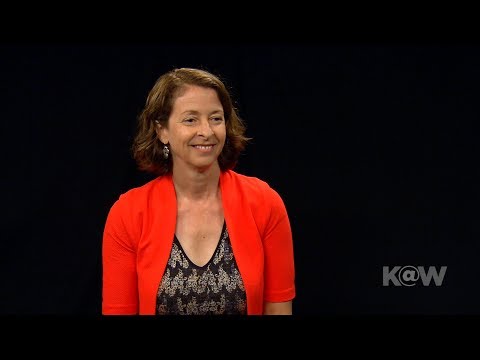
A School, and a Future, For Blind Children
Ask about Knowledge at Wharton
Episode Description
Read the full story: http://knlg.net/1lD0QQD
Sabriye Tenberken and Paul Kronenberg founded a school for blind children in Tibet as well as an institute in India to promote social entrepreneurship. And that's just the beginning. 📂 ESG
Read the full transcriptHide the full transcript
- i'm robbie shell with knowledge at wharton and i'm here today with sabria tenburkin and paul cronenberg
- co-founders of a school for blind children in tibet sabria who was born in germany and has
- been blind since 12 attended the university of bonn and studied among other things
- the cultures of central asia from there she traveled on her own to china and then to tibet
- where she translated the tibetan language into braille and with paul whom she met in nepal they
- co-founded the school called appropriately enough braille without borders the two were also part of an expedition
- that led blind children up a 23 000 foot mountain next to mount everest the expedition was chronicled in an
- award-winning documentary called blindsight in 2009 the two of them started an educational and training institute
- in kerala india called kantari international its goal is to train disadvantaged people and help them become social
- entrepreneurs so it's very hard to summarize everything you've done but can you start
- by telling me sabria a little bit about kanthari and the motivation for setting it up
- okay kantari is a leadership training center for social visionaries from all around the world and these are very
- very special social visionaries these are people who have overcome adversity in their life who
- have been affected by social ill and who want to create an ethical social change
- in their regions and countries for example through schools campaigns movements and so on and so forth
- all right paul how can you give me some examples of exactly how successful these
- students have been well we have in the last five years we trained 98 visionaries from 35 countries around the
- world and people went back to their country to start their social projects we have women fighting the killing of
- albinos albinos are unfortunately being killed and chopped up in pieces in their
- body parts hold us good luck charms this is in east africa and kenya we have a lady from kenya who's fighting female
- circumcision we have ex-child soldiers from liberia or sierra leone who now support street children who
- mostly ex-child soldiers and they teach them skills other than killing people so there's a lot of
- different areas where we're working in we work with blindness we work people that are handicapped we have
- people that are affected by wars people are affected by discrimination and they go back so they come to us for
- a seven months course they go back and create a social impact within their own community
- so you're definitely involved in the whole area of social entrepreneurship which is a pretty hot term these days
- um and i'm wondering what have you found works in this area and what doesn't work
- sabria maybe you could answer that yeah first of all i ha i have a problem with the term
- social entrepreneurship because it's um people say only business helps to make the world a
- better place and i don't really agree we feel that there are many many other methods and tools
- that need to be focused on to make a sustainable difference so for example people need
- to create mindset changes through for example training centers or schools and a school cannot always be
- run as a business or should not be run as a business a campaign is not always a business so i
- think it's very very important to also concentrate focus on other skills for example social
- advocacy initiatives inventions art art for social change also very very important paul what does
- it take do you think for an individual to be a successful social entrepreneur i think the the one of the most
- important parts of being successful is the drive and an inner drive and what we've looked
- at if you look at the history of the world and how so sustainable social change has
- happened it always came from within and from within society never came from outside so what we looked at is we
- looked at people that have a drive where do people get a drive from and that is if they if somebody's been
- affected by social ill in such a bad way that they at some point come up and say
- like i now stop now i've got to do something and we call that the gandhi moment on the pinching pinching point so ghani
- was kicked out of the train in south africa he had a first class ticket because his skin collect was kicked out
- and at that moment he became the gun we know today and this is what we look for in any individual that we
- train in our in our kantari training course maybe one thing about kantari kantari is
- a very very small chile in kerala it grows in the backyards of society in the backyards of of the of um of
- kerala's yards and it's very small but highly spicy and it is medicinal so it purifies the
- blood it makes you very very alert it lowers the blood pressure so it's very very healthy
- for the people and we see kantari as a symbol for a new type of old and new type of
- leader somebody who has fire in the belly who has spice in their action who is able or has the guts to challenge the
- status quo and someone who comes up with innovative and new solutions for old and new
- problems and and therefore we call these leaders countries gotcha so some people might say that the
- business uh field has co-opted social entrepreneurship or tried to co-opt it in in a way that
- has good connotations and bad connotations but you do see a role for the business community
- in this area is that correct paul yes um business definitely plays a role and what we've done is uh cantare
- our logo has five colors and we looked at five colors because there is one particular color it's our
- orange that's the business person that has a business a mind of a business mindset
- because they use business to create social change um but we have other callers as well and as
- somebody mentioned the green one is for initiators that are people that start up projects
- like schools and training centers and these always cost money but what we look at is we see that if
- people want to invest money and unfortunately in the world today the return of investment
- is measured in one dimension only and that is money and what we see is a return of
- investment in a better world so if people want to invest in a green cantari that is someone who sets up a
- project where people are trained who are affected by or from the margins of society
- but that results in a better world in the long term it's a good investment and you have a yellow kantari which is
- technology and we feel that everybody who needs technology that to be part in society to take part
- in society like for sabria akane or a braille typewriter or speech synthesizer that should come at low or
- no cost so that's the sharing of of technology the orange one is the business then we've got the red ones these are
- the advocates the gandhis the sabrias people that fight for rights or fight against
- injustice and then we've got the purple ones and these are the the artists the stars
- in in india there's one famous person is shahrukh khan and shahrukh khan goes dish dish and
- everybody buys a dish to watch tv can you imagine if he would say solar solar and that would be solar energy right
- interesting so sabria you've made headlines for many things you rode into into tibet on a horse long after you
- became blind you've co-set up with paul the school for tibetan blind children and
- and you have taken a leading role uh in the in the documentary all along your philosophy has been to
- never consider blind people as victims to never consider that they're anything less
- than sighted people how difficult has that been to sustain and and has the prejudice against blind
- people lightened up at all i have the feeling that in tibet there is a change because our
- kids they're going out with their little kitty canes and they demonstrate that they have a role
- to play in the society of um off tibet um so so they really make a difference people
- normally uh came to to lasa from the outside and and when they saw a blind person
- they would would shout like chargo or shara and that means nothing less than blind fool and
- nowadays actually these kids they just turn around and they say well can you read and write in the dark can
- you speak three languages fluently and of course they cannot and these kids they
- are actually confident enough to show to the world well blindness is not necessarily
- a disability it can be a quality of life i give you one example um kimi for example
- he's he's a little boy he was a little boy and he was sitting in the courtyard and he was smiling from ear to ear and
- we were coming to the courtyard and say hey give me what's up and he said i'm so happy i said why are you happy
- he says i'm happy because i am blind now when you say this to a sighted person he said no this is not possible
- you know but this little boy he knows he's the only one in his family who can read and write
- he's the only one in his village who can speak three languages fluently tibetan chinese and
- and english and he's the only one in his whole region who can serve in the internet and who
- knows that the world is round and this despite the fact or actually because of the fact that he is blind
- and this creates a change in the blind in the confident of the blind in the confidence of the blind but
- also in society who understands we should concentrate on the possibilities not necessarily on
- the disabilities so this could be true for any disability if you're deaf absolutely
- if you are if you have a problem walking and there are so many disabilities that
- we don't even see people who are scared to talk to outsiders people who are scared to
- go into the city my god this is really a disability well interesting so sabria why did you
- why did you study central asia when you were a student what was it that first got your interest going there well
- mainly it was um it was the urge to have adventure to have an adventurous life and also to escape from germany where
- everybody knew what i could do and what i could not do and i wanted to test my own limits i
- wanted to overcome these limits and maybe get even a step higher and for me tibet was probably the most
- adventurous place to be and yeah and i love horses i love mountains i love kayaking white
- water kayaking um and and that was a very egoistic reason why i studied hepatology at first
- later um responsibility for this project are the the enthusiasm for creating something for blind kids came
- along with it so you have the drive that you look for and all the people who come to kontari
- yes that's right yeah um the documentary blind site was so amazing and i hope everyone
- has a chance to watch it like i did what i thought was so impressive was how you were able to chronicle the lives of
- these six tibetan kids along with the the challenges that you all faced climbing up 23 000 feet i still
- am not sure where the name blind site came by came from and paul i wonder if you could explain that
- i think sabri is the better one to explain that so blindsiders actually it's it's something that some
- people have it's a shortcut in the brain where the visual cortex thinks that one still sees despite the
- fact that this person doesn't actually see a bit and actually i'm i probably most likely have blindside
- because what happens now when we are sitting here in this room and i look at you and
- i look at you i actually see you sitting there but in fact i don't see anything i mean
- people can test it i don't see a thing i don't see light and dark but i see you sitting there i see long blonde
- hair i see that you wear glasses well if this is true or not i don't care you know
- i don't really it doesn't matter and it doesn't matter and but but my visual cortex thinks
- that everything that comes into my mind from the outside whether it's acoustically or
- through smell or through through touch that this is actually a picture that i got through my
- eyes and this is called blind side i can add maybe one anecdote to that blind people are not disappointed by
- reality as long as they don't know reality so sabrina when we first met in tibet sabria thought i had dark hair
- black hair from my voice and blue eyes and blue eyes and she likes dark hair and blue
- so she she went home she took a lot of pictures and i happened to be on some of the pictures and she went home to her
- parents and friends and they asked who's the blonde guy in your pictures and she
- said one guy i don't know it must have right in front of my camera so then uh half a year
- later we met and then saria said well paul you were there and maybe you know who this blonde guy is in
- my pictures and i said well that's me and then she was very nice wow um so throughout all these
- initiatives that you've undertaken and the successes and the stresses what's been your most difficult
- challenge paul maybe you can tell me first and then i'll ask sabrina okay i think one of the most difficult
- challenges that people that don't believe in big dreams and believe in our dreams
- and i think this is the this is a big obstacle for progress at large in our world is that
- people don't believe in dreams of others and that people say and that dreaming has a negative connotation and i have to
- tell you just a small anecdote on that as well because with our students when they first came
- to us they came from dark rooms they were locked out of society and when they first came to us we thought how can we
- give them hope for the future because every person has to have that and we gave it a long thought and we
- came up with something beautiful and we we started a dream factory and we asked our students what
- is it that you want to do and this doesn't count only for blind kids it's for everyone in the
- world what do you want to do not your parents your brothers your sisters you it's your life you got to work for
- 40 years can you imagine you do something that you don't love doing yeah we come you
- become one of the thank god it's friday people you don't want to be there so we gave this to our students and one
- week after we asked them you know to share their dreams and there's nobu is eight years old
- there's a big smile on his face and he says i want to become a taxi driver the only problem is you can't see right
- so but if you look at all the taxi drivers anywhere in the world you think they were blind anyway
- so we never say that something is not possible that's why it's braille without borders that's the borders the mental
- bonus so two years later we said fantastic two years later we asked we asked nobu
- what about your dream and then he said with a smile his face he said well now i know that i can't
- become a taxi driver because that's rather dangerous but i could set up a taxi company and run it
- 10 years old and that's what it's about and i think that's what our biggest problem was that people
- didn't believe in our dream and of course then you have to be stubborn and you have to find a team to work
- together and to make it happen now in kerala in in kantari we have a global dream factory a springboard for
- dreamers or for social visionaries who create their visions and we are all believers in these visions therefore we
- select them carefully of course also you know but they have huge dreams you know but
- um the the great thing is we encourage them to dream and we make we give them tools to realize their
- dreams um we have international experts who are there to teach or to catalyze them to push them
- forward to make their dreams come true and um and the thing is with with the country
- you know everyone experience when they have big dreams people say oh it's not possible
- stay on the ground don't grab for the stars you know and here they can just say just bite
- into a country and you know that a small chile can make a huge difference right and this is what they learn in our
- kerala center but in terms of specific challenges is it funding is funding difficult is it um
- getting people to buy into the project what what is it well funding of course is is a is a
- major challenge what we do and what i mentioned before as well it's um the return of investment for a lot of
- people is money and what sabri and i strongly believe in that return of investment is a better
- world because if you look at the state of the world we're not we're in a bad shape and
- we have there's plenty of money there's plenty of resources but it's not been divided in such way or used in such way
- that the return of investment comes in the form of access to clean drinking water access to health care
- access to food access to elderly care access to education we can shoot something right now there
- is this probe that went to this asteroid we can do all that we shoot rovers to mars
- and we can't solve these problems and that's what we believe very strongly and so
- if people are in a position to invest in a better future by supporting for example kantari or any other ngo in
- your neighborhood that would be a fantastic thing the second thing how we can be helped
- where people can support us is by talking about the existence that we are there that we
- have this because we have people from around the world that never had a chance to go to wharton
- or to go to other big places we take them so if people can help spread the news that country exists
- and knows about anyone anywhere in the world that carries a plan for social change
- and then link them to our website kantari.org then they can apply there for the seven
- months course well you may regret saying this because you may be deluged well we hope we're going to have a lot
- of people applying because we want to work with the best people that really make it
- make an impact and a positive impact in this world and for those who cannot start their own project but who want to
- help others i mean a scholarship would be for example an investment not in a in one individual
- but really in the start of a project and for that actually we have a um we have a a bank account here in in
- america we've got a 501 c 3 status so that's a good right so nonprofit um sabria you have received so many
- different awards from so many different institutions and and individuals including just to name a
- few the world economic forum the president of germany time magazine the government of india
- one year you were nominated for the nobel peace prize i'm guessing that these awards don't
- mean that much to you but if you had to pick one that did mean a lot what would it be
- yeah of course awards are always good to know that we our projects our ideas are taken seriously
- and and therefore i was actually quite happy about this one award that the chinese
- government gave us um telling or with this award they said that we belong to the 15 most
- influential people or influential foreigners in the last 30 years and that was in china yeah
- so so that was an award that actually showed us that they don't only believe in women
- for one thing but actually they believe and that people who are handicapped or people who
- have a so-called disability who are blind can actually be influential and can be
- contributors in a huge society like china which i think could be done much much more in other countries as
- well that that they show with awards to disabled people that they believe in the qualities and
- in the importance of people with disabilities very nice so my last question for you is
- i don't want to be so crassus to say what's your five-year plan or your 10-year plan
- but i will say what what lies ahead where do you see yourselves going with all this where do you see your energies
- being concentrated are there new projects or is it expanding where you are now what's up there okay well we um we have
- set up in tibet with our borders we set up kantari in the south of india and um of course most of our participants in
- in kantari come from africa that's and that's where we're now looking at uh to create another campus
- in africa um so that we have well two places maybe it's it's gonna be qantari africa
- it's gonna be kantari asia maybe there will be a cantari america one day uh but the first one the first focus i
- think will be cantari africa in the next few years supreme does that sound absolutely because it's another support
- adventure for me i've never been to africa i have a lot of african friends and of course a lot
- of african students participants who were at our center and i love the people i love the cultures
- yes and it's definitely a new adventure but of course we also will will have one
- lag in india for sure well thank you both for coming and best of luck thank you you
Brief Summary
Sabria Tenburkin and Paul Cronenberg discuss their work in social entrepreneurship and training blind children in Tibet and India.
Key points
- Braille Without Borders. Sabria and Paul co-founded a school for blind children in Tibet, promoting independence and education.
- Dream Factory for Social Visionaries. Kantari trains disadvantaged individuals to become social entrepreneurs, fostering impactful change.
- Nobel Peace Prize Reflection. Discussing the impact of awards on recognition and influence.
- Future Projects in Africa. Plans to expand Kantari into Africa and beyond.
Episode highlights
- Braille Without BordersSabria and Paul co-founded a school for blind children in Tibet, promoting independence and education.“Blindness is not necessarily a disability; it can be a quality of life.”8:50Feb 6, 2014
- Dream Factory for Social VisionariesKantari trains disadvantaged individuals to become social entrepreneurs, fostering impactful change.“A small chile can make a huge difference.”16:40Feb 6, 2014
- Nobel Peace Prize ReflectionDiscussing the impact of awards on recognition and influence.“Awards are always good to know that our projects are taken seriously.”19:19Feb 6, 2014
- Future Projects in AfricaPlans to expand Kantari into Africa and beyond.“We’re now looking to create another campus in Africa.”21:00Feb 6, 2014
Tension
40/ 100Low tension