How One Foundation Is Flipping the Paradigm on Social Change
Ask about Knowledge at Wharton
Episode Description
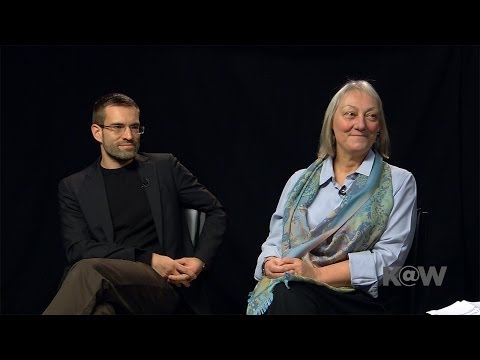
Ruth Shaber, founder of Tara Health Foundation, discusses how her organization aims to improve the health and well-being of women and girls through the creative use of philanthropic capital. More: http://knlg.net/2tJdfgn 📂 ESG
Read the full transcriptHide the full transcript
- hello I'm Cheryl Coleman managing director of the wharton social impact initiative and we're here today to talk
- about gender lens investing with ruth shaver who is the president and founder of the Tara Health Foundation Ruth thank
- you for joining us thank you for having me so tell us a little bit about the Tara Health Foundation and your
- background my pleasure so I'm a physician I'm an ob/gyn physician and I spent my career working
- for Kaiser Permanente in California and in in addition to being a provider of general ob/gyn care I also have the
- opportunity to have many different administrative roles most significantly I had the opportunity to oversee the
- evidence-based medicine program at Kaiser Permanente can you explain what evidence-based
- medicine is I mean is a tall medicine evidence-based we hope so but what that means is how does medicine translate the
- research and the basic science and human physiology into actual care how do we go
- from understanding how a drug might work to how do we actually use it in people to have them have better outcomes
- healthier lives and that can be basic science it can be a clinical trial and it also can be what we call
- implementation research so how do you actually create programs that reliably deliver some sort of technology to
- people so that they have the benefits of that sign and so is basically you're developing that implementation aspect is
- very interesting because what you're saying is let's have some sort of standardization because it's based on
- this kind of evidence rather than each of us doing it our own individual ways that's exactly right and in fact we talk
- about manufacturing and other types of industries in addition to medicine as evolving from a craft into a production
- system where you end up getting the reliability and quality and standardization through the system
- systems engineering and that was what my background was at Kaiser Permanente and
- when I started my new career in philanthropy I've been very interested in bringing all of that I've learned not
- just in the content not just in how do we take good care of people and women but also
- how do we create more reliable systems in this new discipline so then how's the tarah health foundation doing that well
- we have a couple different things and our overall mission is to improve the lives of women and girls and we're doing
- that by demonstrating creative uses of philanthropic capital so that means that we're looking at our 500 percent of our
- assets from how we make grants how we develop the fields how we do direct and private investing and also how we use
- the largest part of our endowment in in public equities in public investing and we want to have a hundred percent
- mission alignment in our specific area of social interest which is in reproductive health we firmly believe
- that improving a woman's opportunity to control the size of her family is going to optimize both our economic and social
- aspects of her life so by looking at improving access to reproductive health care we can do that
- in many different ways we can do that by funding grants to improve clinic access
- or we can do that by investing in companies that are creating new products for contraceptive use or we can think
- about how are we using our public investing strategy to also improve the lives of women and girls so we're
- looking across all of our assets so give you a specific example of an investment
- you made or a grant you've made that could help illuminate some of these approaches well we believe that not only
- are we do we need to improve access to reproductive health technologies but we need to improve access to capital for
- those who are providing reproductive health so one example of how we're using capital in an integrated fashion and
- creatively is in how we've supported an organization called whole Women's Health
- whole Women's Health were the plaintiff in the recent Supreme Court case that was decided last year that was arguing
- against the restrictive laws in the state of Texas whole Women's Health has been a vibrant entrepreneurially led
- organization and thriving in its provision of women's health services and reproductive health
- and abortion care in particular but because of all of the burden of the ledges of the litigation they needed to
- open and close their clinics multiple times as a result they had a large amount of debt and the only place that
- they were able to get capital from were high interest credit card debt so when we got involved in supporting them we
- had the opportunity to refinance their debt with a very low interest rate very favorable terms for them and yet it
- still was providing an investment for Tara Health Foundation as opposed to giving them a grant we were able to to
- do this in private debt it's giving us a three percent return over five years and
- it saves your grant money for another educator in it and it's not a program related investment it's actually coming
- out of our endowment also with whole women's health they also have a non-profit arm and once the Supreme
- Court case was settled last year they had the opportunity to reopen their flagship clinic in Austin and that we
- were able to finance through a grant so in addition to the debt through as a private investment we also were able to
- provide grant money through to different parts of our portfolio and that's one of
- the things we're seeing a lot when we're talking about impact investing in the work we're doing at this social impact
- initiative is that people are seeing a range of capital tools that they can use to drive towards a particular end and so
- this is a kind of interesting approach or and and becoming one they were seeing more frequently because people are sort
- of saying grants aren't enough there are other things I can do with my capital let's just figure out those different
- opportunities and I know you're looking at that very close yes I believe that the traditional model for how social
- change is funded from philanthropy should be turned upside down if you talk to most traditional large foundations
- they'll say that the intimate drive social change is their grant making and they rely on a market-based favorable
- return from their investments through their endowments to create the income and wool will fuel their grant-making
- I believe that we have an opportunity to think about this differently is instead
- we think about our endowments and our investment strategy as the primary engine of social change and the 95
- percent of the capital that sits in that space and instead start using our grant-making as opportunities to do
- their research to better understand what are the best investing strategies for that social change that it's going to
- unleash a huge amount of capital and really drive change in a way that we could never have dreamed and I like that
- you brought in the research angle as well it's clear you've got that evidence-based approach eating a lot of
- the work that you're working on at this stage absolutely and just like in medicine the only way that we're really
- going to understand the best use of capital is by investing in research and we can't just rely on good intentions
- and intuition but there is a lot to learn when I talk about this in medicine I'll say well for there was probably 500
- or 600 years where we really thought that bleeding people yeah was going to cure all of their diseases because it
- worked in some cases or anyone oh there was in any action but they say they don't it you had it
- they had a technology that were leeches and they were looking for our disease to
- apply to and they just said well we'll just you know try it on everybody and it was only through a little bit of science
- and rigor that they realized what you know what people are actually dying from this I think that if we can change our
- thinking a little bit and apply some discipline some standardization just like in medicine just like in many
- fields that have benefited from science that we're going to have a lot more opportunity for the social change we all
- crave and I think that part of what the research angle is great but also this how do we share the information how do
- we build the data around this there's so many angles to take and kind of building
- that evidence base around that it's something that we're really passionate about it this social initiative as well
- you talk about how important knowledge sharing is and dissemination in medicine there was a fascinating study that came
- out in the Journal of the American Medical Association several about 20 years ago that showed
- that the the average time between when a piece of evidence was established and how long it took for it actually to
- trickle down into everyday practice was 17 years and that's just unacceptable and now that we understand the
- importance of science and the importance of sharing what we learn I really do think that there are opportunities for
- us to be much more proactive and I think that what you're doing at Wharton is really a great example of how we can get
- information out into the public space and to the into the hands of the people are actually doing the work and creating
- the change that we want well this is a really a thought-provoking conversation any final thoughts on what you would
- tell for a philanthropist about how they can be more intentional and strategic about their work so what I would tell my
- peers and others who are interested in in the power of philanthropy is to create the networks
- start talking to people don't just stay in your silo they we have so much to learn from one another and to bring your
- heart absolutely to what you're doing and to follow your heart in the social change that you want to see but don't be
- scared to bring in some science and some rigor into making sure that it's not just your intuition that you're using
- that you really can learn from the many people who have gone before you and yeah
- I think this goes to the willingness to sort of acknowledge when something isn't
- working absolutely and we talked a lot about failing and failing often but we have to
- be willing to learn from our failures - we've been talking with dr. Ruth shaver president and founder of the Tara Health
- Foundation on evidence-based philanthropy and gender lens investing thank you thank you for more insight
- from knowledge award please visit knowledge Wharton turn you [Music]
Brief Summary
Ruth Shaver discusses gender lens investing and evidence-based philanthropy at the Tara Health Foundation, focusing on women's reproductive health improvements.
Key points
- Evidence-Based Medicine Explained. Ruth Shaver explains how evidence-based medicine translates research into actual care.
- Innovative Philanthropy. Ruth discusses the Tara Health Foundation's mission to improve women's lives through creative capital use.
- Transforming Philanthropy. Ruth advocates for a shift in how social change is funded, prioritizing investment strategies.
- Learning from Failures. Ruth emphasizes the importance of acknowledging and learning from failures in philanthropy.
Episode highlights
- Evidence-Based Medicine ExplainedRuth Shaver explains how evidence-based medicine translates research into actual care.“How does medicine translate research into actual care?”0:44Aug 3, 2017
- Innovative PhilanthropyRuth discusses the Tara Health Foundation's mission to improve women's lives through creative capital use.“We want to have a hundred percent mission alignment in reproductive health.”2:55Aug 3, 2017
- Transforming PhilanthropyRuth advocates for a shift in how social change is funded, prioritizing investment strategies.“We should turn the traditional model of philanthropy upside down.”6:20Aug 3, 2017
- Learning from FailuresRuth emphasizes the importance of acknowledging and learning from failures in philanthropy.“We have to be willing to learn from our failures.”10:35Aug 3, 2017
Tension
30/ 100Low tension