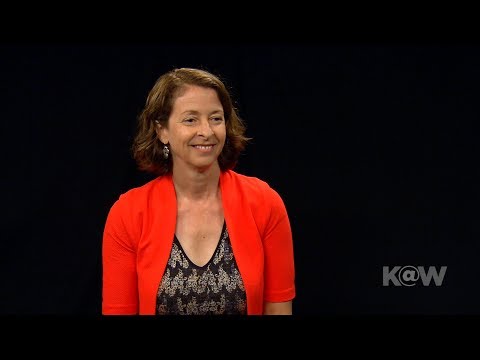
How Employers Can Support Women’s Reproductive Rights — Leading Diversity at Work Series
Ask about Knowledge at Wharton
Episode Description
It’s been a year since Roe v. Wade was overturned. In this episode of Leading Diversity at Work, host Stephanie Creary and experts, Bobbi Thomason, Megha Bansal Rizoli, and Jen Stark, tackle the sensitive subject of how companies handle the issue of abortion.
Bobbi Thomason is the Assistant Professor of Applied Behavioral Science at Pepperdine University, Megha Bansal Rizoli is the Director of Organizational Strategy at Jobs for the Future, and Jen Stark is the Co-Director at the Center for Business and Social Justice at Business for Social Responsibility.
Leading Diversity at Work is a podcast series featuring Wharton management professor Stephanie Creary in conversation with experts in diversity, equity and inclusion. Learn more at http://whr.tn/leadingdiversity.
The Knowledge at Wharton podcast features interviews with Wharton faculty and industry leaders about the business landscape and the impact of their work. Conversations range from the latest research and books by faculty authors, to Leading Diversity at Work with professor Stephanie Creary, and Dollars and Change with professor Katherine Klein.
#reproductivejustice #reproductiverights #womenatwork #womenempowerment ----- The Wharton School of the University of Pennsylvania is committed to sharing its intellectual capital through Knowledge at Wharton, the school’s online business analysis journal.
Launched in 1999, Knowledge at Wharton offers free access to:
- Articles, podcasts, and videos highlighting Wharton faculty research and analysis of current business trends - Interviews with book authors from Wharton School Press - In-depth series of curated content like Wharton Executive Education’s Nano Tools for Leaders - A searchable database of more than 10,000 articles covering all aspects of business - A weekly newsletter that delivers Knowledge at Wharton insights directly to your inbox
Visit the Knowledge at Wharton homepage: https://whr.tn/3qUpSBE Subscribe to the Knowledge at Wharton YouTube channel: https://whr.tn/3DEAgAU
Read the full transcriptHide the full transcript
- this podcast is brought to you by knowledge of Wharton [Music] hello my name is Stephanie creary and
- I'm an assistant professor of management at the Wharton School of the University
- of Pennsylvania and I'm delighted to welcome you to today's episode of the knowledge at Wharton leading diversity
- at work podcast series which is focused on Reproductive Rights and the impact on
- education and the workforce joining me today are three very special guests first we have Professor Bobby
- Thomason who is assistant professor of Applied Behavioral Science at graziadio business school Pepperdine University in
- California prior to that Bobby was a postdoctoral fellow at the war in school her research explores how individuals of
- traditionally underrepresented social categories at work um pursue their careers globally and
- work in the workplace she is particularly interested in how individuals overcome inequality and
- social hierarchies in order to attain career rewards and resources part of her research agenda focuses on how women
- overcome professional barriers to their career Ascension Bobby has worked in Conflict Management Consulting and as a
- research associate at Harvard Business School and the Harvard Kennedy School she also was the international research
- a fellow for Cheryl sandberg's book lean in women work and the will to lead and to the book option b facing adversity
- building resilience and finding Joy she's also a contributor to the lean in foundation and recently along with a
- number of business school professors from around the world Bobby published an article in the MIT Sloan management
- review which was focused on and entitled how organizations can take a lead in productive protecting Reproductive
- Rights next we have mega Bonsall Rizzoli who is director of employer mobilization
- at jobs for the future and an Alum of the Wharton MBA program Mega has over 15 years of experience working in strategy
- and Innovation she started her career working for the federal government dabble in research and analytics at the
- Brookings institution and she spent close to a decade working in Consulting at monitor Deloitte where she focused on
- how large-scale disruptive Trends impact organizations communities and people Mega was also a fellow at the world
- economic Forum where she launched a major research initiative and publication at the 50th WF annual
- meeting in Davos in 2020. at jobs for the future Mega Drive strategy thought leadership and high impact initiatives
- focused on transforming policies and practices building capacities and driving behavior change of private
- sector employers and employer coalitions and associations towards Equitable economic advancement for all
- Mega's published thought leadership and guidance to employers on how best to respond to the Supreme Court decision
- that ended up overturning Roe v Wade and into she provided the thought leadership
- prior to the decision she's also shared these insights and others in both the popular press and at this year's South
- by Southwest edu conference and last we have Jen Stark who is co-director at the center for business
- and social justice at business for social responsibility she's been working for over the past year to prepare
- companies for the fall of row by addressing the workforce impact and identifying meaningful ways they can
- respond including advocacy data privacy risk mitigation and corporate political giving alignment prior to be to joining
- BSR gen directed Investments at the Terra Health Foundation to drive Behavior change among private sector
- employers on gender and racial Equity including historic progress on Paid Family and Medical Leave reproductive
- health and other workplace protections before working in philanthropy she founded the corporate relations program
- at Planned Parenthood Federation of America to unlock advocacy Grant making and employee support to preserve access
- to reproductive Healthcare Nationwide while at Planned Parenthood excuse me well at Planned Parenthood Jen also
- helped launch don't ban equality a national platform for businesses that reinforces abortion as a Workforce and
- economic issue so it goes without saying we have quite an accomplished group of panelists today for our leading
- diversity at work podcast welcome Bobby Mega and Jen I'm so delighted and honored to have you here with me today
- with us for what I hope will be a very interesting and provocative conversation about Reproductive Rights and the impact
- they are having have had will continue to have on education and the workforce so I would love to start us off by
- talking about the June 22 2022 Dobbs versus Jackson Women's Health Organization decision so this is the
- decision that overturned last year Roe v Wade and I want to just give ourselves our audience more of a sense of how you
- entered this conversation where you sit in this conversation and what your work is uh in related enriched this topic so
- Bobby let's start with you and how and why did you become involved in this topic focused on Reproductive Rights and
- organizations um the necessity for organizations to take it up and can you summarize some of
- the main parts of the MIT slow management review article I referenced earlier gladly thank you so much Stephanie for
- having us here and hosting this conversation which I think is only increasingly relevant in the world today
- so as you highly introduced I broadly study inequality at work and I'm very focused on the experiences of women to
- do that research I generally do inductive work so I will open with a broad-ended question about how and the
- principle of the work that I'm really trained in doing is to follow the data and one thing that keeps emerging from
- the data over more than a decade of my work is the ways in which life outside of work fundamentally shapes women's
- careers within organizations and I think as professionals uh ourselves and in the
- audience it it probably is just a given that in the midst of our careers life is happening
- um and so unsurprisingly for women children caregiving marriage uh these things really fundamentally shape
- their career so just as an example we find that uh research on the gender gap in earnings and Leadership is really a
- function of the fact that women and men have different career paths and women end up making choices as a result of the
- context in their families and their organizations where they pursue different paths and this really shapes
- their earnings so given the findings on just Parenthood and pregnancy it um the research on abortion access is also
- quite Stark that when individuals with uteruses do not have access to abortions they are more likely to be out of the
- workforce six months after that care is denied um and in the long term are more likely
- to end up in economically precarious situations and raising children in poverty so as a scholar the evidence on the
- connection between abortion rights Reproductive Rights and work is just um very fundamental so when the
- decision came out last June it was striking both as a scholar aware of the evidence and the consequences of of
- reproductive and abortion care and it also felt personal it was something that I worried what did this
- mean for the safety of myself for the people I care about for I have a young daughter what what is our country going
- to look like for her and the choices that she's going to be able to make so I had tweeted you know what can we do
- as management Scholars at this moment with a particular tools that we have and that led to multiple conversations
- with other faculty other Scholars and the first step was actually realizing that our own professional association
- hosts conferences that rotate around the U.S and we realized that in the past this had been in states where abortion
- access was now either illegal or severely limited and we got together and wrote a petition
- that over 500 management Scholars signed asking our association to not hold agree
- to not hold conferences in those States and ultimately our professional association did not support our petition
- and while that was quite disappointing the process of putting that petition together
- gave us a chance to think about what do we what do we want our own organization to be doing what could other
- organizations be doing and so collectively we wrote this article for MIT sloanmanagement review documenting
- the very clear consequences for employment and economic security when abortion access is denied and we specifically
- outlined five things that organizations could do for their employees in the wake
- of the Dobbs decision the first was to allow for remote work and locations flexibility suddenly the health care
- that individuals can access change dramatically and we really encouraged companies let your employees and workers
- make choices for themselves about where they are going to be safe second to support employees in accessing
- reproductive care this was a move that we did see a lot of organizations saying in the wake of Dobbs we will help pay if
- you need to travel to access abortion care the third thing we talked about was partnering with organizations that are
- experts in providing this care so this is something we see a lot of progressive companies doing around Family Planning
- and pregnancy and there are indeed organizations um like hey Jane and just the pill that
- are experts in supporting abortion care and that organizations can partner with because this is not expertise at every
- every company has the fourth thing and very poignant to us was to be careful about where you are holding your
- organizational events and conferences big conferences are professional development opportunities they are where
- people are seeing um senior folks in the organization that have control over promotions and key
- opportunities and when a predictable fraction and segment of your Workforce is not going to be safe attending those
- events you you're marginalizing and perpetuating inequalities and so we really felt very strongly and that felt
- personal about thinking about where are you going to have promotable career consequential events and the fifth thing
- was that we reminded organizations to be really careful to align where your money is going with the
- values you're purporting so we saw after the Dobbs decision lots of organizations
- were speaking in support um and many of them were also lobbying organization lobbying politicians
- that were supporting legislation that went specifically against those words so it also is really an opportunity for
- organizations to think about being consistent thank you so much Bobby I remember so
- Bobby and I belong to the same Professional Organization so I've watched all of this unfold and you know
- I remember when you all posted to our group um chat uh that uh the association had
- not been supportive but you know something that I think was helpful to me I didn't I think admittedly when we
- started talking about where the conference should be held I I didn't make all of the links
- um as to sort of like why that would be a problem outside of the values right but we all have different values you
- know some people are in our organization Association our pro-choice and some are
- pro-life and so it wasn't really about that it wasn't about declaring us as you know a pro-choice organization and so
- don't hold conferences in places like it wasn't that it was the one part of what
- I think it was in one of the various pieces that you all wrote whether it was to the group or to publicly it was
- understanding that you know conditions under which someone might need access to abortion care
- and one of those that really resonated with me was um you know at various stages of of a pregnancy the pregnancy
- May no longer be viable right and this may be a wanted and desired pregnancy and the answer to that pregnancy becomes
- abortion like that's the only option and so if that happens to you and you're in
- one of these states um you will have have a hard time accessing that care that you need for
- this pregnancy that you probably did want but is no longer viable that to me sounded really um also interesting and
- important and I felt like that could even resonate with people who are pro-life is as like this is it is a
- danger to the to the person with the uterus um to to keep that pregnancy like it's a
- life or definite matter to them and then if you're in a state that um says that this is not something that
- we provide now your life is truly in danger were there other examples um that you can speak to that I think
- would help people who protect perhaps um are more along the lines of you know I don't know why abortion it matters to
- a conversation about where we hold conferences that I didn't already explicate that was the one that stood
- out to me as perhaps helping some people find Clarity around the importance of this issue
- well yes exactly I mean I think you're raising a critical point which is a lot of us in writing the article wrote from
- the perspective as mothers or along the way of our journey to being mothers um and I think it can't be emphasized
- enough that what has been curtailed in the wake of this legislation are medical procedures that
- are also necessary for people who desperately and happily want to become parents but depending on how a pregnancy
- goes a DNC which is now a procedure that um will be considered an abortion and is
- uh illegal by punishable as a felony in in states in the country now is what is necessary in the case of a pregnancy not
- becoming viable and so I have had uh even friends talk about having um a a miscarriage while traveling and
- thinking about what does that look like today um suddenly we're making questions about
- you know thinking through are we going to be safe and um I think we'll continue to talk about
- this in our conversation but we're seeing you know doctors are really being constrained in what they can do and this
- is leading to doctors leaving States uh hospitals I mean just this week in the news hospital is closing their
- maternity Awards because they cannot safely deliver babies anymore um it it the ripple effect of this
- this decision is really quite wide thank you so much Bobby let me turn to you Mega can you share it with us a little
- bit about the work that you've been doing in this area as well so so as I mentioned when when I introduced you is
- that you know Mega is an Alum of the Wharton School she actually was also in my first uh leading diversity
- um in organizations class that I taught at war end back in 2017 or 2018 you're in the class I can't
- remember now but um interestingly Meg and I have had a number of different contexts over the
- years certainly initiated by you or you've invited me to be part of things that you're doing and one of the things
- that you recently invited me to be part of was a panel that you put together for
- South by Southwest edu we talked about many of these issues and topics I actually Bobby referred to your article
- and some of the insights from your article during this topic but so can you share a little bit more about that and
- other activities Mega that you've been involved in with respect to this the topic of Reproductive Rights yes
- Stephanie thank you um and thank you for having me uh my work at jobs for the future really
- focuses on unlocking the potential of the private sector to drive Equitable economic advancement for all and Bobby
- as you've just laid out I mean when we think about Reproductive Rights and abortion care and as we've seen this
- play out this is a huge issue around economic mobility and a huge issue for employers
- um the stats are incredible right and you highlighted some of them too Bobby I mean one in four working women will have
- an abortion in their lifetime and as you mentioned women who do not have access to abortion care are three times more
- likely to leave the workforce and four times more likely to have a household income below the federal poverty line
- not to mention sort of the economic impacts on state so State abortion laws are costing over a hundred billion
- dollars annually in reduced labor force participation and productivity and reduced earnings so last year when this
- was the one the decision was leaked you know at JF at jobs future jff we knew we
- needed to do and say something about it and so in response to that my organization we first quickly organized
- to adapt our own benefits and policies to support the preservation of Reproductive Rights for our employees no
- matter where they live we work in all 50 States including travel benefits Flex time off and a number of other things we
- also quickly organized our own call to action for employers to do more to support Reproductive Rights Beyond just
- the travel benefits that so many have now started providing so extending benefits plans going Beyond this to talk
- about time off flexibility Child Care checking in on employees psychological safety and creating spaces for that
- dialogue and you know among other things examining corporate policies around political donations and sort of how
- you're aligning values and a lot of the work that we outlined Bobby matches up quite nicely was sort of what the call
- to action that you also had that this is really about how employers can be supporting employee well-being job
- quality um so our our work really focuses on that we we think about and we do uh work
- on how to help employers become become good become better right and become more impactful
- um in prioritizing employee well-being and job quality um we view this as a critical component of that
- um I will also say on the personal front uh I you know I'm going to tear up here
- because I was you know three months pregnant when this decision came out and found out we were having a baby girl on
- the day that this decision was leaked and so this was incredibly personal for me as I thought about what this was
- going to mean for the future of my my little girl's life right and and the decisions and the country she was going
- to grow up in she's six months old now so everything is is great um but I view this as a little bit of of
- my dedication to her right and the life and the and the country I want her to live in so it was very personal for me
- too and everything you shared about being a working mother right now and thinking about how these issues play out
- on the personal and the work front um it's just very core to to my motivation and passion around this as
- well so thank you Mega let's turn to you Jen welcome I would love to hear more about
- the work that you've been doing in this area which has certainly been quite um extensive
- um and I would say intentional as well so can you share with us uh what you've been doing
- yeah I just want to reiterate thanks again for creating a space for this conversation and for the team at at
- knowledge at Wharton for for recognizing abortion as a Workforce and an economic
- issue if I could you know go back 50 years and wave a magic wand I would make abortion as much about economic
- empowerment and economic Justice is anything else um I think it's also important
- um as I share a bit more about how I approach the work just to level set currently that abortions now banned in
- 14 States following the overturn of Roe a year nearly a year ago these states are mostly in the Southeast and Deep
- South uh in many states the fight over abortion access is still taking place in courtrooms Daily uh while other states
- have moved um to expand and protect access to abortion so all that said I was among
- the founders of the don't ban equal platform back in 2019 and what was then a historic spike in state level abortion
- restrictions companies were calling leading reproductive health organizations like Planned Parenthood
- ACLU Center for Reproductive Rights neural pro-choice America to understand the impact of abortion bans at the time
- in Georgia and in the Midwest and struggling to find ways to talk about it so don't manage quality is now a
- coalition of more than 800 businesses from large to small making the case that policies that restrict reproductive
- Health Care are bad for business and don't pay inequality was actually just recognized by Fast Company
- um among the world-changing ideas and you know as everyone said so far access to abortion care impacts business
- operations workplace benefits Workforce health and safety Talent mobility and it's important also to underscore that
- access to abortion is supported by 75 percent of Americans believe reproductive Health Care decisions
- should be between patients and providers and the majority of residents in 43 States say abortion should be legal and
- this is playing out in states where we've seen ballot measures like Michigan Kentucky and Kansas and so from where I
- sit now at BSR at 30 plus year old organization that works with business particularly large companies on a range
- of issues across the globe we've been preparing business to respond to the fall of row and I've been telling them
- that this is just the end of the beginning so we've helped companies understand this for what it is this is an ongoing
- slow-moving Public Health crisis that you know leaves companies as as a firewall whether they want to be or not
- when it comes to their workers accessing abortion care absolutely absolutely um this conversation's already been Rich
- so far uh and what we're gonna do from here is is continue to Pat unpack a lot of what you were saying maybe I'm gonna
- go Mega I'm gonna go back to you um so the mission of jff jobs for the future which is your employer is to
- drive transformation of the American Workforce and education systems to achieve Equitable economic advancement
- for us that's a stated mission on the website um but I think it might be hard for some
- people to automatically link a conversation about Reproductive Rights in the Dobbs decision to that mission so
- can you connect the dots for us a little bit more yeah absolutely um so I'll repeat it again so as you
- said our mission is around achieving Equitable economic advancement for all and the truth of the matter is that for
- for women and and particularly women working in low-wage jobs and women of color this access can mean the
- difference between I mean economic insecurity and economic advancement and the choice to participate in the
- workforce often unfortunately comes down to issues of Access to Health Care and child care in this country and the data
- backs us up um I remember there was a survey last year I think from from Courts at work
- that found that 40 of women who sought abortion cited financial reasons as a factor so huge socio socioeconomic
- concerns the driver of decisions to participate in the labor force not to mention uh when you consider things like
- the time and money required to cross state lines for medical services and the disproportionate effect that this has on
- communities of color who you know for due to many structural reasons often may have inadequate health coverage and
- insurance that could be contributing to unplanned pregnancies um so it's a critical issue for
- Equitable economic advancement and a critical issue in which employers have a huge role as we've started to talk about
- this also you know two-thirds of college-educated workers said that they wouldn't take a job in a state that had
- an abortion ban and almost half said they would move if the state was rolling things out and this was over a year ago
- and I'm curious to see now how that actually has played out right and it goes beyond employers so if those
- planning to enroll in an undergrad program 39 said that the overturn was a factor in their decision to attend or
- stay in school so I'll pause here but for me that's massive right you think about the the
- ramifications of this on education and on Workforce um it it's it's very hard to deny the
- linkage there and I think when you play this out a couple years you play this out choices around where to go to school
- if to go to school where to live they have just huge economic impact so um that's sort of the linkages we see it
- both in terms of the economic advancement and the role that employers really can be doing to mitigating the
- um the Fallout from this decision yeah very compelling I don't know if you if your organization or any organizations
- that you know are actually doing research to track this over time we all know I mean here at the Wharton School
- as well as many of our institutions these days right it's like what's the day to say and you all have done such a
- fantastic job of giving us the data in addition to sort of your broad insights on these topics as well and your
- perspectives I think what will be especially compelling important over time is that we have this longitudinal
- understanding of of how not just one year later what the implications are but but the larger Fallout because these
- become the basis for you know other legislative opportunities and changes as well so Jen continuing this theme I can
- imagine that businesses and employers more broadly might be struggling uh to understand their place in this
- conversation about Reproductive Rights I mean I think we all know in many of the
- people who are listening to this podcast understand that you know businesses always had somewhat of a tense or
- precarious understanding of its relationship to broader societal issues and concerns
- um we also know and I also experience this personally and professionally that when the decision came out there weren't
- a lot immediately of employers who wanted to get on camera or to be recorded saying what they were doing on
- this topic so to the extent that Reproductive Rights felt especially taboo I know that was felt um I know
- even myself as a diversity scholar I was trying to figure out like what is the right way to talk about this
- conversation and how does this relate to the topics I normally talk about around
- diversity and so you know I've used opportunities to engage with you know people who who have your backgrounds and
- some of you individually to to upskill myself that said I can imagine Jen that there are still businesses and employers
- who are still struggling to understand their place in this conversation so how have you been helping them to make sense
- of their roles and responsibilities on this top I think that is um the the the Cornerstone question here
- Stephanie and um I appreciate all the the the um research and stats that um Bobby and
- Mega have brought in so far if if I had to put it you know on a bumper sticker for business right now I'd say the
- sidelines are no longer the middle ground uh this issue is literally showing up on the doorsteps of companies
- um you know nearly 60 percent of women of reproductive health age live in a state hostile to abortion access
- and as mentioned the Institute for Women's policy research citing um the existing costs of restrictions in
- terms of Labor Force impact and earnings is conservatively over 100 billion dollars annually and new research will
- be coming out in the coming weeks and now without Rose setting some kind of constitutional floor if you will
- um companies are having to mind what I'll call the quote-unquote collateral damage of abortion restrictions in a way
- that we haven't that they haven't had to historically So speaking of data on BSR
- recently commissioned um some polling from morning consult that affirms and this is for the second
- year in a row and I appreciate the um the academic research expertise on this call as well and we'll continue to
- do this so that we do start to get some longitudinal data This research affirms that by a two to one margin workers
- across all demographics um educational levels income levels Etc want to live in a state where
- abortion is legal and accessible folks already mentioned the new data coming out about prospective and current
- college student preferences and I do think higher education is such an important economic driver in States and
- I think part of the Hidden costs of State restrictions that folks I think will come to realize perhaps a bit late
- and I think Bobby mentioned at the outset I think it was on PBS NewsHour a few days ago they did this incredibly
- compelling segment on OB gyns in Idaho who are leaving the state in mass and hospitals are closing their maternity
- Wards because of the state's abortion ban um and the ambiguity around what care that they can provide one of the
- Physicians who left Idaho said something like do I have to wait till I need to perform CPR do I have to wait till she
- bleeds out um there's little a company can do to make up for a healthcare desert in a
- state without engaging in some of the structural issues so on that note I think it was notable in Watershed
- um how companies are finding ways to speak out through industry groups like how the biotech and pharmaceutical
- Association signed recent amicus briefs to the courts when a judge in Texas was willing to sort of throw chaos into the
- gold standard FDA regulatory process to enact his own agenda to try to ban one of the drugs used in medication abortion
- in the U.S you know we are hearing about companies considering travel policies that restrict hosting events in places
- where abortions illegal or where their workers may be unsafe and unable to access emergency care if they need it I
- think increased restrictions are also prompting new questions relevant in the long term to corporate site selection
- whether that's office location you know warehousing other types of footprint business might have I do think site
- selection is the new quote-unquote boycott if you will um finally finally I think
- um companies are increasingly cognizant um and actions are starting to be taken behind the scenes to minimize or at
- least consider the harm when it comes to data collection and storage and I'm not
- talking just about tech companies also financial service companies and REITs and retailers who need
- who realize they need to mind the unintended consequences of the information they have on users and
- consumers in this Minefield of state-by-state public policies where abortion may be you know illegal in one
- place illegal in another and you have policies that seek to criminalize anyone who quote unquote AIDS in a bets and
- this isn't some you know dystopian novel or movie this is you know the state of America in 2023 so I'd say companies are
- um even if you don't even if there's not always the press release about a particular company's stance or policy
- there's a lot going on behind the scenes absolutely absolutely Bobby you've already covered some of this but I just
- want to give you the chance to to say more um and then to begin to offer some recommendations we've spent some time
- talking about like all the issues and the challenges but at first what I'd like to hear you share more about is is
- you know this is this is a topic you know where it is important to you you said it personally it felt important
- professionally it felt related to the research that you do on issues of gender and diversity broadly in the workplace
- and how that affects careers and you're also an educator right you teach students in a higher education setting
- would love to hear more about the the links that you draw to the meaningfulness of this topic to the to
- the education setting and then if you want to begin to kick us off by offering what you see as as the way forward
- um in the different spheres you touch that would be great sounds great so let me start off
- addressing how I'm thinking about this as a scholar and an educator the first is that uh in the follow-up to
- that MIT Sloan article several of us are working on empirical projects we clearly
- as as a team of Scholars care about this issue and want to understand it more and
- So based on some pre-testing and recent data we've collected what we're seeing is that job Seekers care very much about
- having access to abortion and reproductive care um so when we ask individuals to
- prioritize factors of a job abortion access is in the top few items and mega mentioned this survey that came out a
- year ago showing that job Seekers don't want to move to a state where abortion is legal or restricted so very
- consistent with those findings and we are in the midst of ongoing data collection and so I I will look forward
- to having more to say as we further unpack the data but for now I feel quite confident between
- the pre-testing I've been doing with my collaborators and and surveys that have come out before that this really is
- something that job Seekers care about and it is a priority to them as Stephanie mentioned I'm also an
- educator I have students that I talk to about their career choices and even my past students it's been many years since
- I was at Wharton but I keep in touch with those students and as I open saying I increasingly am thinking about the
- ways in which life happens along the way of us pursuing our careers and so it is
- something I have in recent years become very proactive in talking about with my students that I
- really encourage them starting in the content of my class to think about what is the life you want to be leading
- holistically what are you your values where do you find joy and how is that going to be
- a part of the job and career decisions you make and so it's very sobering realizing in the past year that I am now
- including in that conversation where are you going to feel safe where can you get
- the health care that you need or by default where is your partner going to feel safe is this a place that they can
- live with you and that is a conversation I am having with my you know with students with past students and with my
- friends and peers this is not um the conversations with my students are frankly not that different from
- conversations I have with friends and peers that I am watching multiple people move and take new positions because they
- overnight the place that they lived was no longer safe for them and their family
- yeah very sobering thank you for for your recommendations and I think for keeping it
- um very close to home I think personally and professionally again because you and
- I come from the same field and and we share the same background and we study similar things every time I hear you
- talk it feels like you are talking straight to me and I'm sure other people listening will feel that as well so
- thank you so much Bobby Mega let's turn to you when you think about all the spaces you touch what recommendations do
- you have for the people in them so I I do want to highlight there's a bright spot here we have seen more work
- and more I mean as Jen you laid out with don't be inequality 800 companies have signed on it's just incredible work that
- you all are leading and doing and there's a lot of great momentum from employers but I will say you know many
- workers aren't satisfied still right so one month after after the decision less than 10 percent of companies had made a
- public statement and though many more have taken action now there's a recent survey um from catalyst
- uh let's say 44 of their of workers want to see their employers doing more to ensure abortion access and half of
- younger employees don't think their companies are doing enough um and it goes so far to even
- characterize some employers responses as performative on without real substance and those are not my words
- um necessarily but I guess my call to action recommendation is to employers I mean you have to listen
- to your talent right listen to your employees that Talent is is the driver of growth and Innovation
- um for companies and they want I mean Bobby your research says it they want and deserve workplaces that prioritize
- their well-being and their psychological and physical safety um the quality of their experiences the
- ability to advance and learn and develop and grow and build careers that serve them holistically in all aspects of
- their life so that would be a recommendation is you you have to turn inward this isn't about
- a statement you put out um this isn't about you know a PR campaign this is about the work and the
- work of making your workplace one that all employees can thrive in um and then you you talked about the
- work that we touch and we also touch work with employees and I guess a call to action for employees would be
- ask more right do you know you should be voicing your opinions and encouraging leadership to make changes and I love
- seeing the data and the stats about how people are voting with their feet so to speak where they're going to go to
- school where they're going to work it's troubling when you think about the long-term impacts but it's also a mover
- for this and so of course there have to be psychologically safe Avenues to do this in the workplace
- um but I think worker voice and employees kind of using and and and using their voice to really Drive
- organizational behavior change is critical especially at a time where we are only going to be seeing more and more
- social and political issues colliding with business um so those would be two call to actions
- listen to your employees use your voice they go really well together absolutely thank you Mega for for your
- offering all of your your insights today and and for those um very concrete recommendations Jen will close out
- recommendations with you what do you think when you from the standpoint of the employers who you work with or even
- if you have recommendations for individual employees what do you think they should do more of or do differently
- going forward yeah um I just want to touch back on on that on that last question really quick though when you
- talk about other collateral damage and impact that employers and companies need to be cognizant of when access to
- abortion and reproductive Health Care Providers go away or become severely restricted it also impacts the
- availability of lgbtq inclusive care energy geography the availability of um of of IVF and artificial reproductive
- Technologies so again there's all these secondary and tertiary sort of Fallout that again folks I think are just
- beginning um to understand and that employers are realizing that they're also left to to
- have to navigate as well um I I circling back to this question on what employers need to do more of or do
- differently going forward there's not enough bus plane or train tickets um that a company can can help subsidize
- or provide uh to help workers get the care that they need um even if they've you know done what
- they can to sort of pull that lever of toggling toggling their benefits and maybe are trying to mind are there are
- they offering their benefits in you know the most inclusive inclusive and accessible way
- um it's long overdue and circling back to something that Bobby said at the outset it's long overdue that companies
- align their corporate political giving with other stated commitments as well as operational risks so you know the
- collateral damage of supporting elected officials hell-bent on Banning abortion just doesn't make sense and is is bad
- for State business climates um it's interesting to note that after environment and climate concerns
- political giving alignment had the second most shareholder resolutions so far this proxy season so there's a proof
- point that investors are concerned about the risks operational reputational and Beyond as well I'll call it Ria Ventures
- is leading some important investor engagement work in the space Also there's um uh some data points that you know
- it's two-thirds of college-educated workers say contributions to candidates uh or elected officials who support
- Banning abortion would make them feel less positively about their company if their company where it was contributing
- to these elected officials and and they and they understood understood that and that information was readily available
- to them um so I just thought that was an interesting data point and really also kind of brings back to the point Mega
- raised about how it's it's a combination of um of employers and and worker voice
- that um you know needs to hit a critical mass here to bring about the structural
- change that we need absolutely well this has certainly been I think for me a very
- um inspiring conversation on many levels and I think what I find inspiring about
- it is the work that you all are doing um and that the work that you're doing is is not only data driven but it's it's
- it's it's real and authentic and it's based on sort of people's lived daily experiences and stories that we can all
- get behind I find you know as a scientist and as an educator is you know people come to understand
- um issues and topics and whether or not they should jump into it or jump out of them based on our ability to uh appeal
- to to their senses and so we know that some people need the facts and the figures and you all have done an amazing
- job just helping us understand the magnitude of the problem but also the opportunity here but I think also people
- need to see themselves in it right see what how this might affect them personally and so I just want to thank
- you for offering what I feel is a very balanced perspective data wise both with numbers and in both in terms of
- qualitative stories on this topic uh so thank you Bobby Mega and Jen for joining
- us today thanks for sharing all of your insights and your expertise I truly truly appreciate you for being here with
- me in conversation and I want to thank all of our listeners for joining us and for listening to this episode of the
- knowledge at Wharton leading diversity at what work podcast series goodbye for now
- for more insight from knowledge of Wharton please visit knowledge.worton.upen.edu
- [Music]
Brief Summary
Reproductive rights impact workforce participation; experts discuss implications of the Dobbs decision on education and employment.
Key points
- The Impact of Reproductive Rights. Experts discuss how reproductive rights affect education and workforce participation.
- Personal Stories and Professional Insights. Panelists share their personal experiences related to reproductive rights and their professional work.
- The Economic Impact of Abortion Access. Access to abortion care significantly affects business operations and workforce health.
- Public Support for Reproductive Rights. A significant majority of Americans believe reproductive health care decisions should be private.
- The Role of Employers in Reproductive Rights. Employers are increasingly recognizing their responsibility in supporting reproductive health access.
- The Fallout of Abortion Restrictions. The economic implications of abortion bans are becoming clearer as companies respond.
Episode highlights
- The Impact of Reproductive RightsExperts discuss how reproductive rights affect education and workforce participation.“This is a huge issue around economic mobility.”18:17Jun 20, 2023
- Personal Stories and Professional InsightsPanelists share their personal experiences related to reproductive rights and their professional work.“It was very personal for me too.”21:13Jun 20, 2023
- The Economic Impact of Abortion AccessAccess to abortion care significantly affects business operations and workforce health.“Access to abortion care impacts business operations and workforce health.”23:16Jun 20, 2023
- Public Support for Reproductive RightsA significant majority of Americans believe reproductive health care decisions should be private.“Access to abortion is supported by 75 percent of Americans.”23:28Jun 20, 2023
- The Role of Employers in Reproductive RightsEmployers are increasingly recognizing their responsibility in supporting reproductive health access.“The sidelines are no longer the middle ground.”29:56Jun 20, 2023
- The Fallout of Abortion RestrictionsThe economic implications of abortion bans are becoming clearer as companies respond.“Companies are having to mind the collateral damage of abortion restrictions.”30:36Jun 20, 2023
- Job Seekers Prioritize Abortion AccessJob seekers are increasingly considering abortion access in their career decisions.“Job seekers care very much about having access to abortion.”35:53Jun 20, 2023
- Corporate Responsibility and Political GivingCompanies need to align their political contributions with their stated commitments to avoid collateral damage.“It just doesn't make sense and is bad for state business climates.”43:37Jun 20, 2023