What's Behind VPS Healthcare's Explosive Growth
Ask about Knowledge at Wharton
Episode Description
📂 Leadership;Health Care Management
Read the full transcriptHide the full transcript
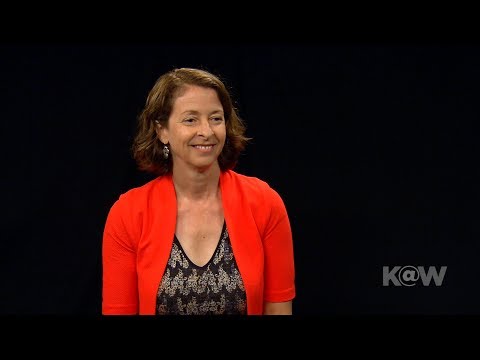
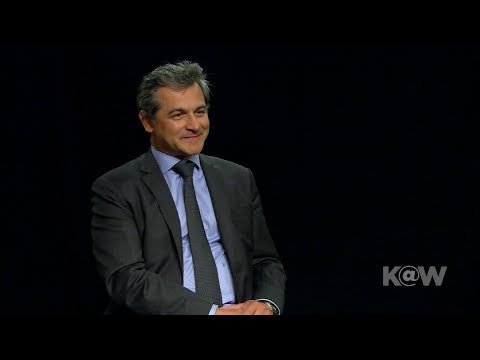
- Our guest today is Dr. Shamshi Vil, founder and managing director of VPS Healthcare, a rapidly growing company in
- the UAE. Uh Dr. Shamir, thank you very much for joining us today on Knowledge at Wharton. Thank you, Mul. Thank you
- for having me here. Uh Mike, uh and my co-host today is Dr. Mike Yusim, uh director of the leadership center. Uh
- Mike, would you like to get started? I will jump in and Shamsir, welcome to the program here. Thank you, Mike. And a
- couple years back, you were a practicing radiologist. You practice medicine and now you deliver medicine and you deliver
- it to a lot of people. The last time I checked, some two million people patients a year come into one of your
- facilities. So, just thinking about the transition from a practicing a person who practice medicine to a person now
- who delivers medicine to a lot of others. What did it take to make that transition?
- uh I'm I'm trained as a radiologist. I spend almost uh 10 years of my life in medical training. then another two years
- for the the masters and then uh I realized that uh as a radiologist my life would be uh more or less contained
- in the basement of the buildings of hospitals because all the radiology departments are in the basement and you
- don't see the sunlight and I decided that my life uh should be used for the larger good of public and uh and being
- in a business family you know you always have that blood of uh doing something by
- yourself and uh I worked for an here in the government hospital uh in Abu Dhabi.
- Then I retire resigned from the job and didn't know what to do. So at that time didn't have any formal training uh in
- business. But uh I knew I had a a strong desire to do something to to build a healthcare uh system which could clearly
- bring out the change for for the patients. So with that dream I started and uh here I am with some good number
- of hospitals, good doctors, good team all around. So it's been a tremendous journey. You know, Shamshshire, I think
- many people have the dream of one day becoming an entrepreneur themselves. And from your experience, you you opened
- your first hospital, I think it was in ' 07. Um, what did it take to finally make
- that decision? And then once you made it, what are some of the steps you took to begin to learn all the business
- skills you have to have to run an enterprise like a hospital? Uh, it's always a learning u day. every day you
- learn something new and uh as somebody who didn't know how to run a business or had no previous experience of running
- hospitals. It was it was a completely new challenge and I was enjoying that uh journey to to be there every day uh talk
- to the mechanics, talk to the the contracting people, talk to them about construction, learn how the electro
- mechanics work inside an operating room uh how the uh the waste water should be ejected out of the hospitals. So
- everything was different. Everything was learning and I was very keen to learn. So I I would be there early in the
- morning spend 18 20 hours without any problems fully charged uh don't get sleep because of the excitement and
- which is still the case uh on on on sometimes when when you have some interesting projects. So uh ability to
- learn was something which helped me a lot. I was I was a good listener. I I would listen to people and I I would
- accept that I didn't have any experience. So I hired the best people on the job. Yeah. You know, it's a very
- interesting point and that is to become a leader of a hospital, your chief executive of the system which includes
- medical centers, pharmaceutical delivery. It's not just hospitals in three different continents. Um, you've
- had to become a general manager. You've had to do everything. You have to know everything. I say I'm the owner and the
- cleaner. You know, that's very my uh my main focus is uh I don't involve in operations. My important task every day
- is I have a team of 15 to 20 people who are all across uh in different areas that we operate who gives feedback after
- talking to the patients and I get all the uh most of them the the the the impulse from from the response from the
- patients. So I take it very seriously and then I work backwards to the systems. If it's more waiting time, I
- need to talk to the CEO to to see what can be done to reduce the times of waiting inside the emergency or in the
- pharmacy or if it is an out of stock pharmacy situation, what to do to tackle it. So, uh pretty interesting. So,
- you've built a very fast growing business. I believe you started in 2007 and you are now as I understand it close
- to a billion dollars worth of revenues. uh what was your strategy in building a business so rapidly uh in the UAE? Uh
- what were some of the steps you took? For me it was all about uh building the capacity you know uh I wanted to go
- where there were no facilities available. So for me I didn't want to build a hospital and expect everyone to
- come to this particular to this particular building. I would uh rather look at areas which were devoid of
- healthcare and go build capacity improve the the capacity efficiency comes then then gives you that uh ability to
- negotiate with your vendors it brings down your operating expenses you have uh service line optimizations where you
- want to retain the best talent you need to have certain volume so that comes with capacity so for me I was more on uh
- I was not focused on the revenues at all I knew if I focus on the quality and and
- get good doctors because that would bring me the revenue. So we went in for the accredititations. We we got the US
- accredititations to start with and that time it was not uh really required by uh
- any legal standards but we went and got all these things and it started teaching
- us how to do things in a more systematic way. Even though we have lot of anarchy
- which comes with the growth that we have but we have teams who are only focused on certain activities and they're not
- concerned about what's going around the group. So we have some people who are on
- the ground uh firefighting things every day but some people who are on the top who goes around building new centers
- like me I'm I'm more into uh building capacity I'm more into projects you would see me at any point of time in one
- of those projects the sleeves rolled up I still love to do it and I think speed is of essence we take decisions very
- fast you know we appreciate your courage in getting everything going back in ' 07
- and we also appreciate your courage in moving out of Abu Dhabi you're still there of course But in addition, you
- have operations now in Oman, not too far away. London, that's pretty far away. India, culturally, quite a gap there.
- And you're here now in the US to think about partnering with a couple of US hospitals as well. Looking back on on
- your movement out of your home territory, what of what's one of the more difficult cultural chasms you had
- to cross to make things work? See, it's always uh the comfort zone that you leave when you go into a a new
- territory or a new market, but you adapt very fast. You know the local cultural sensitivities. You know uh what ticks
- you need to know the the the the you know the demand of the people and I think if you can be Omani when you reach
- Oman or or being in London, you have to behave the way that what they want to see and what they want to hear from you.
- So once we can adapt to the local requirements of the market regardless of the market and keeping the patient uh
- need in the center it it works and and it's so good to uh uh of a time to exploit and and and to grow fast because
- technology has grown. You could reach uh any part of the world. Tomorrow morning
- I'm having some meetings in London. I fly back to Abu Dhabi the same night. The next day I have something else. So
- you can't be in a better position than uh what you can dream about. So just use the time and take decisions. So if you
- were to look back on your journey uh and I assume that in the past seven or eight
- years it's just barely begun. What have been some of the most testing challenges
- that you have faced? How did you overcome those challenges and what did you learn from them? We started at a
- time when uh the insurance law was introduced in 2007 in UAE. At the same time there was uh the financial world
- crisis which was going on. So there was kind of a lot of mixed responses to our beginning of the hospital during that
- time. But I was very confident that uh whatever the crisis is going around healthcare is going to be the last one
- which is going to be affected. In fact, we saw increase in the number of patients visiting the hospitals during
- those periods because you know they that leads to headaches that leads to you know psychiatric consultations. Uh you
- know jokes apart it's again uh the the testing times which gives us that opportunity to uh be what the market
- needs but you need to be realistic. You need to set uh the goals which are achievable and then uh go all out. You
- know, going back a little bit in our conversation here, one of the great aggravations that many patients complain
- about is weight time. And you referenced waiting time and trying to get that down. In your own experience, what are a
- couple of the tactics, the management tactics to cut weight time? And just to go back to another phrase, make the
- hospital that much more patient centered. I think the the concept was to uh to make a network of clinics all
- across going to the communities because we don't want patients to come inside the hospitals when they really don't
- have to come in because it's unnecessary cost. It's a lot of headache when people
- should not be in the hospitals coming inside is again something that we don't want to have in our group. So we have
- started up opening clinics all across the communities where we educate the patients that if it's something that
- they need on an urgent basis that's the place to be but if they are terribly sick then then come to the hospital. So
- there's a there's a difficult situation where you educate the the public and everyone wants to see the doctor when
- they when they are sick and they want to be the first to see the doctor. So again
- it's improving the accessibility point of view. You know, it's really interesting because uh hospitals are
- there to bring patients in and render services, but from what you've said, one of your tactics here, one of your
- strategies really is to keep patients out of the hospital, clinics, wellness programs, better diet, exercise, and all
- the above. And I think in that sense, you're delivering health services fully. It's not just what happens when somebody
- comes in and needs an X-ray. The best thing is they don't come in for an X-ray at all. That's right. And uh what we
- have done is we wanted the hospital to do cardiac surgeries, neurosurgery, knee replacements and uh let the patients who
- needs uh the wellness programs to go inside the malls uh do their shopping, get into these clinics, get themselves
- checked on a continuous basis because we have launched programs for the disease management of people suffering with
- diabetes so that they don't uh miss their medicines that leads into complications and end up spending a lot
- of money and time on recovering. So these kind of in you know in initiatives have been liked by people initially they
- are kind of hesitant to go to outreach programs but once they find value that is when we can see there's a successful
- program launched. So what are some of the most surprising innovative things that you have tried out? I heard
- something about a dental clinic that was done quite uh innovatively. Can you tell
- us that story? So there was a zoo on the uh the outskirts of Abu Dhabi where a lot of childrens used to go and I took
- my uh children as well and uh I had my one of my clinic managers who was just passing by and we had a a good
- discussion and he came up to with a with an interesting idea of uh you know why don't we start a a dental clinic inside
- the inside the zoo for the children who comes in so that they walk in they get a
- a routine checkup done we identify the carries and you know let them know that there's a carry happening.
- And now at that time I thought it's it's a crazy idea and I I I had to give him his you know uh due credit that I
- finally yielded into his compulsion of opening up the clinic and now we got requests from parents to have some
- facilities even for the parents to be in the inside the clinic when they when they come with the children. So I think
- this innovative ideas of reaching out to the masses especially inside the malls inside the hypermarkets that you see
- here as well uh healthcare is going to take a lot of change in the years to come. You know if you think about the
- years to come digital delivery of uh appraisals of diagnostics I I think it's out there still slow to develop but if
- we were to sit down in five years my guess is digital medicine is going to be a big piece of what you're doing.
- Digital is already there. we have uh diagnostic imaging which is connected right across the group and can be
- reported from any any facility or even from home. So that again uh reduces the need for a lot of radiologists on on the
- on the ground and that has really helped in faster decision-m process. So it's all about taking the right decision at
- the right time using the right technology and that saves life. You have something called as the golden hour
- where you need to be connected. You can't expect when that golden hour is going to happen. It could be on a
- Sunday, it could be on a holiday and you don't have people on the facility and then if you have a digital platform
- where people can log in, see the films, report the uh the clinical needs that could save lot of hassle for the
- patients. So uh just last week uh India's prime minister Narendra Modi was in the US and he was in Silicon Valley
- talking to a lot of uh uh CEOs there about something called digital India. M uh and I think as as far as I understand
- it, the plan is to connect more than 600,000 Indian villages through a fiber uh network. Uh what kind of
- opportunities would this provide do you think for health care uh providers especially to people at the bottom of
- the pyramid who traditionally don't have access to healthcare? I think this could
- lead to a lot of two-way communications when it comes to healthcare delivery and
- uh to reach out to these areas are very difficult. You know they have their own logistic problems to reach out to to
- take the best of doctors to those rural areas. It's it's like next to impossible. So if you have the
- connectivity then you have things like teley medicine which could be used uh we could have lot of information uh passed
- out to these public in their own languages. So I think you could have lot of two-way communications. You don't
- have to wait essentially for a complication to happen before uh they could talk to help. They could talk to
- somebody who can give them the help to to overcome the situation. Uh for a person like yourself going back
- to let's say 06 and 07 you were a professional radiologist but inside you there was the entrepreneur and and and
- the business person. And for our listeners and our readers who got that entrepreneurial bug somewhere that one
- day may be more out and more recognized, what what advice would you have from your own experience on that kind of a
- transition? Yeah, I think it's all about that uh the the listening to your heart,
- your your your gut feeling and what you like to do. And I think that's what's very important. And I remember when I
- was doing my training, I always used to think of a day when you know I could have a hospital treat lot of people that
- was always inside the heart and and there was a time when it came and I have to break the the the the mold and come
- out of it and and follow my heart and and there's no regret because for me at that point of time the decision was
- there was no point of return and I I can't go back and do practice. So uh you know I think I I I would advise a lot of
- youngsters to come forward uh to be in healthcare especially because the world needs a lot more healthcare than what it
- is right now and and there are a lot of good things that you can that you can do
- to to make money to to do good for the people. There's lot of corporate social responsibilities that you can do and and
- the world needs a lot of people uh from here. Give it a try. Yes, why not? Okay.
- So, one one of the key attributes of any good entrepreneur and I think you referred to it somewhat in your previous
- answer uh is the ability to pick the right team. Uh and and uh I was listening to Mark Zuckerberg from
- Facebook talking about how he selects people uh who are his direct reports and he said what I look for is if I am
- willing to work for that person then I hire that person to work for me. What do you look for in your team? Uh you know
- for me uh it's about uh people with the right attitude. The people uh who don't feel that they have done it
- all. They have seen it all who would still have uh the fire in their belly something to prove and uh you know uh
- treat people with a lot of respect and and for us we always had an issue with job descriptions when when I remember
- the first CEOs that I hired and they asked me for a job description and I said that you tell me what you can do
- for us. So that was an approach that I've taken and I still follow that and uh I used to call a lot of the the top
- directors when they join I used to call them personally on a disguise name so that I get a good firsthand experience
- of how they are with people at a lower level. So uh kind of freestyling when when it comes to recruiting senior
- people uh they need to uh be people oriented people driven yet taking decisions and not afraid of the
- eventualities. And looking back over the eight years since you uh founded the hospital
- itself, could you pick out an incident or a decision or a time that seemed exceptionally
- challenging and just walk us through what happened and what decision you reached? because we keep taking these
- tough decisions on a on on a daily basis. But some of the decisions were we have to build a a tertiary care hospital
- and we were given a real estate uh building uh and the and and we were only given 10 15 days to decide whether we
- need the building or not and it was a commercial building at that time. So we we uh you know brought some consultants
- from us they came and said it's not going to be possible and uh that was a very difficult moment and then uh I
- remember one of the local architects on the site he gave me a solution for cutting across the vertical
- transportation and that was a challenge and I have to completely trust Honum to take that building which was something
- like a 200 million project and uh looking back uh uh that's something of a feather in our in our cap and and it has
- done extremely as well the the hospital which looked like a hotel feel like a different environment altogether. We
- have gourmet kitchens inside. We have uh the music playing all the time. People come in to have a cup of coffee. So
- that's the building. You know just a quick observation of what you've said with a question to it. A lot of learning
- what you do now you've learned by doing it. You've got out you went out you made
- a decision. Should we open up a clinic at a zoo? I don't know but let's try it and see what happens. You call it paid
- experience you know some of it works some of it works some some failed we had closures but we learn from every mistake
- we try hard not to repeat the mistakes but eventually you know keep doing the same mistakes but again it's the 8020
- rule you know the 20% of those things which clicks very well compensates everything. Yeah. We have uh I think
- about a minute or so left and for the uh I wonder if I can ask you to do a little
- bit of crystal ball gazing. Where do you see you and the enterprise going versus
- the next seven or eight years? You've already come a long way during the past seven or eight years. What's next? We
- want to go global. We want to uh be in lot of more markets than what we are right now. We want to provide a lot more
- advanced care for the less privileged across the world. Uh we have manufacturing activities. We uh we u are
- getting very strong into the manufacturing activities as well. So what we feel is that we have to build a
- a healthcare ecosystem where uh we have an integrated uh healthcare delivery approach where we control the various
- aspects of healthcare delivery right from patient care, the logistics, supply chain, the the pharmaceuticals, the back
- end, the IT, the home care. So we we feel that that's where we need to go. It's a long journey. Right. Well, uh
- Shashir, thank you so much for joining us today. Mike, yeah, thank you. We appreciate you're coming from Abu
- Dhabi for joining us. A great experience. Thank you so much. Thank you so much for being on the knowledge at
- Wharton show. Thank you. Thank you. [Music]
Brief Summary
Dr. Shamshi Vil discusses his transition to healthcare entrepreneurship and innovative strategies for VPS Healthcare's rapid growth.
Key points
- Transition to Healthcare Entrepreneur. Dr. Shamshi Vil shares his journey from radiologist to managing a billion-dollar healthcare business.
- Innovative Healthcare Solutions. Dr. Shamshi discusses unique strategies like opening clinics in malls to improve patient access.
- Advice for Aspiring Entrepreneurs. Dr. Shamshi encourages young people to follow their passion in healthcare for societal good.
- Global Expansion Plans. The enterprise aims to expand into more markets and provide advanced care globally.
- Integrated Healthcare Ecosystem. Plans to build a comprehensive healthcare delivery system covering all aspects.
Episode highlights
- Transition to Healthcare EntrepreneurDr. Shamshi Vil shares his journey from radiologist to managing a billion-dollar healthcare business.“I decided that my life should be used for the larger good of public.”1:19Oct 19, 2015
- Innovative Healthcare SolutionsDr. Shamshi discusses unique strategies like opening clinics in malls to improve patient access.“The best thing is they don’t come in for an X-ray at all.”10:25Oct 19, 2015
- Advice for Aspiring EntrepreneursDr. Shamshi encourages young people to follow their passion in healthcare for societal good.“I think the world needs a lot more healthcare than what it is right now.”15:44Oct 19, 2015
- Global Expansion PlansThe enterprise aims to expand into more markets and provide advanced care globally.“We want to go global.”19:41Oct 19, 2015
- Integrated Healthcare EcosystemPlans to build a comprehensive healthcare delivery system covering all aspects.“We feel that that's where we need to go.”20:09Oct 19, 2015
Tension
40/ 100Low tension