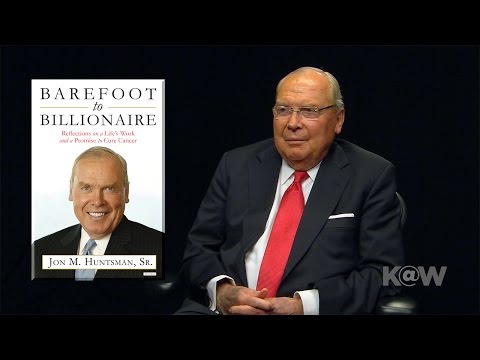
Eight Dollars and a Dream: My American Journey
Ask about Knowledge at Wharton
Episode Description
📂 Leadership
Read the full transcriptHide the full transcript
- our guest today is Raj Gupta former CEO of Rohm and Haas and we're going to talk
- with him today about his book eight dollars and a dream my American Journey which he wrote with said havely joining
- me in this conversation is my friend and colleague magazine who oversees the Wharton Center for leadership and change
- management Raj Mike thank you so much for joining us today on knowledge at Wharton thank you thank you Raj perhaps
- to just start out with a very brief question what inspired you to write this book well you know I have two daughters
- who married late and then we had three grandsons Warner of period of two years three years and what my daughters one
- day out of the blue came to me and said dad he we have lived an interesting life
- all around the world and these kids are so young I don't know what stage he will
- be in by the time they're teenagers would you mind documenting family history so that's how the project
- started is it writing the family history then you know by the time I got to the age of 22 and came to the United States
- it became difficult to separate growing up in u.s. raising a family finding my bearings at
- work so and then it grew into something about living in England living in France
- living in Asia and raising these two daughters living in different cultures did dealing with different people
- so it became a mult amalgam of the professional experience the personal journey and the family life and as they
- got into it you know it became apparent that just my telling the story is not sufficient and that's where we added
- this another dimension to this is to have people who have spoken or have dealt with me at different times in my
- life my mentors lead director sandy moves my predecessors my board colleague in Jack crow
- and above all was really having my two daughters and my wife speak on their own behalf and that is totally unadulterated
- and in fact it was a great insight for me hearing from them as well so it started off as a family history and it
- developed into something that now you see as a book and we thought about you know who will be the audience for this
- book and in fact it wasn't clear but it's like a personal life story was it a business book or was it something else
- so it is pretty much story as it was lived from my childhood growing up in India to adult life and of course life
- post-retirement so Raj in the book you make a very compelling case for the life course that you've been on the personal
- as you've just described it as the result of many people that you came to know many people that influence who you
- are beginning with the course with your parents and thinking about then the professional side of the book you became
- chief executive a Roman House a very large specialty specialty chemical company acquired by Dow Chemical later
- on and as you embarked on a career in business and management and ultimately leadership if you could describe a
- couple people that have been especially influential maybe personal maybe professional in shaping the person that
- you are and then had to be as you ran Roman Haas so let me actually start with my parents because to me both my mother
- and father in the unique way had tremendous influence and 6of was born over seven years between 1944 and 1951
- and the two things I take away from growing up in that family it was actually counterculture in India one was
- living an honest life my father was a civil engineer building dams bridges and canals and the graph was pervasive but
- my father now were accepted one rupee or bribe in his life and the second thing was
- counterculture to me was respecting everyone irrespective of what position they occupied in the society whether
- they were higher-ups or the servers or the cleaners or the driver they treated everybody with respect and those two
- things have were stuck with me all my life and the third thing I would say I carry wave from my mother in particular
- was the notion that you work hard and you work honestly consequences are beyond your control
- except what comes as a result you know so so I think those are the things that go back to my family and my parents and
- an adult I would say you know I was very fortunate to work in an organisation Roman has nearly 40 years and it was a
- true meritocracy you know irrespective of where he came from what your background was and how you spoke your
- English you felt like you were part of his family and treated as equal and you had an equal opportunity to contribute
- so the fact I was given an opportunity to go work in England which in fact in itself was a unique experience in late
- 70s and early 80s then moving on to France and then coming back to England and then going living in Asia for five
- years the opportunity that company provided me were absolutely unbelievable and I would say you know during that
- career there were three or four people at aromatase who were instrumental in shaping me and believing in me more than
- I believed in myself one was the CFO who recruited me Fred Schaefer the second one were my two predecessors Larry
- volson was CEO before me for 10 years and before him means Greg Lee he was the first non-family CEO for 20 years those
- four individuals really had an incredible impact on me and the one last one was dr. basil Vassiliou who was a
- Greek who was headed up Europe for Roman has a unique individual but those four had an enormous impact on
- me in shaping my what would you sing aloud from one of them that is that I kind of a lasting influence on who you
- are and what your style has been so you know I learned things that I wanted to practice and I also learned things which
- I didn't particularly care to follow so he learned both the good and the bad and
- so you know from Mary vos and I learned something which was maintaining your composure and calm demeanor under stress
- and be a good listener than always presenting yourself as the person in charge and I think to me that was a
- search serve me very well during my career with dr. Vasily who was a kind of fighter street fighter a very smart man
- but always controversial I think you know I certainly learned that you can have brilliant ideas but you also need
- to figure out how to best present them and get consensus around them so Raj just to then take that forward in time
- we're all the product of our parents or friends maybe a college or a high school
- teacher along the way but as you became chief executive in 1999 of Roman ha so it was a job you hadn't done before you
- had not been a chief executive before so while you brought many qualities such as
- staying cool under fire from some of the mentoring you had you also had to master
- a very challenging job so just thinking about the first maybe the first 12 months what did you have to learn that
- you didn't already have in your weapons or skill your skill repertoire set on becoming chief executive officer well I
- can think of a number of things first of all you know we transform the company from a midsize specialty chemical
- company largely organically grown to investing six billion dollars of cash to buy three companies and rapid
- session modern international Rodell and Leonel we went from 10,000 employees to 23,000 employees over theta one quarter
- we went from zero dead to over four and a half billion dollars in debt and we had completely new leadership team at
- the top and so I think it was a task bigger than I thought for sure and you know I think the way I approached this
- was number one to make sure that I got to hear from the board each of the board members and met with them individually
- to understand what they liked about the way we worked and what we could improve on to make sure they knew me and they
- felt I had access to them and they had access to me so what you actually went to meet with each of them individually
- yes I did I went out where they were located and went out and spent a couple of hours with each one of them they of
- course knew me I knew them but it was always sitting in the boardroom and occasional dinner as a group so this to
- me was extremely helpful and certainly well as we managed our way through the challenging times for the first couple
- of years the second thing was right after we made these acquisitions everything that could go wrong did go
- wrong we had 64 ERP systems information was late in coming business was declining currencies were
- going the wrong way and we had a new management team in place so very quickly you know it said you know rather than
- trying to do everything what are the two or three most critical things that we need to focus on and that was to get
- right people in right jobs number two was to manage for cash and number three that we are not just in business for
- another six months or a year we need to invest in our future and that was globalization in Asia and investing in
- technology and innovation and those are the four pillars that we really focused on for first two or three years after I
- became CEO to get the company through the crisis in a shape that became very successful after that I was
- really struck by what you said about hitting a crisis as a result of these acquisitions with some of the research
- that they have seen shows how easy it is to destroy value after acquisitions and
- a lot of mergers do not work out with that reason how did you gather your team around a strategy that would ensure that
- the mergers that you had entered into would build value rather than destroy value well wish I could say they were
- all successful you know and I do agree that more and more data show that large complex mergers destroy value rather
- than create value having said it's separating companies into spin codes which are more focused and the vestiges
- of underperforming businesses always add value so acquisition is a tricky game and most of them really fail in my view
- because of people issues less to do with the business logic or strategy because you know smart people make decisions
- about with businesses fit what is it fair value and you do a lot of one work on that before you do that position and
- once you do that in my view that's when the hard work begins and it is the people side of the equation if it's not
- handled right is when things really fall off the cliff and the second thing I would say is timely information if you
- don't have information to manage a complex new company you really are fighting a rearguard battle I mean those
- are the two things I would say strategic logic culture all of that you can define
- a front but getting these two pieces right in terms of how would you manage who are the right people and you have
- the information that's really sure that you are tracking the vision of the strategy reason for which you made those
- acquisitions and what kind of people issues did you face and how did you Givaudan so you know there two or three
- different parts to this one is you know you always find individuals who are very
- successful in building and growing when they're faced with a tough challenge of a shrinking market shrinking margins at
- turnaround situation that's a different skill and so a lot of people you know when you have a lot of tailwind behind
- you and things are going well and their growth oriented mindset and all of a sudden they're faced with this it's hard
- for them to kind of recognize that first or they think they can get past that and
- then most important how to navigate your way to cut the cost manage for cash and
- really much more operational focus so that's that's one thing the second thing I would say is just the demeanor of the
- people and that's goes back to staying calm under stress you know when you are under extreme change situations where
- rapid action is required you see two kinds of individuals generally ones who kind of dis panic and they're trying to
- push buttons in many different funds and the other who kind of stake figure out what the right priorities are and just
- focus themselves and the whole organization on making sure that key things happen and not get troubled by or
- disturbed by the noise around them right just to turn to a career phase that followed your service at Roman Haas and
- onine you helped engineer a sale of the company to gal chemical and a new year since then you've served on a number of
- very prominent boards of directors including Vanguard group the manager of a almost 5 trillion dollars in assets
- these days Tyco International that had gone through a wrenching restructuring our Konica spinoff from Alcoa
- hewlett-packard that when you were there went through a breakup into it's now two
- separate parts and thinking about your role on these several different boards maybe the question comes down to this
- what makes for a really good independent non-executive member of a board of directors great question Mike
- you know first of all I've been very fortunate that post-roman has I've had the opportunity to serve on boards of
- leading companies in different industries so I've consider myself very fortunate I think one of the most
- important requirements were aboard well first of all it's not a part-time job anymore instead it's a job that requires
- a lot of time not only meeting during the board's sessions but also outside of that project I can intervene on Netta in
- surveys of some of these firms that consult with boards conduct they often say that a director on average will
- spend about 200 hours 200 hours per year in their service as a non-executive director that's always seemed very high
- to me is that a correct figure do you think I would say a normal course of time today in the u.s. corporation it's
- a pretty reasonable figure and you know having been involved in some of these transformational companies that you just
- mentioned Tyco and iconic and Hill it Packard and even Delphi they have taken a lot more time with a
- night out so so it's definitely but I think the most important thing I think about the board member is having an
- independent mindset it is so important and associated with this is what I call critical thinking that means there nah
- and the last thing I would say is having the courage to ask the tough questions the first is to have independent mind of
- course that's based on experience second one is critical thinking that means they're always looking at things from
- outside in in a very objective manner and the third one is to have the courage in a group setting even in the face of a
- very strong CEO to ask the tough questions I've got the same question on another aspect of what you do as a
- non-executive director you don't do it often but when you do it yet you have to get a right
- and that is to pick a CEO successor it's often said that's the biggest decision that the board makes and having made
- quite a few of those what in your own experience defines the kind of person you would like to be a CEO successor
- coming in assuming that the company is doing well so not at not a triage moment but a normal moment what makes for a
- great CEO candidate well then I've sort of gone through some great selections and that's not some great selections you
- know my preference at least based on my experience is it is by far like there's no doubt is the most important job that
- board does and frankly board only gets to do it hopefully every five to ten years and if they get it wrong the
- consequences are usually negative and if they get it right it's transformational
- in a positive way for the organization so picking the right person is extremely critical if we have a good succession
- process in place having an internal candidate in my belief is always better than an external one and especially an
- internal one who is an insider outsider somebody who knows the organization knows the businesses but always looks at
- their organization from the outside external point of view and that's the objectivity that's very important not to
- be mired in what you know and what you're told from inside the second thing maybe it's a overstated word is learning
- agility and skills you know the business world is changing so fast that's what I
- find fascinating across industry the common threads and themes but folks were always willing to learn and adapt is a
- very important skill the third one I would say is surrounding themselves with people smarter than them and sometimes
- getting out of their way as well you know this human side of the equation to me is perhaps the strongest trait a
- leader should have because in today's world there everybody is a great strategy there's plenty of money
- available the sole differentiator three successful organizations and not so successful if the leader leadership
- at the top and the leadership team broadly if you get that right idea it makes a whole lot of difference see that
- links me to one of the things that I found most member of about your book which is reflections towards the end of
- your book and one of them that really touched my heart was where you talk about the importance of leaders learning
- to balance a healthy ego with humility I wonder if you could give some advice on
- how CEOs can do that and how you manage that balance in your own life I'm glad of that the asset question I'm I'm a
- revealer maybe this is just me or my nature I I think humility opens you to a lot of
- good input from outside because if you are approachable and humble people will tell you what they like about you and
- what they don't like about you and I think you know when you get rise to these senior very high positions it's so
- easy to surround yourself and always hear how great you are and that to me is a big danger for most leaders and so I
- think it's and on the other hand you know having self-confidence and a healthy ego is an important part of
- demonstrating about your confidence and self-belief that you have and that's very important as well I mean it's not
- because if you want to be decisive you have to trust your instincts you have to have ulti ego on the other hand I think
- if you are also humble and available for a conversation and open feedback it just
- makes you a better person and a better leader one last last so Raj the title of your book I've always found very
- interesting because it really references your your what you had in your pocket a few
- dollars when you arrived in the US and thinking back to that faith at early phase in your life and speaking to
- people let's say of about the same age those maybe in their teens 20s and 30s given the wisdom that you've acquired by
- serving on boards given to wisdom that you acquired is by serving as chief executive what advice would you have for
- people who have a few dollars in their pocket they're in their early 20s but they one day would like to have an
- impact on the world akin to the impact you have had I know the even having a belief in yourself is an important asset
- to have and not limiting yourself most of us limit ourselves you know and rather than somebody else telling you
- one of the great lessons I learned when I was here as an immigrant in her early years all my Indian friends who were
- near my age and similar family backgrounds they would tell me occasionally that you know we will never
- become managers you know we are engineers or we assigned this and that thought we will be technicians technical
- experts but will never become leaders or managers and for whatever reason I'm so
- glad I have the chance to get out from United States and live in a different environment and shared that notion and
- over time I think belief in yourself is so important and the other thing I would
- say is working in an organization that you feel will give you a fair chance you know it because organizations have their
- own culture selecting the right organization you work with and then having belief in yourself that it's
- going to be a fair place for me to make and realize my potential if you get that
- combination I think sky's the limit for most of us and Raj Mike thank you so much for joining us today acknowledge it
- Horton thank you very much thank you thank you my pleasure for more insight from knowledge at
- Wharton please visit warden occupancy d you you
Brief Summary
Raj Gupta discusses his journey from India to CEO, leadership lessons, and advice for young professionals.
Key points
- Raj Gupta's Journey. Raj Gupta shares insights from his life and career, emphasizing the importance of family and mentors.
- The Role of a Board Member. Gupta discusses the evolving responsibilities of board members in today's corporate environment.
- Advice for Young Leaders. Gupta offers wisdom for young individuals aspiring to make an impact in the world.
- The Importance of Belief. Believing in yourself is crucial for success in any organization.
- Finding the Right Organization. Choosing an organization with a fair culture can unlock your potential.
Episode highlights
- Raj Gupta's JourneyRaj Gupta shares insights from his life and career, emphasizing the importance of family and mentors.“It started off as a family history and developed into something more.”2:31Jul 26, 2017
- The Role of a Board MemberGupta discusses the evolving responsibilities of board members in today's corporate environment.“It's not a part-time job anymore; it requires a lot of time.”16:00Jul 26, 2017
- Advice for Young LeadersGupta offers wisdom for young individuals aspiring to make an impact in the world.“Having a belief in yourself is an important asset.”22:37Jul 26, 2017
- The Importance of BeliefBelieving in yourself is crucial for success in any organization.“Belief in yourself is so important.”23:27Jul 26, 2017
- Finding the Right OrganizationChoosing an organization with a fair culture can unlock your potential.“Sky's the limit for most of us.”23:54Jul 26, 2017
Tension
40/ 100Low tension