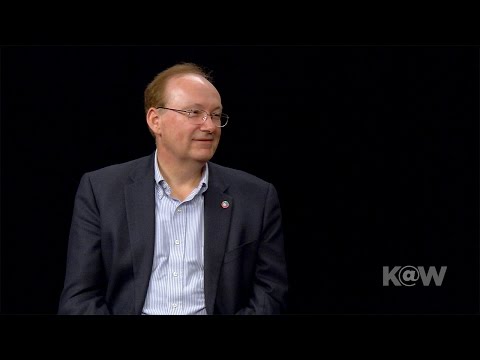
Advice from Entrepreneur Sabeer Bhatia: 'Provide the Same Value at a Cheaper Price'
Ask about Knowledge at Wharton
Episode Description
Sabeer Bhatia is a pioneer in the field of web-based email, having co-founded Hotmail Corp. -- which today boasts more than 220 million registered users -- in 1996. After Microsoft acquired the company in 1998, Bhatia moved on to new projects, including Arzoo.com, an online travel services company for Indian consumers, InstaColl, which offers web-based office tools, and SabseBolo, an audio-conferencing platform for developing markets. Along the way, Bhatia has learned some critical lessons about starting businesses and keeping them going, even during difficult economic times. At the 2009 Wharton India Economic Forum, Achal Mehra, editor of Little India, interviewed Bhatia for India Knowledge@Wharton.
Read the full transcriptHide the full transcript
- the 2009 wharton india economic forum titled india the road ahead took place in philadelphia and brought together
- CEOs of leading Indian companies investors heads of nonprofit organizations sports celebrities and
- Bollywood stars to discuss where India is headed in an age of economic uncertainty Indian knowledge at Wharton
- brings you one-on-one conversations with these leaders Thank You mr. partier for
- joining us we all know you from hotmail which the rumor on the street at least is sold for four hundred million dollars
- I don't know if you can confirm that but you've since been involved in various other ventures can you tell us about
- some of these other projects that you have been with since hotmail sure sure definitely one of the ones that I'm very
- excited about which we will go live in the next month or two is a company called insta call and the specific
- product that we have developed is called live documents and this is based on a new technology it's flash based it's a
- complete software written in flash and it runs on the Adobe's integrated runtime environment but the advantage of
- this is that it is a complete replacement for Microsoft Office for all the three components all the four
- components I should say Word PowerPoint and Excel and outlook but the unique advantage being that it runs on every
- platform which is you know on PCs on Macs on UNIX on Linux and within the browser and it lends itself to you know
- better security and better collaboration so that is one company that has been working on this technology for the past
- three or four years and I'm quite excited about then there's another company called subsea bolo which is a an
- audio conferencing platform that we have developed for developing markets such as
- India and Malaysia and some of the African countries this allows carriers cell carriers in these countries to offer an
- inexpensive way of providing teleconferencing services to their subscribers the next product that we
- will launch on on this platform is a mobile PBX so instead of people having to buy PBX equipment and install it in
- their premises they'll be able to do it virtually and we we hope to partner with
- some of the carriers in these developing countries then there are a couple of others one of you must have heard of
- nano city I'm hoping to develop an entire city outside of Chandigarh and also now in Gujarat which will emulate
- the vibrancy of Silicon Valley and we hope to do that by providing modern infrastructure and also providing you
- know a platform for education I mean you cannot have Silicon Valley with luck without the knowledge so it will be a
- knowledge city and hopefully it will grow into you know becoming a center for creation of intellectual property in
- India now some of these other projects are distinctive but the first project that you mentioned there are other
- players right there's think office and others what makes your program distinctive yeah we've looked at all of
- the competition including Google Docs and Zoho and a whole bunch of others all of them have taken Open Office the
- entire open office suite and put it on the web and in other words they have web enabled Open Office Open Office itself
- has a number of limitations it is not fully functional when you compare it with product version of office for
- example the excel does not have macros we have chosen not to take that bath and instead develop our own own suite of
- applications which not only matches the functionality of office but takes it one
- step further for example we have integration with Twitter we've got complete ability to publish any charts
- or any graphics that are created in Excel on and onto any webpage we have also enabled PowerPoint to be widget
- eyes so that it can be published as a widget that can be embedded in any any HTML document or any document on the web
- we've integrated it with Google and Google Maps so if you look at say names of certain cities instead of just
- putting up a bar chart with the names of those cities it will actually bring up these cities on a map so it allows us to
- be more web 2.0 like because we are based on the web and also on the desktop we can very easily integrate with other
- web-based services now you had obviously hotmail which was exceedingly successful at the venture we
- are also entering a period as you know economically which we in the on the internet side at least we had
- experienced at the time that you were launched your artists do venture which was buffeted by those while there are
- come crash in a sense can you tell us what lessons we can learn from I guess not come crash that may be
- relevant to us in terms of what's happening now yeah it's very pertinent question and it's very relevant relevant
- one as well we've I really personally learned from you know going through the dot-com crash personally and I think one
- of the things that we have adhered to ever since then with all of my companies is to keep our costs low and luckily we
- we are developing products that are substantially lower priced with the same level of functionality or even greater
- so we think actually we are uniquely poised well poised for this downturn because every company today is looking
- to cut costs and rather than creating new products that you know would require companies to to change to alter their
- their way of operating all of these company that I have mentioned to you do the same
- thing at much lower costs for example example take a look at subsea bollo it's built on Asterix
- which is an open software for telecoms and it enables these telecom operators to provide the same service such as at a
- substantially lower cost same thing with live documents if Microsoft charges you know $400 per copy
- retail we can sell the same service at five dollars per user per month so we think we're uniquely poised and one of
- the things that we've done quite effectively is keep our development costs and people costs very low from an
- entrepreneurial standpoint though you know confidence and bluster was you know it is an important segment and we are
- living in a time where clearly fear is talking the land what impact does it have on the entrepreneurial spirit and
- what do you say to those entrepreneurs who feel that fear at this moment necessity is the mother of invention so
- while on the one hand you are correct there is a general fear that has pervaded new you know the entire
- marketplace and that includes entrepreneurs I I would I will say that funding for new ideas and new startups
- has and will come down substantially but having sent said that so will the competition so if you've got a unique
- enough idea and you have to really be careful about identifying market need this is actually a great time to start
- companies but you've got to be very careful in that you really hit a true market need and for that it's safer to
- tread you know there are two ways you can innovate in at least in three ways you can innovate innovate in Silicon
- Valley you can make something substantially cheaper at the same price or you can make something substantially
- better at the same price or you can make now with this new mantra of clean technology you can make something
- substantially cleaner at the same or reduce price these days if you can do something you know you can create
- something which is substantially cheaper that will do I think the best because the marketplace is looking to lower its
- costs across the board whether it's companies or its individuals they're looking to find the same quality and
- that's the reason why you know netbooks for example have become so successful and so popular and people talk of the
- netbooks being the next revolution because there's they are approaching the price points that the One Laptop Per
- child initiative was hoping to achieve you know using a cheaper processor and doing the same thing at about you know
- $299 per computer so that's getting down to that level so that's the advice I would give to entrepreneurs that look to
- doing something which people are already familiar with which people have already
- purchased in the past but try to see if you can shave the cost and provide the same value at a lot cheaper price now
- you have also I guess been an entrepreneur both in the US and now in India one I guess why did you choose to
- make that shift to India and how would you I guess evaluate climate for entrepreneurs and India's versus that in
- the US well there are opportunities and challenges in both places the advantage of a very well developed marketplace
- like the United States is that it's a lot easier to sell if you've got something unique and something which is
- far superior to what exists like once again in India people are looking to get their once sorry there needs fulfilled
- at a large cheaper price so it's a very price-sensitive market the advantage of you know developing something in India
- it's that the costs of development are a lot lower but so also are the inefficiencies of the marketplace
- because of the poor infrastructure in the country you know and you've got a battle power cuts and and water
- shortages and you know frequent infections spreading through your office space I mean the human productivity does
- take a beating and on the other hand in the u.s. you know it's it's you to find quality talent at least in the high-tech
- space it's a lot easier at least in Silicon Valley but the opportunity of servicing a market which is at the
- bottom of the pyramid of you know 606 700 million people who've never you know used certain products I think that is is
- a true challenge and and at the same time a great opportunity and so you know entrepreneurs have to be creative in in
- packaging their products and then squeezing costs out to service that market finally I guess you came to this
- country as an immigrant and I just had the opportunities that you did and you recognized that in these under these
- economic pressures there are pressures to essentially close that free flow of human capital what's your sense on that
- no I think that's a really bad idea because increasingly the world is becoming more global and I think as a
- human species if we have to advance we have to bring down barriers and to a great extent inexpensive communication
- has already done that you know people don't need to physically be present or live in a particular place in order to
- do business in and I think it's beneficial for every country to open its markets both ways because while for
- example I mean take the example of this very recession while the entire Western world is suffering from a slowdown India
- is still growing I'll be that a much lower rate of growth than before but there is a tremendous opportunity like
- take for example the housing sector you know in India 40 million new homes need to be built to
- of course these have to be low-cost homes to because you know 200 million people live in huts and don't have
- access to modern amenities like power and water and and modern sewage treatment facilities
- similarly with cellular phones Indian cell phone market is growing same thing with cars while there is you
- know 2 cars per family in the United States there is one car - I think 70 or 80 people in India so they also up offer
- great markets so it would be a bad idea for any government or any country to to restrict that that that free flow of
- trade and information and ideas and and and experiences across borders I mean I have learned a lot from India I've given
- a lot back to India and vice-versa you know I have learnt a lot over there that I've deployed over here and taken a lot
- of ideas from here over there so I think there has to be a more seamless you know flow of both information ideas
- and capital across the world thank you mr. Walia you're most welcome you
Brief Summary
Sabeer Bhatia discusses his ventures and the entrepreneurial landscape in India amid economic challenges.
Key points
- The 2009 Wharton India Economic Forum. A gathering of leaders to discuss India's future amidst economic uncertainty.
- Innovative Projects in India. Exploring new ventures like Insta Call and Subsea Bolo aimed at developing markets.
- Lessons from the Dot-Com Crash. Insights on maintaining low costs and adapting to market needs during downturns.