How Tech Transforms Economies
Ask about Knowledge at Wharton
Episode Description
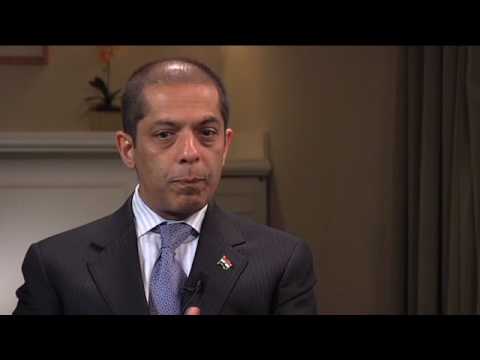
Wharton professor Karl Ulrich talks with Iqbal Quadir, founder of GrameenPhone in Bangladesh, about how he built a network with 55 million subscribers from scratch. More: http://knlg.net/1PD1fLr 📂 Innovation;Management
Read the full transcriptHide the full transcript
- I'm Carl Olrich, vice dean of entrepreneurship and innovation at the Wharton School and I'm very lucky to be
- able to interview today Kadir who's the founder of two amazing institutions, Grammine Phone and the Legatum Center at
- MIT. Welcome. Thank you very much. Great to be here. You know I want to take us back to your origins. Tell tell us a
- little bit about where you came from. I I came from Bangladesh but uh I came from a relatively smaller town called
- Jasur and uh I grew up there and I happened to have gone to a boarding school inside Bangladesh but um
- um since you're asking the what has impacted on me which I guess we could come to is uh that one year of my life I
- was somewhat of a urban uh kid uh but in 1971 when there was a war in the country. I went to the rural area for my
- family did and um we I had experienced the actual rural conditions in Bangladesh during that year. So I my
- friends were often u children of peasants and other small farmers and that had always had an impact on me and
- so that's I I talk about that. Yeah. And how did you end up in the United States?
- Um, I guess I was an entrepreneur. I I don't know. But uh my father died when I was 14 years old and I somehow aspired
- to get a good education and I my mother and uh had provided some funds but I managed to get to the US with some
- scholarships and eventually I got uh better and almost full scholarship and uh so that's how I simply tried myself.
- Yeah, that's a that's a common path for some of our most successful entrepreneurs in the United States and
- and so you you there there are a lot of others who've taken that path and and like the many of those others you also
- achieved some entrepreneurial success. So I wonder if you could tell us a little bit about Grammy and Phone. Sure.
- uh Gramm fund right now is the largest company in the country uh in Bangladesh and it has 55 million subscribers.
- Sometimes in the stock market it's valued some7 billion dollars. But uh if I go back it was really uh for four or
- five years I tried to convince people that this is a good idea this is something to be pursued and it took
- quite a while to convince that but I think if we want to go back to its origin uh it's good that you asked me
- about my personal origin uh those impacts had certain u germ of thoughts that eventually gave rise to uh gramming
- phone and um and this is why I think it's important that no matter how we rigorously we think about problems uh
- deeper at a deeper level passions are important because it drives us to find a logical solution but uh even behind
- logic you may have uh a passionate u pursuit which gives rise to finding a logical solution. So in my case, I knew
- that I came to America and there were extraordinary opportunities here uh in the United States. I managed to go to
- good schools with scholarships and whatnot, but I uh also had in mind the conditions I've seen in Bangladesh and
- so therefore I always on the lookout for uh good ideas that could do something about it. So two really important ideas
- uh stuck me in I was doing that. One is that um the economic progress does not necessarily come from um pouring capital
- into it or something but rather people becoming more efficient uh in managing their tasks or getting better at it. So
- it's a question of improvements or or skills but also how uh let's say in a sense economic progress can come out of
- thin air. I I'll give you the point. Um so for instance I was actually attracted
- to Adam Smith because he mentioned uh Bengal which is Bangladesh. Twothird of Bengal is Bangladesh. That is how I was
- originally drawn to it. And he mentioned an interesting thing. He said in antiquity three places had good um um
- good wealth and they were ancient Egypt, Bengal and Eastern China. And he attributed those things to uh inland
- navigation. And his point is that people could exchange and through inland navigation um tra specialize in exchange
- and divide in division of labor and through that wealth is created and through that uh there was he called it
- opulence in antiquity and that has drawn me and that I as a result I always became a fan of Adam Smith but what is
- interesting is that many things come out of division of labor. many good things okay including inclusivity because if I
- want to specialize in something I have to give up something else to you okay so that gives rise to inclusivity now be
- but what is interesting of all of that is that it's uh it's something I learned over
- time I frankly didn't grasp it all over immediately but uh but I did see the inland navigation as a means of
- communication that naturally certain places had certain other places didn't have. Okay. But separately I had another
- I'll come back to the another Adam Smith point but separately I had another uh important thing I observed is when I was
- an undergraduate I was part of a uh college team. I mean I was the only token student representative in this
- team that decided on buying a $3 million computer. Okay. and one big mainframe that took a whole room full of
- machinery. And then in the when I was doing my graduate studies here at Wharton, okay, I was in decision
- sciences with computers. We learned all sorts of applications of computers. But the key point is there's this Moors law
- that's driving down costs and processing power is getting squeezed more and more
- into the same chips. But the Moors law means the prices of this processing power is declining rapidly which means
- countries that doesn't have very much capital these machines are going towards them. Okay. So I actually tried in the
- middle of ' 80s with another brother of mine. We created a Bengali word processor. Okay. But later on we
- realized that that it was an interesting innovation to take. But I'm trying to show you the evolution of this that um
- the Bengali word processor people couldn't use at least not not the masses because um it's a um most people do not
- know how to read or write. Okay. But an event took place in my life in the 93. By this time I've been trying to be a
- budding investment banker. And the point is that um I I noticed that uh we I was
- to work in a a small firm that had um uh we just had some rudimentary networks. So we didn't have to exchange floppy
- disc and cumbersome activities. So we could send data from one to another etc. And one time it broke down and I was
- waiting for someone to come and fix it. But that reminded me of a day in 1971 22 years earlier. This is in 93 or so.
- And I um remember my mother sent me to get some medicine from this rural setting. And uh I was from a middle-ass
- family. My father was a lawyer and all these things. But uh in this setting, I walked 10 kilometers to get this
- medicine. And when I went there, the medicine man wasn't there. So I walked all afternoon back. And as a result I
- remembered that unproductive day sitting in New York while having waiting for someone to come and fix my network and
- kind of said you know networks help. So if you are connected you can get things done and if you don't get connected then
- you don't get things done. So this inland navigation earlier in my mind I went back to all those things and I
- realized a new thing which is that two things. One is the microchips are getting squeezed in into phones. In the
- early '90s they were becoming digital phones. Before that cellular phones were analog phones. But at this point I also
- realized a powerful point from Adam Smith that there were many things that come out of division of labor
- and division of labor gives rise to productivity. So just like I experienced that if I had connections I could
- produce more and perhaps pay for the phone service. Similarly, this is confirmed by the one of the most
- profound economies, okay? That the it will promote division of labor if we can connect with each other. Otherwise, I
- cannot really divide and do one part and you do another part, we can exchange. But what he made also he said the market
- the extent of the market dep tells you how far you'd be dividing. So let's say I start focusing on fishing but I will
- stop there and not necessarily go any further and fishing only salmons. Okay. If the market is small okay if the
- market is bigger and bigger then I can uh specialize narrower and narrower but that means and all the other good things
- come out of this division of labor. Okay. But if we did that then other means of connectivity profoundly impacts
- on the size of the market. So the point is the the ways to connect determines how far the market will be and how far
- the division of labor will advance. And all of this made sense to me. So ultimately I realized that if the the
- Moore's law is bringing down the price of connectivity, connectivity would be a profound force of of transforming these
- countries and it became so I became so convinced of this because of these insights of these other people. I'm
- basically stealing their ideas. I basically said hey I have to stay put on this. So I stayed for five six years
- convincing various parties to come together and create this company. I jokingly say that that's how I lost my
- hair. Now it's it's amazing because you're really saying not only does private enterprise and entrepreneurship
- contribute to an economy but particular kinds of innovations these connectivity innovations. Exactly. Exactly. So it's
- it's little bit like this. You see I I I like analogies to understand what's happening. Let's say if I take a bucket
- of water, if I drop a a drop of ink, even without stirring, it will get absorbed. And so if it is something
- favorable, the molecules other molecules will receive them. So in other words, people
- will accept them. But if you put a let's say a drop of water, oil, it may not go
- very far. Okay? So if you find the right technology then it will be grabbed by people okay
- and the whole water will get transformed okay the the whole economy gets transformed so the I think the cell
- phone was such a thing because it's fundamentally a elementally human to connect and and produce more and gain
- more sometimes it's consumption I want to contact my friends and see how it is doing but sometimes it's production
- namely I want to save time and produce more etc. So it depends on how it is but it is very elemental and at the same
- time the cost of these things radically going down things automatically come together and so it's the question of
- bringing it together and seeing that it's um frankly to me it's almost surreal but if it is like a
- country like Bangladesh everybody knows is one of the lowest income countries um
- there right now we have 110 million phones And when I started it had a quarter million fixed ones.
- Okay. So it's a really a profound change to know to say the least. Yeah. Now I I
- wonder if you could speak to the barriers to entrepreneurial innovation in developing economies. You've spoken
- very eloquently about the power of enterprise in developing economies. What do you see? What have been the the
- barriers the legacy barriers? Yeah. All all innovations I think human beings cannot radically absorb something
- completely radically new. It's hard. Okay. So uh similarly innovations has to ride on other things. Okay. So for
- instance I there were a lot of things I sorted out in my head and I said this is
- why I'm talking about these insights and I said this is what gave me the resilience the patience to try it
- because I believed in those insights and those insights were logical and made sense to me but there are actual
- practical problems okay and perhaps you were asking about that but one of those practical problems is lack of other
- things. So for example, let's say I bring a good car but without the highway I cannot drive the car. Okay. So
- internet for example in the same early 1990s internet were spreading in this country very rapidly. It was very easy
- to notice. Um so people already had computers, they had modem, they had telephone lines, they could easily call
- up something and internet was spreading. But the real problem in poor countries is that you don't have those other
- infrastructures. Now because of colonialism uh and subsequent adriven statedriven
- development central uh centralized planning even if it's not a communist country tend to be the case it is tend
- even in India you'll see different states and within those states there is central and so usual pattern in these
- countries are one central city often being um supporting a big in um bureaucratic infrastructure
- and vast parts of rural areas uh relatively underdeveloped with no infrastructure and what happens it
- creates a vicious cycle because because the infrastructures are there everybody develops things within that area okay so
- even if you want to start something you don't want to go out in the rural areas and uh not have your children go to good
- schools so you kind of avoid that okay but this case here is the problem I knew through Mo's law and through the Adam
- Smith thing that this is ultimately useful because it's Mo's law would say it's it would it would be viable
- everywhere and Adam Smith said it will be useful everywhere okay so then the problem is that how can I break that
- vicious cycle because I too do not have engineers to go out in the world where there's nothing or there is no lack of
- electricity all these problem and this is why I try to latch on to another organization that may have calm
- infrastructure and this is why I went to microcredit programs and somehow Bangladesh was blessed with good micro
- credit programs and Grammine Bank for instance had um 10,00 branches I thought oh maybe I could put the cell towers
- over there and this is why by the way our name has become in their honor Grammine phone okay but my original idea
- was gonophone which means phones for the masses and the daring see because I'm bringing this insight It's because that
- is how I projected it's will be feasible because I was talking about phone for the masses in a poor country when only
- 1% of Americans had mobile phones in the days I I started this process. Okay. So
- but again I was basing myself on those insights. Okay. But coming back to this, this is why I try to the one of the
- problems you're talking about is the ecology being poorer. Okay. To bring something new. Okay. So, if you have an
- let's say Amazon.com is a company that's selling books or other things, but people have credit cards. Well, you can
- base that on you need those other infrastructure to bring about a new thing. And this is not a conceptual
- problem. It's a practical problem that you need to solve. And so Grammine Bank, not only I could find those sites where
- I could potentially put cell towers and some some infrastructure to help out that process, but also there were
- borrowers and eventually I developed an idea and I proposed it to Grammine Bank that they would give money to somebody
- to borrow uh borrow small amount of money, $100, $200 to buy vegetable growing facilities or ducks or chicken
- or a typical loan was a cow loan. And so I said, you know, the cell phone could be a cow because somebody could borrow
- $200 um instead of a cow, get a phone and the phone would serve the village, but it
- would pay the p it would be a business for that person. And that idea was was um was a little crazy, but it was
- considered illogical. But so the founder of Brain Bank, Mhammed said, "Why don't you see if you
- can make it happen?" So I quit my job. I went there and I flew around the world.
- I got some seed funding from New York and uh I faced many rejections. But eventually I managed to convince the
- Norwegian telephone company. Ah they came and interestingly they have never been to Asia before. Wow. This is
- Teleno. So Teleno and they were very reluctant to come and subsequently they saw this is a great opportunity and
- today they are very big in Asia. Yeah. So I want to I want to talk about that for a minute because the normal view of
- entrepreneurship in the developing world that says that that is the view held by
- most of us in the developed world is that all this great stuff gets invented in the developed world and then it
- trickles down to the to developing economies. Is are we missing something? Is there a different way to view this?
- Well, in this case, it somewhat trickled down. Yeah, somewhat but rapidly trickled down because of the Moore's law
- which says which is which is only a decade later the same amount of processing power becomes 200th or so.
- Okay. So you can even if we throw out all the details it becomes $100 becomes $1 in 10 years. That does go down
- rapidly. That's one issue. Okay. And the other is that it is so fundamentally useful. It's an egalitarian thing. So I
- was totally wrong in chasing computers. Okay, that's when I realized that no when I when I saw that connectivity is
- helpful, I also realized at the same time that it's and Adam Smith and all that is there but you know it's a
- culmination of a lot of things but the other point is it's egalitarian. Everybody can talk. Okay. And so in a
- way there is an irony of all this. The point is the cell phones are actually computers. So the computers have entered
- these markets in the disguise of a phone. Okay? And so so because the voice communication is the killer app, okay?
- And everybody can talk. But now what is happening is that these computers are now that they're there, they're kind of
- a Trojan horse that can do all sorts of other things. Okay? And so when you say trickle down, yes, but if you look at
- Telenor's example, yes, typically a let's say a um western company goes to Asia, first they go to
- Hong Kong, Singapore, Japan or something and then they will go to poorer and poorer places that would I would say
- trickle down. Okay, for whatever reason, maybe because I banged on their door for
- many times, okay, they somehow came to Bangladesh. Okay, before they went to any other uh Asian country, okay, and
- frankly it took them few years. They may not admit it now, but it took them few years to there were some very good
- people who did this. But what I'm trying to and it got endorsement from the top of Telenor. But I personally think it
- they thought it's a good thing to do. Okay, socially, socially speaking, okay, but they had some officially some
- motivation to make money, but they also thought it's a good thing to do. After all, Norway was the poorest Western
- European country and now they their things they have developed very well and fast after World War II. Norway was the
- poorest country in Western Europe. Okay, now by the way it's very expensive place
- to go and okay so what I'm saying they they may have had little bit of that mindset and they have seen their own
- country develop. So they came and after four five years they saw this is indeed becoming very profitable and so now they
- have close to 200 million subscribers in Asia. So Bangladesh, Pakistan, India, Myanmar they had gone to Thailand,
- Malaysia etc. But the bottom line is what is an interesting thing that has evolved not necessarily I saw it all
- that the the western world is providing an innovation but the low so-called low-income country
- is providing a market and I think that's a very healthy dubtail arrangement interest of both worlds and that is an
- interesting model that uh American business schools should look at and so it's not and what I like about it
- there's another aspect of it that is interesting it's not necessarily selling um consumer goods okay again consumer
- goods have their own good purposes but the point is this is empowering people so somebody is spending let's say two
- pennies to make a phone call and is saving him a quarter worth of time then he is advancing by 23 cents okay so
- these people are actually advancing. So I personally think that the cell phone revolution in Bangladesh is at least
- producing I can show some back of the envelope calculation uh at least producing $20 billion a year to say the
- least. Okay, because it's simply millions of people if more oper efficiently. So what I'm trying to say
- if we have productivity tools supplied by western innovations then let the innovators make money and let the
- low-income people provide the market but they also advance. Yeah, both are advancing. Okay. Today I would say that
- Bangladesh is giving uh more aid to Norway through dividends than uh Norway might be giving some aid to Bangladesh
- and you know this is um I think that's the way it should be. I mean we are a bigger country uh we are warm bigger
- country they are a small cold country. I think it's perfectly good arrangement. So interesting. So you're saying
- something actually quite profound. I think again we would often characterize impact entrepreneurship, right, as
- people want to do good in the world. They want to use entrepreneurship and enterprise as the as the vehicle. You're
- saying something slightly different, which is that in some cases pure greed actually is is is fine. That that in
- fact some of these opportunities are exceptionally valuable economic opportunities. I think so. But again, we
- can restrain ourselves with our conscience. Okay. But remember the ultimate restraint comes from people. So
- sometimes we are may we may restrain ourselves through our own internal police and say oh I won't go there and I
- will restrain my greed. But the as people become more empowered through economic uh wherewithal they are also
- able to create more checks and balances. So ultimately it is a good thing. But what I'm also trying to say is that if
- we find fantastic innovations, okay, that are empowering at the bottom, then those innovations
- are to be embraced and people advance this way. And remember another thing, this kind of capital, we're not talking
- about Marxist worries. We're not talking about a big factory where some capitalist may potentially quote unquote
- exploit people. We're talking about people simply uh becoming more efficient with their fellow citizens. Okay? And as
- a result, all the value they create often acrew to them themselves. Okay? And at the same time, there's a viable
- business. The business makes billions of dollars in revenues and very good dividends. Okay? So, but this can be a
- model for other kinds of innovations that are perfectly in sync with each other's needs through innovations. But
- there's another one other issue. Remember, cell phone was not invented for the poor countries. Okay? So, too
- much planning is not necessarily necessary. Okay? It was an unintended consequence. What I'm saying is that we
- need to go into the reservoir of various innovations we have in this in the first
- world and pick out those that we can tweak and make it available for uh lower income people and their income
- automatically rising is is uh then they can buy things from the western world more even not just the phones they can
- buy generators they can buy other things. So what I'm trying to say that what is really necessary is remember the
- two things that are already existing in on the ground two things one normal human desire to improve your lives that
- desire is very much a has a role in this because without that they wouldn't use the phone that's one. Okay. The other is
- there is entrepreneurial energy. Both of these are often squandered if these tools are not found.
- with the tools both can be unleashed. I I want to I want to turn our attention to those young people who are in
- developing economies. We're taking very much the perspective here we are saying in the United States talking about
- entrepreneurship in a developing economy. Well, I want to close by by speaking to our audience that's outside
- the United States, outside the developed world. What advice would you give to a young entrepreneur who's growing up in
- Bangladesh or Pakistan or or my my own example is is itself could be followed. I mean I I mean I'm I'm not trying to
- sell myself but what I'm trying to say is that I can I I'm more authority on myself. The point is the point is I got
- an education in the west. That's one. Okay. And therefore I was informed. Okay. And I I tried to think clearly of
- what is necessary. Okay, that's those are one. But nowadays that is easier than when I try to educate myself. There
- was no internet for example. So now you can even sit in Pakistan and learn some of these things. That's one. The other
- point is that it's um uh that that you don't you could remember I was saying you need one thing to get to the other
- thing. Remember let me show you one aspect of that. the fact that cell phones now exist through my work or
- other people's work then that should make their lives a little bit easier and get the information. You can also read
- the internet through the smartphone now as an example. So, so you can get lot of
- things that didn't exist before, but it's always important to get an education to think clearly and think
- about things that might be available in the west that can be adapted in the in the in the lower income countries. But
- again there may be other ways of solving problems but this is the one I found to
- be um profoundly transformative and also things can hang together around that kind of economic interest dotelling.
- Okay. Well thank you so much. It was so interesting and inspiring. Thank you. Thank you very much. Thank you.
- [Music]
Brief Summary
Kadir discusses entrepreneurship and innovation in developing economies, focusing on Grameen Phone's impact in Bangladesh.
Key points
- Kadir's Journey from Bangladesh. Kadir shares his origins and the impact of his childhood experiences on his entrepreneurial journey.
- The Birth of Grameen Phone. Kadir discusses the challenges he faced in convincing others about his vision for Grameen Phone.
- The Power of Connectivity. Kadir emphasizes how connectivity can transform economies, especially in developing countries.
- Breaking Barriers to Innovation. Kadir addresses the practical barriers to entrepreneurial innovation in developing economies.
- Bangladesh's Economic Impact. Bangladesh is now providing more aid to Norway through dividends than the other way around.
- The Role of Greed in Entrepreneurship. Exploring how pure greed can lead to valuable economic opportunities.
Episode highlights
- Kadir's Journey from BangladeshKadir shares his origins and the impact of his childhood experiences on his entrepreneurial journey.“I came from Bangladesh... I experienced the actual rural conditions.”0:54Jun 8, 2016
- The Birth of Grameen PhoneKadir discusses the challenges he faced in convincing others about his vision for Grameen Phone.“It took quite a while to convince that this is a good idea.”2:37Jun 8, 2016
- The Power of ConnectivityKadir emphasizes how connectivity can transform economies, especially in developing countries.“Connectivity would be a profound force of transforming these countries.”10:46Jun 8, 2016
- Breaking Barriers to InnovationKadir addresses the practical barriers to entrepreneurial innovation in developing economies.“All innovations... cannot radically absorb something completely radically new.”13:30Jun 8, 2016
- Bangladesh's Economic ImpactBangladesh is now providing more aid to Norway through dividends than the other way around.“Bangladesh is giving more aid to Norway through dividends than vice versa.”23:57Jun 8, 2016
- The Role of Greed in EntrepreneurshipExploring how pure greed can lead to valuable economic opportunities.“Pure greed actually is fine; some opportunities are exceptionally valuable economic opportunities.”24:36Jun 8, 2016
- The Power of EducationEducation and internet access are crucial for young entrepreneurs in developing countries.“Education is easier now than it was before; the internet makes learning accessible.”28:23Jun 8, 2016
Tension
45/ 100Some tension