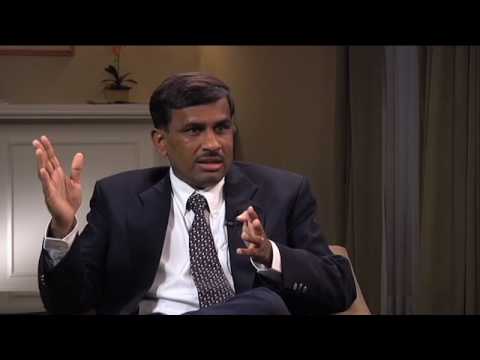
Punj Lloyd's Atul Punj: Rural Infrastructure Is the Country's Top Priority
Ask about Knowledge at Wharton
Episode Description
India is the rowdiest democracy in the world, says Punj Lloyd chairman Atul Punj. And you have to focus on rural infrastructure because that's where most of the people live. It will save time in so many ways -- in children going to school or farmers taking their produce to the market, says Punj in an interview with India Knowledge@Wharton. 📂 Public Policy
Read the full transcriptHide the full transcript
- atul thanks very much for joining us today explosion infrastructure is is often cited as a as a problem in India
- and many of the high-profile infrastructure issues like airports and roads in urban areas are often talked
- about what would you say is maybe one of the most important infrastructure stories it's not being talked about
- enough what I think one of the most important stories really has been the development of rural infrastructure in
- India India unlike China we really addressed it from the rule level first and then I've now moved to the urban
- level and in between urban centers so the development of highways at the rural level connectivity because really
- highways is all about connectivity if you don't have a road or sorry a rural road you can't get to a school you come
- here to a hospital you can give your produce to market so the government really for the last 10 years has been
- dealing with a lot of those issues at the bottom of the pyramid we're now seeing traction on happening at the top
- of top of it what would you say is the greatest impact of that lack of infrastructure in rural India which
- which sectors suffer the most well agriculture you know seventy percent of India's population is still directly
- involved with the agriculture and when you have the forty percent of perishables being lost because they
- cannot be taken to the market or the lack of a cold chain because of lack of connectivity that sector has really been
- hammered consistently the recognition that we need to fix that is really now gained a lot of currency in India so
- we're going to start seeing some significant traction over there what kinds of things do you think will change
- what will change is the ability for children to go to school rather than in some cases walking ten kilometers a day
- what it changes people getting to hospitals for medical attention much quicker you start seeing a lot of
- economic activity taking place at the rule level rather than pure migration to the urban centres which has its own
- problems so I think we're going to start seeing is significantly different Indian
- the next three four years and what kinds of things need to happen and do you think need to have need to happen in
- order for these these keys improvements to take place I mean other significant policy changes that are in
- the future or policy change policies are all in place okay it's the implementation which we are lacking in
- it's the ability of the governance issue that needs attention it's the systems that allow these programs to get rolled
- out that need attention there is a lot of attention now being given because the electorate has become very smart they're
- electing back representatives who have delivered on their promises so rather than voting purely on caste or religious
- lines as used to be in the past so you're seeing a significant shift in the way that the rural resident is really
- addressing his political mandate and that is really resulting in a lot of emphasis on delivery and I think you're
- going to see significant change now punj lloyd has in operations and 16 countries
- i think current including Singapore Thailand China and a number of others what lessons do you think can be learned
- from some of these other countries in terms of their infrastructure developing you mentioned China and you said that
- India's developed in a way that was sort of opposite to have China had what can India learn from from other countries
- that are not very much because the Indian model is the Indian model India has its own genius it has its own
- madness it's a rowdies democracy in the world it's the largest democracy in the world it's many countries within a
- country so many societies within a society many economic sections within their society the fact that india is a
- democracy is what sets it apart from china china has a command control economy where the president or the prime
- minister or the ruling elite will issue a diktat it will get done in india all right the debate starts after
- instructions are given okay it's just the nature of Damien ok also what happens is very often we miss successive
- generations of Technology so when we finally adopted we decide to reform a particular sector we go for
- best-in-class case in point our telecom density was extremely low they open it up for private sector participation and
- today our teledensity is among the highest in the world they grow they adding almost 100 million
- subscribers a year okay more than most countries have till nineteen eighty-two we had two television stations beaming
- black and white television okay basically agrarian based programs we had the asian games in 1982 the whole
- country are blanketed with color television okay similarly now on the highway side one of the biggest risks in
- financing a highway project is traffic the fact that india is willing to catch up okay that's not an issue so the
- financing of some of these projects has now become much easier than a lot of other countries have found so when you
- go to somebody and you say that you want to finance let's say a billion-dollar highway project you already have traffic
- data because really it's not a new alignment it's an existing two-lane being converted to an eight-lane so you
- already know how much you know a traffic of what category is traveling over that
- path so India is unique I don't think we can really learn a lesson from any other
- country because it is not like any other country then reaching back into its own
- passport can work in India learn rather quickly they catch up what what mistakes
- is a need to avoid in order to prevent growth what we need to really do is I think make the bureaucracy at the lowell
- that was much more efficient as i was saying is the systemic fix that we need this too many layers too many interested
- parties in delhi itself for example in new delhi you have three sets of government you have the left-hand
- governor who controls that controls the police and the Delhi Development Authority you have the mayor who
- controls the municipal corporation of delhi and you were chief minister controls the rest okay so now who's
- really in charge and that's true for almost every city in india so lot of that needs to be fixed and the promised
- i know i've been told is looking at that seriously to seeing as to what are the systemic changes that need to be brought
- in and that filters down to rural areas as well it is not beginning to because the focus of the government really is on
- inclusive growth the focus is not on the few people that meet the forbes billionaires list okay every year and
- the few new ones that come on in but the focus is really how do you make sure that the economic activity really
- percolates down to the lowest possible level every speech by the Prime Minister that
- talks about this is made corporate India very responsible to avoid concept that conspicuous conspicuous consumption and
- really see as to what they can do it w CSR if you had to prioritize infrastructure development in in rural
- areas what would you what would you say is most critical I would tell water okay
- and simply but because seventy percent of hospital beds in India filled with people suffering from waterborne disease
- alone and the Indian support system for an individual is his family and the village so when you have somebody
- transported from village to a class b town of a class a town he would typically be accompanied by at least
- five to six people so you have now seven to eight people being taken out of economic activity because of that one
- individual so it's a positive and it's a negative okay but that is I think the most significant fix that we need and
- what would you say would be sort of at the top of the agenda for urban areas urban areas I think planned growth is
- the big issue you know because India's I mean I had a friend for example who was
- listening from obviously sitting in the front seat of the car with a video camera and asked him what he was doing
- and he said if I ever tried to describe this traffic to anybody back home okay never understand it so I just gonna play
- back for them so I think we need planned rules we need really to have the kind of
- focus that New Delhi's getting on every city that really is the biggest challenge beyond you know improving
- roads are increasing their sizes are there are significant plans for development of public transportation yes
- new delhi for example has been building out this metro system it's gone at a record speed by 2018 we will have 450
- kilometres of track compared to London's foreign and eight London's has taken them over 100 years to build we've done
- we will do it in 12 based on that now Hyderabad Chennai Bombay Calcutta and a few other cities are all rolling out
- their mass transport systems what areas are your your is your company focusing on the most in terms of
- development be focused across the board we focus on urban infrastructure we focus on oil and gas we focus on
- petrochemicals we do a lot of offshore work in terms of pipelining platforms fabrication and erection we do a lot of
- work in the renewable space we've just commissioned the world's largest we to ethanol plant in the UK we have a large
- solar initiative that's planning out now and of course on the nuclear space were
- playing a significant role right now of course in an environment like India which you you've pointed out is very
- unique and and there are lots of bureaucratic hangups sometimes that gives rise to a lot of innovation have
- you seen examples that really struck you as innovative in terms of developing certain kinds of infrastructure for
- instance going back to the issue you raised about water in rural areas is anyone doing something that you think is
- pretty significant and interesting in that area the whole country is I mean as I mentioned earlier that if you read
- economic forecasts and The Economist's what India must have to achieve a six percent growth in terms of power and of
- the roads in terms of pores in terms of airports okay India has got none of that
- we're now talking about you know it's now starting but for the last 15 years the Indian economy we are now growing at
- over eight percent without any of that so the whole bunch of entrepreneurs are all so innovative that they found the
- solutions you had somebody talking about being a vendor for BMW for their gear boxes now they are actually supplying
- out of India on a just-in-time environment okay but they cannot predict when the next ship is going to come okay
- and how soon their goods are going to actually go out so they're dealing with best-in-class European or American or
- Japanese automotive manufacturing requirements right in a completely uncertain environment but they found a
- solution and this would be you know hold true for any number of industries in India so I think the innovativeness of
- the Indian okay is what sets him apart we just powers destroy in a really interesting project called lifeline
- express it might be familiar with that so if and what interested me about that was a you know medical infrastructure
- then was piggybacking on railroad infrastructure are there other examples like that where you think one form of
- infrastructure can be used to help expand another form that happens in India to a large extent we're that
- investors in a what is the largest hospital project in the world actually at that size it's a thousand 250 beds
- started up at one phase and we're now partnered with Duke University is there research partners in India but we have
- what we call medical outreach programs so you have these fully fitted buses okay that go into the villages and they
- spend weeks on end in the villages doing the initial screening of potential patients and you have people whether
- they're women with ganic problems or this men with cardiac problems or diabetes etc and with the screening
- happens in the most rural of rural areas you know so there is a lot of that that
- happens where you've got the best in class in the city actually reaching out to the extreme have-nots yoke and
- there's no charge is free and doctors volunteer to go down from the hospital and so these are called medical outreach
- initiatives there's a bunch of these that happen sort of a wheel and spoke approach kind of hmm interesting so
- looking looking ahead five or ten years where d envision India to be in terms of
- infrastructure given the current situation india i believe will look like a very different place physically okay
- over the next five years we will see roads which will be up to international standards you'll see a lot of power
- generation coming online you see a lot of transmission and distribution coming online airports are now being
- commissioned as i mentioned Delhi's got a world-class echoecho that's come up in
- 36 months second largest in the world 78 gates to Beijing's 80 you know that it's
- its largest space larger than terminal five or anything you were saying bombing under construction right now you're
- seeing chennai you're saying calculor all have been upgraded and you have 26 new airports that have been built so
- India will look very very different in rural areas as well a jeweler or they lag do you think no I thought I don't
- think they will like because as I was explaining early the politician knows he has to deliver to his
- constituents his constituent is not the city his constituent is at the village level I was in Canada recently with one
- of our ministers and we were all laughing that his counterpart on the other side of the constituency of
- 100,000 people the Indian ministers constituency was 1.8 million when over 2000 villages in that in that
- constituency so that the electorate he has to address they are the people he needs to deliver to okay so you're going
- to start seeing a huge amount of pressure or there is already a huge amount of development happening at that
- level well thanks very much for speaking with us since been a pleasure
Brief Summary
Atul Punj discusses rural infrastructure in India, emphasizing connectivity, agriculture, and the need for efficient governance to drive improvements.
Key points
- Rural Infrastructure Development. The development of rural infrastructure in India is crucial for connectivity and economic activity.
- Smart Electorate. Rural residents are now electing representatives based on delivery rather than caste or religion.
- Waterborne Diseases. Seventy percent of hospital beds are occupied by patients suffering from waterborne diseases.
- Future of Indian Infrastructure. India is expected to undergo significant infrastructure changes in the next five years.
Episode highlights
- Rural Infrastructure DevelopmentThe development of rural infrastructure in India is crucial for connectivity and economic activity.“Highways are all about connectivity.”0:56Aug 6, 2010
- Smart ElectorateRural residents are now electing representatives based on delivery rather than caste or religion.“The Indian electorate has become very smart.”2:50Aug 6, 2010
- Waterborne DiseasesSeventy percent of hospital beds are occupied by patients suffering from waterborne diseases.“Seventy percent of hospital beds in India are filled with waterborne disease patients.”7:19Aug 6, 2010
- Future of Indian InfrastructureIndia is expected to undergo significant infrastructure changes in the next five years.“India will look very different in five years.”12:40Aug 6, 2010
Tension
45/ 100Some tension