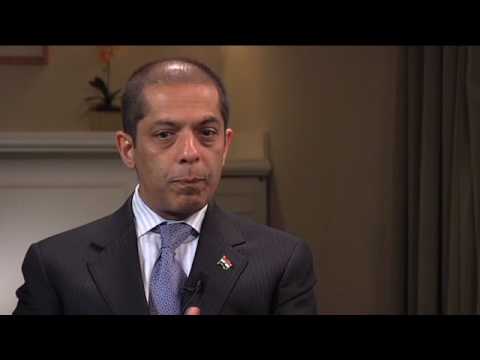
The World Bank's Robert Zoellick: Countries Doing Badly Should Worry about Those Doing Worse
Ask about Knowledge at Wharton
Episode Description
The current financial crisis is no time to let emerging and yet-to-emerge markets lose their momentum, according to World Bank president Robert Zoellick. During a recent talk at the University of Pennsylvania, he suggested that despite the weakened state of the industrialized economies, it is in their best interests to prevent backsliding in the economies of Africa, Latin America, Central Europe and South Asia, many of which have successfully tied themselves to the global markets in recent years. 📂 Public Policy
Read the full transcriptHide the full transcript
- [Music] before introducing our speaker this evening let me thank John and lri reinsberg whose generous gift
- established this lecture series John an alumnist of the college who is now Deputy chairman of Lazard
- Asset Management wanted Penn students to learn from those working in the international
- arena in positions that we might Now call social impact and he and his wife lri established this series and lri is also
- very involved at pen and she's on the board of the instit for contemporary artart I think that you will agree that
- this evening's speaker demonstrably fulfills John and L's purpose our speaker this evening decided
- that he did not want to stand up in front of you and deliver the conventional lecture this is midterm week and perhaps
- he thinks that at this point in this semester most students don't want to listen to another lecture so we're
- having a moderated discussion and he suggested this moderated discussion and we are
- fortunate this evening to have Professor Howard pack of Wharton's business and Public Policy Department to join us to
- moderate Professor pack is an expert in international and developmental economics and by the way he was uh Bob
- zelich's teacher at one point in the past it's my great pleasure to introduce this evening's speaker Mr Robert B zel
- president of the World Bank group who and there was a title who will speak about the impact of the economic
- crisis on developing countries but I do think the discussion May range broadly when we asked Mr zelich to speak
- we knew that there was a financial crisis this was a months ago we asked him to speak and we knew this but now we
- realize that this crisis is much more far-reaching in an article published in the financial
- times two weeks ago Mr zelik was quoted as asking what started as a financial crisis became an economic
- crisis and is now becoming an unemployment crisis and to what degree does it become
- a human and social crisis he then observed that this Stark question should occupy the minds of all
- those those struggling to find answers to the global recession Mr zelich is superbly
- qualified to discuss possible answers to this question let me note some of the highlights of his long career in public
- service he became the 11th president of the World Bank group on July 1st 2007 immediately prior to joining the
- bank Mr zelich served as Vice chairman International of the Goldman Sachs group he served in President George W
- Bush's cabinet as the 13th us trade representative from 2001 to 2005 and as deputy secretary of state from 2005 to
- 2006 from 1985 to 1993 he served at the treasury and state departments as well as briefly in the
- White House during the 1990s Mr zelich served as an Executive Vice President of Fanny
- May Mr zelich is no stranger to Philadelphia he received his bachelor's degree from swore College where he was F
- Beta Kappa um he then went further north along the coast and spent some time at Cambridge he received his JD Magnum L
- from the Harvard Law School and his masters of public policy from the Kennedy School of government at Harvard
- please join me in welcoming Mr Robert celik president of the World Bank turn it over to you okay so when I
- going to start with is a set of questions which will allow us to get the discussion going and the first thing is
- that when uh you became president of the World Bank the big challenges all of 18
- months ago were you're going to list some of the newly emerging uh economies to become Partners
- in uh with the World Bank and fostering development throughout the world you're going to encourage growth in the Middle
- East you're going to try to deal with fragile States emerging from Civil War and disaster use free trade to Spur
- growth and in general build sustainable inclusive globalization and now that you
- face a crisis every morning and probably every night and uh the world has changed
- quite dramatically especially in the last six months can you in retrospect say uh that
- the topics you chose to emphasize when you first came in still remain important are they doable and is it uh feasible to
- address them given the crises that are occurring on a daily basis um well well first let let me
- thank all of you for uh for joining us tonight and uh particularly since as you mentioned it's the heart of the midterm
- but let this be a caution to you um uh Professor pra was my professor he's still asking me questions so you never
- get away from it it's best just to give up and accept the role of the faculty uh what what what Howard had
- mentioned were was that when I joined the World Bank I thought it was very important to identify some strategic
- themes and I talked about them uh as themes because I was trying to recognize that the the velopment mission of the
- bank um had to customize its services for different challenges and so we were focusing on uh the poorest countries in
- Africa the particular challenges of some of the middle- inome countries and the rising uh uh economic Powers the unique
- issues of fragile States uh which uh really require a combination of governance and security and development
- um Global public goods uh which included the trade issue but also uh climate change questions I also highlighted
- uh the Arab world in the Middle East because I thought there were some unique issues there that we could make a
- contribution but another one which cuts across was a knowledge and learning agenda and the reason I drew that out is
- because I think one of the key functions of the World Bank group is not just to do loans and business every day but to
- continue uh to draw on that experience um compare it with other learning and try to see how we can upgrade and
- provide additional insight and in that sense uh those challenges remain at the heart of
- what we need to do in a global crisis because part of the uh the issue for us is how do we customize uh our services
- uh for each of those those groups and categories given the nature uh of the problem that we're in um obviously uh
- there's there's ones that will rise in prominence so I was talking with some of the Huntsman fellows uh uh and louder
- fellows earlier today about the particular challenge in the area of trade of identifying the need for trade
- Finance given the problems that or the amount of of largely government guaranteed debt in the developed world
- this has presented a special problem for some of these Rising economic Powers uh
- that otherwise would have had open opportunities for finance so one of the challenges that uh runs across all this
- for us at the World Bank group is to try to be faster and more flexible in adapting to client needs and seeing how
- we can solve problems uh at the same time there's a ongoing uh requirement to try to anticipate and we can get into
- this further with your questions or others I think we are in a period now of uh extraordinary uncertainty in the
- world economy it's a very dangerous period a lot of risk to the downside so as a public institution what we have to
- try to do while serving clients is try to get a sense of those issues uh that are immediately on the horizon
- and work with other parties because um while the World Bank group has some considerable resources given the
- challenge of this problems our real uh need is to try to figure out how we try to mobilize other players uh in support
- of the things we're doing some of the things on your agenda presumably required funding and a lot of attention
- by you and the World Bank staff and your attention is deflected from those issues
- for example we know that the Arab countries are having remarkably rapid increases population and labor force uh
- they've had some troubles liberalizing but given the amount of time one has to spend on something like that compared to
- the fact that Eastern Europe is in a freefall can you really pursue that as well well Howard I don't have to do it
- all myself we have 15,000 people there right so uh in a sense part of the challenge
- here uh as organizational management leadership is that in to take your case of the uh the Arab world um we tried
- over the course of the past 18 months to work with our Arab partners and try to identify some of the major challenges
- that they saw compared it with our own sense they include issues of Education to Workforce uh women in the labor force
- uh Water Resources uh I was just at the Arab League Summit in the middle of January those remain very very vital
- issues now uh of course you have to adjust about what resources they have to provide and with many of the Arab
- countries the role that the bank was playing was not a financing one it was taking the experience and knowledge and
- we were providing some of this as a fee for service business uh so part of what we instituted or focused on when I came
- to the bank was trying to adjust our business model uh for different needs and so that flexibility uh is actually
- something that gives us the strength at this point now you mentioned Central and
- Eastern Europe in the same vein uh we were talking beforehand and I was asked which region I felt was probably uh most
- exposed to this crisis and I mentioned Central and Eastern Europe because it's a region that over the past 20 years has
- used trade investment movement of Labor Force which leads to remittances to integrate with the international economy
- uh but in that sense it exposed itself to Greater vulnerability than some other countries would that were shielded from
- the system but it doesn't have some of the cushions that uh one had in Western Europe or in North America or Japan and
- in part because a number of the countries were in transition to the euro Zone you have this added danger of
- assets such as mortgages that may be in a foreign exchange in this case the Euro
- or Swiss Franks that adds to some of the risks so part of what we need to do at the bank is something that we were
- working with some of our partners at the European bank for reconstruction development the European Investment Bank
- uh just last week to try to put together a fund where we could try to support some of the key uh Western European
- banks that provide a lot of the the banking structure uh and support uh for Central and Eastern Europe but this
- won't work unless the European governments also provide the overall uh support and framework and that's a
- challenge that you were probably just for those of you that had time to read the newspapers we reading about this
- week another thing which immediately pops up and it's probably a touchy topic is historically developing countries
- have been very uh Out Of Tune with the advice both from the international monetary fund and the World Bank their
- advice differs IMF is macro the World Bank is micro but on things like the the desirability of import liberalization
- are you now finding that some developing countries are saying we don't want to liberalize look at what has happened in
- the world we're not going to try emphasizing exports because our export Market of the oecd are falling apart
- well one of the things that makes this a fascinating period and will be for graduating students is uh it's a time of
- great flux with these issues and uh given the diversity in the world you get countries that are turning to different
- answers so I was just reading as I was coming here um Ecuador is probably um putting on some of the greatest import
- restrictions and so it's one of the countries you see first moving to protectionism um I don't think that will
- succeed um uh we'll see over time but interestingly enough I got a similar report uh from one of my colleagues that
- was just uh in East Asia and some of the East Asian countries were actually recognizing this may be a time to
- continue to move forward with reforms to try to achieve greater flexibility of markets so to come back to the role of
- the bank um what we're trying to do is to focus on some of the Lessons Learned From The 9798 Crisis and elsewhere and
- help clients uh try to deal most efficiently and effectively with what are probably the primary needs one is
- safety net systems uh particularly given what I believe will be the depth and length of this crisis uh in all
- developing countries one needs to be able to use resources effectively to deal with those that can least help
- themselves now um you know if in some countries there's about 10 or 12 starting with Mexico and Brazil that
- develop something called conditional cash transfer programs which are programs that devote uh cash resources
- to those that have been selected as being most in need and the conditions are you need to send your children to
- school and you need to get basic health checkups and that's been particularly helpful for uh maternal Health those
- programs are welld designed to be able to uh increase the amount of resources expand the scope but in some countries
- in subser Africa you don't have the organizational capacity so there we're trying to learn what's worked with food
- for work programs or School feeding programs or School feeding programs that would bring some food home for the
- parents as well um and so part of what the policy advice is if you have limited resources but you want to help those in
- most in need you probably don't want to increase all Civil Service salaries or uh try to increase an overall wage
- structure because that's an inefficient way so part of what we can share is the expertise now a second area uh learning
- from the Chinese experience in 9798 uh is that countries can wisely invest in infrastructure to both create
- jobs and create a basis for future productivity which is what China very much did now this doesn't always have to
- be in hard infrastructure there's various types of soft infrastructure and one of the points we've been making to
- the Chinese actually that have a lot of hard infrastructure is this might be a time to invest in some of the soft
- infrastructure uh and this includes some areas of educational and additional Social Development um the third area
- that we're trying to encourage is the small and medium Enterprise sector uh because it's easy in an environment like
- this where you get big public responses to lose the fact that the greatest engine of creativity and flexibility and
- job creation is the small private sector but they're often on the short end of the credit uh stream and so what can we
- do with microf finance and others to be able to keep that section going now the reality is you in each country we have
- to customize based on the circumstances uh and their own history and their own support uh I mean one of the hard
- lessons of development over the decades is Outsiders can't do it for a country a
- country has to be able to own it they have to be able to have a sense of of uh of control over their project and to
- give you a very practical example on that uh this week I was talking with the president Ukraine and the prime minister
- of Ukraine shortly beforehand the first challenge is to get them working closely
- together to get some IMF program but in the process of offering what people call
- Budget support some basic financing I was trying to suggest that um we had some experience with some programs to
- try to help those most in need and this could be both good politics and good economics so in a crisis like this part
- of the challenge would be issues of political economy how do you get people to the right policy solution recognizing
- the institution and political structure and one of the challenges for us as a as
- the World Bank group uh is that U we have many fine economists and analysts some of what whom you've worked with
- over the years but we also need to try to make sure that the analysts see themselves as problem solvers with this
- broader uh complexion of of political and social issues and one final question before we
- turn it over um the poorest countries in the world the ones that have had slowest growth
- have been the African ones and from roughly 2002 2007 there were a number of about 18 African countries that are
- actually growing quite well and now one senses that with commodity price decline collapse in some
- cases the African countries are having enormous problems and they're going to have increasingly bad problems
- as the oecd countries slow up and as China and India demand for exports from them go down is there any prospect that
- the bank could redeploy efforts towards the African countries let me start uh with the foundation that you referred to
- because many people don't recognize some of the success of African development in
- recent years if you go back uh over about the past decade and you look at some uh 17
- countries that represent a little bit over a third of the population without mineral resources uh that group of
- countries grew on average about 5 and a half uh 5.6% then there were about eight
- countries uh that were the Prime energy producers uh and over that and they represented a little bit less than a
- third of the population that group um grew at about an average of 7.2% so you have about two-thirds of the population
- of Africa growing in a pretty significant range now the problem in part was the missing third and this is
- one of the issues going back to your first question of postconflict in fragile States and one of the tragedies
- of those countries is not only the harm that they caused their own people but often their neighbors and you know we
- now have the statistical evidence that if you one country is next to a postconflict state on average or growth
- is about 1.2% less one thing that would be a great tragedy of this crisis is that people
- lose the sense of Africa's potential and uh having worked with Africa over the years one of the things that I found
- very striking in recent years was a changed attitude among many African leaders of thinking solely of of a
- Social Development agenda and in a sense being Wards of the International System
- and instead wanting to have uh frankly what people in Western Europe wanted to have 50 years ago they wanted to have
- Regional integration linked to global markets they wanted energy and infrastructure and they wanted a healthy
- private sector now in this this crisis uh what that suggests to me is uh one immediate aspect is you want a direct
- attention uh to those who have been the good reformers so uh in a sense you have
- a version of the Central and Eastern European problem some of those that are most linked to the International System
- could be made particularly vulnerable now you mentioned commodity prices separately uh one of the things that we
- began at the World Bank and I actually was at a discussion audit this morning with a our extractive Industries group
- is how for for the for the natural resource producers the real challenge was one of governance how do you take
- the resources and Paul CER and others have written about this build transparency in
- the system build broad-based development um and in this current environment this
- group that we were meeting with this morning was seen that uh if you believe as I do that at some point uh you will
- have a recovery and for various reasons I could see that commodity prices will rise again you actually want to be
- putting in place the platform now um so you don't have um the great volatility and everything from property rights to
- laws to the contracts um and it's not only a question of investor government confidence but it's also a question of
- developing the benefits for the larger population so that uh it's socially sustainable and politically sustainable
- so part of the challenge of any policy job and a development job is how do you combine the near-term challenge uh with
- looking a little bit further out and I would argue that in the case of Africa while you do want to provide uh
- targeted assistance for example in social safety net you don't want to lose the opportunity to build the future
- basis for growth and that actually brings me back to the point about infrastructure at productivity basis
- again there's a tremendous opportunity and this is one of the things things we were talking about with regional
- integration if we can bring some of the smaller markets together uh relying on whether it be transport structure use of
- the waterways some of the energy systems you know one could come out of this crisis with Investments that would
- actually create uh the basis for future growth so you know one of the challenges
- um whether for me as a international policy maker or those at the national level is to try to keep the eye on on
- those those steps uh whether it'll be how you deal with future or the current liquidity and danger of future inflation
- um how you deal with the uh a large expansion of of expenditure and budget deficits uh at the same time that you're
- trying to cope with today's problem um Bob I I've been been sitting here listening and you Ed the word
- crisis 17 times but recovery only once so my question is as Jenice said you talk about a economic crisis a financial
- crisis an unemployment crisis even perhaps a social and um and human crisis what Milestones or um metrics ought
- should we be looking at that's going to Signal a recovery well and I'll add one more that I've added since that piece
- well it's political crisis um and uh you know uh as you could tell a little bit my background is a little bit of mixture
- of economics and law and governance in different fields and so I I tend to look at these issues from a sort of
- multi-disciplinary perspective um and uh no reason people would be aware of this
- but when I was um in the state department from ' 89 to '92 I worked on German unification all the events of the
- Cold War so when I look at the issues of Central and Eastern Europe now has a very striking effect because I think of
- the danger of reversal of what was I think a historic Global achievement and trying to unite Europe whole and free um
- so in terms of of what I would look at um I guess first uh I would I would keep an eye on what's going to happen with
- the with stimulus programs you've had a number of them start as we were talking about before I think actually the
- state-of-the-art of knowing um exactly what are the right tools or things that people have to approach with a certain
- humility but there are certain ones still in the process like looks like China's moving towards a second phase um
- Second and I think this is critically important uh stimulus programs will be like a
- sugar high unless you fix the banking system I mean you'll get a surge uh but and and uh I'm sure none of you uh in
- your circumstance either drink a lot of coffee or eat chocolate or anything like
- that but you kind of get this high and Bam you hit it to the ground um and what Dominique Stan the IMF has talked about
- is they've analyzed some 122 financial crisis and unless you fix the Banking and Financial system you can't get it
- back going and so I think the core issue not only for the United States now but for others is how do you deal with this
- conundrum of cleaning up the Bad Assets and recapitalizing the banks um a third question uh is to keep a watch and and
- again I think in this area I think the United States through the Federal Reserve has been pretty creative is how
- do you keep some of the credit markets working right now the banking system doesn't provide that the Federal Reserve
- has actually used its balance sheet to provide a secondary Market by buying commercial paper and mortgages and other
- assets I personally think that it would be useful for some of the other central banks globally to look at that uh more
- closely as as a tool to use but I do see potential downside risks and and so in the anticipatory sign uh one that I have
- a concern about is something that happened in 97 and '98 hasn't happened yet which would be the collapse of a
- major currency you've had depreciation significant depreciation but you haven't had a currency really come down now as a
- policy maker knowing that that's one of the reasons why I believe that the calls
- for the IMF to double its resources are very important so it would have the resources to be able to intervene and
- support again the role of anticipation um a second area is uh protectionism um you know probably all
- of you have read about smooth Holly and what happened in the 30s and the traditional Terror forms of
- protectionism that would be bad enough um but uh frankly there's a lot of uh sort of Insidious ways that you could
- start to take steps that start to uh create counter reactions in other countries and I just have to emphasize
- this as a former US trade representative people look at the US and the biggest countries with under under a very close
- uh microscope so when you saw this bi America provision came in uh you know fortunately it got some close attention
- so people uh made at least uh what I it appears to be some adjustments but uh as
- you look at these big pieces of legislation and stimulus passes you got to look closely at these to get a sense
- of some of the trade effects the WTO which doesn't have this capability actually recently asked us to try to uh
- examine some of the stimulus packages uh and even though it'll be sensitive in some quarters I think it's a good idea
- to try to uh identify these topics then there's an aspect of um of of political economy that I don't know how to
- describe other than the fact that it's a global crisis you need a global solution
- that means countries have to cooperate and uh one of the D me as we get further into increas in unemployment rates is do
- you start to see actions that show countries pointing fingers at one another as opposed to uh trying to work
- together and I think that's something that I would watch very closely during the course of 2009 you know as as a
- leader of one of the international institutions you know I can try to play a modest role in identifying these but
- uh part of the challenge in this whole system is you know we still have an Economy based on nation states that's
- the political basis those are where the decisions are made people have to be responsible their local citizenry but
- the issues that we're dealing with are certainly crossborder and transnational so how do you uh interconnect those two
- looking a little further ahead uh we talked about this this afternoon in this anticipatory Spirit uh one would
- certainly want to be alert to the fact that there's a lot of liquidity out there and at some point when um the
- velocity of money picks up you could have an inflationary uh boom and bust again and so I think the good news is
- the fed and the European Central Bank have identified that they've suggested how they would withdraw the liquidity
- but is in a lot of things in life timing is everything so knowing when and how to
- do it is still going to be a big issue and if you had to design it what would the post crisis world look
- like or if you could do well I um it it's hard because I'm trying to think of uh sort of the Practical
- reality versus what I would wish um I guess I would say this uh at at this General level um I believe that
- globalization has brought a lot of benefits uh to people and that you know I've been in a lot of developing
- countries where I've seen the incredible opportunity it's provided not only economically but in terms of openness
- and freedom I think it would be a huge tragedy if that were lost and reversed but from the start of my period at the
- bank I felt that to sustain globalization uh one has to uh make it both inclusive
- and I use the term sustainable inclusive within countries so that you get a broader sense of benefits of it but also
- across countries and then sustainable has both the environmental meaning but also it has a systemic meaning how do
- you try to learn some of the lessons uh from what happened in financial markets try to see how you can head them off um
- how do you try to strengthen some of the disciplines in in in the trading system
- and sort of move the the bias towards uh Freer trade uh and so what I hope will come out of this is a recognition that
- um many of the forces that have created incredible Economic Opportunity over the
- 50 past 50 years uh remain very valuable you don't want to throw out the baby with the bath water but you have to
- create some changes in the institutional structure and here again this affects the institution that I had the World
- Bank I don't know how it is now in courses I remember when I was taking courses you we read about the creation
- of the multilateral institutions you know so these are the grand old institutions that were created in 1944
- and 45 not surprisingly public institutions uh often change more slowly than private institutions do so frankly
- coming back to the mission of the World Bank group part of our challenge is how do we overhaul and update these
- institutions to play play a role some of that can happen in crisis sometimes crises can be an opportunity to move I
- mean it's useful to remember that the World Bank and the IMF were created while World War II was still going on so
- those people were kind of busy doing something but they took time to deal with these institutions so you can walk
- and chew gum at the same time but I do think sometimes uh whenever you have an event like we've just or are going
- through sometimes you also have um uh political responses that uh can overreact and there you have to figure
- through um whether you might do more damage you know so just one the to flag is is that obviously there needs to be
- lessons for uh regulatory reforms um there were lessons of excess but one has to be careful in the present environment
- that if you want to get the private sector back engaged uh that you don't uh undermine further confidence in the
- private sector so those are some of the balances people have to strike [Music]
Brief Summary
Robert B. Zoellick discusses the economic crisis's impact on developing countries and the World Bank's adaptive strategies during a moderated session.
Key points
- Introduction of Mr. Robert B. Zelich. Mr. Zelich, president of the World Bank, discusses the impact of the economic crisis.
- Challenges in Developing Countries. Zelich discusses the unique challenges faced by developing countries during the crisis.
- The Role of the World Bank. Zelich outlines the World Bank's focus on customizing services for different countries' needs.
- The Future of Growth. Investments from the current crisis could lay the groundwork for future growth.
- The Importance of Globalization. Globalization has provided incredible opportunities, and reversing it would be tragic.
- Crises as Opportunities. Crises can lead to necessary changes and reforms in institutions.
Episode highlights
- Introduction of Mr. Robert B. ZelichMr. Zelich, president of the World Bank, discusses the impact of the economic crisis.“This crisis is much more far-reaching.”2:24Mar 18, 2009
- Challenges in Developing CountriesZelich discusses the unique challenges faced by developing countries during the crisis.“Countries are turning to different answers during this time of great flux.”13:09Mar 18, 2009
- The Role of the World BankZelich outlines the World Bank's focus on customizing services for different countries' needs.“We need to focus on the lessons learned from past crises.”14:01Mar 18, 2009
- The Future of GrowthInvestments from the current crisis could lay the groundwork for future growth.“You could come out of this crisis with investments that create future growth.”22:41Mar 18, 2009
- The Importance of GlobalizationGlobalization has provided incredible opportunities, and reversing it would be tragic.“Globalization has brought a lot of benefits; it would be a tragedy if that were lost.”29:49Mar 18, 2009
- Crises as OpportunitiesCrises can lead to necessary changes and reforms in institutions.“Crises can be an opportunity to move; you can walk and chew gum at the same time.”31:33Mar 18, 2009
Tension
60/ 100Some tension