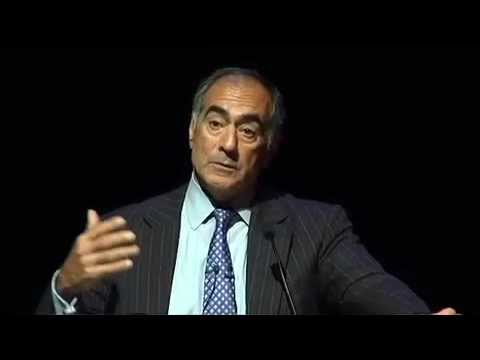
Tata Group Advisor Homi Khusrokhan: Success Is Something You Feel Deep Inside
Ask about Knowledge at Wharton
Episode Description
Homi Khusrokhan has spent over 40 years in the corporate sector with companies like Tata Tea, Tata Chemicals and the Glaxo group in India. Last year he was appointed as special advisor to the board of Satyam. In an interview with India Knowledge@Wharton, Khusrokhan shares learnings from the aftermath of the Satyam episode, the key to successful corporate acquisitions and his own leadership challenges. 📂 Management
Read the full transcriptHide the full transcript
- [Music] uh Mr kushu Khan thank you so much for joining us today thank you thanks nice
- nice to be here well to begin with uh I know that in 2009 February 2009 9 you were appointed a special advisor to the
- board of satam soon after a major Scandal uh broke over there uh I'm sure that our audience all over the world
- will be very curious about your impressions on what really went wrong and uh what you in your role were able
- to understand about how India can avoid such situations again well um when I took the assignment everyone said I must
- be crazy to to take on something like like that but um I found um within a few days that it was a very fine company and
- um it was just the actions of the promoters which which brought it to its sorry state but there were 40,000 people
- who worked very sincerely for this company did a phenomenal amount of good and um I really felt I I I was glad a
- few days later when I took the assignment because I found you know there's so much you could do in a
- positive way for Revival of this company it was a great company it's just very unfortunate that a promoter could do
- something like what the Raju did um how do you prevent such things in future very difficult I think um you can
- always legislate you can always sort of try and put tighter rules into the system but eventually it comes down to
- basically the the philosophy of the promoter and this was a blatant fraud and it was clear that you know there was
- an intent to deceive and it was done over eight years very systematically very methodically so I I don't think there
- can be ultimate safeguards against this sort of thing ever happening again but I
- suppose there will be tighter regulations in future and certainly people will have to be a lot more
- Vigilant about these sort of things happening right now uh considering the fact that you have seen governance in in
- a lot of different uh companies uh were you surprised that the fraud went undetected for so long and and uh could
- there have been any red flags that people could have paid attention to to bring this to light sooner see in
- retrospect it's always very easy to say look surely somebody should have noticed
- this but it was a very very well thought out meticulously planned fraud uh the documents were forgeries most of the
- documents put before Auditors were forgeries uh one could say that look the Auditors are responsible for really
- checking on things and therefore the the one of the key um areas of blame lies there but then again you don't know
- exactly how how they were sort of lured into this feeling that everything was Hy
- Dori um it was a very difficult situation right the Indian government and and and the people on the board have
- received tremendous compliments for the way in which the whole Saum situation was handled uh and the way in which uh
- jobs were not lost uh clients were not driven away uh and and a new buyer was found uh what sort of lessons do you
- think can be learned from that in whole experience we sort of we we sort of structured our entire exercise into
- three buckets one was uh the customer which is very important because we had to make sure customers didn't walk away
- we had to look at the people because a lot of people were very anxious very uncertain about their Futures and of
- course the cash it was a very very IL liquid company in a pretty dire situation in terms of liquidity I think
- when we went in I wouldn't be surprised if they had just about 2 weeks weeks of cash left in the organization so getting
- some cash inflows into the company Emergency Loans was extremely important um I think one of the things
- which um we realized uh fairly early on was that we needed to work very fast because if this thing was allowed to
- fester and drag on for a longer period of time uh it could have been disastrous so it was a tough choice it was a choice
- which I mean some people said look are you guys going to to a fire sale we said no we're still going to make sure we get
- the best price for this this company but we had to move very very rapidly I'm sure there must have been a fair amount
- of demoralization uh among employees as well as a high degree of skepticism among customers how how did you address
- those issues well the people felt very let down a lot of them were completely sh shocked they didn't know how this
- sort of thing could have happened I mean people who are not anywhere near the top
- of the organization were completely sort of dismayed uh demoralized um they thought they' built
- a great company and they suddenly found everything Vanishing in front of their eyes um as far as customers were
- concerned we had two types of customers the guys who said look we will not deal with a a company which is indulged in
- something like this and they walked away within the first week and was a knee-jerk reaction we just couldn't do
- anything about those but those who hesitated a little those are the guys we started working on and saying look this
- is not all bad it's a great company they've done a phenomenal amount of work good work in uh on the software side and
- you know if you stick with them just just weather this little period and everything will be good again and uh a
- lot of them fortunately stayed back great well let's take a step backwards in your career uh uh when you you you
- were you know the at the head of two of the major companies in the Tata group uh
- uh in two the year 2000 uh you you took over at tat t uh and and of course the tle acquisition is is very well known
- could you help us understand a little bit of the Strategic thinking that went into your growth plans for the te T Tata
- te and how you went about uh planning that growth actually the the acquisition decision been made before I join t i was
- sort of my one of my first tasks when I went in was to try to integrate the two companies but the thinking was very
- clear and uh very sound uh tarti Was An Old World Plantation company uh of course it had powerful
- brands in the Indian Indian Indian environment but it was not known outside of the shores of India and the only way
- to really grow the business geographically across the world was to acquire a major te Tea Company and a
- major tea brand and uh that direction was a very clear Direction taken by my predecessors and I think it's a very
- good decision um it's really changed the the the the type of company T te was and
- um once we in what way because really at the end of the day uh tees can be sourced from wherever you want there's
- no sense Force feeding your own tees into Brands you want to really buy the best
- teas available at the best prices uh the Temptation is when you have your own production of tea you tend to use that
- in preference to the best te's available for the Blends you need um so one of the tasks I had to do
- was a difficult one really to sort of um get people to focus on the value of tees
- they were producing and not just the quantity and yields of tees the Temptation in a plantation is to say
- look I've produced X x% more than last year but if the quality isn't what they should have produced it's really
- worthless tea so I had to introduce a system of internal transfer pricing and every batch of tea produced was actually
- valued at the price it could get in an auction so so that's how we sort of changed the
- the value concept of plantations and then people began to realize that you know it wasn't just a question of the
- quantity produced but the quality produced so well you you very modestly said that uh that the decision of how
- the acquisition was made earlier and yours was the task of the integration very often that is the toughest part
- after an acquisition uh how how did you go about doing it and what were some of the lessons learned well i' had done
- about three or four before that so it's like this is this is probably my fourth one and I had to do two more I've done
- about six or seven now so um I sort of knew the the basic model but you know while there are certain commonalities in
- all Integrations there'll always be some new uh thoughts which which come out of
- an integration but could you is pretty well Tren right could you talk us through some of the basic models and
- what was unique in the T situation um well in in most integration models I think two or three things which I insist
- on is first of all what is your integration philosophy what do you want to go what are you going to do are you
- going to just put two companies together or you going to try and build a new company or you're going to try and
- choose the best of both when you make your choices between people and processes and systems um so we decided
- in this one and I'm comfortable with this philosophy I said we'll use best of both so irrespective
- of um who the people where they come from which company they come from where the processes are run best we said we'll
- choose the best of the lot and put together a new company and I think that worked very well um we also found really
- that um although people talk a lot about cultural problems uh it's not such a huge issue um I think the mistake people
- try to make is to change cultures you've got to understand cultures and respect them you don't necessarily have to
- change them as long as you understand how things are done in a particular culture and adjust your way to handling
- that cultural difference I think that's a far better approach than trying to say
- hey these guys are now we bought them they've got to do what we do there is a difference in culture and you've got to
- accept it so I think that's that's always another important learning I've had and at the end of the day I think um
- most Integrations fail because people don't manage the uncertainty which goes within integration uh you've got to
- really think about the people the uncertainty they're going through lay their fears uh if you put a little bit
- of caring and you know employee involvement into Integrations they work much better they just a couple
- of things it's very Sound Advice I would say U uh you went through as you said similar exercise with uh when you were
- at Tata chemicals the in the soda ash industry also uh Acquisitions there could you tell us about some of the
- unique challenges those posed for you well the first one was a British company brunon which was very similar to the tle
- culture so that really we could follow most of what was done in tley but we did it a lot faster we had a 100 day uh
- period for doing the the all the sort of all the what I would call the administrative stuff in Integrations was
- put out of the way in the first 100 days we also Drew up a new strategic plan for
- the group going forward and um this was a company which was owned earlier by private Equity so the moment they felt
- they were back in the fold of a chemical company they felt so much better you know chemical parent was what they were
- really looking out for and I think that we gave them that plus they found you know they'd been strapped for cash we
- had things like R&D we were doing work in Innovation new technologies nanochemistry you know the sort of stuff
- fascinated the people who who were working in bramon and they really sort of enjoyed coming into the fold of a
- large Chemical Company so that that in integration went really well and a few years later well 18 months later we
- bought General chemicals which a really big American company and um this again turned out to be a
- very simple integration because um I guess again cultural difference between the the British and the Americans when I
- said to them look we'll do a typical 100 day 100 day process they said why 100 days let's do it in 50 you know that
- sort of thing so you know all gangho and ready to go and much more sort of open to change than um the British culture
- was they expected jobs to be lost they expected people to be changed around the expected changes in hierarchies and
- responsibilities much more sort of ready to accept that so some valuable learnings in those two as well I mean
- one of the uh things that academic research shows is that a large number of mergers actually end up destroying
- shareholder value rather than building it uh what did you learn through your experience about how to prevent that
- happening I think you've got to really draw uh draw up an action plan for for how you're going to build value because
- at the end of the day that that's really the the meat of the matters in in the value you create out of integration
- unless you have a plan going forward what you're going to do and how you're going to build that value just doesn't
- make sense a lot of Integrations tend to focus their attention on cutting costs and thinking that you know just by
- synergizing and reducing numbers they can produce results but at the end of the day it's the revenue synergies and
- the the sort of expansions the growth the new product opportunities which come out of Integrations which are far more
- important so I I'd sort of focus on the value creation rather than just cutting cost right uh if if I could take you
- still one step f for uh further back in your career to the the almost three decades that you spent in the
- pharmaceutical uh business in India with Glo and Burrows welcome uh what were some of the challenges you faced uh as a
- multinational trying to operate in India's pharmaceutical uh industry especially at
- the time when regulation was pretty tough Glo was a very unique multinational and I used to always say
- when we were running that company that um it was a multinational with a brown face because uh we we really thought as
- Indians we were manned by Indians our MD was an Indian from uh I think um 1975 or
- 76 onwards um we didn't have an expert um CL had some very strong beliefs um and hats off to the chairman
- at the time so Paul jolomi who was a really sort of farsighted legendary strategist um so Paul said look for a
- country like India and he said this sometime in the ' 80s he says I don't expect a bottom line out of this country
- for the next 25 years and you won't find many chairman saying something like that
- but he said as long as you do well in your environment and you're respected company in the environment which you
- operate I'm I'm happy and that philosophy continued for many years thereafter um we did of course have a
- lot more profit pressure as as the years passed but you know that basic sort of approach that India is going to take
- time there's no great urgency uh Saul was Italian and he saw a lot of resemblance between Indians and
- Italians and whenever he came to India he loved India he used to munch chili Chile's where the dozens and uh he loved
- Indian food and he really sort of uh thought of us like you know almost the same way as he thought of Italian
- so it it gave him a different approach to India and different outlook for India but I think that that certainly changed
- the way the group treated India we sort of uh sold our medicines in India at astoundingly low prices completely
- different to other countries around the world and we had huge volumes um at at one stage we were producing something
- like 48% of the total units produced within the group were sold in produced and sold in India so it was that scale
- of operation it was really big one of the biggest subsidiaries of the group and what's the situation today is it
- still uh the case that uh multinational pharmaceutical companies would expect not to generate returns or are things
- better now things have changed because of the patent laws once the new patent laws came in from 2000 onwards uh things
- have certainly changed the newer products are definitely sold at much higher prices and things are changing on
- the profits front I think today Glo Smith Klein is far more profitable than Glo welcome was a few years ago where
- where would you say are the biggest opportunities for international uh pharmaceutical
- companies uh for example I've heard quite a bit about uh you know possibilities in the rural Market do you
- see any prospects there or India will always be a very fast growing Market but uh relative to the Western world uh
- price levels will always be low so that this is something you'd have to accept even with a completely new molecule you
- just cannot charge anywhere near what you would charge in a in an overseas market so pricing is always going to be
- a bit of a problem in India and there's always Big Brother government sitting over your head and watching and uh they
- would intervene I think if if they found U you know the price are too high for the Indian market or the Indian consumer
- uh they have retained sort of horrendous powers of compulsory Licensing in the patent laws so you know they can invoke
- those Provisions if they have to and they do tend to encourage U you know um Indian manufacturers to come in whenever
- they think that prices are too high now over the course of your career you've faced lots of different
- challenges uh which would you regard as your single greatest CH leadership ship Challenge and how did you overcome it
- and what did you learn from it it's difficult to say which was the greatest challenge but I think there was
- a period of time when um I had to um learn to manage people when ex Services I was a functional guy I was a finance
- guy and I was suddenly put in charge of marketing and had a team of 1400 reps to
- look after and these guys were getting unionized and I think my biggest challenge was to encourage them to move
- move away from external unions and bring them back into the internal fold and I still look on that as one of my greatest
- learning experiences how did you go about doing it I intuitively didn't sort of attack
- the level of the rep I attacked the level of the manager they reported to and I said if I change make changes
- there then I think I'll I'll succeed if I'd gone straight to the rep level i' have probably failed but I got a lot of
- Champions on my side by going to the level of middle management convincing them that they had treat their reps
- differently and then worked on their bosses to make sure they were treated differently and then everything fell
- into place but it took about 2 and a half years of hard work uh one final question one final
- question how do you define success something that makes you happy it's got to be something you feel
- within you I don't think a pat on the back of course helps but you know it's got to be something you feel deep inside
- that yes I have succeeded okay excellent well thank you very much for joining us today it's been
- a pleasure chatting with you thanks thank you very much
Brief Summary
Mr. Rao discusses corporate governance, the Satyam scandal, and leadership lessons from his career in Indian business.
Key points
- Lessons from a Major Scandal. Kushu Khan reflects on the downfall of Satam and the lessons learned.
- Philosophy Over Legislation. Khan discusses the limitations of legislation in preventing corporate fraud.
- The Challenge of Integration. Khan shares insights on integrating companies post-acquisition and the importance of culture.
Episode highlights
- Lessons from a Major ScandalKushu Khan reflects on the downfall of Satam and the lessons learned.“It was just the actions of the promoters that brought it to its sorry state.”1:09Aug 6, 2010
- Philosophy Over LegislationKhan discusses the limitations of legislation in preventing corporate fraud.“You can always legislate... but it comes down to the philosophy of the promoter.”1:50Aug 6, 2010
- The Challenge of IntegrationKhan shares insights on integrating companies post-acquisition and the importance of culture.“You’ve got to really think about the people, the uncertainty they’re going through.”10:20Aug 6, 2010
Tension
45/ 100Some tension