How MANSCAPED Used Humor to Break Taboos and Build a Grooming Brand
Ask about Knowledge at Wharton
Episode Description
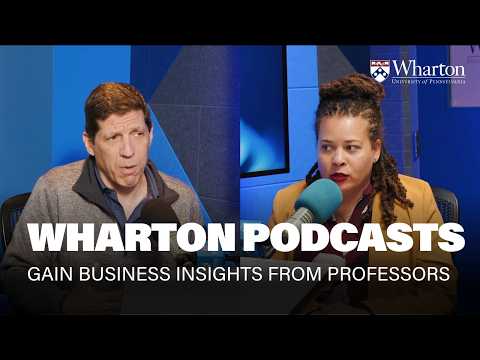
ABOUT THE EPISODE Marcelo Kertesz, chief marketing officer of Manscaped, explains how the brand leveraged humor, premium design, omnichannel distribution, and a breakout Super Bowl campaign to challenge legacy competitors and redefine modern masculinity in the global grooming market.
ABOUT THE PODCAST Marketing Matters is hosted by Wharton marketing professors Barbara Kahn and Americus Reed. Each week they discuss marketing and advertising trends, consumer behavior, data and analytics, the latest in retail marketing, brand-building, and much more with their expert guests. Episodes are recorded at the Wharton School.
#MarketingStrategy #BrandBuilding #MensGrooming #DTCBrand #ConsumerBehavior ----- The Wharton School of the University of Pennsylvania is committed to sharing its intellectual capital through Knowledge at Wharton, the school’s online business analysis journal.
Launched in 1999, Knowledge at Wharton offers free access to:
- Articles, podcasts, and videos highlighting Wharton faculty research and analysis of current business trends - Interviews with book authors from Wharton School Press - In-depth series of curated content like Wharton Executive Education’s Nano Tools for Leaders - A searchable database of more than 10,000 articles covering all aspects of business - A weekly newsletter that delivers Knowledge at Wharton insights directly to your inbox
Visit the Knowledge at Wharton homepage: https://whr.tn/3qUpSBE Subscribe to the Knowledge at Wharton YouTube channel: https://whr.tn/3DEAgAU
Read the full transcriptHide the full transcript
- I think there was a moment where men weren't allowed to care about this stuff. Like we're like slack jawed
- cretins. We don't care. We don't care how we smell. We don't care how our skin feels. We don't care about being
- groomed. None of that stuff. We just show up, you know, and wear our underwear for nine days straight and all
- this kind of stuff. Sorry, Barbara. Barbara, that's too much of a visual for you. Okay. Anyway, so getting back to
- the point, the gateway, Marcelo, is to say, "Hey, no, there's a permission structure, and we're going to we're
- going to open that gateway with humor, like Barbara was saying, but it's a it's actually a very serious conversation to
- say, hey, you know what? I'm a guy and yeah, I want to be well-groomed. There's nothing wrong with that." And so, just
- like brands like uh you know, Dude Wipes or you know, whatever these brands are that say, "Hey, there's a permission
- structure that men can care about these things and not feel less of a man is a very, very powerful statement." And
- today we have a very special guest, Marcelo Keresh, who is the chief marketing officer of Manscaped. Now, if you
- haven't heard of Manscaped, it's a global men's grooming brand that's transformed taboo grooming into a
- mainstream self-care and cultural conversation. So we are very pleased to welcome to the
- show Marcelo. Hello. >> Hi Marcelo. >> Hey. >> Hello Barbara. Hello Americas. And uh
- this is awesome. >> Thanks for having me here. And yes, >> we are guilty of you know making
- trimming down there a bit more popular in the US and in the world. Ladies and gentlemen, we are hot coming right out
- of the gates. >> Pretty much like a warning. You weren't going to go. >> I know. It's it's a it's a desensitizing
- techniques, you know, sometime technique sometimes. We have to start with that. So, no, you just Okay. So, let's let's
- start Oh, God. We might as well start off right away with the elephant in the room and we started talking about this
- before the show started and then we couldn't stand it anymore. We had to start the show. So,
- >> you made a Super Bowl commercial this year, right? >> Yes. You want to tell us a little bit
- about that commercial in case not everyone in the whole world has seen it? >> Well, first thing, if you haven't seen
- it, I urge you to go check it out. I think it will be at the very least entertained. Uh that was one of our
- goals. >> So, this is a story of hair that after being discarded, you know, they feel
- they feel sad because there is a very interesting human. >> It is true. Think about it. This is
- great. >> There is a very interesting human truth which is >> when hair is attached to our body, we
- treat it with care, we use products, we style it, we love it, you know, we touch
- each other's hairs. But the moment that it gets cut from the body, it automatically becomes the least
- loved thing in the world. It becomes a clump of hair in your drain. It becomes something that you despise and you hate
- and it's gross. >> Yeah, it's really gross. >> So, because we've been trimming hair
- >> from men's body, like all over the body now with the face products, head products, nose, ear hair,
- >> we decided to flip the script a little bit and >> think about how do they feel?
- >> And, you know, we learned that they miss us. They miss our >> I'm tearing up here. I I just have to
- control my emotions because discarded hair empathy is welling up inside of me. I'm sorry myself. Please continue. This
- is amazing. >> So this the script is basically that is like hair that has just recently been
- discarded singing about how they feel betrayed, how they feel backstabbed by the people who used to love them just
- few seconds ago. And you know the message that we had to share with the world is that because Manscape has
- started as a growing grooming company um and we transitioned into having like all
- this product. >> Let me just get that straight. You call yourself a groin grooming company.
- >> We used to that's our like that's our initial product. So when our CEO Poor Tran founded this company, uh, one of
- the things that I I think he had this aha moment was first when he looked at all the brands that were serving men
- both on the hardware like trimmers and shavers and all those things and and in the products,
- >> they all skipped a very kind of, you know, unique to the male experience. let's call it part of what
- being a man is. And >> and it wasn't fair that no one was able to talk about it. So he said, "You know
- what? We need to take care down there." So there was this huge white space, but he knew from the get
- >> this is brilliant. I mean, the hits keep coming to you. >> I know. This is beautiful. Go ahead,
- Marcel. This is absolutely the white space. I mean, come on. Yes. And no one no one was like people were afraid to
- talk about it, afraid to you know and to be really honest like in in most places
- it's more common to see women taking a much better care down there and men you know are sloppy. Men don't retribute the
- favor. Men are not doing >> the same. So >> we took on this task of talking about
- this. So that's where the humor comes from because humor was >> instrumental in having a conversation
- about >> I could see that. I could see that if you're gonna have a conversation about
- this which like first of all that's a premise we don't ne whatever but if you're going to do that the
- >> clearly the only way to do it is with humor. >> Yeah% I mean I don't even think you have
- a choice. You have to do it with humor. No, I agree. And and and you know, and sometimes we forget like how powerful
- human humor is, right? Because humor humor is >> like helps us break through hard
- conversations. >> Yes. >> Humors. >> Humor is memorable. Humor entertains. If you have a hard day, like you know,
- having a little bit of humor and >> and and it even um it it almost tells people that, hey, everything is fine. We
- can still laugh about it. like even when you're facing a hard situation. >> So that became kind of our brand voice.
- Yeah. Sorry. Go ahead. >> One of the things with humor though is not everybody finds the same things
- funny. So I mean that's always >> but that's Yeah, that's that's always going to be the case, right?
- >> In some senses it's like >> and I think there's I I I would make two comments on that. One is yes, totally
- true. And that's why we need to have a very well- definfined audience and I think Manscape does.
- >> Yeah. Oh, >> Super Bowl though that's everybody. >> Yes. Because now you know like and the
- humor changes too. If you look at our like humor trajectory what we had to the kind of humor that we have to deploy to
- talk about men's private parts is different than the humor that we deploy now to talk about you know shaving or
- trimming all over your body. >> Yeah. Uh and the other thing that is interesting about humor is you need
- especially for a new brand like ours who we are fighting with you know say how do you go say say
- here in the US send like people who have over 100 years old right because all the
- brands >> yes yes >> all brands on space they have either a 100red years or more like the youngest
- if I'm not mistaken has like 79 years old Are you talking about brands like Gillette or Shik? Are you talking about
- brands like that? >> Like Gillette, like Wall, like Phillips, Norelco, like Bra >> Y.
- >> So, we needed to, you know, to break through. They they can't >> talk our talk and and and and we needed
- to break through. >> Yeah. >> But the but the part that I was going to call out too is
- >> we need to balance this with an obsessive quality on everything else. So that's why you see like our packaging is
- like solid. The graphics are nicely designed. The product design itself, the product itself, like the sound of the
- trimmer when you turn on has to feel premium, has to feel wellcrafted, has >> like a Bugatti when you turn the engine.
- >> Yes. Because >> I love that >> because otherwise you can't be confused with a novelty product, you know, like
- when you >> buy like for fun like those fun >> gift like a you know $100 bill toilet
- paper. >> If you're just humor that's what you become. So for us >> that's what you become.
- >> It's very important to be obsessive about quality. So the website has like a >> so interesting because you hardly ever
- see luxury or really high quality things like you're talking about play with humor. It's it isn't usually the way it
- goes. So it is kind of a paradox to put all of these things together, >> but this is a unique category
- >> and that's what we call in marketing differentiation. So >> yes, >> to Barbara's point, I love that point. I
- love that point. And to be really honest, like this was Paul's vision because when I joined and I joined early
- in the company, but he already had that vision there. And I remember in our first conversation, he talked to me
- about this and I'm like, those things don't go well together. I I don't know. I don't know if I can recall of a brand
- who has that. And but then the more I thought about it, the more it made sense. And then of course after
- everything we did, I'm now a huge fan of the strategy, the approach and I 100% uh
- am behind that. But but I had my own, you know, like he was the one with that vision specifically. So
- >> kudos to him on that. >> I I think that's absolutely super fascinating. I'm going to step back just
- a little bit, Marcelo, and uh connect some of the dots because Barbara's always asking me.
- >> Yeah. Yeah. You connect all the dots you want. and she's like, he's going to say
- something about identity, but I'm not this time. I'm going to I'm going to have like some some restraint. Uh, but I
- love this point though, and Barbara jumped in on this as well because you said something desensitization,
- which jumped in my mind, and I I really love that because I think there was a moment where men weren't allowed to care
- about this stuff. Like we're like slack jaw cretins. We don't care. We don't care how we smell. We don't care how our
- skin feels. We don't care about being groomed. None of that stuff. We just show up, you know, and wear our
- underwear for nine days straight and all this kind of stuff. Sorry, Barbara. Barbara, is this too much of a visual
- for you? Okay. Anyway, so getting back to the point, the gateway, Marcelo, is to say, "Hey, no, there's a permission
- structure and we're going to we're going to open that gateway with humor like Barbara was saying, but it's a it's
- actually a very serious conversation to say, hey, you know what? I'm a guy and yeah, I want to be well-groomed. There's
- nothing wrong with that." And so just like brands like uh you know dude wipes or you know whatever these brands are
- that say hey there's a permission structure that men can care about these things and not feel less of a man is a
- very very powerful statement. That's just my opinion. What are your thoughts on that Marcel? Is that a fair
- characterization >> first? 100%. Like I this is a conversation that we have internally a
- lot and and it's it's interesting that you call that out because in our discussions
- uh one it became very apparent that this was needed right like uh what used to be
- masculinity you know back 20 30 years ago uh you were not like you would feel less of a man if you had your grooming
- routine or if you have products and skincare products and all those things and and we know one first this is not
- good for anyone like not for the men themselves, not for the people who have to kind of, you know, be around them.
- No. >> Uh and and a lot of people had, you know, had the desire to do that. So, >> one of the interesting things,
- >> can I just interrupt for one second? >> While you're saying that to to America's
- point and what you're saying now, it makes a Super Bowl a particularly good audience then, you know, like
- >> perfect audience. To Barbara's point, y >> anyway, continue. >> Yep. No. And that's and that's what we
- kind of made a very clear decision like early on. We did not want to be a brand that is exclusively for the men who are
- already super involved in their journey. Nor do we want to be the brand that's just bringing, you know, the guy who
- just washes his face with hands and water. Like we wanted to be a force towards a better routine no matter where
- you are in your journey because we found out that talking to men there was not a
- one sizefits all one rule fits all like men from all backgrounds would have different routines different approaches
- to taking better care of themselves. So we decided that we are we want to be we don't want to be preachy. We don't want
- to be too posh that you know only the in the know kind of use us. We want to be like that older brother who is cool is
- still a good brother is been through stuff can give you some tips but not like not too preachy not like your
- parents you know. So just like that that resource when we want to be a force towards hey if you want to do a little
- better we're here for you. Doesn't matter if it's just adding soap to your routine on washing your face or full
- body grooming and you know and trimming your your nose hair all the other things.
- >> Yes. Oh my I'm not even going to touch it. I'm just going to let that go. >> I'm avoiding the landmines. I'm I'm I'm
- playing ball. >> Marcelo is like he's incredibly restrained here. He could be like just
- going big time satellite radio sort of. But we're cool. We're cool. So >> Well, okay. So you I mean clearly this
- is to get attention, you know, to get your name out there. You know, it's all about getting your name out there and it
- certainly does that. But that's just one piece of a whole marketing strategy. So
- how do you put all of this together? like how did you come to market? How did the whole thing start?
- >> So you mean like the brand itself back in the beginning or the Super Bowl specifically?
- >> Even back in the beginning and then how you get to the Super Bowl and then what
- you do to leverage the Super Bowl. >> So yeah, so on the beginning to be honest was quite simpler right we we had
- a very very unique task of talking about growing grooming. We had like one core product. So it was simple message, it
- was simple product offering and there is the fifth grader in all of us that whenever we say balls people you know
- already pay attention and already go like like you know like we're doing just now.
- >> Ladies and gentlemen, we are we are rolling here. Yes. Yes. We've got the ball if you need to. But
- >> no, we don't need to. I was just proving the brother, right? >> You are preaching, brother. Keep going.
- I'm in. I'm telling you this is like as a guy. I'm sorry. This is like gospel. It's like the the sun the the clouds
- have parted and the sunlight's coming down. Sorry, please go ahead Marcel. >> So that that with a humor made it a very
- simple task >> and because of the whites space it was very effective. Now what became way more
- complex is when we now that people know us for what we our claim to fame now that we have to communicate that we have
- way more products than you think and that we have >> not just flash in the pan, you know.
- Exactly. And that we have just as good products for your face, for your head, for your ears than, you know, we had for
- >> where we started. So that's where Super Bowl comes in extremely >> well timed for us. It was a combination
- of we reached our product portfolio kind of new state, right? Um in all our brand
- research it was clear that we overindex in authority in the groin space but we still underindex when we looked at face
- >> and and in and other places. So the signs were very loud and clear. That's one. Um people who knew about us you
- know mostly knew about us for our first product and we had a lot of things to say. Now combined with that
- >> we reached like a full >> I would say mature state of uh distribution footprint. Uh we now sell
- at Walmart, we sell at Target, we sell at CVS, we'd sell at Best Buy. >> So we are a true
- >> you had to be in that distribution to to leverage the Super Bowl. If you didn't
- have that kind of distribution by the time you went to Super Bowl, it would have been wasted.
- >> I 100% agree. So that that's why like we the desire to go you know to that stage
- was kind of I I since day one that I joined Manscape we talked about it >> nice >> but the combination of those factors is
- what made it like almost a no-brainer of course if we are in a position to to afford it because it's still
- nerve-wracking >> on how expensive it is >> but uh but it made total sense for us
- because we had a simple but very important message to deliver. It was a message to fasttrack
- >> people's perception of the brand for those who knew about us. There's still a
- lot of people that you know are being introduced to the brand still and it's great that they are now introduced to
- the brand with a much wider uh product offering. So, and you know the distribution you can find us everywhere.
- Now we are >> pretty much even split between our D2C business, our our market places, Amazon
- and other other platforms in other countries and our retail business. >> Um, so perfect timing, perfect moment.
- Uh what was missing was the perfect content because that's the hard part because when we made the commitment uh
- we didn't have the content yet and that's that's >> the idea of something funny but
- something funny that's a pretty hard thing to accomplish. >> That's right. That's right.
- >> Yes. But it's not just funny, right? Cuz in, you know, um we >> in this process, uh we had
- >> a couple internal teams, we had external agencies that we looked over, uh 45 different approaches and ideas
- >> and there was a lot of boxes to check. Like we wanted the products to be >> part of the story, but you know, this is
- not a product story. It's a brand story. But >> brand story >> because because it is we have a message to deliver that
- we have all those products for all those different parts of the body and because
- part of believing in that message is actually seeing that you have those products but it's not about talking a
- specific product. Uh we wanted a story >> that the products had uh you know a reason to be there. Um some of the
- beautiful stories that we saw they were moving stories they were pretty funny pretty cool but you know those where
- product gets inserted like artificially like hey you know here it is or someone is holding
- >> and we didn't want that we wanted a pro a story that revolved around that idea
- of the products triggering something and that's where we landed on this moment where hair gets cut which is triggered
- buy our products and then all the emotional roller coaster that the hairs >> guys what kind of social media or 360
- campaign do you build around this one spot? >> Oh, we we did a ton um one like you know
- coming from a D2C first uh we have a lot of like that was a space that we were very comfort comfortable with. So, we
- had a lot of uh content that we pushed in the day off the before, of course, pregame, the day off. We had like brand
- exchanges. We talked with other brands about our spots with brands that were at Super Bowl as well as brands that were
- not at Super Bowl. >> Um, >> we had a lot of uh like meme content that we already knew that was kind of
- after you saw the spot, it was >> for memes. I mean, exactly. >> And we were happy to see how actually we
- kind of just lit a fire on the meme side and then a lot of, you know, organic memes with our campaign started to show
- up. Um, we also had like a week after just just recently because everything is so recent. Um, we had this auction with
- uh comedian Stavros where we did like a a collaboration where he shaved his body
- hair and and we made like a little monster hair ball with his looks and we auctioned on on eBay.
- >> Yeah. There you go. >> Yes. Yes. >> That's beautiful. and >> and the money uh the money went to TCS
- which is our partner uh the testicular cancer society which since year one of Manscape have been a great partner we
- actually did a lot of >> pay for that >> sorry >> how much did that hair thing go for
- >> if I'm not mistaken it was it was outwards of $500 for you know a clump of hair a very nice clump of hair well
- groomed That's still a clump of hair. >> That's funny. I mean, from a charity perspective, it makes a lot of sense,
- right? Because these partners that you're naming have very synchronous fit with the brand and kind of the important
- point that you were making. So, so I think that's super interesting. Here's something for you, Barbara. Uh, say this
- very quickly. Where's the growing growth going in grooming as fast as you can? Uh, I just I'm stuck on that. I'm groin
- grooming. I'm just like, wow. Thank you for that nomenclature, Marcelo. But I think that part of the point here is
- that, you know, opening up this door and like creating this conversation and allowing humor to be a safe way to sort
- of let's start talking about this and it's actually pretty serious because, you know, men have needs and all that
- stuff. So tapping into kind of an expression of identity that allows you know people to connect with your brand
- and starting from kind of a very private sort of conversation into something that
- is now a more broad permission structure is genius. And to keep leaning in on leaning in on that to Barbara's point
- she's always using the point authentically is like can I stay within the brand and not come off as like you
- know just trying to try stuff randomly but to build the brand voice like you were saying Marcelo. So I I love that
- point that you're making. >> Yeah. And and you know if you if you really kind of you know understand your
- your brand voice or sometimes they call like our superpowers in terms of you know what the brand has and for us
- facilitating hard conversations became something that we had to develop first by you know a need and then it became
- something that we actually got good at. So before this Super Bowl campaign, I don't know if you guys are familiar
- with, but we had a pretty successful campaign to called Send Face Picss instead. And this was one that, you
- know, it's not an easy topic. We know you know the epidemic of people sharing and especially men sharing
- pictures of parts. And we actually did our homework and we paired up with a team of science from from a university
- in Canada and we found good data that proves that if you send a Facebook pic it's way more effective than sending a
- picture of you know your private parts. >> Um and this data for that >> this is this is statistically
- significant at P less than 0.0000 0000001. Yes, the face is much more effective. It
- it's absolutely going to start a conversation. That's true. >> More than >> And two two interesting things about
- that just really quick. One is to your point, Barbara, I I'm I might be off on the number like exactly, but it's like
- 90% of men think that they're going to get something by sending a picture of, you know, their private parts and only
- 4% of women uh agree with that with that. So there's a huge gap or something like that.
- >> That's a big effect size. >> There's a huge gap. But the interesting thing about this was you know it fit a
- lot of things. First remember I told you that we wanted to be a force towards moving men forward like either by
- adopting new you know uh grooming habits or hygiene habits or new routines like one or by just you know better behavior
- too without being preachy. So we need to have a sense of humor. We don't want to
- like talk down to men or anyone in this planet for any uh so and on top of that we were starting to announce that we had
- products for your face. We were launching like those beautiful beard and face shavers.
- >> So the send face pics instead campaign was a way to tap into culture to carry a
- conversation that is more interesting to consumers than just talking about the features of my product. But at the same
- time helping deliver the message that hey you know that manscape that maybe you got to know from
- >> go like now it's it's it's in the face right >> so connecting all those dots to your to
- your early earlier point um is very important to us and that's I think >> yeah and I like I like as you move on
- >> yeah as you move on to other things which is like this big category where you are competing against very
- established players you're coming in with, you know, kind of an idiosyncratic approach in some ways,
- but the way you started out saying you also wanted to link it to luxury to hire, you know, and the humor could have
- backfired there because while it might work where you are now, it doesn't work as well once you get into that
- established area if you haven't linked it to that luxury high quality thing in my mind. So I think recognizing that
- right from the beginning in terms of growth which is what Americas was asking makes sense because the growth from
- something humorous or kind of hard to talk about might not be as big as becoming more mainstream and high
- quality and like a different approach or >> and it fits also to Barbara's point Marcela just really quickly it fits well
- with this notion of broadening masculinity and and sort of rebranding the and re rebranding maleness, all of
- this stuff. And it's sort of nice behavior though. I like that a lot. That's a real So, let me just ask you,
- we're running out of time. Go figure. This is like such an interesting topic. It's already time is up. But I just I I
- noticed you had some an interesting background for getting into this. So, like can you talk very quickly about
- your background and how you went from that to this? >> Yeah, that's I mean I it's it's hard to
- do it quickly, but I will. I started my my professional life in Brazil um in advertising as an art direction, art
- director, creative, right? But I always had this passion for strategy. I wanted to learn more and I felt that sometimes
- especially as you are a young creative, you get too like you were distant from the actual strategic and directional
- decisions. That's what that's where I decided to take an opportunity when I had an invite uh to run uh creative and
- strategy for a presidential campaign back in Brazil and it was a very special one. It was in 2002. It was a very um
- it's kind of almost like Obama 2008 very kind of hope was the theme very uh powerful campaign. Um after that I went
- back to advertising but then I had uh what I call the crazy years in my life where I did another five presidential
- campaigns um in different countries. >> Wow. So all in all I did seven presidential campaigns uh three of them
- in Brazil other other four countries. Um and then because I had that stretch, I was taking a year off and that's where I
- landed in the US and that's where I met Paul Tran and that's where we started um
- you know this. >> So I don't know if politicians and you know private parts can be connected but that's my
- >> geopolitics and grooming grooming it's my background. I cannot Yeah. >> I love it. So, are you naturally a funny
- person? I mean, is that are you do you like approach life with humor all the time? Just out of curious.
- >> I try to be and and to be honest like when when you have when you're running a
- presidential campaign and it's tight, it's very intense and tense, right? And one of the things, and that's one of the
- powers of humor that I learned and that I take for my life, is the fact that in the hardest days of a campaign under a
- ton of pressure, we were still able to crack a joke. It reinforced that, hey, this is just one part of our lives, our
- our conversation, our our relationship, it's still there. So, I believe humor has that power. That's why I try to take
- life you know always with a with a touch of humor and >> one thing that I wanted to mention cuz
- because you mentioned uh you know when you go to the face we needed to elevate the humor like you said but also it was
- very powerful because as I was talking earlier on the on the older brands they have a hard time having a sense of humor
- because they have you know they have their voices established for so long. So, one of the things we do here is if
- we have a piece of content that one of those brands could deploy, that means it's not the right one for us.
- >> And I am happy to report that we are now number three in the US electric shaving
- market. So, we we we already reach some of those >> some of those traditional players,
- >> you know, with with that approach. So, so far it's proving to be a powerful combination and we intend to keep keep
- evolving by doing it. >> You know, I just have to that reminds me Gillette made a famous campaign where
- they were shaming men. Do you remember that toxic masculinity campaign? >> Um, and there was nothing funny about it
- and it really kind of backfired. That was like one of the most hated campaigns. So, your point is really well
- taken even when you get out of that area. >> Yeah. inclusive, anti- preachy, >> uh, but but using humor as a gateway to
- to start the conversation in an authentic way. Very powerful. Very powerful. >> Yeah. And all with all the touch points
- that any brand has today, you know, consumers can smell when you're being not authentic or when you're too being
- preachy or, you know, when you're trying to say something that is not who you really are. It's not like something that
- you have the voice to do it. So, we are pretty careful with that. But it's it's always like, you know, it's always
- nerve-wracking when whenever because we are on that line, right? So, >> yes. Yes.
- >> Yeah. It's pretty cool. Well, I can't believe it, but we're out of time. Marcelo Cart,
- >> chief marketing officer of Manscape, where can people go to find out more about you because you sound pretty
- interesting and your brand and everything you guys are doing at Manscaped? >> That's a good question. I think maybe
- LinkedIn would be would be, but I I that's a good question. And I didn't have a like a good answer for that. But
- about Manscape, manscape.com is still a pretty cool website where you can learn about our products, our campaigns.
- There's a little bit of our of our bios there. But I you just gave me an idea. Maybe I need to think of a place, you
- know, if people want to know more about where where I'm coming from. So, thank you.
- >> That's awesome. >> Yeah. Thank you. Thank you all for listening today. That's all we have time
- for. Uh we'll be back next week. Till then, this has been Marketing Matters on the Wharton podcast network. We'd like
- to thank our producers, Dion Simkins and Marissa Rena. I'm Barbara Khan here with
- America's Reed.
Brief Summary
Marcelo Keresh discusses Manscaped's humorous approach to men's grooming and their impactful Super Bowl commercial.
Key points
- Manscaped's Super Bowl Moment. Marcelo discusses the significance of their Super Bowl commercial and its impact on brand perception.
- The Emotional Side of Hair. Exploring the emotional connection people have with hair and grooming.
- Men's Grooming Revolution. A conversation about breaking the stigma around men's grooming with humor and empathy.
- Manscaped's Unique Campaign Strategy. Manscaped's approach combines humor and authenticity to engage consumers effectively.
Episode highlights
- Manscaped's Super Bowl MomentMarcelo discusses the significance of their Super Bowl commercial and its impact on brand perception.“If you haven’t seen it, I urge you to go check it out.”2:17Mar 2, 2026
- The Emotional Side of HairExploring the emotional connection people have with hair and grooming.“When hair is attached to our body, we treat it with care.”2:46Mar 2, 2026
- Men's Grooming RevolutionA conversation about breaking the stigma around men's grooming with humor and empathy.“There’s a permission structure that men can care about these things.”11:15Mar 2, 2026
- Manscaped's Unique Campaign StrategyManscaped's approach combines humor and authenticity to engage consumers effectively.“Using humor as a gateway to start the conversation is very powerful.”31:28Mar 2, 2026