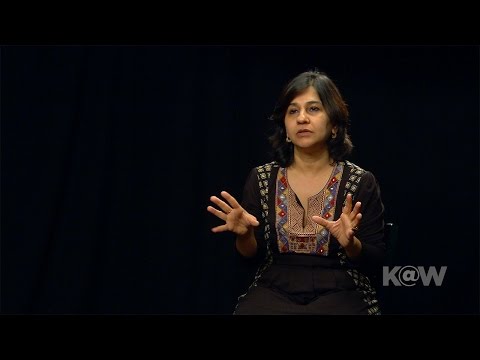
Microfinance and Gender: Why All Inequality Is Not Created Equal
Ask about Knowledge at Wharton
Episode Description
Microfinance programs aim to reduce poverty by making loans available to poor people who, more often than not, are women. But the relative local power of the patriarchy can affect how those programs work in surprising ways, Wharton's Tyler Wry says. 📂 ESG 🏷️ Research
Read the full transcriptHide the full transcript
- the research looks at the lending practices of global microfinance organizations microfinance organizations
- are small financial institutions that make loans to poor people in the developing world
- the idea behind these organizations is that by extending financial products to poor people you can actually help them
- disrupt cycles of poverty so lots of people are really really excited about these organizations and in particular
- because they lend to women at a high rate and this is important because women tend to be poor both around the world
- and within every country they're in so the research that I'm doing here starts to look at the relationship between
- patriarchy and the lending practices of these microfinance organizations and what we do in the paper is start to look
- at different ways that patriarchy manifests in a society and how it effects these practices in some
- counterintuitive ways so the baseline finding is that when you have a high level of patriarchy in the stage in
- religion in the professions and in the family so really suppressing women that makes it harder for microfinance
- organizations to lend to them for a number of different reasons mostly due to a difficulty in attracting resources
- so it's tough to attract money tough to attract actually female customers and it
- can also be tough to attract female employees through actually the people who had make and monitor the loans now
- what's interesting is we see some countries where patriarchy is stronger in some sectors than others so you see
- women being particularly disadvantaged in religion in the family but they have a more equal influence a greater
- presence in government and in the professions and what we see in these countries is we actually see the
- greatest outreach to women and it seems to be that this contrast between high levels of gender and equality in some
- sectors and lower in others actually creates awareness of women's issues and a motivation to do something about them
- so we see lots more local funding support for these microfinance organizations we also see many more
- women employees in these organizations as well as women loan officers and this appears to be driving the effect of
- higher levels of lending to women so the key takeaways from this are one that if you're in the microfinance
- industry it's not enough to pay attention just to economic factors we have a lot of research that looks at the
- business environment and the quality of internal practices and microfinance organizations and how this affects their
- operations in their outreach but I think what this research really shows is that
- if you're not taking into account things like patriarchy and other sources of inequality in a society you're really
- missing half of the picture and particularly in these countries where there's either high levels of gender
- inequality across sectors or low levels where it actually seems to mask inequality in some ways you need to do
- different things to actually ensure you're getting the outreach that you want so when patriarchy is high across the
- board probably important for these organizations to start looking at foreign sources of funding because the
- local support just isn't there now on the flip side in countries that are more equal across the board the research
- really implies that you know there's probably a need for some awareness and some outreach efforts to actually
- educate people that women's issues and women's poverty is still important to address now in addition to that there's
- a broader implication in terms of thinking about the cultural environment of business and social outreach so the
- research that's out there right now tends to focus on cultural or institutional pressures as things that
- lead business to do good in society and the rationale is the business is profit seeking it's instrumental and it would
- not do good things if it were not for external pressures with people saying we will reward you for doing this or punish
- you if you don't now what we show in this paper is that's part of the story sure but if you really want to
- understand social outreach of organizations like microfinance or theoretically any kind of organization
- you need to understand the sources of the problem that is trying to address so if it's trying to address poverty you
- need to understand where poverty comes from if it's trying to address women's issues you need to understand how these
- are rooted in society and the different ways that this pushes back against the efforts that actually do good in the
- world so the most surprising thing for us when we started to look at this data was the
- observation of countries that have this more mixed profile of gender inequality the assumption in the literature to date
- has been that gender inequality is pervasive in society and it is to a certain extent but this has led to an
- empirical strategy where people are measuring patriarchy with a single measure or an index measure and the
- assumption is you know the stronger page the patriarchy is in society the greater
- effect that's gonna have so when we started to decompose this and look at different indicators and see how they
- didn't always cluster together this was really surprising it's a different way of modeling gender inequality in a
- society and we were surprised not only to see it in existence but also to see the kinds of effects that drove in terms
- of the local support for microfinance so I mean by far the most surprising thing
- about the paper so I think an interesting story in the news that's relevant to this research is
- the the new government in Canada so the Liberal Party came in after 12 years of conservative rule and Prime Minister
- Trudeau he has decided that half of his cabinet ministers are gonna be women now
- I personally think this is a great thing but it initiated a lot of pushback a lot
- of consternation of people saying well we need to just have the most qualified people and this is discrimination
- against men and this really gets it one of the things in the paper which is when
- you have a society that is more egalitarian at least ostensibly even though women are so systematically
- disadvantaged in these countries I mean including Canada which you know you think of Canada this great progressive
- place but women still are more likely to be poor and more likely to live in extreme poverty but it gets masked and
- so you get this pushback when someone like Trudeau comes in and says you know we need to have more women represented
- in our cabinet with people thinking well wait no this is discriminating against men when an actual fact you know women
- still are disadvantaged so this is something that we were picking up at our paper as well as it relates the
- microfinance and I think the example of the Canadian government nicely illustrates how it applies in something
- and even as contemporary as you know Canadian democracy so I think one misperception this might
- dispel is you can understand gender inequality as a single thing so the common perception is that gender
- inequality ranges from strong to weak in a society and we really start to unpack
- that and show that it's not always the case and that when you start to get into this deeper level of analysis you can
- actually see some things work and that wouldn't be apparent otherwise in addition to that and you know consistent
- with my last answer you know I think that we really show that you know it's not enough to just assume that because a
- marginalized group has made advances in society that there aren't still marginalized in deeper more fundamental
- ways so you know even in Canada women are still poor even the United States Sweden you know in this perception that
- you know just because there's been advances doesn't mean there's still not work to do you know I think we nicely
- push back against that and show no you know there is stuff you need to do and you know especially in microfinance in
- the developing world there is a big need even in ostensibly more egalitarian societies and if we're not paying
- attention to this we're really missing one of the fundamental things that microfinance er any other similar
- poverty reduction intervention is trying to accomplish so one of the things that really sets a
- study apart from existing research that's been done is it's the first that's looked at the influence of
- patriarchy on the lending practices of these organizations research to date at least the big large-scale empirical
- research has tended to use an economic or finance perspective and they look at all sorts of great things and they drive
- all sorts of important insight but it misses this cultural dimension and so by bringing this to the table we're giving
- a richer picture of the environment these organizations work in and some of the contextual features that affect the
- prospects or their success or failure as it relates the social outreach now in addition to that our study as it relates
- to gender inequality goes well beyond what's been done so far so instead of looking at gender inequality with a
- single variable we're decomposing it into multiple measures and showing that when you do
- this one you get a more fine-grained understand you know some of the mechanisms that are driving the effects
- that we're interested in but also you see things that wouldn't be apparent at all with a single indicator so all of
- the stuff about this contrast between high levels of gender equality in some parts of society and lower in others you
- know this is really the action in our paper it's really what drives the effect and if you looked at it the way that
- people have been so far and studies of gender and gender inequality you'd miss this entirely
- we plan to follow up on this by looking at different dimensions of outreach by microfinance as well as some different
- forms of poverty and how these work in similar or different ways to gender inequality and what this means for the
- actual internal operations of these microfinance organizations so we've started to expand the analysis beyond
- just gender inequality to look at other institutionalized forms of inequality in
- poverty in society so things based on religious ethnic linguistic fractionalization and what this does the
- outreach of these organizations and we're also starting to look at how the nature of poverty be it rooted in gender
- or other forms of systematic discrimination affect the balance between social outreach and financial
- performance of these microfinance organizations and what's interesting is we're starting to see that the level at
- which the social and the financial performance has become compatible versus pulling apart from each other has really
- systematically affected not only by the quality of market institutions in a country but also the nature of poverty
- so in poverty is categorical so it's based in gender other forms of categorical inequality the transaction
- costs are higher for these organizations in terms of the outreach that they're doing and this makes it much more
- expensive to try and address poverty and really starts to tweak the level at which you can do sustainable outreach so
- that's where it's going be interesting to see you know what comes next after that
- you
Brief Summary
Microfinance practices are influenced by patriarchy, affecting women's access to loans and outreach efforts.
Key points
- Microfinance and Gender Inequality. Research shows that patriarchy affects lending practices in microfinance organizations, impacting women's access to loans.
- Surprising Findings on Gender Inequality. The study reveals that gender inequality is not a single measure but a complex issue with mixed profiles.
Episode highlights
- Microfinance and Gender InequalityResearch shows that patriarchy affects lending practices in microfinance organizations, impacting women's access to loans.“When patriarchy is high, it's tough to attract female customers and employees.”1:05Nov 30, 2015
- Surprising Findings on Gender InequalityThe study reveals that gender inequality is not a single measure but a complex issue with mixed profiles.“The assumption has been that gender inequality is pervasive, but that's not always the case.”4:18Nov 30, 2015
Tension
45/ 100Some tension