Creating More Gender Equity in the Workplace with Wharton Prof. Maurice Schweitzer — Ripple Effect
Ask about Knowledge at Wharton
Episode Description
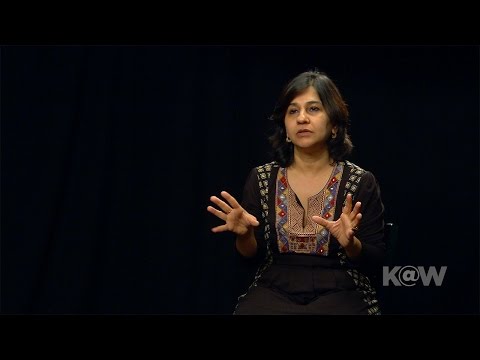
EPISODE OVERVIEW Wharton’s Maurice Schweitzer says he’s optimistic that women will face less workplace discrimination in the future as gender equality improves and norms evolve. This episode is part of a series on “Women & Leadership."
PODCAST OVERVIEW Every day, business scholars answer pressing questions in their research - but what do their insights mean for you? In this podcast, Wharton faculty dive into what inspired their studies and how their findings resonate with the world today. Learn how research insights translate into knowledge you can use, with host Dan Loney.
Learn more at http://whr.tn/rippleeffect.
#leadership #womeninbusiness #womenleaders #womenshistorymonth ----- The Wharton School of the University of Pennsylvania is committed to sharing its intellectual capital through Knowledge at Wharton, the school’s online business analysis journal.
Launched in 1999, Knowledge at Wharton offers free access to:
- Articles, podcasts, and videos highlighting Wharton faculty research and analysis of current business trends - Interviews with book authors from Wharton School Press - In-depth series of curated content like Wharton Executive Education’s Nano Tools for Leaders - A searchable database of more than 10,000 articles covering all aspects of business - A weekly newsletter that delivers Knowledge at Wharton insights directly to your inbox
Visit the Knowledge at Wharton homepage: https://whr.tn/3qUpSBE Subscribe to the Knowledge at Wharton YouTube channel: https://whr.tn/3DEAgAU
Read the full transcriptHide the full transcript
- Maurice Schweitzer: So if we take a step back, and we think about the traditional expectations and norms that we have around men and women,
- we expect women to be more communal and caring and kind; and we're expecting men to be more assertive,
- more agentic. And there can be penalties when people step outside of those assumed norms, those
- gendered norms. And so when women behave more assertively, that might be perceived to be less congruent with the stereotype,
- compared to when a man behaves assertively. Dan Loney: Welcome to The Ripple Effect, the podcast that takes you
- on a journey through the minds of Wharton faculty. I'm your host, Dan Loney, and in each episode, we'll be diving deep into the inspiration
- behind the groundbreaking research that Wharton professors have conducted, and exploring how their findings resonate
- with the world today. Well, gender inequality in the workplace has been an issue for quite a long
- time now, but how much does it still occur, and what can be done to try and eliminate it?
- A pleasure to be joined by Maurice Schweitzer, who is a Professor of Operations, Information, and
- Decisions here at the Wharton School. Maurice, great to talk to you again. How are you?
- Thanks for having me back. How much of an issue do you think that gender inequality is in
- general in today's culture? You know, I think it's different across different industries and
- across different divisions, but it remains a persistent challenge. You know, you have done work in the past looking at the differences between
- how men and women are perceived in the workplace, and that goes to this level of concern around gender inequality.
- Yeah. I— that's exactly right. So you can think about gender differences that reflect how people act,
- and then how people are treated, and then how people are evaluated based upon their behaviors. And there's—
- there's evidence to suggest that basically women incur some costs in all three of those categories.
- How much of a challenge is it, especially I would think right now because we have seen
- an influx of women moving into C-suite roles, and that becomes, I think, you know,
- a greater challenge for what has kind of been an established culture to a degree in and around the workplace
- for many years? So we've definitely seen great progress. That's absolutely true,
- and even in the C-Suite. Still, however, women are more likely to be in roles like HR
- than to be the CEO or chief financial officer. So even though we've seen progress,
- there remain significant differences. What is the perception, then, of a woman in the workplace,
- especially when she's more assertive? Well, so if we take a step back and we think about the traditional
- expectations and norms that we have around— around men and women, we expect women
- to be more communal and caring and kind; and we're expecting men to be more assertive, more agentic.
- And there can be penalties when people step outside of those assumed norms, those gendered norms.
- And so when women behave more assertively, that might be perceived to be less congruent
- with the stereotype, compared to when a man behaves assertively. And so there's some evidence to suggest
- that women experience more pushback for similar behavior. So when you have a scenario like that, then, what is the impact back
- onto the employees, whether they be male or female, of having that component as a perception in the office?
- Yeah. So— so it could be— it could present this challenge because women who want to
- move up the corporate ladder face a challenge because if they're assertive, they may be perceived to be overly assertive.
- But a man doesn't face that same penalty. What we've found, and what other scholars have found is that
- when women advocate for a group— so for my team, for my division, for my area— when women advocate for others,
- this sort of "we" or "us" advocacy, it's now very consistent with that gendered norm. So we're expecting—
- sort of like, think of that mama bear. We're expecting an assertive woman attorney,
- or if you think about, say, the U.S. Government, we've had women Secretaries of State for many years.
- Think about Madeleine Albright, for example, or Condoleezza Rice. Like, for many years, we've had women who have been
- Secretary of State assertively advocating for others, for the country, in this case.
- But how can a woman be assertive and still garner the respect that she probably deserves?
- Well, so there's a— there's a bind, and I think this is one of the challenges women face.
- So— so I think we've seen many changes. I mean, If we think about the last 60, 70 years,
- we've seen dramatic changes. And even here, for example, at Wharton, our MBA class becoming, you know, really
- really close to a 50/50 split in terms of gender in our MBA classes. I think that reflects incredible progress
- and incredible change from where we were before, when classes were exclusively or predominantly men.
- We've seen the same thing happen in executive positions, though not to the 50/50 level. I mean, so,
- things remain in some areas like computer science and finance, the— the gender inequality remains quite big,
- and I think in those cases in particular, women face a challenge in being assertive,
- without being perceived to have violated some gendered expectation. So going back to something you said a moment ago, it seems like
- that component of advocating for others within your group, within your sector, is a very important component in terms of
- somewhat of a normalization of the perception of a female leader in a— in a company, in a sector.
- Well, yeah, what— what others have found is that basically when women are very assertive in advocating for their group --
- as opposed to for them individually— but advocating for the group, when they frame it that way,
- that's perceived very positively. In fact, they're— people are expecting that. It's— it's congruent.
- And so there is a path, there is a lane for women to be very assertive and still consistent
- with that sort of stereotype in a way that does not cause them blowback for— for being assertive.
- But then I would think the individual's mindset and kind of work style, lifestyle
- probably ends up playing a factor in this, as well, because no two individuals are probably the same in terms of
- reacting to all of these dynamics. Yeah, so there— there are definitely individual differences.
- There are industry differences, there are cultural differences sort of as we go across different cultures,
- you can see that the gender equality norms, for example in the Scandinavian countries, Northern European countries,
- we see much greater equality there than in some other— other countries. And I think, you know, these things are changing, not as fast as they
- ought to be. You know, as somebody with daughters, I'm very keen to see these things change faster than they are.
- Yeah, that was going to be my next question, is realistically, are we looking at something that you think can shift over time?
- Or is that some of that historical mindset and bias kind of ground into what we deal
- with and probably will be there for a long time to come? Well, you know, it's a socialization. I think
- if we think about norms in our society, you know, you and I are probably similar in age
- to remember historically how— how we perceived people who are homosexual, and now how normalized
- that's become. And part of that comes from changes at the top, when leaders advocate for this.
- We see examples when laws change. We can see norms change in some cases pretty quickly.
- So I'm optimistic that we can make real substantive change. I don't think this is an innate, fixed, or fast perception.
- This is something that can change. And it has been changing, but— but gendered perceptions,
- gendered norms have been slower to change than we'd like. And I find it interesting because it's also a time where you will see
- companies, specifically probably more small to mid-sized firms, that tend to end up being all female or primarily female. And so I'm
- wondering how a lot of these historical biases play in when you have a framework of a company like that?
- It's interesting. Actually we're seeing women in high school, in college, be very successful,
- often more successful than their male counterparts. And so new companies, emerging companies, there—
- there's now an incredible supply of very talented women, and in some cases, far more talented women than— than men.
- Again, depending on the geographic region, the area. But— but we're seeing, just as you said, some companies
- completely led by women. Some new companies, some even sort of completely comprised of women. And— and I think that's going to
- be, you know, something that will emerge going forward. I think that will help us, you know, normalize the idea that,
- you know, anything somebody from one group can do, another group can do. And, you know, we've been talking about, you know, gender as sort of
- a binary thing, but— but we're beginning to to understand that it's really more of a continuum. - Yeah.
- And so I think— I think our perceptions around gender are really going through a transition.
- And, you know, there are fits and starts, and it's not all monotonic, but— but we're moving to a very different place.
- Somewhat like what we're seeing with some of the generational shifts and mindsets that we've seen in recent years, as well, correct?
- I think that that's exactly right. What's your expectation, then, for how women should perceive
- the state of the workforce right now, and how to best handle a lot of these biases and scenarios when they come upon them?
- Well, yeah. So, I think it's— it's tricky. So— so the one hand, I would encourage women to be very
- optimistic and very enthusiastic about the opportunities and the— and the way forward.
- On the other hand, there's no question that there remains gender bias, and women, as well as minorities from, you know,
- every persuasion are likely to encounter some bias at some point. What do you do about that?
- And it's tricky because we can say, "Well, you want to fight everything everywhere," but it's difficult to fight every battle,
- and there are some times when we've got to pick and choose what we're taking on because there's a cost as you sort of fight things and
- allocate your resources, the precious time and attention that you have, to figure out where you can navigate your career the best.
- You know, also, I'm optimistic these things will change over time, as we see more women leaders
- succeed and demonstrate that anything that was a sort of a historically male position,
- women can do just the same. Where do you think that cost ends up showing itself for the most part? Does it show it in
- the career path that a woman may have? Does it even, to a degree, show up in the productivity levels that
- companies may or may not have? Well, it certainly can. And there is some work on what are termed
- "non-promotable tasks." There are things like, you know, planning an office party
- that come up, and some things that may fall on some people more that others— people who are around, who seem congenial,
- who seem like they'd be a good fit for doing something. And there are some tasks that don't help people
- when it comes time for their annual reviews and their promotions, that, you know, people can spend time and effort and energy doing.
- And I think fighting some battles in ways that may upset some people, alienate people, create friction
- or cause people to wonder, "Hey, I know they had conflict. There are always two sides of a story.
- Who knows how much blame each side deserves?" And so it could be that the battles that people take up
- can be costly. And and so I think we have to, you know, pick and choose where we—
- where we fight, and where we push forward, advancing our careers and sort of blazing a path for change
- that, you know, frankly has been slow. Yeah, because the dynamic of having those battles within the office
- is certainly a totally different scenario than having them out in the public when you're discussing topics, and you—
- and you disagree with somebody. I think that's right. So how public these battles become, you know, that—
- if we think about influence within an organization, we're trying to gain allies,
- we're trying to advocate for our ideas and our positions. And so we need other people to like us.
- We need to be familiar and likeable, and— and sometimes that means not arguing over everything.
- And so again, I think that there's a— there are tough choices that, you know, some people, like
- women or other minorities, might have to decide that— that represents a cost that others may not face.
- But that being said, you seem very positive, very confident that we are on the right path so that we can have better work scenarios,
- better work locations, where we don't have to deal with or consider these biases as much as we move forward,
- as maybe we did in the past. I am. So I mean, I'm very optimistic about the future.
- There are clearly setbacks, and, you know, in many organizations and in many institutions,
- some of the most intense pressure gets put on young employees during their childbearing years, when they
- are likely to be raising young kids. You know, pregnant, raising young kids. That makes things hard.
- I— you know, one cause for optimism is I see— you know, men and women— you know, it isn't 50/50,
- but we're seeing shifting expectations and norms. And, you know, women— women have been a major part of the workforce for decades,
- and they're assuming leadership positions. And we are seeing real change. Is it—
- is it all going in one direction? No, there are definitely setbacks, but— but I'm optimistic that things are changing,
- and that we will— we will, you know, in our lifetime, see things get better. You know, at the rate of change that we're seeing,
- it's not going to be solved, but— but things are getting better. Maurice, thanks very much for your time today. All the best.
- Thank you. Thanks for having me. You got it. Maurice Schweitzer, who is a Professor of
- Operations, Information, and Decisions here at the Wharton School. Thank you for listening to The Ripple Effect.
- We hope you found this episode informative and engaging. Don't forget to subscribe and
- leave us a review so that we can continue to bring you the best insight from the Wharton School.
Brief Summary
Maurice Schweitzer discusses gender inequality, assertiveness perceptions, and the importance of advocacy in the workplace.
Key points
- Gender Inequality in the Workplace. Gender inequality remains a persistent challenge across various industries, despite progress in leadership roles.
- The Cost of Assertiveness. Women face penalties for assertive behavior that men do not, impacting their career progression.
- Optimism for Change. Despite setbacks, there is hope for substantive change in gender perceptions and workplace equality.
Episode highlights
- Gender Inequality in the WorkplaceGender inequality remains a persistent challenge across various industries, despite progress in leadership roles.“It remains a persistent challenge.”1:23Mar 12, 2024
- The Cost of AssertivenessWomen face penalties for assertive behavior that men do not, impacting their career progression.“Women experience more pushback for similar behavior.”4:03Mar 12, 2024
- Optimism for ChangeDespite setbacks, there is hope for substantive change in gender perceptions and workplace equality.“I’m optimistic that things are changing.”18:03Mar 12, 2024