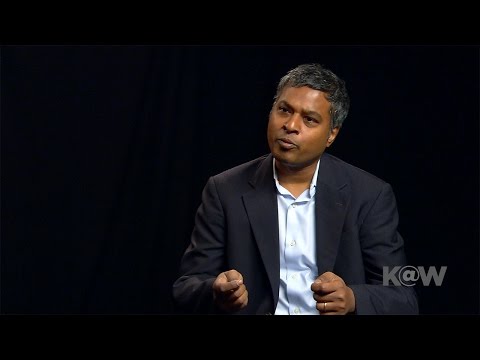
The Hidden Psychology of Vacation Envy
Ask about Knowledge at Wharton
Episode Description
ABOUT THE EPISODE Why does someone else’s vacation sometimes make our own feel less satisfying?
Maurice Schweitzer, Professor of Operations, Information and Decisions at the Wharton School, explains the psychology behind vacation envy and why we instinctively compare our experiences to those of others. From social media-fueled comparisons to unrealistic travel plans and dynamic pricing, Maurice explores the hidden forces that shape how we experience vacations.
He also shares practical ways to manage expectations, avoid common planning mistakes, and get more enjoyment from the trips we take.
ABOUT THE PODCAST Every day, business scholars answer pressing questions in their research - but what do their insights mean for you? In this podcast, Wharton faculty dive into what inspired their studies and how their findings resonate with the world today. Learn how research insights translate into knowledge you can use, with host Dan Loney.
#Psychology #BehavioralScience #DecisionMaking #Travel #vacation ----- The Wharton School of the University of Pennsylvania is committed to sharing its intellectual capital through Knowledge at Wharton, the school’s online business analysis journal.
Launched in 1999, Knowledge at Wharton offers free access to:
- Articles, podcasts, and videos highlighting Wharton faculty research and analysis of current business trends - Interviews with book authors from Wharton School Press - In-depth series of curated content like Wharton Executive Education’s Nano Tools for Leaders - A searchable database of more than 10,000 articles covering all aspects of business - A weekly newsletter that delivers Knowledge at Wharton insights directly to your inbox
Visit the Knowledge at Wharton homepage: https://whr.tn/3qUpSBE Subscribe to the Knowledge at Wharton YouTube channel: https://whr.tn/3DEAgAU
Read the full transcriptHide the full transcript
- So, we're thinking about how is my trip not only going to sort of relax me or rejuvenate me, but also how is it going to compare to other people's trips?
- You know, hey, I had a really great trip, but man, I heard about Dan's trip and that sounds so much better.
- I can't believe it. There is shark diving in Fiji and, you know, I thought going to Paris was really nice.
- Welcome to The Ripple Effect, the podcast that takes you on a journey through the minds of Wharton faculty.
- I'm your host, Dan Loney, and in each episode, we'll be diving deep into the inspiration behind the groundbreaking research that Wharton professors have conducted and exploring how their findings resonate with the world today.
- Well, now that we have reached the summer months, people will invariably start thinking about vacation trips that they want to take, whether that's going to your local beach or if it is going overseas.
- The time away tends to be an important component of people's lives, but there are some components that can cause angst, like not planning properly for the trip or hearing from somebody else that they had a phenomenal trip and maybe it was a place you thought about going in the past and never did.
- And it creates envy and it really can cause a problem for people. Maurice Schweitzer is a professor of operations, information and decisions here at the Wharton School, and he joins us to discuss some of these concerns.
- Maurice, happy summer to you, sir. Oh, thank you. Happy summer to you, too. It is interesting because I think we always associate a trip with relaxation, visiting a place that we haven't been there before, but I kind of lead you into this that there are some of these components around planning and envy that can pop up when you're either going to a place that maybe you wanted to and you couldn't and somebody else has done it.
- Well, yeah, it's a great point. The basic idea is this. We can't help ourselves from making comparisons.
- We make comparisons with others all the time. Social media has made it more intense so we can see how great somebody else's vacation just was as they post photos or share excerpts about it.
- And so we're constantly gauging these comparisons. I mean, one thing I'd say is we make comparisons in many domains where we lack objective measures.
- So if I were to ask you, do you drive a nice car? Do you live in a nice house? How are your kids doing?
- Do you earn a good salary? It's hard to answer those questions without almost instinctively going to comparisons.
- And the same is exactly true for vacations. So does it potentially take away some of the joy when you have that kind of comparison nature, like take away from your own trip when you see all of this other activity going on with your friends, your family members, whoever it might be, colleagues?
- It sure can. And I think both in anticipation. So we're thinking about how is my trip not only going to sort of relax me or rejuvenate me, how much am I going to enjoy it?
- But also, how is it going to compare to other people's trips? And then later, our post-trip evaluation is going to be colored by, hey, I had a really great trip, but man, I heard about Dan's trip and that sounds so much better.
- I can't believe it. There is shark diving in Fiji. And I thought going to Paris was really nice.
- But when you think that, to a degree, with all of the different places that are out there and all of the different potential kind of bucket list things that you could put out there, that there's going to be this element of angst kind of there just in general.
- I mean, it's almost like we should expect it because of how many other places are out there to go.
- Well, yeah, so here's what I'd say about comparisons more broadly than vacations in particular.
- One, all of us make comparisons, but some people are more sensitive to comparisons than others.
- Okay. Two, there are things that we do, like nopping on social media or checking social media all the time.
- There's a continuum here. Where we could make ourself, expose ourself to more or less comparisons.
- So we have both sort of personal and sort of behavioral things that can make the comparisons more intense.
- But the bottom line is we're hardwired for these comparisons. It's hard for us to get away from them.
- All right. So then when you have the trip, part of it is the planning. Like you want to go to place A or place B in the course of your trip, but there's this thing called fallacy planning where maybe you didn't properly prepare for all of the components that could be in there.
- Explain that to us. Yeah. So one key challenge that people have is forecasting. It's very hard for us to forecast, think ahead.
- We're pretty good. Our prefrontal cortex is what allows us to think ahead better than any other animals on the planet, but we're still limited.
- It's still a growing capability. And it's particularly true for conjunctions of events.
- And here's what I mean by that. Imagine you say, I'm going to go run an errand or I'm going to go run five errands.
- Now, any errand might take a little bit longer. I have to find parking and that proved trickier or there was a long line or the person couldn't help me or I couldn't find what I was looking for.
- Each single step could prove to be a little bit more challenging than I thought.
- But if I have to do five of them, the chance that something's going to go wrong is very high, which is why, for example, construction projects where things have to happen in order and there's a long sequence of events.
- Construction products are almost always behind schedule because we're thinking each step's going to take its allotted time.
- But if any step goes long, the whole thing cascades and gets pushed longer. And so the same thing is true with a vacation or trip where we're planning to see this site and go to that museum and then catch this train and be here on time and check in there.
- If any step along the way doesn't go quite right, so there's a delayed train or the museum line was longer than I anticipated, any step along the way can blow us off course.
- And so it means that really we want to build in some flexibility in all of our planning.
- Which really happens a lot when you think, I think, primarily around flying. And if you have a connecting flight that you have to catch, it seemingly always happens.
- Now, let me ask you this from the business side for a second, because for a business, they're not thinking about this as a primary element of what their customers are dealing with.
- But is it there at least maybe a recognition by the third party that a person may be going through this and that business or whoever it is tries to help them out because they know they're struggling with something?
- Well, that's true. And in fact, if you look at airlines historically, I mean, in the last couple of years, airlines have started to pad the schedule because they want to have a higher on time rate.
- And so now it's not uncommon to arrive 20, 40 minutes early where airlines have begun to anticipate exactly that.
- That is what happens if boarding is longer than we anticipated, or the flight was a little delayed getting in, or there was something with the jet bridge.
- I mean, they're beginning to anticipate some slippage in the schedule. And so we do see that in businesses like airlines, they're beginning to try to accommodate for this planning fallacy.
- All right. So one of the other components, and you kind of alluded to it, is the pricing element.
- And, you know, when somebody is putting together a project or they're putting together a trip, they're obviously part of it is they're putting the pricing component together to make sure they have enough money so they can get the job done.
- Same with the construction. They want to have that budget on time and properly being funded so that they can have it be squared away.
- But there is this element that we see play out in certain sectors where dynamic pricing is becoming more and more a popular thing, and it really can frustrate the person who is having to pay to get that experience.
- And it really is driving that person a little bit off the wall at times. That's right.
- So an economist would say we should really pay attention to supply and demand. And if the supply runs short, the prices should rise.
- In practice, people don't like dynamic pricing. So the fact that a Uber ride costs more when it's raining or it's rush hour frustrates people because we have in mind a reference price.
- Here's what the fair price should be. I feel like I'm getting charged more. Restaurants that they'll have lunch specials or a happy hour special, what they figured out is we don't want to be seen as raising prices.
- We want to be seen as lowering prices. So the dinner price is the regular price.
- The happy hour or the lunch price, which is really dynamic pricing, is the sale price.
- But you want to be careful because somebody that frequents the restaurant would feel like, oh man, I'm really getting upcharged at dinner.
- But they have sort of a careful plan to make it seem different from that. But you're right.
- This dynamic pricing, I mean, we should appreciate it because it helps us equilibrate supply and demand.
- But in fact, it feels like I'm getting gouged when I go to Europe in the summer and the prices are so high.
- Is the kind of the bottom line on this that maybe people, wherever they're going or whatever they're doing, enjoy it and maybe have an understanding going in that some of these components may not fall in line like we probably would expect them to?
- Yeah. So I think two key ideas related to what we've been talking about. One is the idea of planning.
- And so we want to make sure we buffer in time so we don't give ourselves tight connections, which can create anxiety or throw off our schedule.
- And then two, to think about budgeting, where with mental accounts, we separate a budget.
- Here's my vacation budget. Yeah. And I don't worry about, I don't stress out about the extra charges here.
- So going out for a gelato, like we've budgeted that in as opposed to feeling like, oh man, all this money is flying out of my wallet.
- So we have to figure out a way and there are individual differences here too. Some great work looking at tight wads versus spend thrifts.
- That is, what is our orientation to money? And some people have a tighter grip and a looser grip on it.
- But if we want to really enjoy vacation, ideally the all-inclusive places release us from having to think about specific expenses.
- So we're not segregating or feeling each specific expense. And so those all-inclusive places, they might be more expensive overall, but for people that have a hard time sort of parting with money at each turn, that might be a solution for some people.
- Maurice, always great to talk with you and get your thoughts and insight. Thank you again, sir.
- All the best. Thank you. Maurice Schweitzer, who is a professor of operations information and decisions here at the Wharton School.
- Thank you for listening to The Ripple Effect. We hope you found this episode informative and engaging.
- Don't forget to subscribe and leave us a review so that we can continue to bring you the best insight from the Wharton School.
Brief Summary
Maurice Schweitzer discusses vacation planning, social comparisons, and dynamic pricing, emphasizing their impact on travel enjoyment.
Key points
- The Ripple Effect Podcast Introduction. Explore the minds of Wharton faculty and their groundbreaking research.
- Social Media and Vacation Comparisons. Social media intensifies our tendency to compare vacations, affecting our enjoyment.
- Planning Fallacy in Travel. The planning fallacy can derail vacations if not properly accounted for.
- Dynamic Pricing Frustrations. Dynamic pricing can frustrate travelers, especially during peak times.
- Budgeting for Vacations. Separating vacation budgets can help alleviate stress during trips.
Episode highlights
- The Ripple Effect Podcast IntroductionExplore the minds of Wharton faculty and their groundbreaking research.0:31Jun 9, 2026
- Social Media and Vacation ComparisonsSocial media intensifies our tendency to compare vacations, affecting our enjoyment.“Social media has made it more intense...”2:21Jun 9, 2026
- Planning Fallacy in TravelThe planning fallacy can derail vacations if not properly accounted for.“If any step along the way doesn’t go quite right...”7:19Jun 9, 2026
- Dynamic Pricing FrustrationsDynamic pricing can frustrate travelers, especially during peak times.“People don’t like dynamic pricing.”9:53Jun 9, 2026
- Budgeting for VacationsSeparating vacation budgets can help alleviate stress during trips.“We want to make sure we buffer in time...”11:52Jun 9, 2026