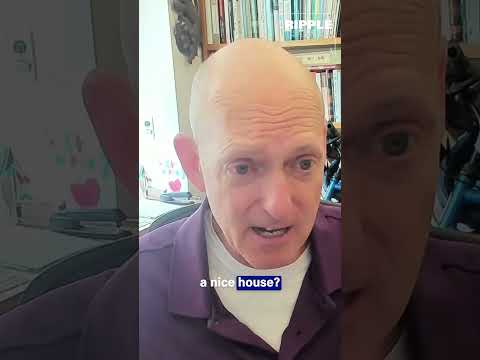
Adam Grant on 'Give and Take: The Surprising Truth about Who Gets Ahead'
Ask about Knowledge at Wharton
Episode Description
KNOWLEDGE AT WHARTON ARCHIVES: A colleague asks you for feedback on a report. A LinkedIn connection requests an introduction to one of your key contacts. A recent graduate would like an informational interview. New research from Wharton management professor Adam Grant reveals that how you respond to these requests may be a decisive indicator of where you'll end up on the ladder of professional success. Grant recently spoke with Knowledge at Wharton for an interview about his findings, which are explored in his new book, Give and Take: A Revolutionary Approach to Success.
More on this interview: https://knowledge.wharton.upenn.edu/podcast/knowledge-at-wharton-podcast/givers-vs-takers-the-surprising-truth-about-who-gets-ahead/
Read the full transcriptHide the full transcript
- [Music] [Music] Adam thank you so much for joining us today thank you for having me so would
- love to talk to you about your uh book give and take uh now you write in your book that uh people differ in their
- preferences for reciprocity and you divide them into givers takers and matchers uh could you
- perhaps Begin by explaining the difference sure so I I was really struck going into this process by the fact that
- people have different motives when they walk into workplace interactions and I think you could sort of anchor this at
- you know at two extremes the takers and the givers so the takers are people who when they walk into an interaction with
- another person they're trying to get as much as possible from that person and contribute
- as little as they can in return thinking that's sort of the shortest and most direct path to achieving their own goals
- on the other end of the spectrum we have this strange breed of people that I call
- givers um not about donating money or volunteering necessarily but looking to help others Maybe by making an
- introduction or giving advice or providing mentoring or sharing knowledge without many strings attached and these
- givers actually prefer to be on the the contributing end of an interaction now I
- think very few of us are purely takers or purely givers most of us hover somewhere in between and that brings us
- really to the third group of people who are matchers um a matcher is basically somebody who tries to maintain an even
- balance of give and take so if I help you I expect you to help me in return um you know I'll sort of keep score of
- exchanges so that everything is fair and really just right now uh so so it seems
- logical enough based on what you said that research shows that in fields like engineering and medicine that give us
- end up at the bottom of the Heap because obviously if you have a if you are focused on giving more to others than
- taking back uh then then it's quite likely that you'll end up at the bottom of the Heap but who ends up at the top
- of the Heap and why yeah that that was one of the most fascinating questions that I got into when I started doing the
- research for the book is you know you look across a wide range of of Industries and even countries and you
- find these three Styles exist everywhere and indeed the the givers are over represented at the bottom um putting
- other people first they often put themselves at risk for burning out or being exploited by takers and so a lot
- of people look at that and they'll say well it's hard for a taker to rise consistently to the top because you know
- often times takers burn Bridges and so it must be the matchers you know who are who are more generous than takers but
- also protect their own interests and when I looked at the data I was really surprised to see that both of those
- answers were wrong it's actually the givers again givers are over represented at the top as well as the bottom of most
- success metrics um I found that in sales that the most productive sales people are actually those who put their
- customers interest first and you know I think a lot of that comes from the trust
- and the good will that they build but also the reputations that they create and I guess one of the the ways that I
- would play this out is to say the the success of givers and the the follow of takers is is often driven by matchers so
- a match is somebody who who really believes in a just world and of course a taker violates that belief in a just
- world matchers cannot see stand to see Takers get ahead you know by by taking advantage of other people and so the
- data on this suggests that that matchers will often go around trying to punish them um Often by gossiping and and
- spreading negative reputational information and just as as matchers hate seeing takers get away with exploitation
- they also hate to see people act really generously and not get rewarded for it and so matchers will often go out of
- their way to promote and help and support givers to make sure they actually do get rewarded for their
- generosity and I I think that's one of the most powerful Dynamics behind the rise of
- givers that's great and one of the things I found Most Fascinating about your book is the combination of of very
- rigorous research uh with some really compelling stories of both givers and takers uh and and so uh among the
- various stories you tell there is one about a person called Peter odet uh could you tell us that story and did
- being a giver help him or HT Hur him and what are some of the lessons to be learned yeah absolutely so I would I
- would say yes to all of the above um so so Peter adet is is one of my my favorite people that I met when I was
- doing research for the book He's a financial adviser and he's the kind of guy who goes out of his way to help
- everyone that he meets so for years he would interview job candidates and he would only be able to hire one and have
- to turn everybody else down and he would often give up his entire afternoon just
- trying to find jobs for the other people that he couldn't hire himself and you know really opening up his personal
- Network to do that um a lot of times this this orientation toward helping others sort of got him in trouble um in
- one particular case he had a a colleague um who ended up calling Brad in the book
- who essentially was was getting out of the business and he needed somebody to to buy his CL clients quickly and Peter
- said sure I'll do it and you know he basically paid about $10,000 for Brad's clients on the spot just to help him out
- and then a couple months later Peter started losing his clients and they disappeared and he discovered that all
- of those clients that he was losing were former clients of Brad's that he had bought and he did a little bit of
- homework and found out that Brad was back in the business and he was basically taking his clients back and
- not paying Peter a dime for them and it cost Peter a ton of money and he really got I think burned by a taker in that
- situation and yet Peter will tell you if you talk to him he's been enormously successful in his career um he runs a a
- financial advisor firm that's uh well well over 7 figures in terms of annual revenue and he will tell you that being
- a giver is how he has gotten ahead it's how he wins business it's why people go to him and I think what happens is often
- times givers put themselves at risk in the short run but in the long run they end up building the kind of Social
- Capital that's really important for success in a very connected world and you know you can see this play out in
- many many different situations in his career uh one of my favorites was when he actually drove out to visit a client
- in the scrap metal business who was the tiniest of clients worth very very little money and Peter's colleagues
- actually said don't bother it's a waste of your time um the drive out there alone is not worth your your hourly fee
- and Peter said you know you can't just ignore somebody because they're not worth your time I I really want to help
- in any way I can and you know the client turns out not to be a a scrap metal worker but the owner of a lucrative
- scrap metal business and he multiplies his fees by a factor of a 100 once he sees what a generous Guy Peter is and I
- think that that's one of the things that that we learned from Peter is that givers do in the short run sometimes
- lose and Peter has gotten better at protecting himself and and screening to say you know is this person a taker a
- giver or a matcher before he determines how much he'll help them um but at the end of the day he also ends up helping
- people who he would never expect to be able to help him back and yet sometimes they do that's very interesting that
- just an act of kindness in going out to see somebody who needed his help uh multiplied his business manif that's a
- very very really very inspiring story um how do successful givers approach networking uh and how does that their
- approach differ from say takers or matchers so takers tend to actually have incredibly broad networks in part
- because when they burn one Bridge they have to go and find new people to exploit in order to get sort of keep the
- the network going um what you find is matchers tend to have much narrower networks because they will typically
- only exchange with people who have helped them in the past or they who they expect to be able to help them in the
- future and so they end up restricting their their Universe of opportunities um givers tend to build much broader
- networks than matchers but in a very different way than takers um what givers will typically do when when they meet
- somebody new is try to figure out how can I add value to this person's life and what could I possibly contribute
- that might benefit this person um and what that typically means is they end up creating a lot of Goodwill in the
- relationships that they build that that often lies dormant until they may actually need
- it how do you spot a faker or a taker and givers clothing H that that was one of my favorite bodies of research that I
- looked into when writing the book so I think there are a couple powerful ways to to spot a taker um one let's start
- with the corner office there's a phenomenal study by chatter G and hamri that looked at over a 100 computer
- companies and actually downloaded the annual reports of each company and tried to figure figure out could you identify
- the taker CEOs without ever meeting them so they got Wall Street analysts to rate
- how much is each CEO a taker and these analysts who knew the CEOs and interacted with them you know rated the
- extent to which they were entitled and narcissistic and self-serving and the first factor that
- really correlated highly with those ratings was the Gap in compensation between the the CEO and the next highest
- paid executive so typical computer industry CEO makes about two to two and a half times as much annual compens
- ation as the next highest paid executive in that company the typical taker CEO had about seven times more annual
- compensation than the next highest paid executive in that company so literally taking more in terms of compensation the
- second cue was looking at their speech so the takers tended to use first- person singular pronouns like I and me
- as opposed to us and we when talking about the company and then the third my favorite was the takers literally felt
- it's all about me I am the most important and central figure in this company and when you looked at their photos in
- the company's annual reports they actually had larger photos and they were more likely to be pictured alone and I
- think that was a third signal so those signals don't just show up in the corner office right there's new research by
- Keith Campbell and his colleagues suggesting even you can spot these cues on Facebook and one of the easiest ways
- that you can look for a taker is to look for a pattern that translates from Dutch
- as basically kissing up kicking down so takers tend to be very careful at impression management and great ration
- when they're dealing with someone Superior or more influential but it's hard to keep up the facade in every
- interaction and so it's often peers and subordinates who have a more direct window into what are this person's true
- motives really like you know what you just said reminds me of a of a story I read many years ago uh when Mahatma
- Gandhi you know when he when he edited a magazine he would receive all kinds of letters and one letter was from a young
- young woman who was about to get engaged uh and uh she was going to meet her you know
- prospective uh fiance for the first time and she wanted to know how she could judge this person and the advice that
- Mahatma Gandhi gave her in The Columns of the the magazine that he edited was don't look at how he treats you look at
- how he treats his servants uh and and and I think that's very very telling in terms of because
- with with somebody whom he was trying to impress obviously he would uh you know he would be very well behaved but a true
- sign of character is how you treat people who are vulnerable I I think that's a really profound observation and
- you know I think there's a famous quote attributed to Samuel Johnson that the the true measure of a person is how he
- treats someone who can do him or her no good exactly exactly now I you also point out that givers and takers are
- very differ quite a bit in the way they approach collaboration uh and and sharing credit
- uh can you give any examples of how how this works out yeah so I think this is one of the most interesting Dynamics you
- could you could really look at so in in doing the research for the book I used some historical examples here that I
- found fascinating uh one was Frank Lloyd Wright who at one point discovered as an
- architect that his uh his draftsmen were essentially getting more commissions and
- more work than he was because essentially customers and clients found easier to work with and every bit as
- talented and he was offended by this and and felt that you know they should be subservient to him so he actually set a
- policy that they were not allowed to accept independent commissions and if while working in his Studio they did any
- work even if he never touched it his name had to be signed first and you know I think that obviously that cost him a
- lot of very very talented drafts people and if you look at his legacy he really mentored and championed far fewer great
- AR Architects than than most who achieve similar stature did another example that
- I think really stands out from history is is Jonas sulk who's really remembered as as a hero uh for discovering and and
- sort of commercializing a polio vaccine but if you look at suk's Behavior really
- closely one of the things you'll see is he never gave credit to any of the the people in his lab who helped him
- discover the vaccine and actually caused the the team to fracture and Splinter um
- so sulk never made a discovery that was nearly as as influential again and I think this is one of the costs of
- appearing like a taker in a collaboration right is slighting other people who might deserve credit what
- givers tend to do in collaboration is assume that credit is not zero some and if I give you credit for your
- contributions that doesn't necessarily take away from my contribution and that makes it a lot easier to keep people on
- board in a team over time it means typically that if you're a leader or manager people will follow you if you
- rotate to a different organization or a different job and I think that that's that's really powerful but often harder
- to do great no you also have a very interesting reason you give why s didn't give credit to his team uh and and and
- there was a certain bias at work could could you explain that that's very fascinating yeah so this this comes out
- of Social and cognitive psychology so the the immediate thinking is well you know if if sulk were a taker he would be
- motivated to put best foot forward and so he would trumpet his accomplishments and really dismiss those of of people
- around him and yet Ross and colleagues have shown consistently that these kinds of biases are less about our desires to
- paint ourselves in the most flattering light and actually more about information that there's a discrepancy
- between what we know about our own contributions and those of others so in suk's case he remembered the Blood The
- Sweat The Tears that he put in Moment by moment when he was working toward creating that that polio vaccine that
- saved thousands and possibly millions of lives he literally couldn't remember the
- contributions of his colleagues because he wasn't there a lot of the time right he he didn't actually experience them
- and this is really the discrepancy that exists um Eugene Caruso and his colleagues have done some really
- powerful research showing that when people are just asked to list the contributions of their team members and
- their own they're literally more able to remember their own contributions and I think that's one of the big factors that
- drives credit biases in collaboration uh one of the biggest challenges for any manager or even a
- teacher is identifying the so-called Diamonds in the Rough you know people who have the potential uh to to to
- become to do great things as they go forward uh how can you tell us a little bit about how a legendary teacher uh uh
- does this in in your book absolutely so there's an accounting professor at the University of North Carolina and Duke by
- the name of CJ skender um the man is taught over 35,000 students in his career he's won every teaching award on
- the planet and he has a remarkable gift for bringing out the best in his students he's had many many students win
- gold medals both in his State and nationally for their accounting achievements he's had more than three
- dozen students follow him to become professors of accounting and when you look at his approach the question is how
- does he do it a lot of people assume that he's got a great eye for talent and that he's immediately able to spot the
- quantitative Vance and then basically work with them and CJ says no it's the exact opposite he sees every student who
- walks into his classroom as a diamond in the rough waiting to be polished and then what he does is he tries to make
- his classes as interesting as possible to bring out the best in those students now of course it doesn't work with every
- student but what he finds over time is by making his material interesting that he does shift some people toward
- becoming more motivated and more hardworking and this is true I think of of coaches and leaders and managers
- everywhere if you look at at research by Benjamin Bloom and his colleagues of what made somebody a worldclass tennis
- player or a world-class musician or even a mathematician or a scientist of of great acclaim very rarely were those
- worldclass candidates Superior early on in their careers um they looked pretty average when you started with them but
- what they had in common was a coach a teacher or a manager who believed in them and set their aspirations very high
- and then that often created a self fulfilling prophecy by inspiring them to to engage in more deliberate practice
- and to put in the 10,000 hours that we all know are critical to achieving expertise you know one other really
- fascinating part of your book deals with what you call powerless communication what does that what does exactly what
- does that mean and how is it useful in persuading and influencing others so I'll give you my own personal example of
- this um when I was 25 and I had first started teaching I was asked to to teach a leadership and motivation course uh
- for uh for senior leaders in the US Air Force and I was about half their age and
- I had just finished my doctorate and I had relatively little experience and I felt like what I had to
- do was speak in you know the most confident possible tone to really establish my credibility and so I came
- in and I I walked through all my credentials and describe sort of what my training was and then we we went through
- the session and and afterward I got the the course feedback and you know it was pretty depressing to say the least uh
- one of the comments that that really got burned into my brain was that there was
- more knowledge uh in the audience than on the podium and there were other people who made comments like you know
- gosh the professors get younger every year and you know how could this guy really teach us to lead he's never been
- a leader and you know I sat back and thought about that and realized that perhaps the The Confident dominant
- powerful approach was not the best path to influence and I decided to open up with a slightly different approach which
- is I walked into the next class that I had to teach for that same audience in the Air Force and I said okay my name's
- Adam Grant I know what all of you are thinking right now what can I possibly learn from a professor who's 12 years
- old and then I just waited and you know after a few seconds everybody started laughing and and one of the Air Force
- Colonels said no no no no that's way off I'm sure you're at least 13 and you know that became sort of a
- running joke throughout the session and I I think what I I guess what I what I learned from that experience was that
- sometimes humility and vulnerability in communication um what you might think of
- as powerless communication is actually a stronger way to connect with your audience and there's a lot of research
- on this there's a classic study by Elliot arenson on the pratfall effect where um quizbowl uh competitors are
- recorded and you get to listen to them and you hear an expert and when the expert spills coffee all over himself
- you actually like him more it humanizes him it gives you an authentic connection
- with him and I think that's a lot of the power of powerless communication uh what
- can givers do to avoid burnout and also to avoid becoming dmats it seems those are two pretty big risks for people who
- see themselves as givers yeah I think that's right I think in a way being a matcher is a safer strategy I think that
- you know knowing the givers end up at the bottom and the top means there are some risks associated with it but I
- think that those risks actually can be mitigated with with careful strategies so I think a lot of it comes down to
- setting boundaries so many givers can confused being helpful or being generous with being available for every person
- and every Quest request all the time um there other givers who confuse perhaps you know being generous with empathizing
- and dropping everything that you're doing to help others um and I think there are also plenty of givers out
- there this is something I found over and over in my research who feel like it's uncomfortable able or inappropriate to
- advocate for their own interests and I think that we need to we need to work with with people who sort of fall in the
- giving end of the spectrum to help them set clear boundaries and determine okay how am I going to help most of the
- people most of the time uh one of my favorite Concepts that I I came across when doing the background research for
- the book is is What's called the five minute favor uh which is basically instead of just helping everyone all the
- time thinking about okay can I offer something of unique value to this other person that will take me 5 minutes or
- less and you know I think it's it's basically about finding High benefit to others but
- low cost to the self ways of contributing you know normally people believe that the alternative to being
- selfish which is what uh you know the trait that takers usually have is being selfless but you've come up with a
- another term called uish could you explain the difference yeah so when I first started studying give and take I
- thought that that basically self-interest versus sort of selflessness were on one spectrum and
- you had takers over here who are very you know very selfish you had givers who are very selfless and it actually turns
- out if you look at the data on this that you can more effectively draw a 2 by two
- and say concern for your own interests and concern for other people's interests are actually independent motivations so
- you could score low and high on one or on both so the takers tend to be purely selfish um there's one group of givers
- who's purely selfless who constantly put other people's interests ahead of their
- own but there's this other group of givers that I call other who are concerned about benefiting others but
- they also keep their own interest in the rearview mirror and so they will look for ways to help others that are either
- low cost to themselves or even high benefit to themselves I.E win-win as opposed to win lose here's the irony the
- selfless givers might be more altruistic in principle right because they're they're constantly elevating other
- people's interests ahead of their own but my data and and research by lots of others show that they're actually less
- generous because they run out of energy they run out of time and they lose their
- resources because they don't basically take enough care of themselves the others givers are able to sustain their
- giving by looking for ways that giving can hurt them less or benefit them more so the the vulnerabilities that you
- identified earlier of burnout and being a dmat are actually uh something that affects selfless givers more than others
- that's right yeah selfless givers are at much greater risk of burnout and exploitation are the other is givers
- right well uh one final question Adam uh what practical advice apart from reading
- your book uh could you offer people who want to start applying the these principles to their own lives so I think
- there there's lots of advice sort of peppered throughout the book in different chapters but when I take a
- step back I think the first question is what is your own style um if you go to the the give and take website give
- take.com there's a self assessment that you can take there there's also a 360 assessment both available for free where
- you can get other people to rate you and I think that's really the first step is
- to hold up a mirror and figure out okay what is my default um I may act more like a taker when I'm negotiating a big
- contract I may act more like a giver when I'm in a mentoring role and I'm probably a matcher when a colleague from
- another organization approaches me for some specialized knowledge but how do I treat most of the people most of the
- time I think as the first step and then I think you know the second step is there are some surprising opportunities
- both for success and for meaning in operating like a giver and so I would ask okay what are the types of giving
- that you find most energizing or most consistent with your skills um for some people it's making introductions for
- others it's sharing credit for others it's stepping up as a mentor and I think finding your own sort of Giver style is
- really powerful and you know I think the the real meaning and purpose associated
- with that is that you know even if givers don't always do better than takers or matchers they manage to
- succeed in ways that make others better and lift others up instead of cutting them down and I think looking for ways
- to do that is probably the the most sustainable path to success in the long term both for individuals and
- organizations Adam thank you so much for speaking with knowledge at Wharton my pleasure thanks for having me
- [Music]
Brief Summary
Adam Grant discusses givers, takers, and matchers in workplace dynamics, highlighting their impact on success and networking strategies.
Key points
- The Dynamics of Givers and Takers. Givers often end up at both the bottom and top of success metrics, driven by their altruism and the support of matchers.
- Peter Adet's Generosity Pays Off. Peter Adet, a financial adviser, exemplifies how being a giver can lead to long-term success despite short-term risks.
- The Power of Vulnerability. Humility in communication can strengthen connections with your audience.
- Risks of Selfless Giving. Selfless givers face higher risks of burnout and exploitation compared to others.
- Understanding Giver Styles. Identifying your own giving style can lead to greater success and meaning.
Episode highlights
- The Dynamics of Givers and TakersGivers often end up at both the bottom and top of success metrics, driven by their altruism and the support of matchers.“Givers are overrepresented at the bottom and the top of success metrics.”2:59Apr 10, 2013
- Peter Adet's Generosity Pays OffPeter Adet, a financial adviser, exemplifies how being a giver can lead to long-term success despite short-term risks.“Being a giver is how he has gotten ahead.”6:05Apr 10, 2013
- The Power of VulnerabilityHumility in communication can strengthen connections with your audience.“Sometimes humility and vulnerability in communication is actually a stronger way to connect.”19:35Apr 10, 2013
- Risks of Selfless GivingSelfless givers face higher risks of burnout and exploitation compared to others.“Selfless givers are at much greater risk of burnout and exploitation.”23:26Apr 10, 2013
- Understanding Giver StylesIdentifying your own giving style can lead to greater success and meaning.24:47Apr 10, 2013