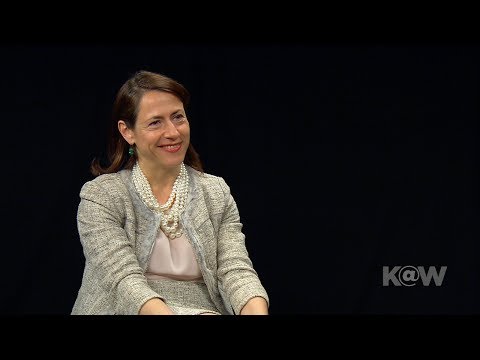
Balancing Competition and Cooperation
Ask about Knowledge at Wharton
Episode Description
A new book by Maurice Schweitzer and Adam Galinsky explains why success depends on being able to cooperate and compete effectively in every relationship. More: http://knlg.net/1XPmiCx 📂 Leadership;Management 🏷️ Research
Read the full transcriptHide the full transcript
- we often look at our relationships in terms of extremes someone is either a friend or a foe but a new book suggests
- that we should actually be looking at how someone is both a friend and a foe friend and foe is also the title of the
- new book by Wharton Professor morce Schweitzer and Adam galinsky who's a professor at Columbia business school
- they're here today to talk to us a little bit about their book and how you can apply it in both your life and work
- Maurice and Adam thanks for being here thank you thank you now you write that a key Insight of the book is that both at
- work and at home we're competing and cooperating all the time often at the same time you also point out that we
- often miss the mark by focusing the on the discussion about whether it's better to do one or the other so wh why is that
- well I think it starts with the idea that we love to categorize things in our world it really helps us navigate our
- way through our social experience so from a very young age we categorize their girls and their boys and that
- extends to thinking about people as other are friends or our foes we just do that natural categorization and and as
- academics we also do that natural categorization when we construct our theories you said you know we missed the
- mark all the time because it's really easy to come up with Theory it says we are born to compete it's also very easy
- to come up with the alternative Theory it's like we have an innate Instinct for empathy and so even as academics we're
- trying to simplify the world to try to understand it and it's easy to take that one's lens now to keep both those lenses
- you know and describe this idea there's a tension between them and a balance between them it makes the world a little
- bit more complex although obviously more realis realistic um and so this idea that we're competing cooperating all the
- time exists for every relationship in fact it it you know it even exists for co-authors I think right yeah it was
- true for us I mean even going back and forth uh taking terms writing and revising and you know we we talked about
- whose name is going to go first on the book and we had to go with the convention of alphabetical order even
- though you know we both contribute are equally Cadena coin TOS you know there's really no difference between um it's
- just it's just an alphabetical but even that you know creates some tension like how are we going to decide who gets to
- be first who gets to be second because being first is still a little bit better you know and so fortunately I was born
- with a slightly you know earlier name in the alphabet but you know it's it's it's
- you know you see that cooperation competition tension existing even as we wrote the book right now you identify
- actually three forces that influence how we shift from friend to Foe and those are scarcity sociability and dynamic
- instability can you describe each one of those one of those and talk a little bit
- about how they interact with each other yeah so you know let me give you one of the examples Us's in the book which I
- really love which is the grevy zebras in Africa now you take these three forces of sociability scarcity and sort of
- dynamic instability and you can see that happen so they have an incredibly scarce
- important resource on the plains of Africa and that's water now when water's abundant they form in a particular form
- of social organization these strong collectives with lots of people interacting with each other in stable
- units around the water sauce but when water becomes scarce then they quickly sort of dissipate from the collective
- form um they they're um uh they form more sort of small bonds with each other um and that often are temporary bonds
- too and so you can see how this scarce resource which is dynamically changing over time produces different types of
- social relationships yeah that's true even with people um we find for example siblings often compete for a scarce
- resarch which is Parental attention and so we have siblings and we think about Brotherly Love where siblings can be
- incredibly collaborative the best of friends but we also think about sibling rivalry they can be incredible
- adversaries often competing for some of these scarce resources and this can change quickly dynamically as the family
- structure changes or even at at the very beginning uh breastfeeding for example is one way infants delay the arrival of
- a new sibling uh that is by breastfeeding longer women are less likely to get pregnant and that that
- preserves their their attention uh for for as long as they possibly can and you can even see that change happen let's
- say a parent gets a new job that's more demanding of their attention the family structure hasn't changed but now the
- cooperation might become a little bit more competive as they compete for that that scarce
- resource and one thing that actually connects Maurice and I is that I'm I'm a twin and his a wife as a twin and so
- even in the womb you're competing for scarce resources so I was born much smaller than my my my sibling and
- there's a weight difference for with marica's wife and and her twin sister you know I'll give you just one other
- example think about Thanksgiving Thanksgiving starts as the most Cooperative day of the entire year we
- come together as family and friends we have an abundance of resources all this food and then we switch sometimes within
- an hour of the end of Thanksgiving dinner into one of the most competitive moments of the Year Black Friday these
- what's scarce these incredible deals two TVs you know for $30 and what do people
- do they literally trample each other to death to try to get one of these TVs and
- so we can see these these re scarce resource whether it's a good deal whether it's parental tension whether
- it's water it changes quickly over time and fundamentally Alters social relationships
- now you also have a lot of examples in the book so again I mean where how can we take kind of the daily things that a
- leader of a country goes through which I mean I don't think a lot of us could really even imagine but then also we can
- apply them to our lives I think you know I think there's I think we can talk about just three examples of presidents
- you know one of the things that we talk about is um one of the key things that we want to do is we want to Signal trust
- to other people we want them to trust us and since the Advent of Television um every president in the United to Signal
- trust in one very very simple but specific way they get a dog right so take Barack Obama Barack Obama's
- daughter is allergic to dogs and yet he still felt compelled to get a dog Scott Walker he's got two dogs Scott Walker
- headline in the New York Times is Scott Walker allergic to dogs will he defy history by knocking dogs so that's you
- know one of these examples but we also even see like in presidential or uh you know in parliamentary politics right how
- important social comparisons are which is another incredibly important part of the book and you know Maurice has a
- great example there well I mean yeah in the book we talk about uh two brothers David and Ed Miland and if you're from
- the United Kingdom they those will be familiar names they were both vying for the leadership of the labor party in in
- the United Kingdom and uh David was the first to announce that he was going to run and his younger brother Ed announced
- that he was going to compete for that position they went through several rounds of voting and finally at the very
- end uh the younger brother Ed edged out David now this this social comparison there is we're constantly comparing
- ourselves with people around us including our siblings and here that sibling comparison is a really intense one and
- when we go out of order when the younger brother gets Advanced first or we can think about when one sibling gets
- married before another sibling when we go out of order we're making these comparisons that can be very unpleasant
- and and David for example he he not only resigned from Parliament he ended up leaving the country he actually came to
- New York he he didn't do it right away but but he talks about the invidious comparison that was really corrosive for
- him and as a as a final example you know just take presidential debates we're going to see Republican debate tomorrow
- night and the question is you know do I want to like break out on my own or do I
- want to sort of be in step with other people and and one study that I did with some of my colleagues is we actually
- analyzed every transcript of every televised debate and we looked at something really simple did I mimic or
- was my verbal structure similar to the person who asked me the question or the person who I was responding to let's say
- my opponent and now you might think you know if I really use a different sort of
- verbal structure I'm going to show him a leader I'm going to be different but if
- I use a similar verbal structure it shows I'm kind of in tune with you that I'm makes it more smooth it makes it
- easier for you to process what I say and so we actually showed that people who did more verbal mimicry actually got
- higher boost in the polls after the debates now this occurs in every Walk of Life so just for example waitresses
- studies showed that if waitresses mimic the behavior um and words of their customers they get higher tips study I
- did if you know you like to lean back if I lean back a little bit my in my chair
- and we're negotiating I get a better um I get a better deal if you like lean forward if I lean forward a little bit
- towards you I get a better deal and so this mimicry occurs at the presidential level you know in restaurants in
- negotiations at work all over the place there's a lot of examples in the book that seem to contradict a lot of
- commonly held thinking and one of the ones I thought about is you know two that really stood out was one that teams
- may actually be better off when they have less talent and another one is that it's actually better to be interviewed
- last for a job whereas I think our we might all think that you know it's it's better to be first because then you're
- first you came in first so I was just curious about like how did that how does that play out like why is what we think
- is true not actually the case yeah so with the talent one you know we call this the too much talent effect um and
- the idea is that when we have a lot of talented people in a group one of the problems that can occur is it can create
- what's called status conflicts like who's really the best person who's going to be the alpha person who's going to
- take control who's going to dominate now sometimes that's not really a problem at
- all let's take a sport sport like baseball right um in baseball the more Talent is always better right if we get
- a bunch of people can hit home runs you're always going to win more games a bunch of people can pitch really well
- you're always going to win better but in baseball I don't need to coordinate my behavior very much with anyone else I
- just need to hit the ball as hard as I can now let's take another sport like basketball it turns out in basketball
- you see this too much talent effect you really see this phenomenon where at a certain point Talent is helpful but then
- it goes down and actually hurts you now in basketball we have to coordinate our Behavior incredibly well when I'm
- shooting that means you're not shooting and so therefore who gets the ball is a scarce resource in addition it's much
- easier to score if I get the ball in a position close to the basket or there's not a Defender so that means it requires
- a lot of coordination even like rebounding and defense requires a lot of coordination and so what we found is
- when teams get above a certain level of talent they don't coordinate very effectively they don't have a lot of
- assists they have more turnovers and their winning percentage actually goes down and just take you know a good
- example recently was when um the Los Angeles Lakers at Kobe Bryant Dwight Howard Steve Nash and even their coach
- said I don't even like watching us play it's like no one likes watching an All-Star game because All-Star game is a
- Just J bu people jacking up shots this is what we have right now is we have an All-Star team but we don't have a real
- team and so you can see this too much talent so the key variable and this is what really matters is how much do you
- and I really have to coordinate if we have to work together as a team you can have too much talent and sometimes you
- do you're you're better off less is more getting a little bit less Talent if we don't have to coordinate it all and
- we're just independent people um whose own talents contribute directly to Performance more Talent is always better
- so it's really cool because we can really see like basketball and baseball how one variable interdependency and the
- need for coordination determines whether more Talent is always better or you get
- too much talent I mean related to these sort of structural ideas you can think about uh these order effects you
- mentioned before and in many cases it's better to go last particularly when there are many different competitors or
- we're we're choosing among a lot of different candidates if you look at for example American Idol you look at
- ratings of the Olympics uh going last is a huge benefit particularly when the judgments are subjective where one of
- the things we're doing as judges is we're holding out we leave room in our first judgments because we want to see
- if somebody better might come along by the time we've gotten to the end we no longer need to keep that buffer uh and
- second there's a recency effect that is our memories are remarkable but they're limited and we forget things over time
- and our memories are sharpest for the most recent things so there are two benefits at least two benefits that the
- last person receives and you see this play out in a lot of of different competitions where it's often best to go
- last and and you know part of this where I got really interested in this topic was back when I was in grad school I got
- an interview at the University of Chicago great you know job and they wanted me the first one to come in and I
- was back of my mind feel little apprehensive but I asked you know uh a lot of my f professors like oh we always
- want our best candidate come first and I went and interviewed it was the first one interview didn't get the job you
- know and then still kind of thinking in the crawl of my mind about this and then
- I realized in my entire five years at Princeton we had had five Job searches and the last person had gotten hired
- every time and then you know when I was at Kellog and and I got interviewed there I was the last person to be
- interviewed and I got the job and so you can really see how you know the this effect really really takes place I don't
- know if everybody knows this everyone's gonna want to go last now and now there's speaking of job interviews there
- was also something in here that there was also something in here about you guys had a colleague who used a really
- interesting exercise right before her inter interview that actually helped her aset and this was in your chapter about
- power so you tell us a little bit about that yeah so you know many years ago I was trying to understand how to study
- power and you know if you go in the lab and you say you know Maurice you're going to be the boss you know Adam
- you're going to be the subordinate there's a lot of things going on to really just try to understand the basic
- psychological consequences of being in power um other than just the power like Maurice has to think about what am I
- going to say to Adam and direct him um and so we came up with this you know manipulation to study experimentally
- where we just said think about a time when you had power really just sort of recall the experience and what we found
- is that actually the same effects if I if I told marce to think about time you had power is the same effects if I
- actually made him the boss and so what happened is one of my former students Jillian CP who's now a tenur professor
- at London business school but she went for an interview and her first interview was at at Harvard and it didn't go very
- well they really plunged her with question she was kind of knocked off her game she walked out of there feeling
- pretty demoralized and so when she goes to do an interview at London Business School you know she's trying to sort of
- you know regain that sense of confidence and they give you about a half an hour before your talk to settle in she said
- you know what I'm going to do I'm actually going to do Adam's experimental manipulation you know just see if it
- actually get the same effects and so she wrote about a time when she had power literally physically wrote it out to
- really like get into it and then she was complete control of situations she was just you know knocking the questions
- back you know answering things and you know she got the job and you know she's still there to this day and it was you
- know just one of those examples we had another who had been in the market a couple times um hadn't done as well went
- in the market a third time before every talk wrote out a um the power Prime um and got four offers that year you know
- so you can just really see how you know you can just by taking this reflection and thinking about time when you had
- power has this transformative effect let's say I mean there a lot of great examples but um but Adams run hundreds
- of studies where not hundreds I mean do yeah probably hundreds uh where where this this experimental manipulation
- brings back it sort of creates a psychological sense of power and it's been incredibly widely uh adopted yeah
- now the book I mean we it stresses that you know we're both cooperating and competing constantly and simultaneously
- but I'm wondering now I mean are some people better at one than the other I mean like if I'm really good at
- confidence but maybe I don't always know how to defer who to defer to like how can I use the knowledge about which one
- I'm better at to sort of help me in these situations kind of check myself for example well yeah so so certainly
- some people tend to be Cooperators some people tend to be competitors and some of us are sort of in the middle harder
- to classify and there's a social value orientation scale that can help us classify people so so there are
- definitely individual differences and there are things about a context that can push us one way or another that is
- there there cues in our environment that can easily push us one way or another yeah and I I think you know you asked us
- really a great question of like how do we you know recognize the fact that there always is this tension and we're
- Co cooperating and competing um and that we have to find a balance between these
- forces and I think about the interview context is a really great one how do we do well when we're going for a job
- interview well we want to express confidence but we also don't want to express arrogance so the key balance
- there is to express confidence as a way to sort of compete well but also to express some humility as a way to sort
- of show cooperation and I think that one of the things that you know Maurice and
- I really think as valuable about this book is that it it allows people to ask themselves the question am I finding the
- right balance am I finding the right am I being exploited so I'm cooperating too
- much am I losing opportunities to make connections because I'm competing too much and I think that just by asking
- ourselves that question periodically maybe once a month it allows us it gives us a sense of power it allows us to
- correct course um but allows just asking the question allows huh no know maybe I
- need to be a little bit more Cooperative to get back more in balance or maybe I need to toughen up a little bit to get
- back more um into the competitive mode and so I think that what we hope this book does is allow people to recognize
- we're always cooperating we're always competing to recognize that tension and also to ask ourselves if we're finding
- the right balance well and I I had one other idea which is um something that I tell my students uh I think you a lot of
- us tell our students to keep a journal um for negotiations uh and I tell my students
- you know after the course ends you know keep keep this journal as you go through
- life jot down some things about your negotiation what you expected what surprised you and how things ended and I
- told them to look for one thing in particular if you look back across 10 negotiations and you find that you're
- satisfied with your outcome every single time you're probably not setting your goals high enough if you look back
- across Ross an arc of negotiations and you find that you've ruptured relationships nine out of 10 times
- you're probably being too competitive and so here we can think about looking for data to help us bring ourselves back
- into balance now one of the things I thought was interesting I mean you're talking
- about the individual there but I also found that the book I would think has a lot to offer for say I'm a manager and
- I'm managing a team and I have a diverse team of people like really thinking a lot more deeply about the team dynamic
- and how to deal with them and how to kind of structure things so I'm getting the best out of each person we talked
- about social comparisons before we compare ourselves with other people and as a manager we might think well okay
- let's try to make everything equal or let me try to gain trust by by creating better transparency and so gravity
- payments they they made payment information transparent they so they shared that information and they brought
- everybody up to you know sort of equal salaries uh a disaster is sort of and and I would say a rather predictable
- disaster that is we We crave comparisons we we want to know how we're doing compared to the people around us that's
- how we figure things out in our in our social world the salary information a really
- key piece of information um and there's a good reason why we don't talk about salaries as freely as as we might um
- because it's going to make some people feel absolutely terrible and when you start moving people's salaries around
- people are going to find inequity uh it's it's easy for us to justify why I should be paid more
- somebody else should be paid less and and it's an easy source for us to become completely miserable and I think in this
- case it's really interesting he was motivated by an incredibly well-meaning intention which is some my employees
- can't afford to live in the Bay Area like they're getting paid $35,000 they just can't pay rent what if I just move
- them up to $70,000 everything's going to be great they're going to be able to pay
- now how do the people who are getting paid $70,000 feel now they before were getting paid twice as much and it made
- them feel like I'm twice as valuable maybe they have more valuable jobs maybe they work a little bit harder now
- they're like you know it means nothing right and so then they end up getting and quitting and then you actually lose
- some of your best workers because they don't feel they're being rewarded for their value and so you can see how this
- fluctuation changes dramatically and so by understanding social comparisons we can we can motivate people sometimes but
- we can also sort of undermine them incredibly well without without Our intention now in this book I mean it's a
- lot about accepting the inevitable of that you know we're going to make social comparisons we're probably going to be
- labeled or we're going to label other people or sometimes people are going to be deceptive in negotiations and
- sometimes we ourselves might be deceptive in negotiations so I mean when you're entering into a relationship with
- someone just as kind of a final question I mean are there certain sort of taking
- stock questions that you can ask when entering into a new relationship to kind of assess this and figure out what the
- dynamic is and how the dynamic might change and I mean I think you know the question that you're going to want to
- ask at the beginning of a relationship also in the middle you know it's like how do I find the right balance right
- between these forces how do I recognize what are the competitive forces and what
- are the Cooperative opportunities you know is one way to think about it and I love this one example that I that I've
- often taught in class a guy named John Clint Denon who got hired um right out of Harvard NBA at Xerox and he got a job
- that the person just below him had really wanted to get his name was Tom gunning you know he was gunning for that
- job right and John talks about how do I start off with this relationship right we're going to be co-workers you know
- anytime we walk into a job we're going like how am I going to preserve that right balance between these forces and
- he said the first thing I did is I didn't invite him for a first meeting into my office CU he's going to be
- thinking this should be my office right it's going to make him competitive I didn't invade his office maybe you know
- as another way of power play I found out what his favorite restaurant was and I invited him out to lunch to show a
- little thing and the first thing I said to him was like I need you and the reason why I need you is you know lots
- of people at Zer I'm new here right you can really help give me the lay of the land and you probably need me too right
- you didn't get the promotion that you wanted and maybe I can help you get the next promotion but then he you know to
- make sure that it's the right balance he's like and if you're not the person that can help me I can find someone else
- right so it wasn't just all hugs and kisses it was a little bit to like you know we're there's a there's a tension
- here and it's just a great example of saying we can work together but I'm not going to be exploited by you but I'm
- also not going to exploit you either you know and so just recognizing I think that example is a is a really great one
- well I think it's important yeah this idea of you know getting off on the right foot is exactly exactly right
- there we need to think about this balance and I think often it's you know start stting cooperatively but also you
- know recognizing that that tension in many relationships we often come to a place
- where we violated somebody's expectations so we can think about how to rebuild a relationship and and we
- talk about an example from uh Baptist Hospital in Florida where there was a tragic medical error uh there was a very
- young child who had uh who's breathing to had been disconnected uh during a scan and because of that error suffered
- severe brain damage now what's interesting about this case after this tragedy the hospital
- staff took actions to repair that relationship they were very candid they were quick they they apologized
- immediately and they took actions to change things at the hospital they ended up bringing this family
- in to become advocates for the h the hospital and the parents talked about how these changes were dramatic how
- they're committed to making sure this never happened again they ended up transforming what would be an adversary
- into an ally and there a couple of interesting things about this first there are specific steps that they
- followed to transform this relationship but second these steps had been instituted at a policy level from the
- head Administration so that is they had instituted steps to transform these relationships and they were informed by
- by research that is the the steps they followed um had a very predictable outcome and so I think there's a
- predictability to how we can transform our relationships to really transform foes into friends and find and find our
- balance yeah and and I think you know what Maurice said I think really captures um I think the the essence of
- the book whether it's you know the beginning of relationship whether it's in the middle of relationship just again
- asking your your yourself a couple questions one is have I found the right balance between cooperation competition
- um what do they need getting back to perspec taking but also what do I need we're most successful when our needs are
- being met and your needs are being met simultaneously um are there areas where I could be exploited right but are there
- opportunities to make a connection and cooperation and so if we periodically ask ourselves that question
- sometimes the beginning of the relationship sometime it's after a violation has occurred sometimes it's
- just maybe we think the relationship is sort of you know not humming along as well as it could um it gives us those
- opportunities and that's whether we're parent thinking about child or their spouse thinking about our partner
- whether a friend thinking about a friend whether a colleague thinking about another colleague a boss thinking of
- employee and vice versa asking ourselves these questions are just going to give us so much more control so much more
- balance balance and they're going to make us so much more successful in [Music] life
Brief Summary
Professors discuss their book on balancing competition and cooperation in relationships, with practical insights for personal and professional contexts.
Key points
- Friend and Foe: A New Perspective. A new book suggests we view relationships as both competitive and cooperative.
- The Tension of Relationships. Relationships are complex, involving both competition and cooperation.
- Scarcity and Social Dynamics. Scarcity can change social relationships, as seen in siblings and zebras.
- Finding Balance in Relationships. The key to successful relationships is recognizing the balance between cooperation and competition.
- The Importance of Social Comparisons. Understanding how social comparisons affect motivation and satisfaction in the workplace.
- Transforming Relationships After Conflict. A hospital's response to a tragic error shows how to turn adversaries into allies.
Episode highlights
- The Tension of RelationshipsRelationships are complex, involving both competition and cooperation.“We’re competing and cooperating all the time, often at the same time.”0:30Sep 11, 2015
- Scarcity and Social DynamicsScarcity can change social relationships, as seen in siblings and zebras.“We can see these scarce resources fundamentally alter social relationships.”5:29Sep 11, 2015
- Finding Balance in RelationshipsThe key to successful relationships is recognizing the balance between cooperation and competition.“Am I finding the right balance?”17:33Sep 11, 2015
- The Importance of Social ComparisonsUnderstanding how social comparisons affect motivation and satisfaction in the workplace.“We crave comparisons; it's how we figure things out.”20:11Sep 11, 2015
- Transforming Relationships After ConflictA hospital's response to a tragic error shows how to turn adversaries into allies.“Transform foes into friends and find balance.”25:52Sep 11, 2015
Tension
45/ 100Some tension