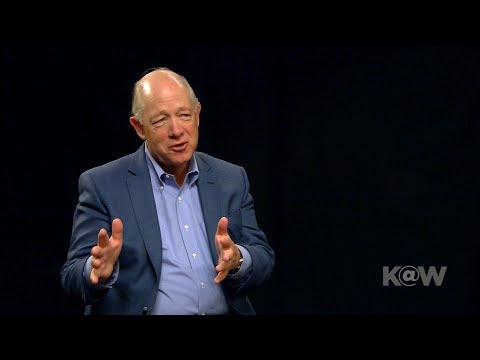
Doing Good, Doing Well
Ask about Knowledge at Wharton
Episode Description
📂 ESG
Read the full transcriptHide the full transcript
- hello I'm Katherine Klein I'm the vice Dean for social impact at Wharton and a professor in the management department
- and I am delighted to be here interviewing Our Guest Jonathan greenblat uh who has an extraordinary
- career in the social impact space every every uh venue within that space Jonathan you are a senior fellow at
- Wharton and we love having you here you are a Serial social entrepreneur with lots of experience in the business SE
- you built uh several successful Brands including ethos water which many of us may know from buying ethos water when
- we're not buying coffee at Starbucks so you've had successful exits uh you're an
- experienced corporate executive you worked at Starbucks you've worked with Google you've been in politics you were
- a member of the White House a director of the office of Social Innovation and civic participation at the White House
- until quite recently uh and you will soon take the role as National director or CEO of the Anti-Defamation
- League so this is business government nonprofits uh and uh I I think today I want to focus on this this title we've
- we've said this your experience as a serial social entrepreneur and talk about the business of social impact sure
- you want to start with uh when you think of yourself and you get this you're obviously comfortable with a label
- serial social entrepreneur let's start with what's a social entrepreneur so I think about a social entrepreneur based
- on a definition that was laid out many years ago by Sally osberg of the skull foundation and Roger Martin who's the
- dean of the rotman School of Business uh up in Canada I think about a social entrepreneur is someone who tries to
- create change through a market-based approach that's about taking direct action so not necessarily lobbying or
- doing advocacy but Lally going in and creating something that is trying to do so in order to create or let's say fix a
- broken disequilibrium so it's not someone who's trying to do something on the outside that isn't causal but
- instead trying to create systems change and repair a difficult societal ill so the social entrepreneur creates direct
- action to fix a broken system for profit necessarily I think it can be both so I
- think you can see social entrepreneurs in the nonprofit space who use that sort of model to attack a particular issue in
- a field it could be healthare could be housing could be micro could be Finance I'm all I personally am more interested
- in what we've seen in terms of social entrepreneurship in the business Community okay so let's talk about that
- social entrepreneurship in the business community and let's start with uh with ethos water you were relatively early in
- this space we've seen a lot of evolution what what did you try to do in in ethos
- water talk brag a little bit what have been the successes and the the wisdom of what you created so ethos Water started
- with my business partner Peter Thum we were roommates in business school at Kellogg for two years which is a lesson
- for all the young Wharton students out there as they think about their classmates uh Peter had this idea of
- creating a bottle of water that would use part of its profits to fund humanitarian water projects as we
- initially thought about it he thought about it initially over time we we then started the company and over time our
- model evolved and when did you start the company we started Pete started working
- on it in 2002 and we came together in late 2002 m 2002 and when did you sell the company to Starbucks we sold it in
- April of 2005 so fast fast yeah pretty fast it's funny you see this pattern of starting scaling and selling on a pretty
- rapid time frame in Silicon Valley all the time right in cpg or in other kind of categories it's a little less common
- right nonetheless the model was predicated on this notion that we could connect consumption to the cause so if
- you look at the first generation of social Enterprises in the business world businesses like Ben and& Jerry's yeah or
- Body Shop yep or Stonyfield Farms here you had products and brands that were about ice cream or about yogurt or about
- you know uh hand like hand cream lotion personal care products right that were not
- necessarily tied to the causes they sought to address they were organic healthier may have had better supply
- chain more that's right right that's right they they they aimed in that like I think you know Ben and Jerry's didn't
- use recombinant Bine growth hormone right right but now consumers didn't understand that and the body shop
- aspired to do things with better sourced inputs from the Amazon but again consumers didn't understand that we
- thought consumers would understand this basic idea of bottled water which is kind of an irrational category to begin
- with connecting its consumption to clean water issues it's a huge Global problem
- so what's gotten more familiar and there is a a one for one model so so people may have heard from of a one for one
- model we see that in Tom shoes perhaps most famously you know and and I know they've evolved their model but it was
- hey hey consumers you know buy a cool pair of these shoes and we will donate a pair of shoes right so ethos water it's
- a little bit of a different it wasn't hey hey hey uh buy a buy a bottle of water from Starbucks previously you and
- we will donate a bottle of water elsewhere what what was it so our notion was if you buy this bottle of water we
- initially aspired to donate up to 50% of our profits to fund humanitarian water programs around the world now I say
- programs because it wasn't just a project or that kind of Hardware like a like a new
- latrine instead or or a new uh like well and that matters but the hardware is no
- good without software so we also sought to do hygiene education and to create sort of economic schemes that would make
- the water system sustainable yeah so that approach is really different than saying I'm going to invest in a
- community here in order to create an ecosystem around water is very different than saying we'll give somebody a pair
- of shoes but there it seems like it's different in at least two ways one is right it's a commitment that's around
- we're going to donate 50% of our profits not uh you know it's not it's not tied to we're each one of our products we're
- selling it's tied to our products and um it's not tied to a particular solution I'm going to give away a bottle of water
- you had more flexibility more ability to change the an ecosystem yeah I think our
- approach so let's take those two things starting with the latter I think our approach was more strategic and the one
- for one model is often more tactical right so we were investing strategically versus techically giving someone
- something sure it's more like it's not teaching a man to fish it's creating an ecosystem around a fishery ecosystem
- better than giving someone a fish right but on the on the flip side look I will say that I think Toms and Warby Parker
- and these other businesses who are endeavoring to do this model I think it's admirable I think we should
- encourage them right I would simply say I think the model can continue to evolve
- in ways that create more enduring change and you know what else connect the consumers to the issue more effectively
- though I would argue that can when you you know the Simplicity of the hey buy a pair of shoes and we'll give a pair of
- shoes away uh may not be the right solution and I know Toms has has been criticized and has evolved their their
- model but from a consumer perspective it's it's very concrete very clear well now you're kiding something of the key
- so the consumer wants to understand hey I do this what happens yeah so our slogan was every bottle makes a
- difference helping children get clean water right simple I buy this water someone gets water but the fassil I buy
- this water we give someone a bottle of water that's crazy right and so we we thought it would be more respectful of
- the consumer's intelligence right to have a model that was honestly more intelligent and smarter with that said
- um I do believe that Toms and Warby are evolving their approaches absolutely to accommodate for what is the complexity
- of the issues and as a consumers as consumers awareness has increased their expectations have increased and they
- demand more from these Brands than just oh I buy it you give it away right right
- so you know you started this company by the way you know Tom's didn't start you know who started this model Nick Negron
- started this model remember the one laptop per child oh yeah sure the way he went to Market out of the digital Lab at
- MIT and he had a great partnership with companies who helped you buy a laptop initially he was going to give them away
- and then he realized you buy a laptop here we'll give one away over there yeah yeah very interesting so if that's the
- start of the one for one model and your your company was an early social Enterprise what are you seeing in the
- space as you look at the new ways that businesses and let's stick with that the business enterprises the new ways
- businesses are engaging in social impact whether you want to be thinking about social Enterprise or corporate social
- responsibility or the places they're they're blending what are you seeing that you think this is interesting and
- and there's potential here if we can grow this in the bus sector what's interesting I think is you certainly are
- seeing lots of innovation in the supply chain or the value chain more and more give us an example well more and more
- businesses are using um more sustainable Supply chains so think about a business
- like um oh I don't know like a so Tesla be an example right so it's a better battery and it's produced in a way that
- makes the car more efficient right we hear this a lot about about Nike for example exactly so there're interesting
- models where it could be the inputs if you will the materials it could be the labor force so there are businesses that
- are trying to use labor forces let's say overseas and give their workers better opportunity even here at home the
- company in Detroit The Watch Company in Detroit is doing this whose name I can't
- seem to remember now very unhelpfully one watch one I think it's got the word one in it but there but there but you're
- starting to see some interesting models like that so from it could be the labor force it could be the materials it could
- be the way you go to market right like using climate friendly vehicles to deliver your product if you will or
- something so that stuff the supply chain work is interesting and of course there
- are businesses who are doing interesting things on the back end V how they give away part of their profits right uh I
- think the interesting things are happening not in the value chain and in the profit distribution but on the front
- end and how these businesses are getting created and how these business are measuring
- their impact so great let's talk about so the first side you know we've seen we're here in Philadelphia which is the
- headquarters of blab right the organization that has developed this interesting model of certifying
- companies right um and you get that cert you take their audit and you get that certification and you get this B
- Corporation status right or there's actually right a distinction between the legal status of being a b Corporation a
- benefit Corporation and the certification process of of being bab certified and and the you know just to
- clarify the bab certification is assessing uh multiple aspects of the company right what is its Workforce what
- is its Mission what is its environmental impact and so on in all the ways this could be a mission driven company it's
- exactly right so their certification process is what's interesting to me because we're seeing all kinds of
- businesses start to adopt this businesses you might not expect consulting firms an example like or
- different companies who really don't fit the Ben and Jerry's Tom Sho ethos water
- model right um now as you were saying we're now starting to see policy catch up with this as different states are
- accommodating for and allowing businesses to incorporate as for benefit companies right using in many case some
- of the stuff of the B Corp um certification process so that's very interesting because as we see more and
- more businesses take those princip and put it into their Charter right make it part of the way they serve not just make
- it explicit part of their value proposition to serve stakeholders as well as shareholders that's really
- different and that flips Milton Freeman on its head right so that's neat and then kind of related to this becomes the
- way that we measure value so let's let's pause for a moment I want to get to there but I know one of the questions
- that that um you know that I've heard about this B certification is okay this B certification and if you believe in
- these social missions you believe businesses can do this this is good and yeah we kind of know that that consumers
- may be interested but the vast majority of these companies uh are are private companies a few of them have gone public
- um or been acquired uh but one of those question marks out there is what happens
- when they go IPO right did you know will people look at this company and say wow
- we want to invest like crazy this has so much of a social Mission and an economic
- Mission or will they will they say H that's nice economic Mission probably just okay given the social what are the
- assumptions that investors may have in their heads about a company that's Mission driven you know B certified and
- is it worth investing so that's it's an interesting question I don't think we know the answer yet you know today as
- the day we're recording this Etsy just filed for they filed for the public offering 90 days ago they're going out
- today they'll start trading today we'll see how we'll have one case at least and
- there's another firm there's email marketing firm in North Carolina that I think is out but Etsy will be the most
- prominent public Equity with the B status yeah so that's fascinating see how it plays out when there are
- questions in the boardroom shareholders versus stakeholders when there are questions in the annual meeting
- shareholders versus stakeholders who wins right hard to say right um so I think we're going to work those things
- out on the other hand we do have lots of big companies who aspire to be better for the world and don't even have that
- status right so think about Google for example yeah sure Google's been very explicit with their don't be evil Mantra
- they don't have B certification and they are trying to maintain their line now the way they've done it right is with
- the different the different classes of stock and the the controlling stock if you will is owned by the founders Sergey
- and Larry I think maybe Eric Schmid but all of the shareholders the common shareholders don't have the controlling
- stock that they do right so they continue to make the Strategic decisions for the company because of these two
- classes of of equity right and Whole Foods would tell you I know we've been we were recent speaking with the co-ceo
- Walter Rob I mean he was very explicit hey our purpose comes first and our profits follow and very much sees the
- mission driven elements of of Whole Foods Howard Schultz would say the same thing as Starbucks right sure right um
- you know we see other corporate leaders beginning to adopt a similar Mantra you know Richard Branson has started his
- thing called the B team with corporate CEOs who are trying to Aspire to similar a dual mission where
- purpose theoretically comes before profit yeah now on the other hand if you don't have any
- profit got to be very right so so it's it'll be inter profit allows you you know in the ideal world what we hope
- we're seeing in this space is that the profit drive a virtuous cycle right that's right profit purpose drives
- profit drives purpose but we come back to this question that you raised earlier which is you know as we see companies go
- public and there are shareholders getting involved how does that actually play out
- what are the pressures upon those buses and then you wanted to talk about the other end of the spectrum oh measurement
- so I think ultimately and this may answer the first question as firms are beginning to develop integrated models
- to actually measure not just their financial performance but their sort of social environmental right Etc
- performance so out of that b certification process has come something called gears right which is a
- measurement system which is quite interesting um M gears it's the impact in global impact investing rating system
- right and that is being applied right now to funds yeah to evaluate their portfolio right and I think what's
- meaningful about that is it's creating the conditions in which these fund managers are looking at their portfolio
- of investment say how do we perform right and by the way that may be one of the most interesting things about blab
- is not the thousand plus companies who now have the certification right far more businesses have taken the self-
- audit right the fact that they've created the conditions in which entrepreneurs and Executives managers at
- all levels are thinking about these issues that alone is a contribution I think to the to the National
- conversation right yeah know i' I've heard the founders speak essentially it's like a checklist that says huh I'm
- not eating enough enough vegetables am I right you know they're they're reflecting on that yeah it's like a food
- plate of uh firm performance isn't it right and the impact measurement piece I think is is a really important piece to
- come to in this conversation because um you know as as you know when we've talked about this in the in the past
- there's such there's so much that's inspiring in this in this space but there are parts that are worrisome right
- that companies may come on board without a genuine commitment to social impact without careful evaluation of what
- they're doing and without uh accountability to create an impact and there's you know potential for abuse I I
- fear down the line as this as these kind of business become businesses become more and more common so the commitment
- to impact assessment and accountability and transparency about this is what we're doing this is what the real impact
- of our business is would seem to be a really important Safeguard it's absolutely crucial it's crucial for a
- couple reasons so number one although I think Millennials in particular maybe in
- part because of social media they can sniff out what isn't authentic um so brands that aren't
- really you know True to this are often exposed yes um so that is a bit qualitative but on the quantitative side
- if we ever really hope to bring Capital into this field at scale if we hope to do the kind of comparative analysis that
- makes gives us the ability to analyze those public equities like we were just talking about so you can compare whole
- foods' performance to superv value or to Kroger's or to Albertson's we need a set
- of common measures by which we can judge their performance on something other than EPS right um so I think it's
- important for that reason and then thirdly because because if we really hope to create change at scale we need a
- discipline and a rigor um around measuring you know quarter on quarter year on year how we're making progress
- on key metrics so you know you manage what you measure sure so the Advent of measurement systems I think augur well
- if we want managers to be focusing on this great Jonathan it's been fabulous talking with you we need to uh pull this
- to a close even though we could keep talking for hours I know so great do it again I hope so and great insights on
- the you know the business of social impact thanks thank you being with us [Music]
- thanks
Brief Summary
Jonathan Greenblatt discusses social entrepreneurship, ethos water, and evolving corporate responsibility models in this episode.
Key points
- Ethos Water's Unique Model. Ethos Water connects consumption to humanitarian efforts, donating profits to clean water projects.
- The Evolution of Social Enterprises. Katherine Klein discusses how social enterprises are innovating in supply chains and impact measurement.
- B Corporation Certification. The B Corporation certification process assesses companies on their social and environmental impact.
- The Importance of Measurement. Effective change requires rigorous measurement of key metrics over time.
- Closing Thoughts with Jonathan. A reflective conversation on social impact and the need for ongoing dialogue.
Episode highlights
- Ethos Water's Unique ModelEthos Water connects consumption to humanitarian efforts, donating profits to clean water projects.“If you buy this bottle of water, we aspire to donate up to 50% of our profits.”5:38Jul 13, 2015
- The Evolution of Social EnterprisesKatherine Klein discusses how social enterprises are innovating in supply chains and impact measurement.“We're seeing lots of innovation in the supply chain or the value chain.”9:14Jul 13, 2015
- B Corporation CertificationThe B Corporation certification process assesses companies on their social and environmental impact.“Their certification process is what's interesting to me.”11:21Jul 13, 2015
- The Importance of MeasurementEffective change requires rigorous measurement of key metrics over time.“You manage what you measure.”18:40Jul 13, 2015
- Closing Thoughts with JonathanA reflective conversation on social impact and the need for ongoing dialogue.“I hope so and great insights on the business of social impact.”19:00Jul 13, 2015
Tension
30/ 100Low tension