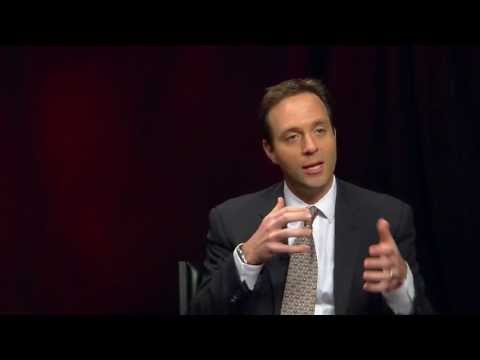
Exploring Crypto Prices: Why Consumer Trust Matters
Ask about Knowledge at Wharton
Episode Description
EPISODE OVERVIEW In this two-part episode, Wharton marketing professors assess the growth of cryptocurrency so far and how consumer confidence can influence pricing. This episode is part of a series on “Cryptocurrency.”
PODCAST OVERVIEW Every day, business scholars answer pressing questions in their research - but what do their insights mean for you? In this podcast, Wharton faculty dive into what inspired their studies and how their findings resonate with the world today. Learn how research insights translate into knowledge you can use, with host Dan Loney.
Learn more at http://whr.tn/rippleeffect.
----- The Wharton School of the University of Pennsylvania is committed to sharing its intellectual capital through Knowledge at Wharton, the school’s online business analysis journal.
Launched in 1999, Knowledge at Wharton offers free access to:
- Articles, podcasts, and videos highlighting Wharton faculty research and analysis of current business trends - Interviews with book authors from Wharton School Press - In-depth series of curated content like Wharton Executive Education’s Nano Tools for Leaders - A searchable database of more than 10,000 articles covering all aspects of business - A weekly newsletter that delivers Knowledge at Wharton insights directly to your inbox
Visit the Knowledge at Wharton homepage: https://whr.tn/3qUpSBE Subscribe to the Knowledge at Wharton YouTube channel: https://whr.tn/3DEAgAU
Read the full transcriptHide the full transcript
- Loney: So Bitcoin is the one that a lot of people focus on. It's obviously drawn the most attention because of the pricing
- component. But there are so many different brands that are out there right now in this landscape. So how do you think
- all of these brands are doing, trying to kind of find their place in what is a very crowded landscape?
- Dave Reibstein: So what it is that we see in most industries, there's a proliferation of various different brands. Some of them survive.
- Some of them don't survive. We see that industry after industry. And as John was just saying, we had 10,000. Some of
- them won't— won't continue to exist. But it's not— I don't think it's going to go down to, you know, one or two. I think
- there still will be several of them that are out there, everybody having their own little angle that's there. And
- there's some that are going to be popping up and trying to be specialized. Like Dogecoin. I mean, come on. But it was like,
- you know, it sort of caught people's attention. It happened to be there. Bitcoin is going to exist for a long time. Ethereum
- is going to be out there. There are a few others that are going to be there. And they're going to dominate the market, but
- there's going to be this long tail of other brands that are still out there. It's not like we have to worry about shelf
- space, like we do for physical products. Welcome to <i>The Ripple Effect</i>, the podcast that takes you on a
- journey through the minds of Wharton faculty. I'm your host, Dan Loney, and in each episode, we'll be diving deep into the
- inspiration behind the groundbreaking research that Wharton professors have conducted, and exploring how
- their findings resonate with the world today. Well, we know that cryptocurrency is already starting to have a— an impact
- on a large segment of the population. Not everyone, though. But that brings in the attitudes of people towards
- cryptocurrency. Some people are all in. Others, maybe not as certain right now. And not only will it have an impact on the
- perceptions of the public, but also on companies considering using it as a tool, or the crypto platforms themselves. This is
- all part of research that is being done here at the Wharton School, and a pleasure to be joined right now by Wharton
- Marketing Professors Dave Reibstein and John Zhang, who have taken a deeper dive into this.
- Dave, great to see you again. Well, good to see you again. Thanks. John, great to see you. It's been a while.
- John Zhang: Good to see you, Dan. - Thank you. As we've seen cryptocurrency develop, I
- think one of the questions that I have, and maybe a lot of people have is, has it developed to the point where it
- is maybe the success that a lot of people think it should be? Dave? - So, it is certainly progressing and continuing to develop. I don't
- think it took off like people were anticipating. You know, it's had its ups and downs. That's part of what's of
- interest to us is the roller coaster that it's been on. But it hasn't replaced other forms of currency, for sure, and to a
- large degree, it's just an alternative investment. And more and more people are accepting it as a currency that they want to
- be investing in. But more and more retailers are also starting to accept it as well. - John?
- I really think that there is no better time for cryptocurrency than now. The reason is because you see that with the Trump
- selected as the President— and definitely that there's going to be a whole lot more institutional support for the
- cryptocurrency. And if you look at the history, in fact, that cryptocurrency was only less than pennies in 2009. Now that it
- is over $91,000 and— - For Bitcoin. So— yeah, for Bitcoin. And you have the total capitalization is almost like $1.8 trillion. And
- in fact, some people are forecasting that— that's probably very, very soon, it will hit a million dollars. And also, some
- people even predict a billion dollars. So I think that there's a long runway ahead of us for sure.
- So that's— let me play off of that. Because one of the conversation points is also about the fact that right now,
- the landscape of cryptocurrency has so many different types of cryptocurrency out there, and whether or not we're going to
- see a paring down of some of these options as we move forward, so that we get maybe two or three true core
- cryptocurrencies that we will see relied upon. Obviously Bitcoin, kind of one of them. That, I would think, would
- potentially impact the pricing component of cryptocurrencies moving forward, wouldn't it?
- Absolutely. I think that— a couple years ago, I actually looked into this. There were over 10,000 different
- cryptocurrencies circulating in the marketplace. And you can imagine that not every one of them will survive. And so
- obviously that there will be sort of some kind of a reorganization in that particular industry, and
- concentration is going to increase. And I think that eventually— and people probably will come together on a couple
- of those currencies. I cannot imagine that every one of those 10,000 cryptocurrencies will survive.
- So Bitcoin is the one that a lot of people focus on. It's obviously drawn the most attention because of the pricing component. But
- there are so many different brands that are out there right now in this landscape. So how do you think all of these brands
- are doing, trying to kind of find their place in what is a very crowded landscape?
- So what it is that we see in most industries, there's a proliferation of various different brands. Some of them survive.
- Some of them don't survive. We see that industry after industry. And as John was just saying, we had 10,000. Some of
- them won't— won't continue to exist. But it's not— I don't think it's going to go down to, you know, one or two. I think
- there still will be several of them that are out there, everybody having their own little angle that's there. And
- there's some that are going to be popping up and trying to be specialized. Like Dogecoin. I mean, come on. But it was like—
- you know, it sort of caught people's attention. It happened to be there. Bitcoin is going to exist for a long time. Ethereum
- is going to be out there. There are a few others that are going to be there, and they're going to dominate the market, but
- there's going to be this long tail of other brands that are still out there. It's not like we have to worry about shelf
- space like we do for physical products. So with the pricing component, it's interesting because— and
- part of the work that you're doing is in and around consumer attitudes— that with the pricing, the way that it has
- fluctuated, you know, over the last several years, you would think that there might be more skepticism around— around
- cryptocurrency than there is. But there still seems to be very much a fervor about what it might be in the years ahead.
- I think when you look at that, the sort of Bitcoin, and there is absolutely no intrinsic value to it. Right? So it's basically that it
- is a sort of electronic currency, and there is no government backing. It's not like gold, and you have some kind of
- intrinsic value. So, which means that ultimately, the price really hinges on the collective beliefs amongst the customers,
- the investors. If they believe that this particular currency is going to become a store for value and for the— for, for
- the vast economy in this country, and— or become the unit of exchange, you can imagine that value can increase
- tremendously, simply because at this point you still have the institutions, like some of the legitimate institutions. They
- have not been part of this particular asset class yet. And also that you see that some of the country, like El Salvador
- and, begin to actually use the cryptocurrency for the national economy. In fact, the—Trump even proposed that we're going to
- have the strategic reserve of Bitcoin and so on and so forth. As more countries are doing that, obviously that— the value will
- increase, and there's long, long runway ahead of it. But most importantly, if you look at this particular type of currency, it's
- really the collective belief that matters. So which of this means that customer attitudes, sentiments, and all the
- macroeconomic factors will impact on the prices. So I think this really depends on whether you are optimistic about
- the future or you're pessimistic about the future. You look at the fact that it doesn't have intrinsic value, versus that
- whole— so many people are so enthusiastic about it, in fact, that Bitcoin has gone through up and downs up to now, but yet it
- has really taken off recently. So I think it's interesting thinking about, we talk about
- cryptocurrency. Is it an alternative currency, or is it an investment? And I think most people are viewing it like an
- investment. But let's couple that with what John was just saying. Most investments that we make— well, I'm going to own
- some of this share of a company. There's something behind that. And you know, as John was saying, there's nothing that— you know,
- there's no intrinsic value that's here. Company sales, they— you know, and they— they end up generating cash for us.
- Here, it's total speculation that's there. And that's why what we're working on, which is looking at consumers' confidence
- in it, is— is part of what's highly tied to what the particular prices are, and people's continued faith in
- this. And then bringing on others that are— you know, as I say, the retailers and banks and everything, that are showing
- their confidence in it. It basically is this huge speculation. Almost like tulips back— back in the old tulip
- market in Holland. And so this is leading to a confidence index that you and your colleagues are putting together.
- That's right. We have been collecting, month— every month for the last several months— I think we're now at 18 months— that we take a
- survey of 1000 people across the country, representative of the United States, and we ask them a series of questions. Do you own
- crypto? But we also ask them how confident they are in the currency. And we have three questions that we ask them about
- that, which is, how confident are you about it for yourself? How confident are you for the economy? Do you want to
- invest more in cryptocurrency? And trying to get some sense of how they personally feel. We're trying to relate that to the
- price of crypto itself. And we would anticipate that as people are more confident, we're going to see prices going up, and the
- other direction. As prices go up, people are more confident. So these sort of go hand in hand together.
- So going back to the pricing component, then. Having an index that can be used as a tool to understand from your
- perspective, how do you see there being a potential impact on the pricing component moving forward?
- Well, here's the sort of a basic— the fundamentals. And there are about 20 million Bitcoins that are already mined.
- And there are additional 1 million that will be mined in the future. I think the last coin is expected to be mined
- around 2140. So that's a long time away. And— but in any case. So given that supply is mostly fixed, right? You can
- imagine the price of the Bitcoin will depend on the demand. So that demand, obviously, you're going to depend on the
- confidence of consumers. So that's why we are looking into— looking in that direction. And hopefully what we could do is to
- look into the consumer confidence, see if that could forecast the price change in the future for Bitcoins. Like—
- the way, like the consumer confidence by Michigan. - Sure. - And what— they predict how the
- stock market or economy is going to do. And we're going to— we are pursuing that direction of our research.
- Thank you you for listening to <i>The Ripple Effect</i>. We hope you found this episode
- informative and engaging. Don't forget to subscribe and leave us a review so that we can continue to bring
- you the best insight from the Wharton School.
Brief Summary
Experts discuss the future of cryptocurrency and consumer attitudes towards Bitcoin and other digital currencies.
Key points
- The Future of Bitcoin. Dave Reibstein asserts Bitcoin will remain relevant for years to come.
- Cryptocurrency's Current Landscape. John Zhang believes now is the best time for cryptocurrency due to institutional support.
- Consumer Confidence in Crypto. Dave Reibstein discusses how consumer confidence affects cryptocurrency prices.
Episode highlights
- The Future of BitcoinDave Reibstein asserts Bitcoin will remain relevant for years to come.“Bitcoin is going to exist for a long time.”0:54Jan 7, 2025
- Cryptocurrency's Current LandscapeJohn Zhang believes now is the best time for cryptocurrency due to institutional support.“I think there is no better time for cryptocurrency than now.”3:06Jan 7, 2025
- Consumer Confidence in CryptoDave Reibstein discusses how consumer confidence affects cryptocurrency prices.“The price really hinges on the collective beliefs amongst the customers.”7:00Jan 7, 2025