Financial Literacy in Schools: Why Early Education Matters
Ask about Knowledge at Wharton
Episode Description
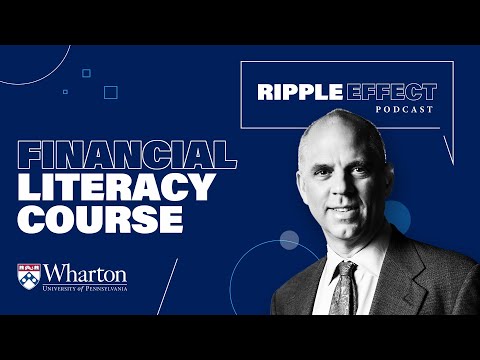
ABOUT THE EPISODE David Musto, finance professor at the Wharton School and Director of the Stevens Center for Innovation in Finance, speaks with Dan Loney about why teaching money skills early is essential. The discussion covers real-world decisions like payment apps, credit, and student loans, the importance of understanding Social Security as informed voters, and the long-term benefits of saving for retirement. Musto also highlights Wharton’s financial literacy course for high school students, and shares insights on negotiation, daily money management, and the need for financial awareness starting in middle school.
ABOUT THE PODCAST This Week in Business features interviews with Wharton faculty about the latest news, fascinating trends, and issues impacting both consumers and the business world. Episodes are recorded at the Wharton School and published twice per week.
#FinancialLiteracy #FinancialEducation #MoneySkills #FinancialWellness ----- The Wharton School of the University of Pennsylvania is committed to sharing its intellectual capital through Knowledge at Wharton, the school’s online business analysis journal.
Launched in 1999, Knowledge at Wharton offers free access to:
- Articles, podcasts, and videos highlighting Wharton faculty research and analysis of current business trends - Interviews with book authors from Wharton School Press - In-depth series of curated content like Wharton Executive Education’s Nano Tools for Leaders - A searchable database of more than 10,000 articles covering all aspects of business - A weekly newsletter that delivers Knowledge at Wharton insights directly to your inbox
Visit the Knowledge at Wharton homepage: https://whr.tn/3qUpSBE Subscribe to the Knowledge at Wharton YouTube channel: https://whr.tn/3DEAgAU
Read the full transcriptHide the full transcript
- Dan Loney: Well, as kids head back to school, one of the areas of focus that schools are looking at implementing or already have,
- is that of financial literacy classes. The feeling is that having this as a component of their education is vital to
- their future success. But how much is this occurring at the moment, and how much further does it have to go as we move
- ahead? Pleasure to be joined here in studio by David Musto, who's Finance Professor here at the Wharton School. He's also
- director of the Stevens Center for Innovation in Finance. Great to see you, David.
- Hi. Great to be back. Thank you. I mean, I remember talking with you about this topic a few years ago. So
- how has financial literacy education advanced in the last several years? Well, more states have discussed implementing mandatory financial
- literacy education, and I think more and more schools have gotten excited about the possibility of getting their
- students ready to be financial citizens. And I've been— what we were starting, I think we spoke last— we were starting, here at
- Wharton, offering a financial literacy course that I've overseen. I made a bunch of videos for it talking about the
- whole range of topics. And now we have about 1000 students a year across the country taking this, with our— our MBAs and our
- undergrads as— as teachers doing the synchronous sessions for this. So it's actually a big, big effort here at Wharton.
- Do you view, then, as you think about curriculums building out, does financial literacy—does it need to be mandated? I mean, it
- can't be an optional thing as we move forward, right? Well, I think it's a good idea to mandate it. And I think you
- understand also why states and the federal government want it to happen, is that when people are not financially literate,
- then that ends up being a problem for states and the federal government trying to help people who get into trouble
- down the road. I think it makes sense to make it mandatory. There are just, you know— you are— you are engaged in the
- financial industry before you know it. You know, just the way you pay for things. And then you're taking out student
- loans, which are huge when you're 17 years old. All these things happen very quickly. And so you really need that
- astuteness as soon as possible. And then there's the component of the kids who maybe don't go
- to college, who go right into the workforce, and need that— for that understanding as well, on just the basic day to day living.
- Oh, for sure, yeah. I mean, just— you know, it's just how you finance the little things, how you finance the big things,
- and then, of course, how you finance your retirement, which is— maybe to the high school students, it feels odd to be
- talking about your 60s and your 70s, and hopefully your 80s and 90s, when you're in high school. But, you know, those long, long-
- term returns on your— what you save in your early days, you know— you'll be happy you did it.
- So when you think about the type of topics and areas of focus, as you said, that you're doing with students right now,
- what do you feel are the most important components that need to be part of that— that understanding?
- Well, I see it as having three groups of topics. And there— these are not mutually exclusive. I see it as, number one, the things that
- are already happening in your life right now. Like, you know, if you're paying with this app versus that app, or with debit
- card, credit card, all the different ways you can pay. You're doing that already. And to understand what's being taken
- out of your payments, who's making money off you, how are they making money off you. There's that. And as I mentioned,
- student loans. That comes up before you even finished high school, if you're going to go to college. And those are huge. So
- there's that, that's just news you can use right now. And then, you know, of course, once you're 18, you're a voter and
- and then there's topics that we want our voters to be educated about. Right now, the big topic is Social Security. Everyone
- talks about, "Well, there's a trust fund." People say, "Well, there isn't exactly a trust fund." "Yes, there is a trust
- fund." "It's running out." "No, it isn't running out." There's all these things that you hear politicians say, and I think to
- some extent, they're taking advantage of the fact, sometimes, that people don't really understand what they're talking
- about, and they try to express it in ways to get people to vote this way or that way, without ever really understanding it.
- Especially for the younger people, to understand how Social Security works. What are the issues? Well, you know. What
- is being stressed right now? What isn't? - Right. What do you think? How do you think it should look?
- These things are all key, right? So there's news you can use. There is being an educated voter. And then, as I said, there is— there's just
- those long-run things that you just— you simply have to start now. Largely, we're talking about saving for retirement. So they
- might seem very abstract and distant, but in fact, there's a huge benefit from starting as soon as possible.
- Are you getting feedback from some of the students and maybe from some of the schools that they understand the importance
- of having this education as part of their their time in high school? Well, I get feedback through the course I'm involved with, right?
- So the course I'm involved— we call it Finance 2. It's— it's it's a Penn course. It's only for high school students.
- We offer it through our Global Youth Outreach. And we have these 1000 students a year. There are events where I meet
- them. And then we have a chance to talk about what we covered in class and how they apply this to— to their daily
- lives. Here's one fun thing that we talk about in the course that I enjoy, which maybe doesn't sound like finance, but ends up
- it is, which is negotiating. - Right. - Right? Negotiating, where— you know, if you apply to college,
- chances are you'll get into more than one college. They're going to give you offers. And just talking to some of our Philly high school
- students, I've heard about, some of them realize this is an opportunity to say, "Hey, if you give me what they're giving, you
- got me. I'm yours." And that works. I mean, that kind of thing that didn't occur to me when I was applying to college.
- Negotiate, right? But in fact, it's hugely valuable. Is high school, then, the right time to start programs like
- this? Or can you see a value of doing this, say, when kids are in middle school and working their way up through that, those
- six years, through their high school days? Well, you know, the sooner, the better. It's— you
- know, as as a middle school student, you wouldn't have that many decisions to make that are financial, but you
- will, you know— these days, I guess, you know, how many middle school kids have a phone? And now they're starting to—
- starting to make their payments that way. And anytime someone is making money off you, especially if a business is making money
- off someone who's 12 or 13 years old, you want to know, right? People— it's the famous line about the internet, which is,
- you know—it's famous because it's true, which is that, you know, "If it seems like the product is free, then you're the
- product." Right? - Right. Know when you're the product. That— that's— it's never too— never too early to learn that.
- David, great to see you again. Thanks very much. Right! Great to be here. Thank you. David Musto, Finance Professor
- here at the Wharton School and director of the Stevens Center for Innovation in Finance.
Brief Summary
David Musto discusses the need for mandatory financial literacy education in schools and its impact on students' financial futures.
Key points
- Financial Literacy in Schools. Financial literacy classes are becoming vital for students' future success.
- Mandatory Financial Education. Experts argue for mandatory financial literacy education to prevent future financial troubles.
- Negotiation Skills for Students. Students learn the value of negotiating college offers, a crucial financial skill.
Episode highlights
- Mandatory Financial EducationExperts argue for mandatory financial literacy education to prevent future financial troubles.“I think it makes sense to make it mandatory.”2:10Aug 27, 2025
- Negotiation Skills for StudentsStudents learn the value of negotiating college offers, a crucial financial skill.“Hey, if you give me what they’re giving, you got me. I’m yours.”6:34Aug 27, 2025