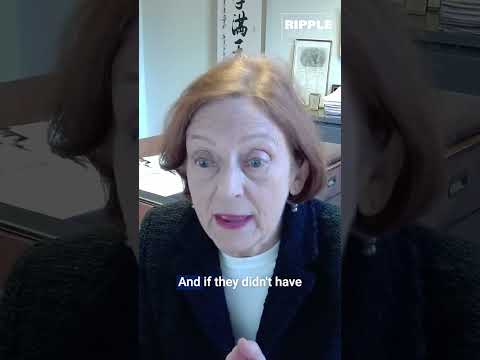
Why Is Financial Literacy Important? — Wharton Professor Olivia Mitchell — Ripple Effect Podcast
Ask about Knowledge at Wharton
Episode Description
EPISODE OVERVIEW Financial literacy should be a lifelong education because economic factors change over time, including the amount needed for retirement, says Wharton’s Olivia Mitchell. This episode is part of a series on “Financial Literacy.”
PODCAST OVERVIEW Every day, business scholars answer pressing questions in their research — but what do their insights mean for you? In this podcast, Wharton faculty dive into what inspired their studies and how their findings resonate with the world today. Learn how research insights translate into knowledge you can use.
Topics and Questions Covered: Introduction - 00:00 Filling the Gaps in Financial Literacy - 01:38 Starting Financial Literacy Young - 03:17 Financial Literacy as an Investment - 07:24 Long-term Effects of Financial Literacy - 10:10 Key Takeaways - 13:08
#financialliteracy #financialeducation #budgeting ----- The Wharton School of the University of Pennsylvania is committed to sharing its intellectual capital through Knowledge at Wharton, the school’s online business analysis journal.
Launched in 1999, Knowledge at Wharton offers free access to:
- Articles, podcasts, and videos highlighting Wharton faculty research and analysis of current business trends - Interviews with book authors from Wharton School Press - In-depth series of curated content like Wharton Executive Education’s Nano Tools for Leaders - A searchable database of more than 10,000 articles covering all aspects of business - A weekly newsletter that delivers Knowledge at Wharton insights directly to your inbox
Visit the Knowledge at Wharton homepage: https://whr.tn/3qUpSBE Subscribe to the Knowledge at Wharton YouTube channel: https://whr.tn/3DEAgAU
Read the full transcriptHide the full transcript
- Olivia Mitchell: Well, it's particularly a challenge now that so many Americans, 50 million Americans, have student loans. And many of
- them, in fact, are continuing to have to repay those loans through retirement. 6% of Social Security recipients are still
- having their Social Security checks garnished for student loans. Dan Loney: Welcome to The Ripple Effect, the podcast that takes
- you on a journey through the minds of Wharton faculty. I'm your host, Dad Loney. And in each episode, we'll be diving deep
- into the inspiration behind the groundbreaking research that Wharton professors have conducted, and exploring how
- their findings resonate with the world today. - Well, and great once again to speak with Olivia Mitchell, who is an expert in
- the area of financial literacy. She's Professor of Business Economics, and Public Policy, as well as Insurance and Risk
- Management here at the Wharton School. And she's also Director of the Pension Research Council. Great to see you again.
- - It's wonderful to be back. Thank you. - You know, it's interesting, you and I have talked about this for many years now. And the idea
- and the concept of financial literacy is one that I think a lot of people think about, but maybe they don't truly
- understand. So from your perspective, what encompasses financial literacy? - Well, financial literacy is really a broad
- concept. But in particular, what we've been focused on is people's ability to process economic information, and to
- make informed decisions about things like saving, investment, and spending during retirement. - There is seen to be a gap in
- financial literacy for many years now. So can we say that with all the attention that now is starting
- to come forward with the research that you and others have done, are we getting any better? Is it getting better in general?
- - I wish we could say things are getting better, and they may be a little bit at the margin. But we've been doing a
- number of studies of financial literacy across not only the US, but around the world. And there are still grave shortcomings in
- what people know and what people are able to do. So I think there's still much work to be done, as much as I hate to say it.
- - How important is that? That component of research as we move forward here, as a driver to kind of
- open more doors around financial literacy? - Well, I think the place to start is actually going back 20 years when a colleague
- of mine, Annamaria Lusardi, and I decided to, just really on a whim over dinner, discuss the possibility of surveying older
- people, people in their fifties and sixties, to find out how financially literate they were, and what impact that might have had on
- their saving, on their investment, and their retirement outcomes. And to our shock and dismay, we found that people were sorely
- underinformed. So then that one thing led to another, now we've been doing financial literacy studies in over 80 countries
- around the world, focusing on the young, focusing on the middle aged, focusing on retirees. And there's definitely much more
- that needs to be done for each of those groups. - But you and I have talked about -- and maybe it's in part my perception that
- one of the areas we need to focus on is being able to connect with our children as young as possible to incorporate
- some level of financial literacy in their lives, so that they are best prepared when they get through high school, and they go
- out to work, or they get through college and get out to work. And that seems to be one of the biggest challenges, is being able
- to kind of set that framework, although there are some states that are trying to do that right now. - In fact, around 21 states,
- and Pennsylvania is the most recent, have mandated that high schools provide financial education as a mandatory course.
- And I think that's very much to the good. Of course, there's still details, and the devil is always in those details, about
- who's teaching the class. Is that person capable and understanding of the subject? What kinds of topics will the
- high school kids be interested in? Because while they might not be interested right away in retirement planning, they
- probably need to know about credit cards, student loans, and all the other topics that they're going to confront right
- away on leaving high school. - You know, it's funny, because many, many years ago, it used to be understanding a checking account
- and writing a check and all that stuff. Now, in this age of digital, we have so much of that at our fingertips through our
- smartphones and various apps and such. - And a lot of young folks make many bad mistakes. There was a case recently of one app,
- which had gamified investment in the stock market. And it had also made it possible for people to borrow on margin. These are
- kids. And in fact, a young man had accrued $100,000 in debt and committed suicide as a result of that.
- So you can not only make big financial mistakes, you can make big personal lifetime mistakes unless you're better informed
- these days than we were back in our youth. - So when you think about the research that you've done, and the framework that
- we need, what do you think are the greatest benefits of being able to have that type of a framework in place when you
- think about individuals longer term? - The key issue with financial literacy is that it's an ongoing process. I myself
- started the so-called Bank of Mom, when my children were little. And the Bank of Mom was nothing more than a spreadsheet,
- and they would get 25 cents allowance. And then if they wanted more money, they would have to do chores. And so we'd
- add up the positive side, and we add up how much they had to spend. And if they didn't have enough, they couldn't spend it.
- So this was a way to start edifying kids from a younger age about budgets. Later on, when it comes to high school, as I said,
- credit cards become paramount. My younger daughter, when she came to Wharton was sent 20 credit cards in the first month that she --
- - The offers for credit cards? - Yeah, well, she got the cards, and immediately got into financial trouble, and we had to
- have a little session cutting up the cards and explaining interest and so on. She's done better since then, I'm happy to add.
- Then subsequently, when people get into the workforce, they're making a number of choices like, what should I put into my 401(k)?
- What should I invest the money in? And so again, there's multiple teachable moments. - Right, and so off of that, the
- potential positive impact that it can have for somebody over their lifetime, it can be vast for having that understanding,
- and then being able to implement it in a variety of areas of their life. - Absolutely right. The reality is that we see that
- the young people that have been educated in financial literacy, they incur less debt, they save more, they plan more for
- retirement, they understand better what the options are for investment. And now what we're seeing is that people, when they
- hit retirement age, are doing a better job making sure they don't run out of money in old age. - You've talked about, in some
- of your research, the component of financial literacy being an investment in human capital. Explain that a little bit.
- - Well, we see financial literacy much like other kinds of education. It takes time to learn financial concepts and to
- apply them. And it takes -- sometimes it takes money so that you can hire someone or take a course or what have you. So
- these are the two components that are involved in investing in that knowledge. Moreover, that knowledge can depreciate if
- you don't use it over time. There's also always new financial products on the market, adjustable rate
- mortgages and so forth, so that the knowledge base needs to be continually built throughout life. And so it is definitely an
- educational process. Many employers are now offering financial training, literacy training at the workplace. Why?
- Because they understand that their workers are suffering financial stress due to debt. The debt folks are calling them
- up at work and hassling them for not paying their credit cards or what have you. So this is something that really is in
- everybody's best interest, to have a more productive and better informed workforce. - And probably there are many
- instances of not having that base that end up being missed opportunities. You were mentioning before about
- retirement savings. But components of that that could have led to a very secure retirement period of your life
- that maybe some people don't have, because they don't have the understanding or, you know, of components or ideas
- that they should have gotten involved in. - Well, indeed, most employers that have 401(k) plans or their equivalent in the
- nonprofit sector will pick what they call a default savings rate. That is if the worker has no clue what to do, then the
- company will say, "All right, we're gonna have a default savings rate of 5% of your income." The reality in this day
- and age is 5% is probably not enough. It probably ought to be at least three times that. And so it's nice to have some guided
- advice, if you were, from the employer, but if that number, that savings target is too low, then the employee needs to have
- additional information to be able to say, "Oh, you know, I might want to save a little more if I can, when I can. I might
- want to save enough to get the full match rate from the employer," for example. I negotiated with my kids, I told them they had
- to save 25% of their paychecks when they started working, and we settled on 18%, which I felt was a huge success. - Yeah, well,
- and the other thing when you're talking about kids is that if you start them out early, just off of that, what
- they can potentially have in their savings, even in their early time out in the workforce, when they don't have a husband
- or a wife or a significant other, when they don't have children, that's the time to really get things started so
- that you can have that great base as you move forward. - Well, it's particularly a challenge now that so many Americans, 50
- million Americans, have student loans. And many of them, in fact, are continuing to have to repay those loans through
- retirement. 6% of Social Security recipients are still having their Social Security checks garnished for student loans. So
- if you can set people's feet on the right path early on, don't get them involved in payday loans, or only paying the
- minimum on the credit card, or— buy now pay later is a very popular phenomenon. All those things reflect a
- misunderstanding or financial illiteracy about the consequence of not saving enough and living within your means.
- - I know you've also done some research looking at the lengths that some people will go to kind of make sure that they have
- acquired that knowledge through education, and the difference of having it and not having it. And what that can mean longer term
- over somebody's life. - Well, absolutely. For example, if you don't understand interest rates, and heaven knows, that's been in
- the news a lot lately, they won't refinance their loans when interest rates go down. Or they pay too much for borrowing, or
- they fail to insure themselves against living a very long time. If you're going to retire at 60 and live to 100, and mark my
- words, a lot of us will, that's a whole long time to try to live on your savings if you haven't concentrated on it properly
- early in life. - I know that we talk about this a lot in the scope of what we see going on here in the United States. Is
- this also something that plays out in many countries around the world as well? - Absolutely. To date, about 80 countries have now
- set up national programs on financial literacy. In fact, Finland is interesting. Finland has launched a new national
- strategy for becoming the country with the highest financial literacy in the world by 2030. I wish we in this
- country would follow that shining example. But we are seeing progress, as I said, especially at the state level,
- and many employers are doing their part now to help people do a better job saving for retirement investing. And by the
- way, not taking out their entire nest egg when they hit retirement, but rather helping retirees eke out their money
- over their lifetimes. - So as we are here now in 2024, what do you think are the most important components that either young
- adults or parents trying to help their children really need to think about when they bring up the topic of financial literacy right now?
- - Well, I don't know how it was in your family. In my family, finances were not discussed publicly. People's
- incomes were always very private. And folks didn't really talk about things like how much the rent was, or that kind of
- thing. I think that's -- there's more that we can do to be more transparent. For example, helping kids set budgets so that
- they understand how much something costs, and how much work it takes to save to get to be able to pay those those costs.
- I worked through high school, I worked in college. Increasingly, the work experience is something that a lot of kids don't have.
- And parents understandably protect their kids from working too much or, you know, not getting their schoolwork done. But I find that
- just living in the work world early on is a really good way to start explaining and understanding how costly it is
- to live, how much -- how careful one has to be and ultimately, the value of saving. - Olivia, great to talk to
- you again. Thanks very much. Olivia Mitchell, who is Professor of Business Economics,
- and Public Policy as well as Insurance and Risk Management here at the Wharton School.
- - Thank you for listening to The Ripple Effect. We hope you found this episode informative and engaging. Don't forget to
- subscribe and leave us a review so that we can continue to bring you the best insight
- from the Wharton School
Brief Summary
Olivia Mitchell discusses financial literacy, student loans, and the importance of early education for financial decision-making.
Key points
- The Ripple Effect Podcast Introduction. Join host Dan Loney as he explores the minds of Wharton faculty.
- Financial Literacy Gaps. Olivia Mitchell discusses the ongoing challenges in financial literacy across the globe.
- Importance of Early Financial Education. Mitchell emphasizes the need for financial education starting from a young age.
- The Consequences of Financial Illiteracy. A tragic example highlights the dangers of poor financial understanding among youth.
- Global Financial Literacy Initiatives. Mitchell highlights Finland's ambitious goal for financial literacy by 2030.
Episode highlights
- The Ripple Effect Podcast IntroductionJoin host Dan Loney as he explores the minds of Wharton faculty.“Welcome to The Ripple Effect, the podcast that takes you on a journey through the minds of Wharton faculty.”0:21Apr 23, 2024
- Financial Literacy GapsOlivia Mitchell discusses the ongoing challenges in financial literacy across the globe.“There are still grave shortcomings in what people know and what people are able to do.”2:10Apr 23, 2024
- Importance of Early Financial EducationMitchell emphasizes the need for financial education starting from a young age.“We need to connect with our children as young as possible to incorporate financial literacy.”3:29Apr 23, 2024
- The Consequences of Financial IlliteracyA tragic example highlights the dangers of poor financial understanding among youth.“A young man had accrued $100,000 in debt and committed suicide as a result of that.”5:00Apr 23, 2024
- Global Financial Literacy InitiativesMitchell highlights Finland's ambitious goal for financial literacy by 2030.“Finland has launched a new national strategy for becoming the country with the highest financial literacy by 2030.”12:33Apr 23, 2024