Why Financial Literacy Still Falls Short
Ask about Knowledge at Wharton
Episode Description
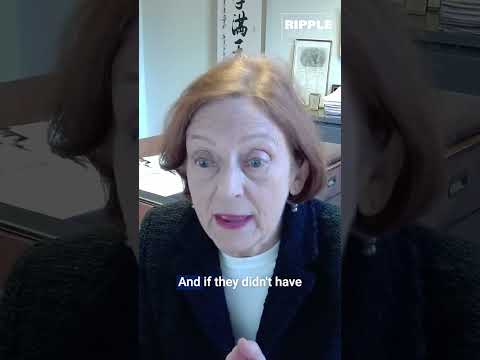
ABOUT THE EPISODE Financial literacy in the U.S. is improving, but not fast enough. Olivia S. Mitchell, Professor of Business Economics and Public Policy at the Wharton School, explains why access and quality remain uneven, why starting earlier matters, and how parents and schools can better prepare the next generation to make financial decisions.
ABOUT THE PODCAST Every day, business scholars answer pressing questions in their research - but what do their insights mean for you? In this podcast, Wharton faculty dive into what inspired their studies and how their findings resonate with the world today. Learn how research insights translate into knowledge you can use, with host Dan Loney.
#financialliteracymonth #financialliteracy #personalfinance #financialeducation #wharton ----- The Wharton School of the University of Pennsylvania is committed to sharing its intellectual capital through Knowledge at Wharton, the school’s online business analysis journal.
Launched in 1999, Knowledge at Wharton offers free access to:
- Articles, podcasts, and videos highlighting Wharton faculty research and analysis of current business trends - Interviews with book authors from Wharton School Press - In-depth series of curated content like Wharton Executive Education’s Nano Tools for Leaders - A searchable database of more than 10,000 articles covering all aspects of business - A weekly newsletter that delivers Knowledge at Wharton insights directly to your inbox
Visit the Knowledge at Wharton homepage: https://whr.tn/3qUpSBE Subscribe to the Knowledge at Wharton YouTube channel: https://whr.tn/3DEAgAU
Read the full transcriptHide the full transcript
- I was amused when um my daughter came home from after school. She was probably in first grade and she said, "Mom, I did
- something great today in exchange for two dimes. Somebody gave me a quarter. So, they got two coins and I got one."
- >> Oh, wow. Okay. >> Yeah. Well, you know, we need to do a little more teaching about financial
- literacy here. Welcome to the Ripple Effect, the podcast that takes you on a journey through the minds of Wharton
- faculty. I'm your host, Dan Looney, and in each episode, we'll be diving deep into the inspiration behind the
- groundbreaking research that Wharton professors have conducted and exploring how their findings resonate with the
- world today. The month of April is National Financial Literacy Month. It is an important month, an important topic
- and to find out more about how things are going in that realm. A pleasure to be joined once again by Olivia Mitchell,
- Wharton, professor joining us here on the show. Olivia, always great to chat with you and I guess I'll start out with
- what your view is on kind of the state of financial literacy right now. You and I have talked about it for several years
- and things have developed, but where are they in the development right now? >> Well, a pleasure to be with you. Thanks
- for having me, Dan. Um the state of financial literacy is improving but it's still very uneven. So the biggest
- positive change is now 30 US states have mandated a high school financial literacy course in order for the
- students to graduate. So that's terrific. But access and quality still differ across states um across uh school
- districts and uh teacher quality can also be very uneven. It's still very important, of course, because my
- research with Anamaria Luzari uh determined that only one in three American adults meets the basic standard
- of financial literacy, which strengthens the case for starting earlier and teaching more consistently. So you
- brought up a couple of components there about the teaching and and obviously the
- the states that's an issue into itself but in terms of the teaching and the curriculum that is being brought forward
- how then do you continue to improve it? What are the areas that need to be focused on and I guess to a degree how
- do we get more teachers to be able to be the ones teaching this curriculum? This
- is a very um fraught question because here at the at the University of Pennsylvania Wharton, we have actually
- brought in teachers who teach financial literacy. So that's something that um teachers are willing and eager to learn
- because they themselves know they don't know how to make financial decisions. And so the only way they can pass it on
- to their students is to build up not only their confidence but their skills in this area.
- >> So then colleges have the opportunity to maybe be able to play a vital role in
- that development at the local level building up these programs working almost to a degree like a public private
- partnership so that we can improve things moving forward. Well, the University of Pennsylvania, for example,
- where I work, is um actively teaching financial literacy beyond its own campus by uh running programs and having
- courses delivered to high school students in underserved communities. And these classes are wonderful. They cover
- real world topics like paychecks, student loans, credit cards. Um, and Penn also of course focuses on financial
- wellness for its own students. Um, offering workshops, peer counseling, and tools on budget, uh, debt and
- investments. >> What are some of the other key components when you're talking about
- putting together a program like this in a school district? What are the areas that really need to be focused on so
- that kids can be better prepared for when they're either going to college or they're going out into the real world?
- >> Well, I think the first issue is relevance. Um, students need to understand how the material that they're
- learning can apply to real decisions they'll face now or will face very soon, including things like budgeting,
- spending, saving. Um, many students end up taking out student loans and that's clearly an area where you need more
- financial literacy. Fraud is another uh area because we're all so uh exposed now
- to the opportunity for scams and and theft. I think another important area is um practice because learning comes not
- just from listening but it comes from doing >> and so students need to build habits and
- decision skills through cases, simulations, budgeting. >> Obviously teacher quality is another key
- factor. Having a strong curriculum is great but it only works when teachers are well prepared and supported. The
- other point I would make is that continuity is um critical. I don't think financial literacy needs to be delivered
- once and done in 12th grade. Ideally, it should start at home. As I'm fond of saying, when my two daughters were
- young, I had the bank of mom and um each kid got a pittance of an allowance and if they wanted more, they could do
- chores around the house. And the bank of mom was a spreadsheet on my computer which also taught them about Excel. Y
- >> um and then if they wanted money, I mean obviously I bought, you know, food and
- clothing and stuff like that, but if they wanted to go out with their friends, they had to see how much was in
- their their bank of mom and if they didn't have enough money, either they couldn't do it or they had to work to
- earn more. So I believe it starts at home. But in elementary school, kids need to learn about the difference
- between needs and wants, how saving work works, and and that money is limited, right? Money doesn't grow on trees. Um,
- it's also important to teach them delayed gratification and simple budgeting that I would say two more steps. In
- middle school, kids need to learn how banking works. um the basics of earning, taxes, digital payments. It's a useful
- time to introduce ideas like interest and debt and online financial safety, especially nowadays.
- >> In high school, then what's crucial is to make students ready for the real world. They need to learn about credit,
- loans, investing, insurance, taxes, um and long-term planning like retirement. They also need to become
- exposed to topics like uh social media. Right now you can get on uh Tik Tok and get all kinds of bad financial advice
- without even trying. So digital assets are also important because those are obviously things that kids are um
- exposed to. Maybe I don't know if it's a direct need, but do we also have to start to have conversations for kids uh
- around cryptocurrency because of the fact that that's becoming such more of a prevalent component in our banking
- scenario these days? >> I think cryptocurrency is um is absolutely essential to teach kids
- about. um I forget I think it's Costa Rica that is now um or maybe it's Salvador that is now using crypto as the
- medium of exchange for the country. Um I myself don't uh hold crypto but the Trump administration has recently said
- that it wants to encourage not only alternative investments in 401k plans but also cryptocurrency. So
- understanding what it is, what it's not, um what the risks are associated with that uh asset I think is absolutely
- essential to teach kids. >> One of the things that so many business sectors are talking about these days is
- artificial intelligence. And I'm wondering if you're starting to hear the use of artificial intelligence come into
- play when you're thinking about financial literacy. And does it become potentially that much more important,
- especially if we're not able to get the numbers of teachers that we need at the high school and middle school level
- focusing on financial literacy, that AI can play some role level in in developing and continuing to teach this
- type of content. >> Well, the conversation has really moved from whether AI will be part of
- education to how to use it responsibly. AI can be very useful as a support tool because it can help personalize lessons,
- generate scenarios, uh translate material, and help students practice decisionmaking.
- Um, but it can't replace strong teachers or become, heaven forbid, an unverified
- financial advisor. The key to using AI as a support tool rather than a replacement for educators is that it can
- really expand access and make learning more engaging. >> So that's obviously one area as we move
- forward here. What are some of the other areas that you are looking at and are watchful of when you think about
- financial literacy moving forward the next 10, 20, 30 years? So I would say that the focus should be on expanding
- access, improving quality and starting kids earlier in the educational process. I think uh several areas come to mind.
- Universal access. Every student should have a meaningful personal financial learning experience before graduation.
- Um implementation quality is critical. States need to pair the mandates with teacher training materials and
- accountability. Um earlier exposure, middle school is an important entry point because money habits and digital
- behavior start early. And um students now need to understand not only budget and saving but also how to deal
- with buy now pay later um opportunities online. um crypto risk. Um FI FINRA's latest national capability study
- recently added questions on asking people about inflation AI and be buy now pay later which shows how fast the
- content is evolving. >> I would imagine and for me when I was growing up one of the things that my
- parents did for me when I turned 16 was to get a summer job. And that started the process of understanding of getting
- a check and opening an account and going through that process. Even something as
- simple as having a summer job or a weekend job during the school year can probably be a big benefit for that
- individual as they're getting started in this journey around financial literacy.
- >> Absolutely. And I think, you know, babysitting jobs, any job that pays you a little money, um, is very useful in
- helping begin to understand the need for saving, budgeting. Where do you put the
- money if you want to save it? Hopefully not under your mattress. Um, >> well, I I for many years I've heard you
- talk about the bank of mom and I can just tell you the bank of dad has been very challenged, but we're doing okay
- with my three kids. So, I I fully have taken this to heart about how important the role of the parent is in this
- process. I think it is very much at times undersold how much the parent can do in helping their child or children
- understand what financial literacy some of these components actually mean. >> And I think it's going to get harder
- because um you know when I was in probably kindergarten we learned about what's a penny, what's a dime, what's a
- nickel. >> Um and and nowadays people don't carry cash anymore and they don't carry coins.
- So that is difficult. Um >> and we don't have to teach about the penny anymore since we don't make it
- anymore. >> Right. Exactly. But I was I was amused when um my daughter came home from after
- school. She was probably in first grade and she said, "Mom, I did something great today. I in exchange for um two
- dimes, somebody gave me a quarter. So they got two coins and I got one. >> Oh wow. Okay.
- >> Yeah. Well, you know, we need to do a little more teaching about financial literacy here.
- >> What are you most hopeful for then? I'll finish on this and when you you focus so
- much about this in your career. What are you most hopeful for as we move forward?
- Because there seems like there is obviously more of an understanding that this is a core component that so many
- kids need to have moving forward. you know, I think it's Finland that has announced that it's going to be the
- number one country for financial literacy by 2030. Um, I wish as a country we would dedicate ourselves to
- um making sure that our people are are sufficiently financially literate. And yet you see, you know, people getting
- out of school, not being able to, not understanding the student loans they have, not understanding that they should
- do more than just pay the minimum on their credit cards. So there's a lot to do and content is evolving very quickly
- especially with um with uh Tik Tok and and so forth. People need to understand what's bad advice and what's good advice
- >> and it's their responsibility to pick it up. >> Olivia, always great to get your insight
- and thank you again for the time. >> Thank you. >> Thank you. Wharton Professor Olivia
- Mitchell, thank you for listening to the ripple effect. We hope you found this episode informative and engaging. Don't
- forget to subscribe and leave us a review so that we can continue to bring you the best insight from the Wharton
- School.
Brief Summary
Olivia Mitchell discusses the state of financial literacy education and the importance of early teaching and parental involvement.
Key points
- The State of Financial Literacy. Financial literacy is improving but remains uneven across the U.S. education system.
- Teaching Financial Literacy. Colleges can play a vital role in improving financial literacy education.
- The Role of Parents. Parents play a crucial role in teaching their children about financial literacy.
Episode highlights
- The State of Financial LiteracyFinancial literacy is improving but remains uneven across the U.S. education system.“Only one in three American adults meets the basic standard of financial literacy.”2:03Apr 28, 2026
- Teaching Financial LiteracyColleges can play a vital role in improving financial literacy education.“Colleges have the opportunity to build programs working like a public-private partnership.”3:14Apr 28, 2026
- The Role of ParentsParents play a crucial role in teaching their children about financial literacy.“The role of the parent is very much undersold in helping children understand financial literacy.”12:12Apr 28, 2026