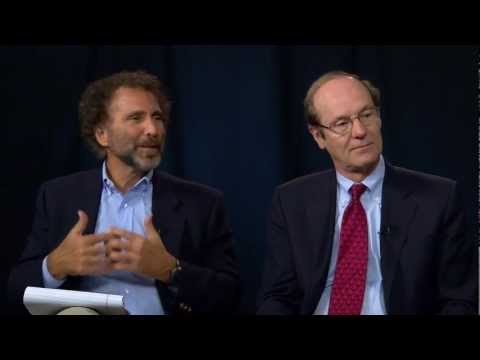
How Agentic AI Is Transforming Marketing
Ask about Knowledge at Wharton
Episode Description
ABOUT THE EPISODE Chris O’Neill, CEO of GrowthLoop, joins Barbara and Americus to explore how compound marketing, agentic AI, and data-driven experimentation are redefining marketing workflows and customer experiences, using his insights from decades of leadership across technology, data, and brand-driven growth.
ABOUT THE PODCAST Marketing Matters is hosted by Wharton marketing professors Barbara Kahn and Americus Reed. Each week they discuss marketing and advertising trends, consumer behavior, data and analytics, the latest in retail marketing, brand-building, and much more with their expert guests. Episodes are recorded at the Wharton School.
#AgenticAI #AIinMarketing #MarketingOperations #DataDrivenMarketing #MarketingAnalytics #PersonalizedMarketing ----- The Wharton School of the University of Pennsylvania is committed to sharing its intellectual capital through Knowledge at Wharton, the school’s online business analysis journal.
Launched in 1999, Knowledge at Wharton offers free access to:
- Articles, podcasts, and videos highlighting Wharton faculty research and analysis of current business trends - Interviews with book authors from Wharton School Press - In-depth series of curated content like Wharton Executive Education’s Nano Tools for Leaders - A searchable database of more than 10,000 articles covering all aspects of business - A weekly newsletter that delivers Knowledge at Wharton insights directly to your inbox
Visit the Knowledge at Wharton homepage: https://whr.tn/3qUpSBE Subscribe to the Knowledge at Wharton YouTube channel: https://whr.tn/3DEAgAU
Read the full transcriptHide the full transcript
- Hello and welcome. You're listening to Marketing Matters on the Wharton Podcast Network, which is our weekly podcast
- where we analyze the latest in advertising, marketing, customer behavior, new product launches,
- retailing, branding, anything marketing. I'm Barbara Khan, the Patty and JH Baker
- Professor of Marketing, and I'm joined by my co-host, America Reed, the Whitney M. Young Jr. Professor of Marketing and
- the Brand identity theorist. Hello Americus. >> Hello Barbara. So last week we sat in on
- a presentation in our department uh professor by the name of Kevin Lee, University of Michigan marketing prof
- talking about AI and how AI can be used agentically to help design your emails and outreach
- and protocols and different collaterals for your marketing efforts. and they actually introduced this idea of having
- AI sort of help you figure out in AB testing what's working, what's you know what's not working and so on. So really
- >> really cool result. They actually reported a 33% lift. So now I'm wondering I I want to go deeper on this
- idea of of agentic AI and like the the marriage Barbara between these new tools and us as marketers trying to measure
- stuff trying to elevate and amplify. Is there anything you've got for me that can help shed some light on this today?
- >> Why don't we get someone who really knows what he's talking about? Uh, and I'm really happy to have with us in the
- studio today Chris O'Neal who's the CEO of Growth Loop. And Growth Loop is trying to redefine that future of
- marketing using, as you're suggesting, AI and data. Chris, welcome to our show. >> Hi, Chris.
- >> It's great to be here with you. >> So, Chris, before you tell us about the world of AI and marketing and how to
- improve everything, can you tell us your background, how you got to where you are?
- Yeah, absolutely. I grew up in a very small town of 7,000 people in the middle of nowhere up in Canada and I found my
- way to the valley for two months uh before graduate school and that's turned into 25 years. I've been very fortunate
- to be part of some incredible companies like Google, some amazing teams and brands. Um and really uh the first wave
- of that was really trying to figure out how you actually use this thing called digital marketing to help um build
- personal connections or just connections with with consumers and businesses. So that was the first wave and now we're uh
- here an exciting new wave with applying AI in uh in an even more transformative way. So I'm really lucky. I've been part
- of some incredible teams and boards and um and that's that's really uh been a fun journey and I'm really excited to
- share some of it with you. >> So I mean just because Americus went to that lecture but I didn't. So like
- there's like a bunch of stuff that I don't even understand the words of. So can so I understand growth loop which is
- the company you're CEO of uh has something to do with compound marketing like what what does that term mean and
- and what does aentic AI mean? Can you just start at the really basic? >> Yes. Yes.
- >> Cuz we know compound we know compound interest is a good thing, Chris. >> 100%. And that's where it started. You
- know, in that small town, we used to get a lot of snow in the winter. And I remember my we'd have parents, friends
- of our of ours come in and sometimes they get stuck. Like literally, it' be that much snow. And I was given a book
- during one of these four-day stays when some some family members read some books
- and they left me this book. And it was called The Wealthy Barber. And it was a story about a proverbial wealthy barber
- who did some really small investing and compounded it over time and he became wealthy. And that started a lifelong
- fascination with the notion of compounding. And when you stop and think about it, compounding is everywhere.
- Albert Einstein famously said it's the eighth wonder of the world. Compound interest, right? It's in nature, right?
- If you think about how forests happen, it's actually compounding. There's like the worldwide wood uh worldwide wood
- they call it. It's a mitochondria like underneath the soil. It's in nature. It's in technology. You know, when you
- think about network effects, that's compounding. Um James Clear, who I'm a huge fan of, if you get 1% better every
- day, by the end of the year, you'll be 37 times better. So, it's the notion of little things that are done consistently
- over time that start to lead to exponential results. And we got to thinking, okay, gosh, we're trying to
- combine data and AI with people in the loop to unleash the brand's potential, right? whether it's a personal
- connection with a brand or whether it's the different variety of of tools and channels you can bring together to offer
- truly personalized and really great experiences. So we borrowed the term compounding shamelessly and say hey what
- if we could compound marketing and so that's really where it starts. Um the second part with with aantic really like
- AI is interesting in so many ways and we'll unpack some of it today but many of the changes in marketing were were
- kind of the demand side meaning we changed the consumers changed how they interacted right we went from desktops
- to mobile right analog to digital and certainly there's elements of demand side change here but the bigger change
- is supply side what I mean by that is the way in which we do marketing the way in which we go about workflows uh with
- AI in the middle uh is really exciting and we're just scratching the surface and again I'm keen to get into it with
- you today because I think it's a supply side meaning it's changing the way in which we interact with people in a very
- personal way in a way which in many ways has been the holy grail forever and we've been living with this unfulfilled
- promise of marketing as a cost center or marketing as some interruption and there's so much more we can do together
- and I know you feel the same uh and I'm keen to as I said get into it a little bit with you today.
- >> So, okay. So, you had this big idea of compound marketing and you understand more of how all this works. So, with
- that in mind, did you start growth loop or like how did the whole company get started or what is what is it exactly?
- >> So, I've been fortunate remember I talked about great brands and teams and Google was one of them. I was at uh
- Google for 10 years during a very great in you know really really wonderful time
- during a very obviously generational company and during that time I met some incredible people including the two
- founders of growth loop uh they worked for an old CMO of mine when I was up running Google in Canada uh and they are
- like just incredible entrepreneurs and they they looked at how Google did marketing and they said gosh for a
- company that's allegedly so innovative they sure don't don't like really always think about marketing an interesting way
- So Chris and David, the founders, said, "Hey, why is it that I, as a product marketing manager with goals to drive
- value for a particular product, have to go and line up outside a data team just to basically get a hypothesis tested
- with SQL and all this code and that bounces back and forth and takes days and weeks and up to a month just to do
- one campaign. They thought that was in that was silly, right? So basically they had the innovation to to build on top of
- a data cloud, right? So increasingly we're putting data in fewer places these things called data clouds that's Google
- bigquery this is Google cloud company like snowflake data bricks Azure um Amazon there are many data clouds but
- the notion was how about you start there by putting an intelligence layer on top
- of the data as opposed to pushing the data everywhere really and this is incredibly important from a cost
- perspective from a compute perspective security perspective and now of course with AI you want to have your data and
- your understanding and your intelligence on your customers in one place so you can apply the full effect of this
- magical technology called AI. So that's the insight where it started. And then the other part with compounding is the
- notion that it's not a funnel so much as it's a loop, right? You basically have ideas who you should be speaking to,
- where you should be speaking to them and then do closed loop experiments where you get a little bit better every time
- and then it really compounds as you do. So >> wait, I got you got a because I'm like
- big on this funnel and this loop. So I I really need you to unpack that a little
- more. So you have a different structural model of dealing with the customer rather than thinking about it like
- >> a funnel which is traditional. So you know are you in the product category then you're considering the brand then
- you know my brand compared to others you're suggesting some kind of loop. So what exactly does that mean? I I I don't
- really understand. >> Yeah. No great question. Like so in a funnel, we basically treated the world
- as like this big uh this big pool and then you basically pull them through a funnel. Um and there's a consideration
- all that stuff we've been we taught when I was in business school. We were taught
- about consideration, awareness, all that good stuff. And look, I'm here to say look, you need to continue to invest in
- your purpose and your brand and why you why you exist. That is that is as important if not more important than
- ever. However, you can do better, right? Rather than treating everyone as like one big segment, we're actually getting
- close to the holy grail where you can actually reasonably into it something interesting about a person at the
- onetoone level. This is the importance of what sometimes called first party data information you have on that
- person. Okay. Um so that you can inter you can intercept them at the at the right moment
- >> to ensure loyalty surprise and delight them. the customer journey kind of model
- then >> it's an iterative customer journey that says you're going to treat people or sub
- subsegments or even onetoone for the first time in an iterative loop as opposed to just doing what I sometimes
- call waterfall marketing. >> It's more agile just like we develop software. >> Yeah. Just let me let me just see if I
- got if I have this correct, Chris, because I I don't think what you're saying is somehow
- >> uh falsifying the funnel as much as it's saying, hey, you know what? We can make
- this funnel super efficient by almost pointing and using tools that allow us >> to kind of get to that that behavioral
- part faster. In other words, we can have some understanding and then we can use artificial intelligence to sort of test
- kind of immediate sort of intuitions that we have and quote get to the right answer as fast as possible. So there's
- less guesswork I guess in this >> also predicated on this notion of touch points like I mean how do you know when
- to interact? It has to be when the customer engages I guess. >> Exactly. Exactly. So, quick story. I
- serve on the board with a very senior um member at Starbucks, executive at Starbucks, rather, and he he's he he and
- I were talking about this this very topic, and he says, "Look, we know that uh Sally is a vegetarian. So, why is it
- when Sally visits her local Starbucks, we're offering her meat products? We're meat." Like, that just seems odd, right?
- when you can reasonably know with permission and Sally wants to know like what she she's gonna get when she greet
- is greeted by the barista they probably know that but systematically how about you offer something that would be
- relevant to Sally as opposed to relevant so it does start absolutely touch points
- a great a great point >> so when Sally comes to the cash register >> yeah you learn about
- >> a script about Sally that's what you're saying right >> exactly that's customer engages with us.
- Is that what you're saying? >> Yeah. >> Exactly. Exactly. And that's just one touch point. I love that term. We
- actually, you know, we talk about touch points and moments that matter. Uh because again, sometimes it's it's
- leaving Sally alone, right? It's not just constantly interrupting. It's >> implies you know Sally and Sally's going
- to get to know you, right? I mean, so are you only talking about a situation where I've already had interaction with
- the customer and then the way I interact with her at the next moment should reflect that history. But that implies I
- have that relationship already. >> Correct. That's correct. Right. So what we but I am talking about both, right?
- So you can reasonably intuit it. And this is where back to machine learning, right? So we we sometimes intermix the
- term machine learning with AI. Machine learning says, okay, how can we go about into the rest of the the potential
- prospects or potential touch points to basically inform the set of next actions which would reasonably do do the right
- thing for the brand and for the long-term customer relationship. And this is a really exciting part where you
- can actually get to causality, right? So most of marketing is correlative. It's like we think these things worked but we
- don't know, right? And that's the thing that's holding back a lot of marketing is like, you know, BF know the CFO and
- the CMO need to be BFFs, right? It needs to be you talk the language of the CFO and that's really one of the things that
- I think separates the great CMOs from the sort of mediocre ones. >> Yeah, that's I love the CFO and the CMO
- need to be BFFs. That's fantastic. I need that on a t-shirt, Chris. All right. Now, listen. So I I want to make
- sure I'm I'm unpacking this correctly because I think what you're saying is like hey the fact that we have tools
- that allow us to unpack insights and data very quickly now allows us to be much more
- >> uh much more inductive right so we can kind of go to Barbara's point we can kind of immediately we have a touch
- point with Sally and we have we have some inferences about what she's done in the marketplace and not what she
- reported on a survey but what she's actually done and we start building that intelligence and testing and iter
- Iterating and testing and iterating and testing to get that clear picture of Sally and then see to what extent can we
- uh predict other Sally's out there as a function of is that close at all in terms of
- >> you know so fast personalized data driven and continuously optimized. This is the notion of a funnel and this is
- exactly what we're talking about. So you absolutely nailed it. But so his point though because I I understand once you
- know the person using that data that makes sense to me but it I what America said which is taking it another level.
- And is that what you're saying? The way you reach people you don't know >> is by optimizing the data you do know.
- So that's where you start and then you look for other people like that's what America said. Is that what you're saying
- too? >> Yeah. Correct. So you're absolutely right. There's two modalities. Do you
- know the person? Do you know something about them or do you not? And that's like the different techniques are used
- to to tease those apart. But where it starts to get magical is when you start to for inform uh one from the other. Um
- a lot of the a lot of the science is b sort of the techniques are born from a lot of probabilistic statistics, right?
- So you'll you'll hear things like multi-armmed bandits and all that's a fancy way of saying is you're assigning
- people to a group and then you have a test and control, right? A lot of the power and things we're super excited
- about is that you actually have a test and control group. So you can prove causality. You can basically and have a
- hold out group that lasts for a time. Now here's an interesting magic we're we're really excited about is over time
- you can use math to basically approximate the control group. So you don't actually have to hold them out and
- still determine causality and still determine is it having the lift and the desired personalized impact and moving
- the needle on a metric like your customer lifetime value. That's like whoa. That's like mind-blowing for many
- people and we're really just scratching the surface on what's possible there. >> Interesting. Let me ask this question. I
- love this point because in some senses I've heard this quote, Barbara, that marketing starts with math and ends with
- art. Uh kind of I don't we'll unpack that later, Barbara. But Chris, help me because I want to get to to Barbara's
- level of of understanding here. very specific example to say all right I come to you Chris in growth loop and I've got
- a data set >> is that how this happens and then and then you you look at my data
- >> and then you build out a kind of AI infrastructure andor agentic architecture to lay on top of my data in
- order to help me pull as much insights about what I can understand from the people in that data set as fast as
- possible is that some is that correct at all correct let's make it let's make Get
- specific. Okay. So, a brand comes to usific. >> Yeah. Yeah. So, so they have a brief,
- right? We're familiar with marketing briefs. Just say this is what we were trying to accomplish is the business
- objectives is who we're trying to talk to, right? Literally drag and drop the brief into our agent, our campaign
- agent, right? We basically start the following. Say discerning what the what the market is trying to accomplish. And
- you talk about art. I think art and and and math intertwine at different stages because it's like the the real role for
- humans is ingenuity and creativity to say hey what's happening in this in the zeitgeist that really is relevant to our
- customers. So it's a really important role marry that up with what has worked in the past. So a brief comes in it
- basically gets processed by an agent and it says what do we know about this um this objective and these set of
- campaigns we've run in the past and the people that might be relevant. So it then it then offers up to the marketer a
- set of different audiences to basically go and and and you know treat with something and then it would suggest a
- journey right to say okay maybe you send them uh something through your app or your email or you know may maybe you
- have to give them some time and maybe then offer them an ad or some form of incentive. So that's that's what
- happens, right? A brief gets turned into a specific set of audiences and a specific journey which then gets pushed
- into the world and then executed and then run back into what worked and read it back into your data cloud. Lather,
- rinse and repeat. This is exactly the work that we're doing with some >> Can you give me like a real concrete
- example with specific like just specifics exactly how this worked like a big success story?
- >> Sure. I I'll give you a recent one. We we are so fortunate to work with Costco,
- right? Everyone knows and loves Costco. >> Chris, you're speaking her language. COSTCO
- ALREADY. >> I love Costco. So, um I'm going to give a little bit of a little spin on this,
- but Costco is super super into their members, right? And they they put their members above all else. Their business
- model is well predicated on selling memberships and they're very tight. Like if you ever um you know what the
- acquired podcast has done a deep deep dive >> into I've listened to that several
- times. It's great >> and I love it. So okay so people are familiar with Costco and and Costco is
- very in the in the business of working with their brands to basically ensure delightful experiences and connecting
- them to you know say it's DeWalt tools right so basically how can you infer the people in the Costco membership that
- might have a propensity to buy DeWalt tools we can do that with math right and then what we're doing is connecting the
- two we basically say DeWalt Costco here is here's a subset of customers that used to take you days and weeks just to
- do to to to really do the math and really surface the people. We now do that in hours, right? In terms of really
- understanding and automating the connection between in this case a brand and a set of high propensity customers.
- >> What do you do with that information? Can you show me like >> Yeah. Then then you do you send them an
- email? Do you send them an offer? Do you push something into the the Costco app?
- It really depends. and you're constantly testing to understand both what offer resonates with the subset, which
- channels offer the off um seem to work the best. Maybe it's an instore um experience. So, it's it's a really
- multi- channelannel or omni channel. Sometimes people use that term experience that says, okay, how do we
- broker this in a way that is additive for the merchant in the home improvement category and of course the members? It
- has to be a balance between the two. >> So, so let me just get the it's just hard for me. So your client is DeWalt
- Tools and they want to know >> or or your client is Costco and so Costco pays you to figure out how to
- optimize the purchases of specific brands within their environment. Is that how it works or
- >> that that is one use case exactly? Right. So it is and really just to abstract it away and talk just in terms
- like it allows their marketing velocity to be faster. Right. Like where that used to take weeks, it now takes hours.
- So therefore, right, DeWalt has money they want to spend and there's many DeWalts, right? There's n number of
- brands >> and if it's very manual and takes a long time. >> Yeah. >> Well, so this is like a retail media
- network. Is that who your clients are? >> In this case, that's what it is. Correct. Correct. But we do we do life
- cycle marketing and retail media networks and uh really we do the similar stuff with Albertson's and you know
- price line and many others. >> Okay. Okay. So your client is the retailer and the retailer's customers
- are these brands and you're trying to figure out a way to optimize what the brand can get from the retail media's
- data and the way they optimize all that is through you. Is that right? >> Correct. Correct. We we play we play a
- part in a broader ecosystem. I want to be clear. But yeah, it's it's it's the how do you accelerate that get the
- velocity? We talk about speed. Yeah. And then secondly, did it work? Right. It's
- not just did you did you throw out some impressions. No, no, no. Like the the brands with all respect, they care about
- moving their product and having dectual experiences. So, we also help them measure incrementality,
- >> right? Right. >> In the store, right? And that's that's sounds easier than it is in terms of the
- actual math and the calculation. But >> no, incrementality defined as if you didn't do anything, how much more with
- what you did matters in some sense. Bingo, right? >> Yeah. It's a resource allocation problem
- in some senses. Let me ask you this, Chris, because I I want to make sure I understand this part because the math
- gets the retailer to some hypothetical uh set of audiences to think about. >> Does the retailer then step in because
- now it's sort of like, okay, what do I prioritize? Is it an ad? Is it a this? Is it is it a that? Is that where the
- marketers then step in and say, "Well, I know something about some of these groups and now I'm going to bring sort
- of a creative piece to sort of prioritize some of the marketing uh protocols that might be used to again is
- that what happens in this case?" >> Yeah. Exact. We believe in human in the loop, right? So these agents are working
- on behalf of the brands and the customers and they can suggest things the audience the journey the creative
- creative like Nano Banana and all these images are getting like so good, right? So I wouldn't have expected that uh the
- pace we can we can talk about that separately but yeah it's about suggesting things and yeah it's using
- intuition right it's using the understanding of what has worked in the past so so marketers arguably they're
- getting out of the mundane stuff right and a lot of that you know the work of the work is so not why marketers signed
- up for the job so we're freeing them up to do the job that maybe they wanted to do in the first place
- >> along the lines of what America is asking are a lot of the suggestions more price related or deal related or I mean
- typically Great question. Yeah. Um, so you know this is where machine learning and AI actually interact. So machine
- learning would be a propensity model. So we have high propensity like take Albertson's. Albertson's knows who's a
- vegan, right? So they have like propensity models to say vegans uh have high propensity to provide these
- products, right? These products and not these ones. Uh or to your point Barbara,
- price elasticity, right? Um I serve on the board of GAP and tariffs have had enormous impact on anyone who's
- importing things and GAP certainly falls into that camp. >> So getting an understanding of where and
- how you can change prices that's a price elasticity game right. So how do you take
- >> that would be wonderful. >> I mean it's it's f it's a hard problem but it's like not just not just in a
- category all the way down to a skew level and then ideally at an individual level. So this is where the the math
- those are those are math problems right machine learning like propensity or price elasticity.
- >> Yeah. So, let me let me just go back to the old old world of grocery. Like before we had all this data and all this
- fancy stuff and you can do it on each customer, whatever. I remember Catalina would would put out coupons in the
- grocery based on what you purchased just at the cash register that time because they didn't have all the sophistication.
- And they do one thing or another, which is kind of what I hear you saying. They'd either give me a price deal of
- some kind, some kind of coupon for future purchase, or if I was Pepsi and paying for it and the customer bought
- Coke, they might give me a coupon for Pepsi to try to convert me. So, like what you're saying now is in
- multi-dimensions, much more in a sophisticated way than Catalina used to do it at the one time at the cash
- register. I can either give you different kinds of price deals or like you said if I'm vegan or I can give you
- a constellation of brands where I'd be more that's what you meant by propensity I think more likely to buy that product
- because I see you bought this in the past therefore you're more likely to buy carrots than you are to buy steak
- >> with the veganism is that what is that kind of very I'm saying in super simple
- way and you're doing it in a multi-dimensional way but is and 10 times as fast probably. Well 10
- that is well said Barbara exactly I remember Catalina well you studied him and that's exactly now it's it's a it's
- a version of that but it's like it's it's so it's faster to your point and is much more much more it take is taking in
- so much more data right that's a very simple if this >> is a very simple example but I can
- understand it but now if you multiply it by all these different directions and do
- it like instantly the power is incredible >> it is it is and you know so let's weave
- in you asked early off the top, aantic, what does that mean? Like the reason, you know, I spent three hours yesterday
- doing a cloud code um course for PMs in this case, but like I I so recommend people jumping in and trying it and and
- why do I get excited? So the the the innovation that cloud code and and variants of uh of it represent or what
- they're calling long horizon uh agents, right? So you know when when uh the chat
- pimo would happen that was all about pre-training a model and then we had reasoning and inference time compute
- like that was where like it's thinking to basically really really run lots of different permutations and this long
- horizon agents are a gamecher because it actually can look long horizon and hold
- context and look at the whole system. So to your point, Barbara, this is not only
- just taking in more information. It's actually thinking about the long horizon of the relationship, right? So we're
- just starting to see this where it's like, well, maybe maybe it is like these se these 10 things. I'm making that
- number up, but it's thinking about the entire system and that's where the agent it is.
- >> So you're maximizing lifetime value. You're not only at this one occasion doing it in a million different
- directions. So, it's not only multi-dimensional in that way with the different tools you can use and all the
- different questions you can ask, but it's dynamic. It's long term. So, you're looking about how to maximize the the
- That's incredible. >> Ladies and gentlemen, Chris O'Neal has just split the atom slide on our
- podcast. >> I mean, amazing. I I can't I mean, I see why it's so hard to explain because it's
- just so much. Then you have metrics that prove you're able to do this somehow or
- another. >> I mean, you're not just taking it on faith cuz it's pretty hard to get your
- brain around all of these things. >> It it is, but you know, you know, the the math the math we've applied it in ad
- tech for a long time. Those previous, you know, run it Google and now this is like how do you bring it into marketing
- personalization. So, it's borrowing similar concepts and then and then turbocharging with AI. It's just like
- it's it is my my bending. You know the hardest thing is actually changing the people's minds and the workflows in
- their life. People get used to different ways of thinking and the longest pull the hardest change is actually changing
- the ways in which people go about their business and that's the hardest thing and that's you know I find it deeply
- rewarding once you do that. So you're not just applying your existing workflows and your mindsets to a whole
- new set of tools or vice versa right new tools on top. When you say people, are you talking about the marketers, the end
- users, the retailers? Who are the people you're talking about? >> All the all the above, but particularly
- the marketers, right? And so like what's happened? There's always been a tugof-war between technical people and
- like the data teams and lots of different parts of large organizations. >> You know, if you'd asked me 10 years
- ago, I would have thought that the the marketing leaders of today or now would be a blend of art and science, right?
- These people who are have data driven thing and and deep appreciation for personalization and brand. I would have
- thought they sort of merged those together and that's still largely true. But what's happening is the data teams
- and the technologists are really leaning in and they're saying, "Hey, you know, for a long time this promise has not
- been kept, right? The the BFF thing I mentioned." The reason that's not true as a rule is that basically marketers
- haven't leaned in consistently to show that this isn't just a cost center. This is a growth engine. Right? So the
- technologist with all these tools we're talking about, I mean, they're so powerful, it's unbelievable. I wouldn't
- have the slope of improvement is incredible. So you're seeing the technologists really play a role and
- they're trying to learn marketing faster than marketing is trying to learn tech and it's a fascinating time to be in
- business and but it does require a mindset and a partnership of collaboration that takes time and you
- know really really um the culture. >> So let's you know just we we are almost at the end of time if we're not at the
- end of time. So let's just big picture this like just to get like >> with all of this power and all this
- ability that you have to make all these predictions you know are you would you maintain that you are not only
- increasing bottom line for the retailer because the retailer sending this information so the
- more useful the information is the more money they'll get for that information the more value they'll have the marketer
- who's selling more product but are you also maximizing the experience for the end user like is that one of the goals
- too? I mean, >> I think it's the main goal. Absolutely. Right. For too long, I mean, the reason
- I'm in this line of work is like, look, we all experience this in our day-to-day
- life, some sub-optimal experiences, whether it's the actual product experience or the marketing experience,
- the customer service experience. And like I just think that, you know, this is one of going to be one of the use
- cases just like it is for DevOps developing code or customer service interaction where you're applying
- agents. Same as in marketing, too. For goodness sake, we know we know information and people are willing to
- offer it. in a fair exchange for more delightful experiences and that's what right great brands I know I think I'm
- preaching to the to the choir here that like that's what it's all about that's the higher order bit you know the tech
- can be a service to wonderful experiences >> and that's what um that's what gets us
- out of bed every morning and we're really really thrilled to put gonna put up for me next like that's I'm going to
- be even happier shopping at Costco now >> that's funny I love it though Barbara to
- your point though because as Chris saying it's the trifecta, right? I mean, consumer welfare goes up, marketing
- efficiency, marketers do their jobs better. I mean, every it's a just win-winwin. This is fantastic.
- >> Well, Chris, it's been kind of an amazing little session. If I understand an eighth of what you're talking about,
- I'm thrilled. But, uh, it's been wonderful talking to you. Can you tell us where consumers can learn more about
- this or our listeners can learn more about what you're talking about and get into more of the details? you have is
- that available for people to dig in? >> Yeah. Yeah, people can track me down on LinkedIn. That's usually where I spend
- spend my uh my my social time. Um so people want to track me down on LinkedIn or check out Growth Loop. Um we'd be
- happy to to chat or or just really like help us move this this whole uh industry
- one one step forward. So thank you so much for for the time and discussion. I've enjoyed it very much. So thank you
- very much for having me here. >> Thank you. Chris O'Neal, CEO of Growth Loop. That's all we have time for today.
- We'd like to thank our producers, Dion Simpkins and Marissa Rena. Thank you all for listening. We'll be back next week.
- Till then, this has been Marketing Matters on the Wharton Podcast Network. I'm Barbara Khan here with Americas
- Reed.
Brief Summary
Chris O'Neal discusses AI's role in optimizing marketing strategies and enhancing customer experiences through compound marketing.
Key points
- The Power of AI in Marketing. AI can significantly enhance marketing strategies by optimizing outreach and testing.
- Understanding Compound Marketing. Chris O'Neal introduces the concept of compound marketing and its importance.
- The CFO-CMO Relationship. A strong partnership between CFO and CMO is crucial for effective marketing.
- The Power of Costco. Costco prioritizes its members, creating delightful experiences through data-driven marketing.
- AI in Marketing. AI is revolutionizing marketing by maximizing lifetime value and enhancing customer experiences.
- A Win-Win-Win Situation. Improved marketing efficiency benefits consumers, marketers, and retailers alike.
Episode highlights
- The Power of AI in MarketingAI can significantly enhance marketing strategies by optimizing outreach and testing.“AI can help design your emails and outreach.”0:43Jan 24, 2026
- Understanding Compound MarketingChris O'Neal introduces the concept of compound marketing and its importance.“Compounding is everywhere.”3:50Jan 24, 2026
- The CFO-CMO RelationshipA strong partnership between CFO and CMO is crucial for effective marketing.“The CFO and CMO need to be BFFs.”12:53Jan 24, 2026
- The Power of CostcoCostco prioritizes its members, creating delightful experiences through data-driven marketing.“Costco is super super into their members.”18:05Jan 24, 2026
- AI in MarketingAI is revolutionizing marketing by maximizing lifetime value and enhancing customer experiences.“This is not only just taking in more information. It's actually thinking about the long horizon.”26:24Jan 24, 2026
- A Win-Win-Win SituationImproved marketing efficiency benefits consumers, marketers, and retailers alike.“It's a win-win-win.”31:07Jan 24, 2026