How AI is Reshaping Quantitative Finance
Ask about Knowledge at Wharton
Episode Description
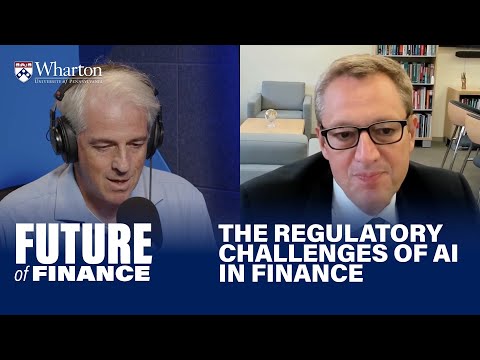
Artificial intelligence is transforming quantitative finance, expanding the kinds of information investors can analyze and changing how they identify signals and make decisions. In this episode, host and Wharton finance professor Itay Goldstein speaks with fellow Wharton finance professor Nikolai Roussanov as well as Ingrid Tierens of Goldman Sachs about how AI is reshaping quantitative investing. They explore how AI is changing investment research and strategy and why human judgment and the ability to ask the right questions remain critical. This discussion is part of a special series of Future of Finance exploring the impact of artificial intelligence on the financial landscape.
SERIES OVERVIEW Hosted by Wharton finance professor Itay Goldstein, this limited series takes a deep dive into the cutting-edge insights and pioneering perspectives of experts in finance, academia, and industry. Discover how artificial intelligence is reshaping financial markets and institutions as we explore its impact on investing, financial stability, the economy, and the future of work in finance.
Read the full transcriptHide the full transcript
- Uh welcome everyone. Uh this is uh season 3 of the future of finance podcast here at the Walton School. I am
- Itai Goldston, a finance professor and currently the chair of the finance department. Uh we devote the third
- season of the future of finance podcast to this very exciting uh new topic of AI
- in finance and today we are going to dive uh deep into the topic of how AI is reshaping quantitative finance.
- Quantitative finance has been one of the fast growing areas of finance uh both in
- research and in teaching. Uh we just launched uh the new uh Bruce uh Jacob's uh masters in quantitative finance
- program in order to help our students uh get more familiar with some of these new
- techniques in quantitative finance and in particular AI in finance. And we're going to try to get an understanding
- from both the academic perspective and the practitioner perspective on how AI is used in quantitative finance. And for
- this we have uh two perfect uh guests. Uh first let me introduce my colleague here at the finance department uh Nick
- Rosenov. Uh Nick Rosenov is the Moisa Saffra uh professor of uh finance. Uh and he has been with us uh for about 20
- years now. Uh he is also uh the uh MBA major quantitative finance uh advisor. Uh Nick, it's great to have you.
- >> Always happy to be here. Thank you for bringing me on. >> Thank you. And together with Nick, uh we
- are very happy to have uh Ingrid Trans who is the head of the data strategy team in the global investment research
- division at Goldman Sachs. She is also uh part of the uh Warton uh community as a member of the advisory board for
- Wartton's Jacobs Levy Equity Management Center for Quantitative Financial Research. This is where a lot of the
- activity on quantitative finance here at Warton is taking place. Hello Ingred. >> Thank you. Um and great pleasure to be
- here. So, uh, let's dive right in. And I'm going to start with you, uh, Nick for a
- little bit of an academic, uh, perspective. Uh, so I just said that you've been with us for about, uh, 20,
- uh, years now here at at Wharton. Uh, and you have been, uh, heavily involved, I would say, in quantitative finance
- research. So, you have seen a lot of the changes in this area. So can you maybe take us here on a little bit of a an
- overview of how quantitative finance has changed in the last 20 years and how AI
- is shaping up to change it further. >> All right. Of course. Thanks it. Um when we say quantitative finance historically
- uh this has meant different things. uh originally uh kind of following the breakthroughs
- in uh you know the finance theory in particular option pricing and so on in in the 1970s. Quantitative finance
- typically referred to uh kind of quantitative or mathematical modeling of kind of complicated financial assets in
- particular derivatives uh or bond pricing understanding the the structure the chunk structure of interest rates
- the yield curve and then various derivatives associated with with interest rates and so on and so forth.
- So for many years that was the the view that the quantitative finance is basically of using mathematical models
- to um value complicated complicated securities like securities that have complicated payoffs and need some
- structures of mathematical model uh to understand them. Now with the advent of even larger data sets and al now we talk
- about alternative data ranging from things like uh credit credit card transactions or satellite imaging and so
- on as well as more powerful statistical tools like machine learning. Um the the this this quantitative investing has
- grown beyond what would traditionally be described as as systematic and even some
- of the discretionary uh portfolio managers will use quantitative tools and data. And of course risk management that
- under underpins uh of everything that that financial financial industry does is also of course very heavily um
- quantitative. And so when we think about how is this being applied to quantitative finance? Well um it it it
- there's several there are several ways in which uh AI is revolutionizing quantitative finance. The most basic one
- is the same in which AI is being used elsewhere which is it's just a productivity tool for model builders for
- uh for so for re kind of re researchers on on the quantitative finance side but as well as portfolio managers um that
- basically kind of makes their their more workflow a lot more efficient in terms of writing code right so we know that AI
- has revolutionized or maybe upended uh the the software software industry and of course quantitative finance is built
- on a lot of computer code and to the extent that AI is helping u increase productivity in the production of that
- computer code that is obviously affecting that um that that that that field. Um as far as kind of systematic
- quantitative investing AI again is represented by these very large multiparameter
- uh models that are can now used directly uh to again predict predict returns even
- better than what was what was done using earlier methods. Um and and and finally
- people are using the large language models themselves without without necessarily tinkering with the
- underlying architecture but using the large language models themselves to analyze vast quantities of textual data
- which is which they can do much better and much faster than human analysts to produce signals for fundamental
- fundamental portfolio managers including discretionary ones. >> Okay, very good. So Ingred um from where
- you see it in the industry and obviously Goldman is a very important player in the industry I'm trying to get a sense
- of how much of a gamecher AI is. Is it just helping uh analysts do their job faster or is it uh doing completely
- different things from your point of view? >> So I think um the answer is of course
- you know um everything. Um and I'm I'm going to expand a little bit on um what was said before here. Um when we talk
- about quantitative finance, it almost sounds like there's quantitative finance and there is non-quantitative finance.
- And um I think you know if we look at the world right now like all finance by definition by definition is is really
- quantitative and every single investment strategy or process if you're not using
- data analytics technology um models I don't really think you know that's that's 2026 anymore. And so for
- me it's it's kind of you know similar as what we were saying before here distinction that is more meaningful to
- me is there different investment approaches there is systematic and there is primarily discretionary and so if you
- think about systematic to me that is like a mix of you know very well diversified portfolios the bets are
- typically you know more limited um discretionary side obviously people have more conviction human judgment still
- plays a larger role um and the portfolios tend to be more concentrated. But what I think is
- consistent across the board is AI is reshaping every single investment approach whether that's systematic or
- whether that's discretionary. And if I look at what's going on and we talk to a lot of clients as well um there kind of
- like three categories that I would look at like number one um AI is turning a lot of previously inaccessible
- information into data. So I think that's super important to think about. So again
- if you kind of roll the clock back a little bit um typically investors were looking at structured data. So like very
- simplistic example like prices, earnings, economic releases. Um and even you know think about a simple example of
- we're in the midst right now of earning season. So you look at an earnings call many years ago a quant signal could
- simply be an earning surprise. are people who build businesses around earning surprises as their main
- quantitative signal. Um, right now roll forward with the advent of AI, you can be analyzing every single sentence
- spoken by management companies, could be across thousands of companies. You can do it going back many many years. Same
- is, you know, the case for filings, research reports, images, videos, um, you name it. And so from that
- perspective, AI is really turning an increasing share of human activity into data. And it's kind of interesting to
- think about it, right? Like if you think about digitization, we started with transactions, then you know,
- communications and now we're actually thanks to AI, we're starting to digitize reasoning itself, right? Like every
- single time when any of us are interacting with a chatbot, you have AI now capturing how you think
- about things. It's probably maybe the first time in human history that the thought process itself is being
- digitized. And just think about, you know, the possibilities from that perspective. So the second thing I think
- that's important is um AI allows people to connect information across silos, right? And that's I think a little bit
- coming to the scalability thing that and the productivity thing you were talking
- about. So you know in the past again you know time is limited human capacity is limited you would look at like
- predefined variables you know you would potentially construct strategies around that. AI can do a much better job at
- starting to sift through diverse sources of information and see if they can you know identify additional insight from
- that. And so again, you know, concrete example, an analyst, a PM, you know, looking at I can at best read 20 reports
- um on stocks that I really care about now, you know, 20,000, you know, related documents, etc. And then a third one,
- which I think is very important as well, going back to more the quantitative aspect, AI is also democratizing
- quantitative analysis itself, right? Like in the past the people who could do quantitative analysis, you know, really
- taking advantage of sophisticated risk management tools, portfolio analysis tools, etc. tended to be the people who
- could code, who are really the power users of these tools. Now you put the interaction with natural language in the
- mix. And I think again people like one or two steps removed from that can potentially get way more use out of a
- lot of that tooling the applications that may have been built many many years ago. The applicability is just you know
- going to become um much broader. So kind of you know like like addressing the question that you were um asking here
- about you know does that mean that it's productivity play or is it you know beyond that there is definitely
- productivity again we just spoke about I mean just think about it like searching
- reading summarizing translating all of that you know it's complete table stakes right now but I think what is really
- more exciting is the fact that the scope of what you can analy ize and the opportunist opportunity set being much
- broader. It opens um a lot of doors, right? Like again going back to its earnings and you know you can kind of
- you know in the past okay what did management say about you know whatever you know some example of spending plans
- now you can go back like you know did the market detect that we run an analysis over multiple companies going
- back multiple um decades. Um, the other thing that I've realized from like talking to analysts as well is you
- always have and as a researcher the same thing. You always have tons of ideas of
- things that you might want to analyze. We're all self- selecting if we have limited time and you know limited tools
- available and you're going to go like me low probability event. I'm not going to
- do all of the work. AI again opens the door that you might start to analyze lower probability scenarios that
- potentially can yield insight that otherwise you wouldn't have been out capturing. And so sitting in um in a in
- a cellite research division where the mandate is you know our goal is really to come up with differentiated insights
- in a timely manner. The productivity gets to the timeliness. the scope and the increased opportunity set gets to
- the you know can we surface things that are more differentiated and make a difference from that perspective.
- >> So you mentioned uh democratization of uh financial analysis and I think it brings up a very interesting question
- what is AI going to do to competition in financial markets. I guess one scenario
- is you know these tools are now going to be available to everyone. So it really opens up the field and there will be
- many new players and it's not clear who is going to have the comparative advantage. But another scenario is uh
- the barriers to entry are going to uh increase because it's really difficult uh to have the capacity to use all these
- tools uh and so it's going to make it less competitive. Where where do you think we're going to go on that?
- >> I I think there's definitely going to be an an arms race uh of sorts with AI. We
- will see financial firms I think entering into entering kind of the sec second or maybe another level of of of
- horse racing just like the AI builders themselves are are are competing on who has a better uh who has a better model
- and and we have you know this these vast uh investments into data sc data center
- capacity to to train bigger and bigger models. We will see this uh happening among financial firms as well. they will
- invest more and more in the tokens of those uh um AI models that people use but also build their own uh their own
- models and their own data centers which they are doing already. Let's say you know XDX is a is is a good
- example is a British uh uh trading high frequency trading firm that's building its own data centers in Finland which is
- of course a cold place good for uh keeping lots of hot uh hot servers. Um uh so I think there will be a degree to
- which uh of the arms race is going to make things more and more competitive. It is true that in order to to to be
- able to invest in data centers you need certain scale right. So in that sense maybe um this will this will further
- lead to further consolidation uh in this indust industry and it will be harder for smaller players uh to make a
- difference. But from the standpoint of um kind of let's say retail investors or ultimate kind of users of of capital
- firms uh right it could still help make markets more more efficient even though that competition will be among kind of
- larger and larger players go going forward. I mean I I'll I'll add a little bit to
- that right like you know obviously like as as we were discussing um data is becoming more accessible you know the
- tooling is becoming democratized but then at the same time I think the um the noise to information ratio is increasing
- um you know dramatically as well and and so I think the edge is still going to be
- coming from you know do we really understand what's going on right like you know when does this fail you know
- where is the domain expertise um connecting with what the tools are producing um and then and then really
- like you know how is this related to an investment thesis and I think those are all you know still very much open
- questions and and so you can kind of think about it in a simple example right you know very topical tool like you know
- suppose some you know AI tool finds that companies that are discussing AI or outperform forming that might be
- interesting but is that causal you know is that a temporary phenomenon is that already priced into the market does it
- persist um etc and so I think the humans still have an important role to play the
- other thing I I would um you know put here as well is like like I always try to think about is a bit of an analogy of
- what has been going on with the asset management industry in and of itself. Um and so if you kind of think about what
- happened with the introduction of index funds be before index funds any manager who could construct a broadly
- diversified portfolio could call themselves um you know someone who's running an active strategy. So index
- funds completely changed that ball game. And then if you kind of think you know you roll forward um since the advent of
- index funds a whole lot of stuff that was called alpha has become completely you know um become beta products um and
- and the benchmark moved higher and higher. And so I draw the analogy here with AI doing the same thing with um
- information. So gathering information now is becoming incredibly cheap. And so if your value ad was I was the person
- who was sitting in the midst of information and could gather it and that was your value ad, you're probably going
- to have to rethink a little bit, you know, what you're doing here. Um and and so it also um starts pausing the
- question of like what is your own personal alpha? Like what is the alpha of your business? And it's it's it's
- just you know a trademark of innovation that as things um you know get entered obviously we all need to move forward
- and hopefully you know we keep capturing or creating um our own differentiated alpha and we keep keep staying ahead of
- the benchmark >> right and I I think that this touches on a very important question that we have
- with AI which is uh what is AI and what is human. If AI can do all these wonderful things, then what is left for
- humans uh to do? And you know, connecting to some of the things you both uh said, I I guess one possibility
- is that we still need humans to kind of put it all together and be a check on AI
- and make sure that it all makes sense and that there is an underlying uh intuition, an underlying thesis or or
- maybe another possibility is that there are still some pieces of information that uh AI cannot pick up uh on on its
- own and humans are those who are bringing those uh signals from outside the the system. So where do you uh see
- this tension between humans and and AI? >> I I I actually look at them as as being
- very complimementaryary not necessarily you know competing um hopefully you know
- um reinforcing each other. And so probably like you maybe three things I would bring up um and you kind of
- already hinted a little bit to some of them. Um the context and framing the problem, right? Like you can ask AI
- tools a lot of questions and it's always going to give you an answer. Um but the
- human is still deciding like what are the questions that are really worthwhile asking, right? and um you know like like
- again the imagination of the human of what is worthwhile pursuing that creativity I think that is going to
- remain um then the second thing you know judgment and especially judgment when there is uncertainty
- um and that can go back to like earlier models you know like like the whole quant history right like it's the same
- thing you know you stick you stick numbers in an optimizer and even if the differences are tiny the optimizer is
- going to you know take it very literal so you got to build in you know uncertainty around it etc. Um and and
- again you know same thing here right like AI is learning very very quickly about a whole lot of stuff but it's
- still to a large extent based on situations that have occurred in the past with probabilities around it etc
- and so you know you kind of wonder about roll back the clock how would AI have dealt with episodes like you know co
- geopolitical shocks like all of the things for again reducing it to a you know a narrow quant concept like
- momentum momentum works really well until there is a break in the system um and like again same thing here how how
- will AI deal with that I I think it's still a little bit of an open question um and then last but not least
- responsibility and accountability right like like at the end of the day AI can create a ton of possibilities the
- humans are still going to decide which of these possibilities deserve capital to be committed to them. Um, and then
- also if the outcome isn't really what you wanted, I don't think an AI tool is is going to volunteer to take the
- responsibility for that. And I think that's an open question in a whole host of um other fields as well. Forget about
- finance where you know it's an AIdriven outcome that someone may be pursuing it goes wrong who ultimately will will take
- the responsibility for it. >> Nick, do you want to add to that? >> I mean I agree with everything that
- Ingred said. I think the the key uh uh kind of point that is that ultimately asking the right questions uh is still I
- think fundamentally kind of the the advantage of the humans and and and and ultimately judgment. Um I mean we we've
- now seen that one can one can have AI write what looks like an academic paper in finance let alone construct a trading
- strategy. But the question is, is that a is that a good question to ask? Is this
- is this a meaningful uh meaning kind of meaningful strategy to to use? Is and kind of is it is it is a paper good? And
- so far I don't think we're there yet, but there are people who are trying. Now that's not to say that that AI will not
- uh at the same time act as substitute for certain types of u human human intelligence. Right? We already have
- seen that that coding is going to be a lot more commoditized and coding skills, not that they're going to be irrelevant.
- You still need to be able to make sure that whatever the code that AI wrote for you actually makes sense and is doing
- what you want. And this is going to be a big challenge for a lot of uh companies
- going forward, they're they're relying on AI to produce their codebase. Um, but we don't necessarily need as many right
- entry levelvel workers in in software and maybe not as many in entry level workers ultimately even though maybe
- we've not seen that yet in let's say investment banking where we need analysts basically sifting through uh
- company reports or putting together PowerPoint presentations things that are you know AI is pretty good at um and uh
- on the one hand that may be means that that that this effort will be will be saved uh and economized in a in a way
- that would allow these smart people to do something else and and maybe more interesting. But it's also possible that
- it will reduce the headcounts that is already reducing headcounts at various uh entry-level positions and uh and and
- the downside of that of course is that to be able to progress to the to to become a portfolio manager, you have to
- be mentored by somebody, right? But uh but if there's nobody to be mentored right who's going to step into those
- shoes eventually if the kind of the bottom rungs of the lad the ladder are going to be hollowed out by by AI that
- is going to mean that is going potentially that ladder itself is going to have to change. I don't think I don't
- think we have quite yet figured out how to uh kind of uh rebuild the career ladder in quantitative finance as well
- as in other fields u in a way that takes advantage of the democratization of uh let's say research tools that in in the
- past were only available to maybe select few have gone down to gone to to to graduate programs and had extensive
- training. um but but also kind of preserves these men kind of mentoring uh stages of of one's career and I don't
- know if Finger has any views on that by the way. >> Yeah, I was going to to maybe follow up
- on on that and and ask so so now with the launch of our new masters in quantitative finance what are the main
- skills uh we should try to get uh for our uh new graduates? uh what what what is the main thing that they need to have
- in quantitative finance going into the job market? >> So I'll um I'll answer it a little bit
- from you know the practitioners perspective. I'm going to keep this fairly simple like one learn data and
- you know there is no AI without data and I think with AI sometimes people seem to think that that
- is going to solve all the data problems magically like get some experience getting your hands dirty with data
- because then you'll have a much better understanding of what potential shortcuts AI may or may not be making.
- Um it's a little bit a selfserving answer as well because my background and you know my PhD degree and my career
- here if I need to um reduce that to one sentence it's like I've spent my entire life trying to make sense of data right
- the second one is obviously learn AI that doesn't mean that people need to know all of the ins and the outs um of
- the uh large language models but you do need to understand where they do well, where they fail, how
- you actually validate the outputs. Um because is again, you know, situation where you answer, you ask a question,
- you get an answer and the output looks so convincing that, you know, people sometimes forget to do their due
- diligence on this. And then last but not least, which goes back to there's an important role for humans to be played
- here. You need to learn judgment and communication. Um the people who can you know connect the dots and and connect
- the technical pieces with investment decisions. I think those are really going to be the people who are going to
- have the legs up. So for any student who's listening here, I would say like you know learn enough finance to ask or
- start asking the right questions and then learn enough technology to be able to use the tools and then learn enough
- communications so so you can actually persuade people. >> Okay. So we are coming close to the end
- of our time here. Uh so so I just want to have each one of you maybe take 30 seconds here at the end uh telling us
- where do you think the field is is going because one thing about AI is that it is
- moving very fast and we are seeing the changes happening in real time very fast. So if we are trying to sit here
- and uh project what's going to happen in 10 years how the field is going to look
- like in 10 years what uh what do you see? Uh so Nick maybe you can get started. >> I do think that uh the the field of
- quantitative finance will be alive and well and it perhaps will be will be more all-encompassing
- um as as sort of as a subset of of finance. Again it has been been historically somewhat silent but as
- Ingred said at ultimately all of finance is quantitative. All of finance using data thinking about risk return
- trade-off is fundamentally a quantitative uh uh kind of task and so I think it is
- just going to be permeating more of the financial industry and the skills and and tools of quantitative finance will
- be a lot more uh universally um uh applied in part because AIdriven democratization again that that that
- great talked about. So I think AI will certainly be ubiquitous as as a as a tool in getting uh answers. U humans
- will still be central of course in in asking the questions as well as again Ingred said validating those answers
- because all the the we know already from from our experience with uh with chat bots the AI will always produce an
- answer and it will learn what answer pleases you. the uh the the the person who is asking the question, right? It it
- certainly aims to please more than uh more than anything else. And of course, that's not the way to to to to produce
- something that is kind of scientifically uh scientifically accurate. And uh you know, as far as quantitative uh
- quantitative finance, I think the traditional tools are still going to be relevant. ultimately back testing let's
- say the output of quantit of of large language models is impossible because large language models have been trained
- on everything out there and have learned everything. So there's no way that we can validate out of sample that their
- predictions uh actually work. So there's a lot of challenges kind of remaining with the implementation of AI but I
- think it will be ubiquitous the field will uh will adapt and we'll will use it with some limitations again their
- privacy concerns people are worried about their codebase about their uh proprietary models being learned by the
- AI tools that they use so a lot of more of the AI models will be trained internally a lot of money will be spent
- on that uh so it will be central but I don't think the the field of quantitative finance itself will be um
- will be gone. It will probably take over the rest of the rest of finance precisely for the reasons we discussed.
- >> So from from from that perspective you know my prediction is going to be and by
- the way 10 years is way too long because the field is moving way too fast. Um but
- I I completely agree with it's going to be so ubiquitous that I think we're not even going to talk about quantitative
- anymore. We're just going to say it's investing. So that's prediction number one. You know, we don't need the word um
- quantitative anymore. Um number two, I do think the human is going to remain, you know, front and center to this. It's
- again just my earlier comment on the benchmark is going to keep moving. But I do think the field is going to become by
- definition also more conversational. i.e. less a way of like do I have a particular skill set but you know can I
- just use all of the tooling that's out there um and again the issue of yep information is all out there but the
- distinction between information and true insight I think will become even more pronounced than it already may be the
- case. >> Okay, thank you very much. This was a fascinating conversation about AI and
- quantitative finance. Uh thank you uh Nick. Uh thank you uh Ingred. Uh this is uh Itai Goldston here at the Wharton
- School and this is our third season of the future of finance podcast. Uh dedicated to the very fascinating
- developments of AI and finance.
Brief Summary
AI is reshaping quantitative finance, enhancing analysis and competition while emphasizing the need for human judgment.
Key points
- AI's Impact on Finance. AI is revolutionizing quantitative finance, reshaping investment strategies across the board.
- Democratization of Analysis. AI is making quantitative analysis accessible to a broader audience, changing the landscape of finance.
- The Future of Competition. AI could lead to an arms race in financial markets, increasing competition among firms.
- The Future of Quantitative Finance. Experts predict a shift in finance where AI tools become ubiquitous, making quantitative skills essential.
Episode highlights
- AI's Impact on FinanceAI is revolutionizing quantitative finance, reshaping investment strategies across the board.“AI is reshaping every single investment approach.”8:05Sep 14, 2026
- Democratization of AnalysisAI is making quantitative analysis accessible to a broader audience, changing the landscape of finance.“AI is democratizing quantitative analysis itself.”10:58Sep 14, 2026
- The Future of CompetitionAI could lead to an arms race in financial markets, increasing competition among firms.“What is AI going to do to competition in financial markets?”13:34Sep 14, 2026
- The Future of Quantitative FinanceExperts predict a shift in finance where AI tools become ubiquitous, making quantitative skills essential.“The field is moving way too fast.”31:23Sep 14, 2026