Why the Rising Federal Debt Could Limit AI and Overall Economic Growth
Ask about Knowledge at Wharton
Episode Description
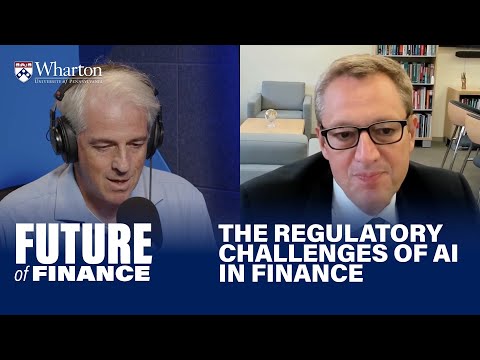
ABOUT THE EPISODE João Gomes discusses the rising public debt which is limiting the resources available for future investment, including AI and digitalization. Itay Goldstein explains how AI is reshaping finance, creating both efficiency gains and new risks for market stability and regulation. Both professors discuss how pressure on the Federal Reserve, geopolitical conflict, and financial fragmentation are shaping the path of the global financial system.
ABOUT THE PODCAST Every day, business scholars answer pressing questions in their research - but what do their insights mean for you? In this podcast, Wharton faculty dive into what inspired their studies and how their findings resonate with the world today. Learn how research insights translate into knowledge you can use, with host Dan Loney.
#FutureofFinance #AIinFinance #CentralBanking #FiscalPolicy #MonetaryPolicy #EconomicPolicy ----- The Wharton School of the University of Pennsylvania is committed to sharing its intellectual capital through Knowledge at Wharton, the school’s online business analysis journal.
Launched in 1999, Knowledge at Wharton offers free access to:
- Articles, podcasts, and videos highlighting Wharton faculty research and analysis of current business trends - Interviews with book authors from Wharton School Press - In-depth series of curated content like Wharton Executive Education’s Nano Tools for Leaders - A searchable database of more than 10,000 articles covering all aspects of business - A weekly newsletter that delivers Knowledge at Wharton insights directly to your inbox
Visit the Knowledge at Wharton homepage: https://whr.tn/3qUpSBE Subscribe to the Knowledge at Wharton YouTube channel: https://whr.tn/3DEAgAU
Read the full transcriptHide the full transcript
- Frustration. - Yeah. - Nervous frustration. I think people feel that we don't care enough about this.
- And I was trying to understand why not, and what could change that. And— and I think what— what I like to say—
- that was, without question, the issue. I think people don't understand why this is important. Clearly. People at large. Voters.
- Let's put it this way. Politicians as a result. And I think— I like to emphasize this. If this government continues
- to ask for $2 trillion a year, we're not going to have enough resources to do all the exciting things that we talk about.
- There's just not going to be enough to keep up on AI investments, on digitalization and so on. There's just not going to be enough resources.
- Welcome to <i>The Ripple Effect</i>, the podcast that takes you on a journey through the minds of Wharton faculty. I'm your host, Dan Loney,
- and in each episode, we'll be diving deep into the inspiration behind the groundbreaking research that Wharton professors have conducted,
- and exploring how their findings resonate with the world today. Recently, the Wharton School hosted its Future of Finance
- Conference, and the one-day seminar discussed a wide range of topics at the forefront of the conversations going on right
- now, including the path of the Fed, AI and finance, and the economic impact in conflict. We're joined right now by Joao Gomes
- and Itay Goldstein, Professors at the Wharton School who were the leads at the event. And they join us to discuss what was
- talked about. Gentlemen, great to talk to you again, as always. Thank you, Dan. Great talking to you.
- It's great to see you. I'll start out with both of you, and Joao, I'll let you go first.
- What is it about this conference in this time that makes it important right now, do you think?
- I think finance is a super exciting field at this moment. I think it's something where Wharton has a unique advantage
- of being able to put together, obviously, great faculty, but also a distinguished group of alums and students, even, that
- were at the conference to benefit from some of these lessons. And of course, Penn Washington is a fantastic
- facility. A lot of what's exciting in finance is happening in Washington right now, with deregulation, and thinking really
- big about the future. Particularly, I think, in AI and private markets, in stablecoins, digitalization, but also
- a lot of the scary stuff. A lot of concerns about geopolitics you mentioned, but also the debt. What's happening with the
- Fed? There's a lot of really meaningful conversations. And so this conference, is a great opportunity to put
- together a lot of people to think about it as we go into 2026. What is it ahead? What are the challenges? But also, a lot
- of exciting opportunities. Itay, what draws your attention right now? So, you know, we had panels on issues that are currently on the
- agenda, and it was striking to see how crucial each one of them is. So we started by talking about the future of money,
- because of all this push to crypto and stablecoin and digital deposits and things like that. And then we talked about
- the Fed, the future of the Fed, because clearly there is a lot going on at the Fed right now. I led a panel on AI, and we had
- other panels on the debt, the public debt, private assets, things like that. When you're looking at each one of these
- topics on its own, it seems like this is just crucial for the development of the financial system and the development of
- the economy. And then when you put it all together, you realize how big this moment is. There are really a lot of things that are happening.
- So your panel was about AI. Obviously, artificial intelligence is discussed in almost every conversation in
- every sector right now. Where does AI in the world of finance stand at the moment?
- So the thing about AI is it is not really originating from finance, right? I mean, we had a FinTech revolution over the last
- two decades where there were a lot of innovations that came out of finance. Blockchain, crypto, things like that, kind of trying
- to decentralize the financial system. The thing about AI is it kind of builds on top of that. It's not originating from
- finance. As you say, we hear about it everywhere. So I would say here, finance is just one of the sectors in the economy that
- is affected by AI, just like all the other sectors. However, it is important to note that the effect on finance is probably
- bigger. There is some data that supports that. And this is because, in general, people in finance make a higher wage on
- average, and AI is affecting people of higher wages. So it is affecting finance more, and it is really broad. So if you think
- about all the applications in finance, it affects asset management, it affects credit and insurance, it affects
- trading, it even affects regulation of finance. So really, everywhere you look, AI is affecting the way that
- finance is being done. The subhead of your group was "Opportunities and Risks." So I
- think a lot of people obviously believe there's a great opportunity here, but they also realize that there can be
- risks associated with this as well. Yeah, absolutely. I think there are huge risks. And I have
- emphasized some of this in my own research, and I think I talked to you about it before, but really what we were looking
- at is kind of thinking about algorithms that are trading on their own in financial markets, which is something that we
- increasingly see, and how AI is deployed to help them figure out the strategy. So basically, you're using reinforcement
- learning for these algorithms to figure out on their own what they should do, how they should trade, how they should optimize
- over time. And you get all sorts of interesting interactions among them that potentially lead to reduced competition,
- potentially lead to financial fragility. And those are certainly things that I think regulators should worry about
- when it comes to risks in the future financial system. So, Joao, when you talk about the world of finance, I think a
- lot of people also have the question of, how is it going to impact our currency? We obviously have cryptocurrency,
- but will we get to a point, at some point down the road, where we actually see something like a digital dollar?
- I think that's the one topic where I think the general consensus was no. I don't think so, and I think I agree with
- that. I think that the Fed has been very mindful of the political sensitivity of introducing a digital dollar. I
- think there's no popular support for that, largely because of concerns about privacy. That's not to say they will not happen
- in different countries, that they will adopt digital— central bank digital currencies, but I think in the US that's far
- apart— that's very far into the future, if ever. I think what we'll have is a continuous push towards having more privately
- issued forms of what I'm going to call money or deposits. And how do we ensure that those things remain relatively stable?
- They provide access, they democratize access to capital markets in potentially many different ways, particularly
- private capital markets. I think that was a really interesting conversation we had. But how do we make sure we have enough
- stability, enough predictability, enough sort of safety rail guards around it to make sure that even in times of
- great distress, like what we had in 2008 or 2020-21, those assets remain very liquid and very marketable and provide the
- safety that people need? So since you brought up the discussion of the Fed, we might
- as well dive into that next, because certainly the Federal Reserve is drawing a lot of attention these days from all
- fronts. How do you view the path of the Federal Reserve, Joao, right now? And I think there are concerns about where it could
- potentially be headed in the future. Sure, great concerns. I think it Itay will have a lot to say about
- that too. I think what I like to say about the Fed is, I think we are sitting here in the United States and thinking a lot about
- the Fed. I think a lot of these problems are really global. Every country in the world is facing them. And I think
- independence is something that we cherish very much in the United States, and it sort of dominated the debate. I would
- say that regardless of what we think about independence, per se, I think there's a lot of realities about rising debt and
- external pressures, competitive pressures from other countries. There is real challenges to how central banks can operate and
- the environment in which they can operate. We like to talk a lot about the fact that debt is going to explode, and that's
- going to constrain what central banks can do everywhere. You see it in Japan right now. And I think Japan is a great example
- of how you sort of take the US environment, take the president, Jay Powell, out of the conversation, and you still have
- the same exact issues facing other parts of the world. So I think the Fed is both a challenge and an opportunity.
- It was definitely one of the most entertaining discussions we had, as you can imagine. It was very timely. And I think the Fed has a lot of
- big judgment calls to make, digital dollar being one, regulation of the financial system, oversight of
- the financial system, how much the Fed cares about financial stability. I think this is a leg of monetary policy being very
- much ignored in the past, and is going to rise in importance as we go forward. There's a lot of judgment calls and competence,
- which is not a word that we hear enough when we talk about the Fed, is going to be much more important than, I think,
- independence, in my opinion. Itay, how do you view the path of the Fed right now?
- Yeah, so I agree with what Joao said, generally. I think there are the long-term issues and there are some of the short-
- term issues. I think what we see here in the US right now is all this pressure around the Fed independence. I came out of the
- panel discussion a little encouraged in the sense that I do think people were looking at it in perspective and saying,
- you know, at the end of the day, there is enough stability in the institution that will help it navigate forward despite all
- these pressures. It's not that easy to put in someone in the FOMC that is just acting completely on behalf of someone
- else. And we had people there that were previous Fed presidents and Fed governors. And I think overall, I came out
- thinking, "Well, hopefully we can sustain that." But yeah, I mean, the path forward has a lot of issues that need to be thought
- about. And I agree with the point about the tension between monetary policy and financial fragility in the economy at
- large. And I think these are issues that the Fed has to debate going forward. Obviously, global conflict was one of the things that you
- talked about, Joao. There's certainly a lot of different events going on right now. Obviously, Russia, Ukraine,
- Israel and Gaza, Venezuela, what we've seen go on there. How are these events having an impact on the world of finance right now?
- I think the biggest impact is— indirectly, is on the dollar and the financial system. Fragmentation of the financial
- system and of currencies. I think that's been very obvious. It certainly has had more impact on some of these countries, like
- Russia, India, China and so on, than it has on us. I think the conversation was interesting because we talked a little bit
- about how countries are preparing themselves or insulating themselves from potential sanctions in the
- future, to prepare for future conflict. That was a really interesting and a little disturbing but unavoidable part
- of the conversation. I think that is— that is something that is not good for the economy at large, financial markets at
- large. Fundamentally, it's going to make it harder for us to grow as— as an economy, as a world economy, because we don't—
- we cannot tap that sort of large pool of resources we used to just five years ago or 10 years ago. So that fragmentation is
- important. Does that impact the dollar? Does that impact the US financial system? I think the US financial system
- is mostly insulated, with the exception of the US sovereign debt market, which depends a lot on external
- capital flows. But does it impact the dollar as the world's reserve currency? That is a conversation that is going to
- continue for years, I think. So Itay, for part of your conversation— and I know you and I
- have talked about this in the past, is AI and regulation. And with the conflict that's going on, how much concern is there
- about AI as a tool that can be used by bad actors, that can have an impact on the financial sector as we move forward?
- I think there is huge concern about that. It didn't come up so prominently in the panel. But I think if you talk to other
- people in other contexts, this is something that people think about. I mean, first of all, it doesn't have to be bad actors to
- create a lot of damage. So you could take your hedge funds of today, and the financial institutions, financial traders,
- and they start using those AI algorithms, and those AI algorithms just create some damage. So it might be that this
- is something that is not intended and can still create damage. But as you point out, there is also a concern about
- bad actors that can potentially use the US financial system, or any other financial system, to create damage. So you know what
- prevents someone from just deploying an AI algorithm and trying to manipulate financial markets? Especially these days,
- I think, with the rising prominence of prediction markets, which is a topic we didn't touch on so much, but I
- think is quite important. But with prediction markets, you can more easily manipulate them, and full prediction markets have an
- effect on mainstream financial markets. And when you couple that with AI algorithms, I think there is quite a lot to think about.
- Joao, I know you led the discussion on the issue of debt. What was the general consensus on dealing with what has been,
- at least from the US side, just a massively growing level of debt, that we have?
- Frustration. Enormous frustration. I think people feel that we don't care enough about this. And I was trying to understand why
- not, and what could change that. And I think what I like to say— that was, without question, the issue. I think people don't
- understand why this is important, clearly. People at large. Voters, let's put it this way. Politicians as a result.
- And I think— and I like to emphasize this. If this government continues to ask for $2 trillion a year, we're not
- going to have enough resources to do all the exciting things that we talk about. There's just not going to be enough to keep
- up on AI investments, on digitalization and so on. There's just not going to be enough resources. And I think if
- we don't address that, all these rosy pictures we have about the future don't come to fruition. So there's a lot of frustration.
- Let me finish up with this as kind of a wrap up of the conference— and Itay, I'll start with you. When you think about
- all that was discussed during this seminar, what do you hope came from it? Is there— is there one theme that you left that
- maybe is sticking with you as you move forward here? Well, I think there was really a punchline that came out of each
- one of these panels. I would say one thing that caught my attention in the AI panel at the end of the day, you know, one of
- the big issues with debate on AI is, what is this going to do to the labor market, and is this going to just replace humans?
- And I think there was a bit of a sense of optimism coming out of it, that even though AI is increasingly used, from Anthropic,
- for example, they told us that they are still hiring more engineers. More computer scientists. So there is still
- room for collaboration between AI and humans. And hopefully we're going to— we're going to see that. As I mentioned, I think
- the Fed panel was also particularly illuminating in kind of trying to think about all the scenarios and how the
- Fed can still be resilient despite all the pressures. But there was, there was a lot more.
- Joao? I'd say overall, there was quite a bit of optimism, excitement. I think there's— there's a sense that this is a really
- interesting time to be in this field. There are issues and challenges. We talked through them. But I think even there,
- the general sense is we could navigate them. And so I would say, yeah, it was a very positive— this is an exciting
- time to be in the field, particularly the next two or three years. I think we'll see a lot of transformations, really
- revolutionary transformations. So I would say that that was the, I think, the undercurrent through the entire set of talks.
- Gentlemen, I appreciate your time. All the best. I look forward to talking to you both throughout 2026. All the best.
- Okay, thank you very much. - Thank you, Dan. Thank you. Wharton Professors Joao Gomes and Itay Goldstein.
- Thank you for listening to <i>The Ripple Effect</i>. We hope you found this episode informative and engaging.
- Don't forget to subscribe and leave us a review so that we can continue to bring you the best insight
- from the Wharton School.
Brief Summary
Wharton professors discuss AI's impact on finance, the Federal Reserve's challenges, and global conflicts' effects on the financial system.
Key points
- The Ripple Effect Podcast. Join Dan Loney as he explores groundbreaking research from Wharton faculty.
- Future of Finance Conference. Wharton School's seminar discusses the path of the Fed, AI in finance, and economic impacts of conflict.
- AI's Impact on Finance. AI is reshaping finance, affecting everything from asset management to regulation.
- Concerns About Debt. Growing debt levels raise concerns about future financial stability and resources.
- Optimism in AI and Finance. Despite challenges, there's optimism about collaboration between AI and humans in the workforce.
Episode highlights
- The Ripple Effect PodcastJoin Dan Loney as he explores groundbreaking research from Wharton faculty.“Welcome to The Ripple Effect, the podcast that takes you on a journey.”0:40Feb 10, 2026
- Future of Finance ConferenceWharton School's seminar discusses the path of the Fed, AI in finance, and economic impacts of conflict.“We’re joined right now by Joao Gomes and Itay Goldstein, Professors at the Wharton School.”1:10Feb 10, 2026
- AI's Impact on FinanceAI is reshaping finance, affecting everything from asset management to regulation.“AI is affecting the way that finance is being done.”4:56Feb 10, 2026
- Concerns About DebtGrowing debt levels raise concerns about future financial stability and resources.“If this government continues to ask for $2 trillion a year, we're not going to have enough resources.”14:33Feb 10, 2026
- Optimism in AI and FinanceDespite challenges, there's optimism about collaboration between AI and humans in the workforce.“There is still room for collaboration between AI and humans.”15:56Feb 10, 2026