Inside the Marketing Moves Shaping Sprite, McDonald’s, and Dude Wipes
Ask about Knowledge at Wharton
Episode Description
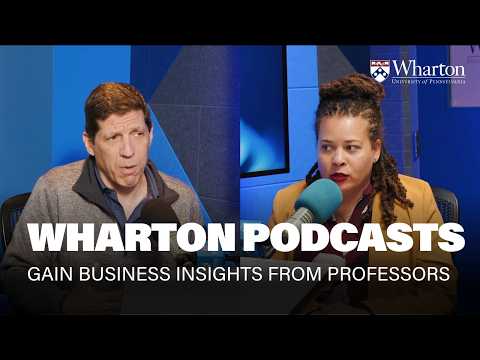
ABOUT THE EPISODE In this episode of the Marketing Matters podcast, Wharton professors and hosts Barbara Kahn and Americus Reed are joined by guest Chris Kelly, senior reporter at Marketing Dive. The discussion covers Sprite’s campaign featuring Jalen Hurts and the return of its "Obey Your Thirst" messaging, McDonald’s re-entry into the chicken wrap space and its ad strategy, the marketing approach behind Dude Wipes, and JCPenney’s back-to-school advertising efforts. Chris Kelly shares insights into the strategy, execution, and branding decisions behind each of these campaigns, as well as how they’re being received by industry insiders.
ABOUT THE PODCAST Marketing Matters is hosted by Wharton marketing professors Barbara Kahn and Americus Reed. Each week they discuss marketing and advertising trends, consumer behavior, data and analytics, the latest in retail marketing, brand-building, and much more with their expert guests. Episodes are recorded at the Wharton School.
#MarketingStrategy #Marketing #BrandMarketing #AdvertisingCampaign #Advertising ----- The Wharton School of the University of Pennsylvania is committed to sharing its intellectual capital through Knowledge at Wharton, the school’s online business analysis journal.
Launched in 1999, Knowledge at Wharton offers free access to:
- Articles, podcasts, and videos highlighting Wharton faculty research and analysis of current business trends - Interviews with book authors from Wharton School Press - In-depth series of curated content like Wharton Executive Education’s Nano Tools for Leaders - A searchable database of more than 10,000 articles covering all aspects of business - A weekly newsletter that delivers Knowledge at Wharton insights directly to your inbox
Visit the Knowledge at Wharton homepage: https://whr.tn/3qUpSBE Subscribe to the Knowledge at Wharton YouTube channel: https://whr.tn/3DEAgAU
Read the full transcriptHide the full transcript
- Barbara Kahn: Hello and welcome. You're listening to Marketing Matters on Wharton Podcast Network, our weekly podcast where we analyze
- the latest in advertising, marketing, customer behavior and new product launches. I'm Barbara Kahn, the Patty and Jay H.
- Baker Professor of Marketing, and I'm joined by my co-host, Americus Reed, the Whitney M. Young Junior Professor of
- Marketing and the Brand Identity Theorist. Hello, Americus. Americus Reed: Hi, Barbara. So you know, my middle name is current events.
- And -- that's what they call me. I'm just saying, - That’s a middle name. - Hey, you know, I just -- I didn't make this up. This is what the
- people said. So you know, the 24 hour news cycle is, you know, crazy and very important. And for us in marketing, we have to
- stay on top of, like, what's happening on a daily basis. And so what have we got today to sort of jump in and sort of
- understand, in real time, Barbara, what's going on out there in terms of the marketing world, and things that we should
- be very much aware of as marketing professors at the Wharton School? - Yeah, what's interesting is what's brand new news in marketing is
- probably not the big headlines in the New York Times, but we still consider it really important. And we have with us
- the Senior Reporter at Marketing Dive, our guest, Chris Kelly, Hello, Chris. Welcome to our podcast. Chris Kelly: Thanks for having me.
- and - And Chris, can I just say your look is fire, man. I love glasses. Dude. You're like the coolest guest ever. I'm just like,
- what's he going to say? I'm just, like, totally like, you know, on every word. - Americus, you're not cool anymore.
- - I'm not cool anymore. I've been replaced. - There's room for all, all of us to be cool.
- - I think you need glasses and maybe you need your beard back, I don't know. - Yeah, I need to up my game, Barbara
- - Not that other beard, I hate that. - I know you didn't like it and it's gone, but I wish I could do what Chris
- is doing. He's got this -- it's amazing. I mean, this guy looks like -- I just want to hear everything he has to say about
- the news. - Yeah. So Chris, before we start talking about your stories, let's talk a little bit, in case people don't know
- what Marketing Dive is. Just, I mean, we never really talked about this before. But who is your audience for Marketing
- Dive? Do you write for the industry? Do you write for -- like, who is the -- I know you do a deep dive into marketing stories, and
- you have a particular beat that you might look at too, but I'm just curious, who reads Marketing Dive?
- - Yeah, so, you know, Marketing Dive is a digital B to B pub. So our audience, ideally, is, you know, the CMOs and the
- leadership at major, you know, Fortune 500s, and major B to C brands, and all the ecosystem around them. So the
- agencies, the ad tech, you know, anyone of -- and, you know, education. Anyone kind of interested in this space, you
- know, from inside the industry, not really a, you know, consumer side. - But the things you talk about, consumers are interested. So
- it's kind of like a professional look at what end users end up seeing. And today, we were going to talk about some of your most
- recent articles. And just to that point, what you kind of write about is why these campaigns are going, the
- marketing strategy behind the campaign, and then what the end user will see is just the commercial, or they'll see
- whatever they see, 30 seconds or different parts of the campaign. But you kind of get behind the scenes and talk a little bit
- about the why behind these different campaigns. And so you've talked -- you've written a bunch of stories in recent
- days on really big brands, and there's two that I really want to look into. In case we don't have time to do all of them, I
- want to start with my favorite. And my very, very favorite one is the Sprite one with Jalen Hurts that you wrote about,
- because we're from Philly, and it is football season. And Americus, you might have seen that Jalen Hurts was only voted, even though he
- won the Super Bowl, the ninth best quarterback. Did you see that? - I didn't see that. I would have been raging in the
- streets, Barbara. This is insane. - It’s like, who do they think won that Super Bowl? Like, it's just amazing. He was on some
- list of best Super Bowls. He was only number nine, and Philadelphians are crazy mad about it. - They're going to hear
- from us. - It's interesting to take a person like Jalen Hurts and have him be the spokesperson for Sprite. And, you know,
- I don't know how much you've covered the soft drink industry, but I assume you have, Chris. That's really seen a lot of
- movement. I mean, Pepsi used to be number two. It's like number four now. I think Coke is number one, Dr. Pepper is number
- two, then Sprite, I think, is number three, and then Pepsi is number four, something like that. And so this campaign, it's
- not small. Why don't you tell us a little bit about why you wrote this story, and the background, and everything you
- know about the sprite Jalen Hurts story. - For sure. Yeah, so you're right. You know, there is a lot of
- motion and movement in that space. Sprite did become number three, you know, carbonated soft drink, I think, in the US this
- year. After last year, Dr. Pepper moved up. So Pepsi keeps falling. Obviously, Sprite being a Coke brand. But, you know, has its
- own identity. And a big part of that identity is this Obey Your Thirst campaign that we -- that, Americus, we remember
- from the '90s as a major part of their their marketing that they brought back last year. They kind of did a modern take on the
- classic ads that had Grant Hill in them. Last year, they brought it back with Sha'carri Richardson, the sprinter, and also Anthony
- Edwards, the basketball star. And, yeah, you know, extending it into football now. They haven't done
- as much. It's been mostly, you know, basketball, hip hop culture, but, yeah, moving into football and kind of -- and
- getting someone, like you said, Barbara, a top quarterback in the league, a known personality, and making the face of it,
- and having some fun kind of with his persona and what he deals with as a top quarterback. - So
- Americus, have you seen this ad? - I have not seen it. Describe it to us. - Yeah, or
- Chris, you can. I'll just tell you what I see as an end user, and then you can say what the B to B marketing is. What's interesting
- about Jalen Hurts, if you know him and you follow Philly football, but why wouldn't you? He's a Super Bowl MVP, in my
- opinion. - Heard that. - However, he doesn't talk much. So he gets asked a whole lot of questions, kind of dumb questions, and
- that's what they're playing on in this commercial and linking it to the persona of Sprite in some way. Chris, is that
- like a fair analysis? - Yeah, no, you got it. I think, you know, it's funny, it's
- called Success Hurts. So they had a little play on words there. But it's a reporter named Thurston A. Sip hounds Jalen at
- every turn, from the press conference to the restaurant to the red carpet to even his tailor. He's got stupid
- questions, like, you know, "Do you have more ice in your veins or ice in your chains?" And Hurts basically is stoic and goes like, "Who is
- this guy? Like, can we get rid of this guy?" And, you know, and it builds up to that kind of
- classic Obey Your Thirst line of, you know, if you want to let your game do the talking, say less. If you want a refreshing
- drink, drink Sprite. And so that's -- you know, I think Jalen as being the poster boy of, you know, letting the field speak for it,
- and not necessarily the persona, is a lot of fun. And this really does contrast kind of with, you know, who they -- for the last
- year, Sprite has made Anthony Edwards the star, and he's basically the 180. And, you know, I spoke with executives of
- Sprite that basically described them as yin and yang of kind of sports personalities. If you follow basketball, you
- know, or you know the culture around that, A is a big personality, versus Jalen. - Yes, that's amazing. - It's kind
- of interesting if you think, you know, like, if you look at this, again, like, does this campaign make sense? I don't know if it
- does or not. I love Jalen Hurts. So for me, it's celebrity endorsement, and I kind of like the whole thing. It really
- appeals to me. But in this -- I mean, in this field of soft drinks, it's changed so much. Like, you look at Lacroix. I
- mean, they're now serving Lacroix on American Airlines. It's kind of amazing to me. It's one of your choices. So it used
- to be Coke and Pepsi and maybe Dr. Pepper, and now Lacroix is there, and Poppi, and all these functional drinks, and moving
- away from colas. And like I said, number two is Dr. Pepper, number three is Sprite, not Pepsi. So you're moving into
- flavor, you're moving into functional. Is this idea -- do you think this way of branding Sprite makes sense to link it to
- a celebrity like this? - Yeah, I think they -- you know, part of their their effort is
- really, like, we hear from all the brands is, you know, moving at the speed of culture. And really, it's not just Jalen
- Hurts holding up the bottle of Sprite and saying, "Drink it." It's showing him in all the ways that he's existing as an
- athlete, as a celebrity, as a Black man. Like, the kind of different things he's dealing with. People asking stupid
- questions and expecting different things. And so they really have made -- and sprite has made a big push
- around that. You know, culturally, a lot of the -- you know, they've worked with East Side Golf and and
- these other organizations that speaks to different audiences, more diverse audiences. And so they've done a
- big thing on that. But like you said, it is the soft drink space, the beverage space has really mixed it up with the
- emergence of, you know, the functional beverages. And, you know, there's even kind of competition on their block. You
- know, Pepsi has Starry, which they launched a couple years ago. Now, a week ago we covered Starry. Basically, if it hits 100
- degrees, they're giving away free drinks. And and Sprite has made the temperature and the refreshing chill a big part of
- it. And you know, Sprite -- you know, the executive I spoke to, A.P. Chaney, was not -- did not seem pressed. She said,
- "The competitors can do whatever they want." They're feeling pretty confident at Sprite. But I think, yeah, really having a
- strong point of view as people are reaching for different types. - Yeah, I think it's super -- very intriguing, to Barbara's point,
- Chris, this idea of the Sprite brand is just so powerful. I mean, basically -- right, Barbara? It owns basically the lemon, the
- clear lemon -- - Pepsi has tried with all different stories, but it doesn't ever seem to make a dent. And even 7 Up, which I used to
- think was a great brand, whoever drink -- I never -- you don't see 7 Up anywhere.,
- - You don’t see that on the menus. - Seven down, yeah. You know what, Chris, talk about this,
- though, because something interesting, and Barbara weigh in on this as well, and that's the idea that, okay,
- well, you know, we picked the winner, and we feel like we -- this is Sprite talking. You corroborate if this is at all
- what the C-suite people said. But we picked the winner. We've got a really nice fit with a persona that is quiet. Obey Your
- Thirst, Do the Work, all that kind of stuff. I'm curious as to the idea of, well, we know it's going to help Sprite in
- Philadelphia, because we love Jalen Hurts, and we love the tush push, and we love, you know, all that stuff. But what's
- the thought process of beyond the geography? In other words -- - He is a Super Bowl winner. - He's a Super Bowl winner, but there --
- you know, I mean, I don't know, there's a group of consumers out there that, you know, in Kansas City, let's say, for example,
- who might say, "You know what?" Maybe they don't have a negative reaction, but they have kind of a non reaction. And I'm
- wondering the logic behind, you know, what is the thought process of the expectation of, to Barbara's point, how much
- is -- how far is this going to reach? And, like, what -- is it a thing where it's like, we're just kind of doing
- the cool thing because Jalen's hot? - He is good looking, there is that. - He's a fantastic, fantastic guy. What are your
- thoughts on this, Chris, as a long term, you know, expectation of the strategy for the folks who who came up with this idea?
- - Yeah, I think part of that -- you know, I think that's always a concern. You know, these players that, I'm sure they do their
- Q ratings, and see who has, you know, real positives, real negatives. And I feel like with the athletes that
- they've chosen, they're really picking ones that fit the brand, and we always hear about that, of finding the right fits and,
- you know, finding someone who speaks to their brand values and their slogans and all that. I think they have that in Jalen.
- And, you know, Barbara, I'm sure -- I hope he plays the rest of his career for your sake in green and white, but I think --
- and which also matches nicely with the Sprite. - Oh, I forgot about that. That's good, yeah.
- - But I think they're looking at these players as kind of celebrities, you know, in their own sphere,
- regardless of the team, and kind of looking for these cultural figures who kind of go beyond sports.
- - You know, like talking about celebrity, I wasn't going to do this next one but I just can't wait to do Dude Wipes.
- Maybe, given what you just said, we should do McDonald's, because I mean, that's another really big industry. But
- the reason that I thought it was interesting is the choice of celebrities that they chose for that. So do you want to talk a
- little bit about that campaign? - Sure. Yeah, no, so I kind of did a bigger dive into this area
- of QSR and fast food right now is this kind of reignited chicken war, as we saw a few years ago, with the chicken
- sandwiches that everyone was going crazy for and a lot of competition. You know, in this, McDonald's did bring back
- the Snack Wraps, which was a fan favorite, had been off the menu for a few years. You know, but as they announced it, other
- brands trying to get in on it. You know, Popeyes trying to beat them to market. Taco Bell has made chicken a big part of
- their push. And, yeah, you know, the campaign -- you know, some of the campaign they did here with the -- McDonald's
- did with the Snack Wrap, made up a new character named Unc, who's played by Hassan Johnson from The Wire, as, you know,
- the older guy, the uncle, who knows this stuff and has to educate the young ones about the Snack Wrap that we used to get
- on the dollar menu and gives the co-sign. And so they kind of went a different way, and kind of made a new brand
- character, instead of just, you know, someone, -- an actor who's recognizable, but not as a -- he's an ad guy, he's not a
- brand name - Yeah, but it's definitely targeting the African American consumer
- market in this, like with that ad. Or, I mean, that's at least what you said in your article. So like bringing in The Wire
- actor, that's like a really different kind of way of promoting a product, unlike -- well, to Americus's point, I
- think Jalen Hurts is America's sweetheart You know, it’s like Super Bowl is a broad
- audience where this seems like it is a little bit more targeted. - For sure. And they did this with Translation, which
- just signed on as their African American agency of record. You know, they've done work with them before. Or on the Big Mac,
- they did the now iconic "I'm Loving It" jingle, which was written by Timberlake and Pusha T. I've got to get my music knowledge
- in there. - Nice, nice. Audiophile, very nice. - So they -- yeah, I think they are looking, you know, specifically in this.
- You know, they did a big push around the culture of, you know, the Snack Wrap itself and what fans have been asking for
- on Twitter for years. But yeah, this TV push is definitely more targeted around consumer groups.
- - And the other thing that's funny, you know, it's McDonald's. You think of that as a hamburger company, but this is
- all about chicken. And I guess it's competing, you know, with the chicken retailers of quick service restaurants and
- things. How well does McDonald's do in that segment? - Good question, yeah. - Yeah, I think they have made it a big part. I think this
- is definitely what I do with my colleagues at Restaurant Dive. I think, you know, the chicken price versus beef price. I think
- there's a big push restaurant wide to kind of get into more on the chicken side. But it has been just, it's
- really what consumers want. We saw, like, with the chicken sandwiches, you know, it's a really competitive space with
- your -- you know, but yeah, the fact that McDonald's, I mean, I think Taco Bell doing nuggets and chicken strips and stuff
- is even -- - Yeah, it's kind of funny. - So, I mean, it has gotten competitive. And then, you
- know, your traditional ones, like Popeyes and KFC, also reasserting that this is their domain, for sure.
- - Gotcha. And let's not -- I'm sorry, I grew up in Atlanta, Chris, and so I have to put in Chick Fil A, because Chick Fil
- A -- by the way, you just got to Google some of their -- some of the economic analysis around the average revenues of their
- stores. And they're closed on Sunday, so they give up 52 sales days per year, and they're doing pretty well, right? - Yeah,
- and also a really strong brand voice. I mean, they've got -- they still have the Eat More Chicken cows. They still
- have those. Even as -- and we've seen, you know, a lot of this chicken war stuff has been the kind of sparring. You know,
- Popeyes did a diss track, and they're trying to, you know, have some fun at each other's expense. Comig for the big dog of
- McDonald's. But, you know, other brands have tried that. You know, they've tried ads around and campaigns of, we're
- open on Sundays. - Oh, interesting. - Because, you know, people -- I think Chick Fil A has a really strong brand loyalty.
- And I think they've -- yeah, like you said, even giving up those days, they still, you know, set -- year over year sales is
- always very, pretty strong. - Very, very cool. Yeah, and the other thing that's interesting, Barbara, I just have to -- can I tell you, I love
- this. It's serendipitous, because I used Dude Wipes, like, an hour ago. So we're going to get to my --
- Chris, we're going to get to my skin regimen a little bit later to Barbara. Real quick, Barbara and Chris, like the idea of,
- like, bringing in celebrity influences. Give me the high level risk analysis that says, "Okay, we love Jalen Hurts.
- Jalen Hurts is low risk because he's a good guy, he's a family man and so on and so forth - He doesn't talk much either.
- - He doesn't talk much. So talk us through the risk profile analysis that says, "We're going to bring in an AD, or maybe an Antonio Brown,
- or, like, one of these sort of, like, firecrackers." Talk us through that. Like, how do they manage that? How do they --
- how did the folks, you know, sort of deal with that? Is it all in the contract? I mean, what do they -- what's that process look
- like? - Some of that's still in the black box. To me, I think they definitely -- you know, sometimes I think this with
- Jalen will be a good, their first foray. This is the first NFL player they've done a deal with. So I think it's
- probably a low risk, maybe high reward for them. They've done the basketball space a lot, so they maybe know what to expect.
- You know, it's all out there. So it seems that maybe. You know, where it's like, well, people know what
- they're getting, you know? You already know how you feel. So they're not worried about any skeletons or anything.
- He's out there. And, you know, they've done other ads. They had done some ads, you know, speaking of kind of a framing
- around, you know, an Unc. They did some ads with Kevin Garnett and they let them -- you know, when I spoke to them about
- that previously, you know, they let them kind of ad lib a little bit and just make it actually seem like it was -- it's
- not two guys just, once again, holding up the Sprite bottle. So I think that -- yeah, I think it is a risk
- analysis, for sure. - All right, Americus, you ready? Let's go. - Oh, I'm so excited. Here's the thing, Chris, and
- help us unpack this, because I am on record, Barbara, on Twitter years ago saying, "This is the dumbest idea in the world."
- The notion of a sort of slack jawed cretin of a dude, the dude kind, showing up with wet wipes is never going to work. Barbara
- Kahn, I was wrong. I was totally wrong. So help us unpack the Dude Wipe phenomenon, Chris.
- - Yeah, Chris. So this is a wet wipe, and it's targeted -- we're talking about targeting now. It's targeting dudes, right? - Sure.
- Yeah. Yeah, no, I've had some -- I'm with you on their branding and the kind of -- you know, the dude of it all. But they haven't
- really -- they've had some fun campaigns. And I wrote up this one recently on the evolution of wiping. It's a 30 second
- spot. You know, it's an edutainment. They take it to a museum, they show you the history, maybe, what, you
- know, cavemen were doing. - Or not doing. - Or not doing. Maybe using a tree or a pine cone. And then they put toilet paper in
- that same, under glass, can you believe people used to do this? And then they take -- their way that they
- approached this, they took, of course, a mission to Uranus, and they demonstrate the future of wiping, which is the Dude Wipe.
- And, yeah, I think a lot of people, from their name or their business model, you know, they've passed -- you know, I
- was talking to their CMO, and they recently passed Cottonelle in dollar share of omnichannel sales. They see more growth in the
- future. They're doing kind of product extensions, different lines. So there does seem to be something here. But yes,
- they do have a lot of fun with the idea of wiping and -- - I can't imagine marketing this any other way. Here's a situation
- where, if you're going to go into this category, and you can't do it with humor, I just can't imagine how it's going to
- work. - And you can't do it with the bears in the woods, you know? I mean, there's, like, very recognizable things. I mean, the
- Charmin has nailed that down, and they have that -- - You can't do bears in the woods. - And they've had -- Dude Wipes spoke about
- this. They had, you know, what they can do as they move into traditional linear TV, what they can actually say. They had -- if
- Uranus didn't work, they said they were going to go on mission to the moon. They have to kind of think through how they
- can actually, you know, do this. And getting back to football, they just recently -- this happened after my piece
- published, but they became a sponsor of the Cleveland Browns, who are doing an all brown uniform and helmet.
- - Oh, my god, that's a weird sponsorship for Dude Wipes. - I mean, they really have looked for these opportunities. - They really go
- in a lot of different directions. - I mean, it goes the one direction you think. And they really -- they
- know what they are, and they aren't afraid of it, and it seems to be working. And, you know, I was at a -- last weekend or two weeks ago,
- I was at a concert for my other work I do with the Washington Post, and they had -- outside the men's rooms, they had big free samples
- of Dude Wipes. And people were taking handfuls all weekend at, you know, the festival.
- The product is the product. - That's amazing. I love the point, sorry to interrupt
- Barbara, the brand identity point. I just want to touch on this really quickly and get your reaction to this, Chris and
- Barbara, because part of what the hypothesis was, why Americus was so wrong when he predicted that this is not going to take
- off and get any sort of traction, was the idea that there's latent demand for men to use these products. But when
- they go in there and they just don't want to pick up the pink thing or the baby blue thing or the thing that's marketed for
- babies, and it was -- it's the opportunity to say it's out there, but give them a permission structure to level up
- their wiping evolution, and this is what happens. I mean, is there any credibility to that, or is that just post
- hoc, you know, delusional rationalization? - No, I think that makes a lot of sense. I actually do
- think that makes a lot of sense. What do you think? - What are your thoughts, Chris? - I think that's exactly what they did. I think they
- looked at a product. You know, these were three guys. They were college roommates, I believe is their origin story. And they
- were buying, you know, big packets of baby wipes at Sam's Club. And they were like, "There's got to --" you know, but
- they were baby wipes. And there's -- like, there's got to be a market here. We're the market. Just really regular guys and to
- not -- yeah, to move away for someone -- it's kind of the reverse, you know, the pink tax of -- the idea that the
- women's product is separate. I mean, of kind of going back and back filling the market, and changing who's doing the
- shopping and, you know, identifying they want to -- there have been some -- you kind of see some kind of look alike products
- and getting in this kind of dude bro space, but they do -- they're not -- I was a little dubious as well, but they do -- there's
- a big wink on a lot of this stuff. - That's interesting. - They did definitely open it up to the different consumer.
- - So we only have a few minutes left, and let me end with your last story on JCPenney. But before we go to that -- not your
- last story, you write tons of stories, but the last one that we were going to cover. The three that we discussed before
- kind of break out of the cover with some clever campaign. You know, like Jalen Hurts is definitely getting your
- attention. Dude Wipes will get your attention. You know, the whole chicken wars thing is -- they've been pushing so much
- hype about all of that. But now you've got JCPenney's, which is like, I just sigh when I think of JCPenney's. You know, what
- are they going to do now? And in general, this is a category that's in really tough shape. Like, the tariffs have hurt it.
- The department stores are not doing well. The apparel market is really being hit from the low end, Temu and Shein, and all those
- kinds of brands. It's just a really tough place. And so JC Penney's is trying to get back into a very critical market, or
- very critical time for department stores, is back to school, and that's when people start shopping again in their
- category. It's really an important time. And so I mean, Christmas is important also, but back to school has got to be the
- second biggest season for them. And this is a time to come up with some kind of campaign that gets above the clutter. Do you
- think that they pulled that off with this campaign? What do you think about the JC Penney's campaign?
- - Yeah, I would definitely say that this one, which they're calling Back To It, instead of just back to school, kind of
- expanding the idea of everybody's going back shopping for school shopping, and mom's going to get something, Dad's going to
- get something, shopping for kids too. You want to have a nice fall look, or whatever it is. This is an extension. It's not
- as flashy as the other ones. It's got a fun construct they've been using this year. This, yes, JCPenney, which kind of --
- it recognizes the sigh. It recognizes the problems they've had in this category and as a brand. And, you know,
- when they rolled this out, they did a lot of, like, here's this designer look for $40. We have the receipts. And this idea
- that, yes, it is JCPenny. And the whole idea of these ads is, you didn't just get a $200 outfit. You got the jealous look
- at the other -- of the other moms at drop off, all for $200. So it's these, like, what you're also getting with that value.
- So, like, a very monetary value, but then also, like, a personal, you know, value value. - It's interesting.
- - Yeah, yeah. And the question is, is it going to pass? Like, are people going to believe? They're going for style at a good price,
- but it is JCPenny. I mean, they admit, yes, it's JCPenney. You know, there's a credibility issue here too. I mean, I
- don't know. maybe it'll work, maybe not. - Barbara. Barbara, what is your conceptualization of the JC Penney brand as it sits?
- - I mean, I think they've gone through a lot of misses, and it's a category that's tough to start with. Department stores
- are really tough. And if they don't get the exact right positioning, you know, people are going to buy online. They're
- going to buy from these other brands that are cheaper. Maybe they'll go into more style. JC Penney's always been kind of
- stuck in the middle, you know? I just wonder. I just think it's tough. And I don't know how clever the campaign is.
- - Also to your point, Barbara, and jump in on this, Chris, as well. It's also -- I love this line of logic that
- you're putting out there, Barbara, because it begs the question of, you know, how -- do we start over? Do we say we're
- going to throw out the JCPenney name, and just like, you know, redo the entire slate? Or do we -- you know, we try
- to modernize? Do we wait for older consumers to die so that younger consumers -- - Well, it's targeting young people too, and it's trying to make them,
- like he said, back to it, yes, JCPenny, believe me, this is JC Penney, and it's trying to come out with, it's a cool look, but
- it's JCPenny cool. I don't know. - Yeah, in my mind, to Barbara's point, Chris, jump in on this,
- it's like, yeah, I have a very robust understanding of what I think the JCPenney brand is, based on my upbringing and how I
- interacted with the brand. So like changing Americus's mind will be very different than changing the 15 year old's mind
- or creating a perception. Talk about this, Chris. - For sure, yeah, and I think, yes. JCPenney, they brought
- in -- you know, they also are -- they had some kind of structural changes with the brand, but they brought in early this year
- Marisa Thalberg as a CMO. She did some really great work. The stuff that Taco Bell did a decade ago that really ignited a
- lot of this, like, cultural brand of people wanting to buy a sweatshirt with Taco Bell on it, that was a lot of the stuff she
- was doing there. She really brought a new energy to JCPenney. You know, this first iteration they did, it helped
- boost in store traffic. A lot of their ad awareness metrics went up. So they were seeing results. They did -- and to speak of that
- online, you know, it's obviously getting people to go to a department store versus their couch on their phone. It is
- different. But they've done a lot of -- they've done these really big deals campaigns, which is very app based, mobile based,
- tying up with Jimmy Kimmel and stuff like that. So they are trying to, like, not throw the baby out with the bath water.
- We've seen the rebrands that do that, and everyone freaks out. And I think they are saying, "For the people who were
- still about the brand, yes, it's JCPenney. And then for the people who aren't --" it's really an inflection of, like, "Yeah,
- it's JCPenney, it's good, but you didn't think it was good, but here we are." So I think they're trying to have
- it both ways. I think, so far, it looks like it's there's some equity here that they're playing from.
- - Well, we'll see how it does in the big back to school campaign season. Well, Chris, we're out of time. Thank you so much for
- joining us today. And if people want to read these stories, where can our listeners go to keep up with you and your
- coverage of these marketing campaigns? - Please follow along. Marketingdive.com. Go ahead and subscribe
- to our newsletters. We'll be in your inbox every morning, and not much more, and that's the best way. - Okay, well,
- thanks a lot for being here. Well, that's all we have time for today. So we'd like to thank our producers, typically, Dionne
- Simpkins and Marissa Renna, and thank you all for listening today. We'll be back next week. Until then, this has been
- Marketing Matters on the Wharton Podcast Network. I'm Barbara Kahn here with Americus Reed.
Brief Summary
Chris Kelly discusses Sprite's Jalen Hurts campaign, McDonald's Snack Wrap, and JCPenney's Back To It initiative.
Key points
- Marketing Matters Podcast Introduction. Barbara Kahn and Americus Reed welcome listeners to their marketing podcast.
- Sprite's New Campaign with Jalen Hurts. Chris Kelly discusses the Sprite campaign featuring Jalen Hurts and its cultural significance.
- McDonald's Snack Wrap Campaign. The podcast explores McDonald's new campaign featuring a character named Unc, targeting African American consumers.
- Dude Wipes Phenomenon. A discussion on the surprising success of Dude Wipes and their unique marketing approach.
- JCPenney's Back To It Campaign. Exploring JCPenney's new campaign aimed at revitalizing their brand during back-to-school shopping.
Episode highlights
- Sprite's New Campaign with Jalen HurtsChris Kelly discusses the Sprite campaign featuring Jalen Hurts and its cultural significance.“It’s interesting to take a person like Jalen Hurts and have him be the spokesperson for Sprite.”4:22Aug 3, 2025
- McDonald's Snack Wrap CampaignThe podcast explores McDonald's new campaign featuring a character named Unc, targeting African American consumers.“They kind of went a different way, and kind of made a new brand character.”13:48Aug 3, 2025
- Dude Wipes PhenomenonA discussion on the surprising success of Dude Wipes and their unique marketing approach.“I was wrong. I was totally wrong.”19:42Aug 3, 2025
- JCPenney's Back To It CampaignExploring JCPenney's new campaign aimed at revitalizing their brand during back-to-school shopping.“It’s a tough place.”27:25Aug 3, 2025