Reinventing Bowling for a New Generation
Ask about Knowledge at Wharton
Episode Description
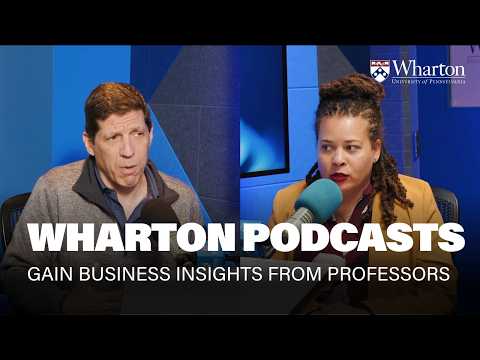
ABOUT THE EPISODE Consumers are looking for reasons to put down their phones and spend time together. That shift is creating new opportunities for brands built around real-world connection.
Julie Zukof, Vice President of Brand at Lucky Strike Entertainment, explains how the company is using nostalgia, community, and immersive experiences to make bowling relevant for a new generation. She discusses the strategy behind Lucky Strike, AMF, and Bolero, what Gen Z wants from a night out, and why in-person entertainment is having a moment.
ABOUT THE PODCAST Marketing Matters is hosted by Wharton marketing professors Barbara Kahn and Americus Reed. Each week they discuss marketing and advertising trends, consumer behavior, data and analytics, the latest in retail marketing, brand-building, and much more with their expert guests. Episodes are recorded at the Wharton School.
----- The Wharton School of the University of Pennsylvania is committed to sharing its intellectual capital through Knowledge at Wharton, the school’s online business analysis journal.
Launched in 1999, Knowledge at Wharton offers free access to:
- Articles, podcasts, and videos highlighting Wharton faculty research and analysis of current business trends - Interviews with book authors from Wharton School Press - In-depth series of curated content like Wharton Executive Education’s Nano Tools for Leaders - A searchable database of more than 10,000 articles covering all aspects of business - A weekly newsletter that delivers Knowledge at Wharton insights directly to your inbox
Visit the Knowledge at Wharton homepage: https://whr.tn/3qUpSBE Subscribe to the Knowledge at Wharton YouTube channel: https://whr.tn/3DEAgAU
Read the full transcriptHide the full transcript
- It's funny, a lot of people I work with actually have a personal connection with bowling.
- I didn't think about it at the time, but when I talk to people and they're like, my mom was in a bowling league
- and I used to go bowling with my dad and it's incredibly nostalgic. Hello and welcome.
- You're listening to Marketing Matters on the Wharton Podcast Network, our weekly podcast where we analyze
- the latest in advertising, marketing, customer behavior, retailing, branding, new product launches, everything marketing.
- I'm Barbara Kahn, the Patty and J.H. Baker Professor of Marketing, and I'm joined by
- my co-host, Americus Reid, the Whitney Ann Young Jr. Professor of Marketing and the Identity
- Theorist. And today, we're happily joined by Julie Zukoff, who's the Vice President of Brand at Lucky
- Stripe Entertainment, and we're going to talk about that industry and her background because she has
- done a lot with brands and just the new generation of consumers and what they're looking
- for in entertainment, in retailing, etc. So welcome, Julie. Thank you. Thank you for having me.
- Should we start with your background, just so we have a reason to listen to you?
- You've established your credibility. Well, now you have. Just pause the whole thing.
- Yeah, sure. I'm happy to give a bit of my background. I'm VP of Brand at Lucky Strike Entertainment.
- I've been here for about a year. Prior to this, I was doing brand marketing for a few different telehealth brands.
- Prior to that, I was in big brand worlds—Sephora, Coca-Cola, McDonald's, Target—working on the ad
- agency side and design firm side, doing brand strategy and brand positioning specifically, as well as
- research to either create new brands for existing brands, create whole new brands, line extensions, all
- of that kind of work. So more on the brand positioning and new product development side.
- And then also on the advertising and communication side. So TV spots, all of that work.
- I want to go into that way before we get into where you are currently, because some of those brands you mentioned are some
- of my favorites. And one of them is Sephora. I think that Sephora revolutionized the retail world
- in a certain way, really changed how to sell beauty. And maybe there's some parallels there with Lucky
- Strike. But what exactly did you do at Sephora? What are your thoughts about Sephora?
- Because I do use that as an example in my classes a lot. And I'm curious to hear what someone who
- actually worked there says. Yeah, for sure. I worked at the design firm that was
- hired to help work on their private label collection, which was a really interesting project, because
- when you walk into Sephora, you pretty much notice everything else, right? You notice all the different brand names.
- Their background is more about being in a theater, right? That's what people used to actually wear, white
- gloves to show you the product, the spotlights. It's supposed to feel like a whole production
- in there, right? And Sephora private label was like the least exciting thing in there at the time.
- This was a bit ago. And the idea was, how do you revolutionize the brand that has their actual name on
- it to feel as exciting as the third -party brands that were in there? So it was consumer research.
- We did shop-alongs. And I think what Sephora does really, really well, and you'll see why they resonate so
- much with consumers, is they actually do consumer research. I think a lot of brands think they
- know their consumer or don't want to spend the money on consumer research. But great brands that really are thriving are
- ones that actually spend the money and take the time. So we did a lot of shop-alongs
- to understand the consumer and did positioning work around the private label and marketing and signage
- recommendation. I got to tell you, to build on what Barbara was saying, whatever you guys are
- doing, Julie, it works. Because a story, I have a 15-year -old daughter. We took her and her friend to LA,
- and we were running out of time. They got the opportunity to choose, do you want to go to the beach or do
- you want to go to Sephora? And Sephora won. And now they have one here. And so, you know, I love that.
- But I want to also quickly pivot because you said telehealth, which is also an interesting
- sort of… What were some of the key… Because telehealth to Lucky Strike, telehealth to these
- other kinds of experiences might be not as obvious. So were there some key things you learned
- in the telehealth space that also helped inform maybe what you're doing now? Yeah, great question.
- When you work on the advertising agency or design firm side, the advantage of that is
- you work on so many brands and so many categories so that when you go in -house to a client, you can go into
- beauty, you could go into wellness, you could go into fitness, you could go into entertainment,
- right? So what was interesting about telehealth… I've always had a passion for health and
- wellness. And so for me, it was a no -brainer. It's a mental health, telehealth company, two of
- them that I was working at. What helps me with that now? I mean, it seems so different than marketing
- sports and entertainment, but I was actually marketing to people that were incredibly unhappy, right?
- It was a mental health challenge and crisis. And you were basically marketing the solution to
- depression with services and medicines. And what's interesting about this is you're marketing
- actually happiness through community and experience. So there's some interesting shared consumer insights in
- loneliness epidemic and what makes people happy. That was an interesting stepping stone to coming
- back to sports and entertainment that I probably wouldn't have had had I not touched into
- that category. That's very interesting, the perspective. So I can hear from what you're saying
- all the pieces that definitely relate to what you're doing now. So how did you make the transition to
- Lucky Strike? What drew you to the brand and why are you here? Yeah, so it's funny.
- A lot of people I work with actually have a personal connection with bowling. I didn't think about it at the time,
- but when I talk to people and they're like, my mom was in a bowling league and I used to go bowling with my
- dad. And it's incredibly nostalgic. And so I actually grew up going to the bowling alley with my parents.
- They were both in leagues and I was in the pin pen, it was called. They had daycare at the bowling alley and
- they called them alleys. Now we call them centers. But that's a bit of my origins with
- the personal aspect of it. And my grandfather actually was a pin boy. Before there was the automatic pin setter that
- sets the pins. He lived in Brooklyn and he was a manual pin setter that they called a pin
- boy. And you sit perched above the lane. And after people knock it down, you reset
- the pins yourself, which maybe was a risky job, I don't know. But yeah, so I have a deeply personal
- connection. Somebody I used to work with worked here that I trusted and wanted to work with.
- And so a combination of the things. But I was always passionate about community, sport,
- entertainment. And I've done food and beverage as well. Also, this company has just a collection of
- all the things I've done. Let me just build on something you just said in order to get into what you're
- doing now. So you're talking about legacy bowling, as far back as manually resetting the pins.
- So just to set the terrain in case people don't know it, how is Lucky Strike bowling different from what you're describing historically bowling
- was? I mean, you said the word is different, center and alley. That's an interesting thing.
- So you obviously reframe the whole experience in some way. I'm kind of curious to know if you
- could start with way that way and then what it is now. Yeah, that was a great point.
- I know, I caught that. I saw what you did there. Way to sneak that in. Yeah, so Lucky Strike Entertainment, we're a public
- company. We actually have three bowling brands. One is AMF, which is the more traditional
- one that actually launched in 1900 and invented the automatic pin setter. They started as an automated American machine foundry
- is what they stood for. And eventually, one of their machines they created was the automatic pin setter.
- And then they continued to make gear, apparel, and machines, and then opened their first bowling
- center in the 50s. They ended up being distressed and they were going to go bankrupt.
- And so we acquired them in about 2013. And so that's our more traditional company.
- And that has a long history and a lot of nostalgia. And we just rebranded that a little bit.
- And that I think we'll probably get into later. Then we have Bolero, which is a company
- that is kind of like the middle ground between a Lucky Strike and AMF. It does have a little bit more entertainment,
- a little more elevated food, dimmer lights at times, more of an entertainment experience, a bigger
- arcade space. And then Lucky Strike, which is in Philly. So you might have been there, Barbara.
- I think you guys had your department party. Your department party there. I heard.
- I love that. So that is definitely next-level entertainment and a wow experience.
- You walk in and it's the lights, it's the bowling, it's the arcade. There's VIP areas in some of them.
- And so the three different brands cater a little bit to different audiences. But AMF is more the one that's the
- traditional one. So one of the things that's different is the pricing is quite different also.
- I imagine you have it across the gamut, though. But I think the pricing is quite different
- on that, too. I mean, I don't know how you price it exactly because they pay for us.
- So I don't really know. But I would imagine that was one of the strategies. You have like good, better, best in this
- kind of project. Different tiers. Yeah, yeah. Yeah, there's different pricing. There's also different pricing based on like what
- city you're in as well, right? Like I'm in Miami, you're in Philly. Those are more expensive cities than other places.
- And AMF is, yeah, a bit more traditional. So the pricing will follow that more as
- well. Well, I mean, kind of not even the exact number, but like in traditional bowling, I
- think you played by the game and you rented your shoes or whatever. And I wonder if this is like a
- party experience, a group experience, you know, how that works. Like do you pay for the experience and
- like you throw the bowling in or, you know what I mean? Something like that. Like what's the philosophy behind how this is
- positioned? Yeah, and let me just, before you answer that, I want to build on Barbara's point
- because she's raising something very interesting. And she studies variety seeking.
- And I was thinking a little bit about what you were saying. And I want you to answer Barbara's question
- through the lens of competition, Julie. And what I mean by that is how do you think about yourself?
- Are you competing with like table tennis and darts and putt-putt golf? Are you competing with, no, I'm going to
- stay home and watch Netflix? I mean, how do you think about the full array of options and the experience Barbara's
- talking about? Like how are we going to position ourselves as different from, you know, because part of
- the question of figuring out how are you different is to figure out what are we competing against to be able to tell that
- story about differentiation. So can you just unpack that a little bit for us? No, no, no.
- Well, I mean, if it's an expensive thing, right? Then the price is all a reference point.
- Yeah, but just curious how that went. And then we can go into this differentiation.
- They're actually related. No, it's a good question. I see where you're going with it.
- It's not like you pay to enter and that you're paying just for an experience to be there.
- It's still, you buy both still. Oh, I see. You could either walk in and get it or you could reserve your lane in advance.
- So you still like do that. And then with arcade, that's like a separate arcade card.
- And you could choose to do that if you want to. Or you could choose to not do bowling
- and you could do just arcade. You could also just go sit at the bar and like eat an amazing meal.
- We have like ridiculous tacos and pizza. And I thought people were crazy when they
- said our food was amazing. But like it actually is. And people do come just to actually eat.
- So that you would never think of at a bowling center prior to us. So to answer your question, you pay for
- the product that you're going for. And then in terms of the competition. So in the world of competition, there is
- other experiential type companies, right? Like the golfs, the paddles, the pickle balls,
- the putt ones. All of those things. All of which I'm bad at. But please continue.
- Other bowling. Yeah, all the experiential type stuff. Of course, we compete with that.
- And then in a way, we just compete with like other bars. We compete with like the share of mine
- with what am I doing tonight? Where am I going on a date tonight? Where am I taking my kid today?
- Right? Like we compete with restaurants. We compete with bars. We compete with movies.
- Right? So just like anything that is out of home experiential. Yeah. And, you know, rather than watching a movie
- at home too. Like with, you know, maybe your kids on a rainy day. What would make you get up and be
- like, let's go. Let's go there. This will be more fulfilling. To sort of build on that.
- I want to ask you as well, Julie. How do you think about innovation in the bowling space?
- What does innovation look like? Is it, you know, we put lights in the balls and now you roll the ball.
- And there's, you know, cool things happening. Like how do you continually try to create
- like. You know, because bowling is an established thing. We know what that is. Pickleball is new and that's the shiny new
- object. Maybe. So it's like, how do you, how do you innovate in your space to be able
- to continue to get that same kind of community energy to keep showing up? Right.
- Actually, that's exactly what we've been thinking about. We have something new launching this fall.
- I can't say exactly what it is, but it is an innovative product that. We'll do just that.
- It'll make you want to get back out time and time again, because there is like an interactive and technology type of component.
- And then other than that, I mean. Just like having a more fulfilling, deeper screen
- free time than other options is very appealing to people these days. Right. Screen free events are up 500%.
- Restaurants are even putting out buckets for people to like put their phone in it.
- So I think just by innovating, by actually going backwards, which sounds strange, offering people an
- antidote for like anti-innovation in a way is it sounds strange, but people. Yeah.
- I mean, along those lines, I've seen that this is the first quarter. I think that malls are actually doing better
- and it's part, it's partly for that reason, because people are looking for a different place
- to go, particularly the younger consumers, which have always been the people who hung out at
- the mall. So when people choose to go to your grants, they tend to go as a group.
- Can they walk in and decide last minute? Do you have to reserve in advance? How, how does all of that work?
- Like what's the customer journey look like? Right. So there's two customer journeys.
- One is you reserve in advance. You pick, you reserve a lane and it's, you know, super easy, like two clicks.
- And then the other option is you just walk in and you come with your friends, you come with one friend, you come on
- a date, whatever. Just sometimes we can be very full. So you might have to wait a little
- bit. So we always recommend reserving in advance. If like, that's definitely what you want to
- do, but we always have arcade and bar and restaurant to spend your time if you need to wait for bowling.
- But yeah, you can do either. Very, very easy. And so part of your strategy then, like
- if that's the journey and you can walk in a reserve and it sounds like it's date night or experience.
- So maybe you're talking about weekends and, and, and evenings, maybe more, I don't know.
- So where do you locate? Like, are you in malls? That's interesting. You're in the city center, but like.
- Yeah. What's that strategy? How do you make your location decisions? That's a great question.
- That is a great question. I am not on the location decision team, but what I will tell you is Lucky
- Strike is in more urban areas. And then AMFs are on the suburban outskirts. So sometimes you will see a Lucky Strike
- attached to a mall or a shopping center and same with AMF. Like for example, one off the top of
- my head in Long Island is attached to a strip mall that has like also a supermarket and also like other things.
- But we also are in some mall type complexes as well, for sure. And then sometimes we're just, we're just standalone,
- but it's Lucky Strikes are in more city center urban areas and, and Boleros and then
- AMFs are more on the outskirts. Interesting. So that does, I mean, I didn't, as I was thinking about this, it occurred to
- me, you probably are more evenings and weekends and things like that. So is that an issue?
- Like, are you trying to fill the space 24 seven, or do you have like strategies to have them come in for lunch?
- Or, I mean, I wonder, do you do, are you doing things like that? Yeah, we are. We are, you know, traditionally young adults will
- go out in the evenings, right? Or date nights happen in the evening. So a lot of our family time and
- birthday parties will be more filling the daytime space, you know, and during summer, even for
- example, like kids camps would come during the day, but then you'd have like your evening
- young adults that like, wouldn't overlap with that same group. And so, you know, there's something for everybody
- at all different times, but like families are often, yeah, like primetime during the day, right
- after school. And then you'll have like your adults. So just to build on Barbara's point and
- Barbara, I think this is actually related to your point. So Barbara's like, America's is asking like random
- arbitrary questions, but when she said something that really triggered in my mind, customer journey, and
- I'm starting, sometimes you can kind of infer the customer journey based on the segmentation strategy
- that the company has. And so you may not choose store locations, but you're definitely in charge of the consumer
- insight. So I heard families, I heard young adults. Is there like bowling league teams come in?
- What's your segmentation strategy? I remember bowling leagues from my childhood.
- Yeah. So like, what, what's, how do you think about groups segments that you want to try
- to attract? And then how do you, how do you deploy resources to try to attract them?
- Is it all the same? Is it like we, we focus on families. We focus on young people.
- Like, how do you think about that? We think about it as a segmentation, like, like you're saying, and I didn't mention leagues
- before, but leagues are a huge business. And those often are like on kind of off days too.
- Like you'll walk into a lucky strike on a Monday night and it's absolutely packed with
- a league, you know, AMF2, Bolero2. So leagues are amazing and we love our leaguers and they've been with us a long,
- long time, especially with AMF. There's some people that have been bowling in a league at AMF for like 40 years
- that you'll meet, right? So leaguers, and a lot of leagues happen during the day too.
- You'll have a lot of retirees also that will, we'll do the leagues during the day.
- So leaguers are a big one. Young adults are a big one, like Gen Z, millennial parents for like their kids birthday
- party slash millennials for like date night and other things. Those, those are like the sweet spots of
- our target. Gen Alpha, obviously because kids have an opinion of like where they want their birthday party.
- Right. So like, and they have ideas. And we would love to be part of, of that idea.
- Right. So Gen Alpha of course as well. But you know, Gen Z is what everyone's talking about and they're the ones spending the
- time in the mall and they're the ones drinking less. They're the most nostalgic generation and, and you
- know, they, they are craving community and, and bowling type events. Like it's just like on the rise.
- So that is, that's of course a big focus like, like most others. So unlike my last question, which is something
- you didn't do, let me focus on what you did with the branding. And you mentioned nostalgia and you're talking about,
- that's an interesting thing because you're talking about Gen Z's nostalgia for something they didn't partake
- in. So like, how do you build that into a brand? How do you tell that story and on
- what platforms do you tell that story? It's just a funny idea for them to be nostalgic for something they weren't actually part
- of. But I understand what you're saying. So how does that work? Yeah. So for AMF our strategy was this concept
- called nostalgia. And it's like, how do you innovate a brand and make it feel a bit new
- and fresh, but still harness the nostalgia of the category and that brand itself.
- So AMF, it had been around since 1900. The logo probably changed. We had like 10 different versions of this
- logo that we found online. And the brand exists even in centers that aren't their own because they make the pin
- center. So like, there's like logos everywhere. They make pins and shoes, all the stuff.
- And so it's like, how do you take a brand that people have so many memories of and update it for today?
- So what we did was we looked at every single piece of the brand and infused nostalgia factors throughout.
- So for example, even the color system, we researched old AMFs since their first AMFs and
- use that as a secondary color palette. We researched old bowling league patches that people
- would put on their jackets and pulled colors from there. We looked at nostalgic fonts.
- We even licensed old photos from the archives, old ads, old pictures. And so we really like took a look
- also at the brand archetype, which is, I don't know if you guys are, I'm obsessed
- with brands. So I could talk about it forever. So AMF is an every man archetype and
- it's all about belonging. Right. And so just looking at what other brands have belonging and what kind of storytelling do
- they do. And so AMF is supposed to be a very inviting brand. We made like a bunch of icons and
- stickers and it's just, I have like a hat here that just feels like, it just feels a bit nostalgic.
- Okay, Julie, I need that. I need that. That's incredible. I got to go to the merch store
- after our interviews. Yeah, we made like varsity jackets and all this stuff. So it's like, you know, taking throwback stuff
- and, and modernizing it a bit so that it doesn't feel like we totally rebranded because
- actually this logo isn't terribly far off from the previous version, but all the wrapping around
- it got, got a bit of an update. You know, I'm listening to you talk. It sounds like a lot of creative, a
- lot of intuition, a lot of searching the archives and things like that to come up
- with a new brand. And then do you do testing? And you talked about consumer research.
- Do you then test it or do you go with your gut? So with this, we did we didn't do
- official consumer testing actually for this. I would have loved to, but we did more like down and dirty kind of research
- with people that used to work at AMF, some leaguers, a bit more like informal, really
- rich qualitatively, but like not like a mass study. And I asked the question for that reason,
- because it sounds like to do like formal consumer research on this would almost lose the
- spark. Cause you kind of sounded like you were painting a picture, telling a story.
- It was very creative. And I was wondering how that, how that fares. If you do like formal rigorous testing, it's
- kind of like when you think of movie people, you know, and creatives and movies, we
- don't really like all that. They don't want surveys. And what you're trying to tell a story
- to, you know, I was wondering and it sounds like you're, you did do some informal
- testing, but you did go with, you have a long history, you know what you were looking for.
- You had a strategy and trying to implement on that strategy. Yeah. And we did research before, like we went
- to league nights, we talked to leaguers. We really understood bowling culture. We own the PBA, like professional bowlers association.
- I watched documentaries on the history of bowling. I watched all the old bowling movies, but
- there's a documentary called join or die. It was on Netflix. It's fascinating about the book bowling alone by
- the Harvard. Yes. And so, and so it was just interesting about the rise of community in America and
- bowling being a huge part of it. Bowling actually is the number one participated sport
- even today, but it was like these sport, you know, in the fifties and sixties. And then once the rise of television happened,
- community kind of took up quite a bit of a nose dive. And now post COVID, community is just human
- touch. Yeah. Right. Right. And so it's just like a prime time for these type of brands and this kind
- of nostalgia. That's awesome. I also, I just real quick to you may have already answered this in terms of
- how you responded to Barbara's intuition and thick, rich description question. And, but we have to ask it, the
- point of view of your company, your brand on generative AI, does it show up in the bowling at all?
- Are you like, we, we're not going to touch that stuff. We don't want bots anywhere near this beautiful
- thing. What's your point of view? How do you use it? You and your team, if so, how what's
- your, what's your point of view on it as a tool? No, that's a good question. Yeah, of course we use AI.
- I think I don't, I don't know any marketer that, that isn't using AI probably. Right.
- I'm curious how you, how you guys teach it in your courses and the usage of it. What I find the most interesting though is
- the context piece and training it on context, because I know you're the identity expert.
- And I think that when you plug more identity context about a brand in there, it helps everyone be consistent.
- So like brand books to me are like more important than ever so that everybody that's
- using Claude or Chachi, Batija, Gemini, whatever it is, they're all consistent and everything is on,
- on voice, on message, on tone, all of that. So like even archetypes, like I'll always plug
- in the archetype to make sure that like AMF is, is, is the everyman archetype and
- make sure any recommendation you give me should be about the everyman archetype.
- And it's also more and more important about people's expertise. Like Claude and AI has kind of democratized
- knowledge a bit, right? Like all, all of a sudden everyone can be any kind of anything role.
- And the knowledge and expertise to me is even more important because like people told me
- when the calculator launched, people would double check the calculator. And I think we're still in those days,
- maybe not for long. So this phrase might be updated in about, you know, I think, I think expertise and
- knowledge and learning is still so important. That's correct. And to build what Barbara was saying, if
- you have the internal knowledge, the institutional knowledge that's inside the building that is not out
- there informing the LLMs, that's the big, the, the, the, the, the gym, if you will.
- Right. Because it's sort of like the knowledge base that is within the building and can't be
- replicated out there. That is really important in these AI contexts. Sure. And then regarding the LLM point, so many
- people are turning to these instead of Google to say, where should I take this girl
- on a date tonight? Where should I have my kid's birthday party, et cetera? Where should I go on a rainy?
- Yeah. Where should I go on a rainy day? So we have to shift our marketing to think about how, how best to show up
- on those versus just thinking about the previous. Yeah. And that is quite different because there's a
- lot of data that shows at least 30 to 50% people are doing that now. And it's not similar.
- What would come up in Google and what comes up in Claude there's, there's not as
- much overlap as you might imagine. So it does have important implications for how
- marketers market because they now make out, make sure they're coming up where their customers are
- looking. So that's quite interesting, but we're out of time, which is really terrible.
- Oh, so wonderful to talk to you. Julie Zotkoff was the VP of brand at Lucky Strike Entertainment.
- And she was talking about what I think is really interesting is building on legacy brand,
- but modernizing it, bringing it to a whole new audience who are craving the old, but
- also are new. And what did you call it? Nostalgia or something like that? Nostalgia.
- Yeah. We worked with an amazing design firm, Doobad department of branding and design, and they helped
- work with us and branding for AMF. I like that that differentiates it. And I love the idea of a basket
- for your phones. Anyway, thank you so much for joining us today. And where can our listeners go if they
- want to find out more about you or what you do? You can find me on LinkedIn. Just go on LinkedIn, Julie Zotkoff, Z-U
- -K-O-F. That's probably the best way. That sounds great. Thank you very much. And that's all we have time for today.
- Thank you all for listening. We'll be back soon. Till then, this has been Marketing Matters on
- the Wharton Podcast Network. I'm Barbara Kahn here with America's Freed.
Brief Summary
Julie Zukoff discusses brand strategy and community engagement at Lucky Strike Entertainment, focusing on nostalgia and consumer insights.
Key points
- Sephora's Retail Revolution. Julie Zukoff discusses how Sephora changed the beauty retail landscape.
- Personal Connection to Bowling. Julie shares her nostalgic ties to bowling and its significance in her life.
- Innovative Product Tease. Julie hints at an upcoming innovative product that will enhance the bowling experience.
- Targeting Young Generations. AMF aims to attract Gen Z and Gen Alpha, who crave community and nostalgic experiences.
- Nostalgia in Branding. AMF's strategy focuses on harnessing nostalgia while modernizing the brand for new audiences.
- The Role of AI in Marketing. Discussion on how AI is used in marketing and the importance of brand consistency.
Episode highlights
- Sephora's Retail RevolutionJulie Zukoff discusses how Sephora changed the beauty retail landscape.“I think that Sephora revolutionized the retail world.”2:24Oct 8, 2026
- Personal Connection to BowlingJulie shares her nostalgic ties to bowling and its significance in her life.“I have a deeply personal connection.”7:23Oct 8, 2026
- Innovative Product TeaseJulie hints at an upcoming innovative product that will enhance the bowling experience.“I can't say exactly what it is, but it is an innovative product.”14:45Oct 8, 2026
- Targeting Young GenerationsAMF aims to attract Gen Z and Gen Alpha, who crave community and nostalgic experiences.“Gen Z is what everyone's talking about and they're craving community and bowling type events.”21:09Oct 8, 2026
- Nostalgia in BrandingAMF's strategy focuses on harnessing nostalgia while modernizing the brand for new audiences.“How do you innovate a brand and make it feel a bit new and fresh?”22:01Oct 8, 2026
- The Role of AI in MarketingDiscussion on how AI is used in marketing and the importance of brand consistency.“I don't know any marketer that isn't using AI probably.”27:31Oct 8, 2026