Inside the U.S. Aviation Infrastructure Breakdown
Ask about Knowledge at Wharton
Episode Description
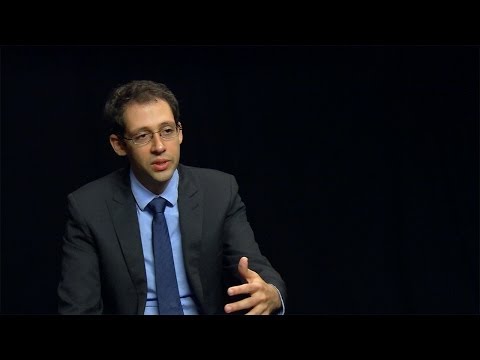
ABOUT THE EPISODE Professor Gad Allon of the Wharton School analyzes recent aviation system failures at Newark Airport, a crash in Washington, D.C., and a fire at Heathrow. He points to chronic underinvestment in air traffic control staffing and outdated technology as root causes. Allon explains how temporary fixes, like task forces, fail to address systemic issues and emphasizes the need for long-term infrastructure planning, technological upgrades, and stakeholder alignment. He compares the aviation sector’s lack of urgency to the rapid response seen in highway infrastructure, noting the economic and safety risks of continued neglect.
ABOUT THE PODCAST The Wharton Business Daily podcast features interviews with top business leaders, innovators, and renowned Wharton faculty about the latest news, fascinating trends, and issues impacting both consumers and the business world. Episodes are recorded at the Wharton School.
#AirTrafficControl #AviationSafety #FAA #FlightDelays #Airlines ----- The Wharton School of the University of Pennsylvania is committed to sharing its intellectual capital through Knowledge at Wharton, the school’s online business analysis journal.
Launched in 1999, Knowledge at Wharton offers free access to:
- Articles, podcasts, and videos highlighting Wharton faculty research and analysis of current business trends - Interviews with book authors from Wharton School Press - In-depth series of curated content like Wharton Executive Education’s Nano Tools for Leaders - A searchable database of more than 10,000 articles covering all aspects of business - A weekly newsletter that delivers Knowledge at Wharton insights directly to your inbox
Visit the Knowledge at Wharton homepage: https://whr.tn/3qUpSBE Subscribe to the Knowledge at Wharton YouTube channel: https://whr.tn/3DEAgAU
Read the full transcriptHide the full transcript
- The problems at Newark Airport in New Jersey over the last few weeks have highlighted the needs to upgrade parts of that
- industry. And while there is a need to fix these issues as quickly as possibly, there must be a way to be able to also
- think about a review of the system in general for the safety of our airports and our planes and the people who fly on them.
- Gad Allon is Professor of Operations, Information and Decisions here at the Wharton School. Gad, great to catch up
- with you again. How are you? I'm good. How are you? Great to be here, back. Thank you. And I guess
- when you look at what has happened at Newark Airport, but also the flight that crashed in Washington, DC a few months ago,
- there is probably more of a call to look at a lot of the systems that are in and around this industry right now.
- Yeah. And I know it's slightly different—let me also add the fire in Heathrow Airport a few weeks ago as well. I know, very
- different story, but not unrelated. What we see here is neglect of years, right? I mean, in the case of— actually, focus
- on the US and Newark and DC— people have been warning for years that we have a shortage of air controllers. This is, I
- think—a few years ago, the number that was quoted was at least 3000. Now we're talking about maybe fewer. They're using
- technology. We can actually change some of that, but we're talking about thousands of people that are missing in terms
- of air controllers. Then there are other issues, which are crumbling technology. Many of these systems are antiquated and
- need to change. Their backups are actually limited. In the case of— here I can actually, should bring back London. There
- was— the issue there was fire in one of the power supplies. There was a backup, but the backup was exactly near
- the other power supply. In the case of Newark, there was a wire that caught fire, and because of that, for 15 to
- 20 minutes, the air controllers could not see anything. These are extremely, extremely important infrastructure
- decisions. That neglect of years brought us to where we are. Well, and I think for a lot of people, they would be
- surprised that we are having these issues in these types of locations, when you think about how important these entities are
- to running our countries in general. Right, exactly. I mean, Newark is one of the most important
- airports in the country. It's the hub for United, the biggest— one of the biggest airlines, but definitely the airline with the
- biggest international footprint among the American airlines. This is extremely, extremely important, a node in the overall
- transportation within and outside the US. DC, the same. So the fact that there is such a long neglect means that there
- are probably many other infrastructures that are actually not ready. So when you think about the infrastructure piece and the
- transportation department here in the United States coming out and saying they've formed a task force and brought on a couple of
- different companies along with their entity to be able to try and fix this as quickly as possible. This still feels like,
- though, it is a short-term fix for a longer-term problem. Exactly. I mean, exactly. I think what we're going to see here is
- we need here— I'll give an example. Inflation Reduction Act. There was a request to allocate more budget to
- infrastructure. Ultimately, I think— I forgot exactly the number. It's 1% or 4% of the overall was allocated to that. We
- know for years that these are issue that requires budgeting, rethinking. And having a short- term task force for that
- is— that's exactly what it does. It's actually just solving an issue for now, but that will just— kicking the ball
- down the street. So for the component of the air traffic controllers that you mentioned before, that's a challenge, I guess, in part
- because of recruitment. But there is a process that you have to go through in terms of your training. And from what I was
- told a week or so ago, it's not like you can be an air traffic controller in Philadelphia and then just go up to New York and
- fill in the gap. You're talking about very much different areas and processes that go through. - Yeah,
- that is one thing that's true, but there's actually an interesting aspect here. And you mentioned Philadelphia and New
- York. One of the main things that caused that— the shortage— was the fact that actually there was a transfer of the air
- controllers from New York, from New Jersey, to Philadelphia. So many of the people that control the air in Newark actually are
- now based in Philadelphia. It was against the advice of many air controllers, and it was done with very little consult and
- advice from them. And so a big part of that was actually, how do you actually manage the change where there is a new
- technology, potentially, that can solve on these issues that you're describing and potentially, in the long run,
- reduce the dependency on where the air controllers are, and reduce the dependency on them knowing the specific air of
- where they are. But this is, again, a long-term change that requires you to bring people on, to get them to buy into the
- change, to make sure they are aware of that, and rather than exactly the time where you need them, have an accelerated
- number of them take retirement or don't show up to work for other reasons. So I think there's an aspect here of
- reducing the dependency you're talking about. But that cannot be done against the construct of the people actually doing the work.
- What do you think, then, is the best process to try and make the corrections that are needed, but also to look at this
- longer term, so that we can have the best and safest air system in the country? Yeah. It's a great question. I think one— first of all, one is
- to treat each one of the flights that happened as a near as— the near accident is an accident, right? The fact that
- nothing happened in Newark when there was really no air controller, there are 170 planes in the air if I remember correctly
- during that time. And imagine, these are planes that are now essentially flying essentially blind. And to me, at least,
- we have to treat and think about that situation of what if actually 170 planes actually crashed during that time?
- What type of an uproar will we have? How much budget would we divert at that time to try to fix these issues? How much
- money could have been saved, or should have been— was saved by not— by these things not happening? And so I think once
- we elevate to that level, I think the next question is, really, what is the long term budget we need for that? What's
- the technology? How do we envision that? The US is actually behind, technology-wise, compared to many global airports. What's
- the technology investment we need to make? And then what is the change we need to make in terms of these roles to make
- sure that we are solving— because these are issues that are going to be— to reappear again, again, and again every five years, unless we
- solve them as a much more programmatic way for the next 30 years. The airlines are moving slowly. This is an
- industry that overall moves slowly, exactly for the safety reasons that you mentioned. But the fact that it moves slowly means
- that we just need to look much more into the future than looking into short-term solutions. So thinking about,
- first of all, the cost of that, budgeting appropriately, but then making sure that we are retrofitting these with the
- right technology and training plan, I think is the right route and process for that. - So is
- the thinking, then, similar to how it seemingly has been here in the United States about our roadways? We've always put our
- roadways at the top of the infrastructure conversation because of how much we move on the highways, whether it be
- individuals going to school or going to vacation or businesses shipping materials. That's always been at the top of the
- focus. - Yeah. I mean, if you remember, both of us are based in Philadelphia. A few years ago, there was the I- 76 fire that people anticipated
- was going to take maybe a year to fix, and it's going to impact the GDP. People basically said that it might actually reduce
- our GDP by or growth of GDP by 1% just because of the fact that it's going to be such an important artery of
- transportation and logistics. Ultimately, they managed to fix it within 30 days and avert many of these doom— gloom and
- doom predictions. But we don't have anything remotely as urgent, or at least we don't treat it with them remotely as
- urgency, the same urgency, even though the impact can be colossal as well. There's a reason the United Airlines CEO
- wrote an email to every person that is a United customer, primarily because many customers I know actually chose to avoid
- United. Avoid Newark, and maybe avoid United, over the last few weeks since the incident. Once because of the delays, but also
- because of safety. And so I think we need to have the same level of urgency that we have with respect to roads.
- Gad, great to talk to you again. Thanks very much. All the best. Same here. Thank you.
- Thank you. Gad Allon, Professor of Operations, Information and Decisions here at the Wharton School.
Brief Summary
Gad Allon discusses Newark Airport issues, air traffic controller shortages, and the need for long-term aviation infrastructure upgrades.
Key points
- Urgent Need for Airport Upgrades. Recent problems at Newark Airport reveal critical infrastructure needs across the aviation industry.
- Air Traffic Controllers Shortage. A significant shortage of air traffic controllers poses safety risks for flights.
- Long-Term Solutions Required. Experts argue for a shift from short-term fixes to long-term infrastructure planning.
Episode highlights
- Urgent Need for Airport UpgradesRecent problems at Newark Airport reveal critical infrastructure needs across the aviation industry.“This neglect of years brought us to where we are.”1:55May 25, 2025
- Air Traffic Controllers ShortageA significant shortage of air traffic controllers poses safety risks for flights.“Imagine, these are planes that are now flying essentially blind.”5:50May 25, 2025
- Long-Term Solutions RequiredExperts argue for a shift from short-term fixes to long-term infrastructure planning.“We need to look much more into the future than short-term solutions.”6:50May 25, 2025