Why Supporting Employees Holistically Boosts Productivity
Ask about Knowledge at Wharton
Episode Description
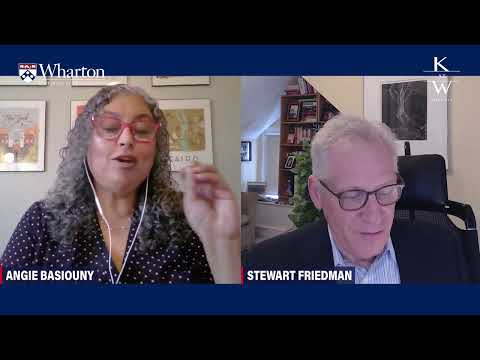
EPISODE OVERVIEW Wharton Emeritus Practice Professor of Management Stew Friedman, Director of the Wharton Work/Life Integration Project and Founding Director of the Wharton Leadership Program discusses how corporate leadership has evolved to support employees’ personal and professional lives. Drawing on decades of research and experience, he explains the concept of "total leadership," how work-life integration drives innovation and productivity, and why businesses benefit when they support the whole person—at work, at home, and in the community.
PODCAST OVERVIEW Every day, business scholars answer pressing questions in their research - but what do their insights mean for you? In this podcast, Wharton faculty dive into what inspired their studies and how their findings resonate with the world today. Learn how research insights translate into knowledge you can use, with host Dan Loney.
Learn more at http://whr.tn/rippleeffect.
#WorkLifeBalance #EmployeeWellbeing #FutureOfWork #RemoteWork #CorporateLeadership ----- The Wharton School of the University of Pennsylvania is committed to sharing its intellectual capital through Knowledge at Wharton, the school’s online business analysis journal.
Launched in 1999, Knowledge at Wharton offers free access to:
- Articles, podcasts, and videos highlighting Wharton faculty research and analysis of current business trends - Interviews with book authors from Wharton School Press - In-depth series of curated content like Wharton Executive Education’s Nano Tools for Leaders - A searchable database of more than 10,000 articles covering all aspects of business - A weekly newsletter that delivers Knowledge at Wharton insights directly to your inbox
Visit the Knowledge at Wharton homepage: https://whr.tn/3qUpSBE Subscribe to the Knowledge at Wharton YouTube channel: https://whr.tn/3DEAgAU
Read the full transcriptHide the full transcript
- And the really good news is that we now have a body of evidence that shows that when you take care of the whole person in a
- way that serves the interests of the person, their families, their communities, and your business, you can all win. Now
- it's not easy to do that, and of course, there's conflict between work and the rest of life, and you've got to deal with those,
- having to do with time and other other constraints. But when you ask what can be done to make things better for you and your
- family and your community and our business, people come up with ideas for innovation that you wouldn't have thought.
- - Welcome to <i>The Ripple Effect</i>, the podcast that takes you on a journey through the
- minds of Wharton faculty. I'm your host, Dan Loney, and in each episode, we'll be diving deep into the inspiration behind
- the groundbreaking research that Wharton professors have conducted and exploring how their findings resonate with the
- world today. - The balance between the time we spend on the job and the time we spend living our lives has been a very important
- area of study for quite some time now. But just how different is that balance now from a couple of decades ago? Pleasure
- to be joined here in studio by Stew Freeman, who is Emeritus Practice Professor of Management here at the Wharton School. He
- also founded the Work Life Integration Program, a project— excuse me— here at Wharton. And he's Founding Director of the
- Wharton Leadership Program. Stew, great to see again, as always. Thank you, Dan. So good to be here.
- Let me start out by— because this has obviously been such an important area of focus
- for you for many years now. Let's go back in time and— what was it that first had you thinking about the importance
- and the connection between work and life? Well, I was a graduate student at the University of Michigan in
- the early '80s. And there, I sort of minored in the field of role theory and adult socialization, and how people figure out how to
- piece together the different roles that they play in life. But my main emphasis in my research and teaching and
- practice was on talent management systems and the succession and development of leadership talent in companies.
- But when my first son was born in the late '80s, I had a very profound reaction to his arrival, to meeting him and
- thinking, "Oh, what do I do now to ensure that the world that he grows up in is one that— will be one that encourages his
- flourishing, his safety. It was a question that I hadn't really given enough thought to before I actually met him, but it was— it
- was a question that I couldn't get out of my head after— after that moment. And I asked everybody— my parents, my
- friends, relatives. And then when I got back into the classroom about a week or so after that, I asked my students.
- I kind of cleared the deck of what we had planned to study that day, which had to do with motivation and reward systems.
- We were going to do a case on that. And I said, "You know what? We're going to put that aside because there's something else
- that I want to talk with you about, and that is, how are you as future business leaders, going to cultivate a world in which
- people can be the people they want to be, outside of work, as parents, as whatever— friends, members of their communities.
- And the reaction was intense. There were people in the room who were thinking, why is he doing this when we prepared a
- case for today. And that was in the days when students would prepare for class. Sorry. - Not using ChatGPT, right?
- Well, they were— they were there, ready to go. And I was putting that aside. They were also saying, like, "This is—
- how's this relevant for us right now? We're a business school. Why are we talking about children and families and—
- Professor, nobody really cares about your family. So like, let's get to— let's get down to it." But there were others in the
- room who kind of leaned forward and said, "Yeah, let's talk about this." - Right.
- And in response to my question, what are you going to do as future business leaders to shape
- a new world, one of them said to me, "Well, you're the professor. You tell us." - Right. - And that that caused me to shift my
- attention. That's probably more than you wanted to hear about the early days of this. But the late '80s, I shifted my
- interest and started to focus more on— and using what I had learned in graduate school and the tools that I had developed
- there at the Institute for Social Research at the University of Michigan, how could I study this question and
- produce useful knowledge for people to help them figure out what it was going to take to integrate the different parts of
- their lives? - How, then, have those two elements, work and life, kind of developed? And
- thinking about it from the corporate perspective and the employee perspective, how have they developed in the last 30
- years, to whatever point we are at right now? And maybe, to a degree, where you think we are going with this?
- That's a great question, Dan. There's good news and bad news here. The good news is that the world has changed in many
- positive ways in terms of the role of women in the workforce and the increasing authority and power that women have, which has
- changed the dynamics of the domestic lives of people, and forced a new kind of questioning and experimentation with
- different ways of approaching how men, women, everyone figures out how to integrate the different parts of their lives
- for mutual gain. That became our challenge and our task. So today, you have many more young men interested in having
- fulfilled lives beyond work, and you have many more women in positions of authority who are also helping to drive innovation
- and change. What we figured out— so I started the Leadership Program at about the same time that I started the Work Life
- Integration Project. And there, we were developing new models for how people learn what it means for them to lead and how
- to grow as leaders. 35 years ago, this wasn't standard fare. Now it is. And now it's standard for organizations
- around the world to be asking the question, how do we help our people grow as people, not just as elements of our, you
- know, components of our productive machines? They're more than that. And the really good news is that we now
- have a body of evidence that shows that when you take care of the whole person in a way that serves the interests of the
- person, their families, their communities and your business, you can all win. Now, it's not easy to do that. And of
- course, there's conflict between work and the rest of life, and you've got to deal with those, having to do with time and other
- other constraints. But when you ask what can be done to make things better for you and your family and your community and
- our business, people come up with ideas for innovation that you wouldn't have thought.
- Should I be surprised that maybe the corporate world has taken the level of interest that it seemingly has in this topic,
- specifically? Because it feels like going back decades— and you talked about this before— this was not on the radar of the C-
- suite or the corporate world in general. Now, obviously, it very much is. - Yeah.
- Well, back in the day, not only was it not on the radar, it was— it was an idea that was suppressed. And indeed, when I
- shifted my focus of research and practice and teaching to this issue, I had people— senior people— saying, "Stew, what are you
- doing? This is a women's issue that nobody cares about. Why are you shifting your attention in this direction?" But I could
- foresee that things were going to be different. I'm not saying I had a crystal ball, but it was clear that— that changes in
- the roles that men and women wanted to play in organizations, and the increasing flexibility that was going to be possible,
- and the supports that we were seeing in Europe, especially northern Europe, that were being provided for people's
- lives beyond work, particularly their families, was creating pressure for organizations in the United States to respond.
- And so when I was, you know, a man at the Wharton School talking about families and kids in the late '80s and early '90s, I
- was decidedly strange. I mean, I still am in a lot of ways, but— but there, I was a distinctive messenger. Because at that time,
- it was almost only women talking about this issue. And it wasn't— it wasn't really on on the radar, as you say, in most
- business school curricula. So as things changed, we have now, with the advent of the internet, of course, and then with the
- pandemic and the radical shift to working from home, there's all kinds of new models for how to figure out the ways and means
- of how we get things done in the different parts of our lives. And so to a degree, it's incumbent on companies to have this as a
- component of their health profile that they will have for employees, of making sure that they are doing as much as they
- possibly can for the employee, not only for the bottom line benefit of the day-to-day work, but obviously, the component of
- keeping the employee there, who may be very valuable. And you don't want to lose an employee to another company who may be,
- you know, a key cog in your daily mix. Yes, and that is the good news in the story. When I
- went, at the end of the '90s, after launching the leadership program here and doing the research on, what does
- it take to integrate the different parts of life for mutual gain throughout the '90s, the CEO of Ford Motor Company
- hired me to be the Head of Leadership Development for the company worldwide. And so I went there for a few years. Took a
- leave from my post here at Wharton and there, had the opportunity, with an incredible support of remarkable executive
- sponsors and a great team, we created a program that we call Total Leadership, which brought together what we'd been learning
- about the growth of leadership capacity and the integration of the different parts of life. And what we demonstrated there was
- that when you help people to articulate their values— what they care most about— to be real, to act with authenticity
- by clarifying what matters most to them, by helping them to be whole, by identifying who are the most important people at
- work, at home and in the community, and what do they really need from you, and what do you need from them? And
- looking at your whole life as a social system that you can navigate and influence. And using that knowledge, that fresh
- knowledge in a peer-to-peer coaching environment to come up with ideas for innovation that are designed to produce what I
- called a "four-way win"— and that is demonstrably improved performance at work, at home, in the community and for yourself.
- People are able to do that. And they overcome the guilt and the fear of trying something new when they realize that what
- they're trying to do is not just for themselves, their families, their communities, their businesses, but for all four. So
- when you take that view— that it's possible, if you look— put on a new set of lenses and look for ways to make things better
- in the different parts and experiment with that, then you can actually make those things happen and get support. So using
- leadership principles to create change, to become a leader that is capable of producing sustainable change— because it
- works for all the different parts of your life. And we call this Total Leadership. For the last 25 years, I have been doing
- that, both in coursework here at Wharton and with companies all around the world. And the good news here again is that our
- evidence shows that when you take this approach, people work smarter. They're less distracted when they are at work, and they
- actually produce better results at work while spending less time at work. Which is a paradox that my economist friends wonder about.
- Are we then going into a time that requires a little bit more focus because of the fact we're seeing companies start to
- call people back into the office full time, and there are some people that are fighting back against that, or not staying
- with the company, or, you know, making a choice that— that balance that they've had for the last few years, especially
- during the pandemic, is more valuable to them than being in the office five days a week?
- Yeah, having control over your life is something that more and more people are claiming. Now in the current labor market, it's
- hard to predict what is coming forward. But what we have found, and the evidence is pretty clear, is that when you trust
- people and verify, you know, that what they're doing is good for you and for them in their lives, and you let them know that they
- can and should be experimenting with different ways of getting things done that are good for you and for them, and you
- measure that, and you support that, that you're going to get a big return in terms of retention and loyalty. But you're also
- going to get better productivity. So the blanket policies of "Everybody's coming back, and everybody's got to be
- there all the time," I think that's going to backfire. Because the norms for today's workforce are very different
- than the ones that I grew up with and the ones that you grew up with too, a generation later, Dan, after me. And— and so, you
- know, there is going to be pushback. But of course, in a tighter labor market, you know, it's going to— there's going to
- be— it's hard to know. I don't think anybody can really predict. But clearly, the trend is in the direction of greater
- freedom, greater sense of control, greater belief that people want to be productive in the different parts of their
- lives. And when you give them the tools and the support to do that, the returns are great for your business.
- Great topic. Where can people find out more about the work that you've done in the past and how this is progressing?
- Well, it's kind of you to ask, Dan. The Total Leadership website is probably the best place to get free information,
- videos, book chapters. It's totalleadership.org, and you can learn all about our history and impact there.
- Great to see you again. Thanks very much. Stew Friedman, who is Emeritus Practice Professor of Management here at the Wharton
- School and founder of the Work Life Integration project, as well as the Founding Director of the Wharton Leadership Program.
- Thank you for listening to <i>The Ripple Effect</i>. We hope you found this episode informative and engaging. Don't forget to
- subscribe and leave us a review so that we can continue to bring you the best insight from the Wharton School.
Brief Summary
Stew Friedman discusses work-life integration and leadership evolution in the corporate world, emphasizing holistic employee well-being.
Key points
- The Ripple Effect Podcast. Join host Dan Loney as he explores groundbreaking research from Wharton faculty.
- Work-Life Integration Insights. Stew Friedman discusses the evolution of work-life balance and its importance today.
- Total Leadership Program. Friedman shares the success of the Total Leadership program at Ford, enhancing leadership and life integration.
Episode highlights
- The Ripple Effect PodcastJoin host Dan Loney as he explores groundbreaking research from Wharton faculty.0:36May 27, 2025
- Work-Life Integration InsightsStew Friedman discusses the evolution of work-life balance and its importance today.0:55May 27, 2025
- Total Leadership ProgramFriedman shares the success of the Total Leadership program at Ford, enhancing leadership and life integration.10:53May 27, 2025