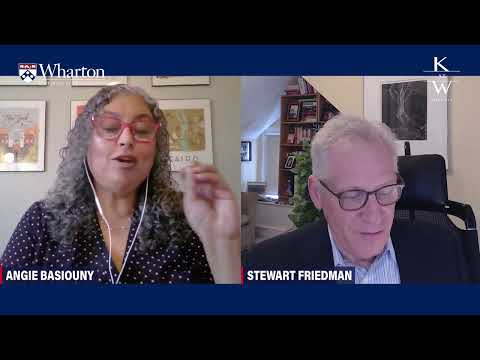
Integrating Work and Life
Ask about Knowledge at Wharton
Episode Description
📂 Management;Human Resources 🏷️ Research
Read the full transcriptHide the full transcript
- I'm Jeff Klein executive director of the Wharton leadership program this is knowledge at Wharton I'm joined today by
- Stuart fredman author professor and an influential expert on leading from the point of view of the whole person Stu's
- new book leading the life you want skills for integrating work and life has just been released by The Harvard
- Business press Stu thanks so much for being here it's great to be here Jeff thank you for
- joining me in this conversation of course uh so let's just start I mean leading the life you want it builds on Decades
- of your research right both in leadership development as well as work life integration what led to this book
- for you well I published total leadership which is kind of the predecessor book in in 2008 which is the
- story of my course which I've been teaching here at Wharton since 2001 since creating it when I was on leave
- from Wharton uh as head of leadership development for Ford Motor Company right and in total leadership what I've done
- is to basically tell the story of that course which generally takes about four months to go through and it's a
- stepbystep uh series of activities that uh I ask students and clients uh and readers around the world now in a in a
- moo that I teach a massive open online course on corera to go through each of these different steps in uh in a
- progression uh so it's very kind of systematic and you know one step Builds on the other um and that's that's it's
- worked really well but immensely popular here what was missing though from uh the
- total leadership book uh and what drove me to write leading the life you want were two things first um I'd get a lot
- of push back from people who were saying to me well Stu all this you know work in
- life stuff is sounds great but to be truly successful in the professional world or in the public world I mean come
- on you've got to sacrifice everything in your life right and what I knew from my
- own experience but also as a consultant as a coach as a as an educator and as a researcher was that that's actually not
- true even though that is the common wisdom and certainly I'm not saying here that you know you can you can have
- everything all the time and that uh uh you know you you can have success without without sacrifice without effort
- without you know discipline and persistence in the face of in the face of disappointment but what I am saying
- is that not only is it possible to create a greater sense of Harmony among the different parts of your life while
- achieving greatness it's actually necessary that the people who were most successful even by you know external
- markers of Fame and wealth uh and you know power uh those are the folks who are able to figure out in their own way
- how to bring together the different parts of their lives over the course of their lives and indeed it's their
- commitments to family to community and to their private selves their minds bodies Spirits that's what gives them
- the strength the resources uh the support that they need to be successful in the professional world so so reason
- one was to address this issue of you know uh you have to sacrifice everything not true and you're say it's it's a
- false Choice basically it's a false choice that it holds us back from the kinds of success the kinds of happiness
- that you're talking about indeed uh that to think in terms of you know the binary
- work life balance which is a term that I have been railing against for decades and I and I think I think we're making
- some progress there because more people are talking instead about work and life integration or Harmony uh over the
- course of life and that the balance concept just doesn't work because it forces you to think in terms of
- trade-offs uh if your mindset is what am I going to have work or life uh then you're always thinking in terms of what
- you have to give up yeah there's always loss always some something to lose and of course your employer sees that as
- well if you're working for somebody and say I need some more balance what she your boss is probably thinking is okay
- you're taking something from me and you know I've already gotten nothing so like
- how's this going to work where where does that go now so so we've really got to be uh focusing the conversation on
- what I refer to as four-way wins MH things that you can do that are within your control that enable you to create value
- in some way some demonstrably improved result not just at work not just for yourself not just for your
- community not just for your family but for all four and what I've discovered in in asking that question of students and
- clients around the world like tens of thousands of them now is that everybody can answer that question with an
- affirmative response like yeah here's something I could try uh and that's that's a that's a big part of what we're
- trying to get people to do with this with this model and with these examples so so the first reason I wrote this book
- was to show examples of wildly successful people who have shown that you can integrate the different parts of
- your life and be incredibly successful in fact you need to and the other was to really drill into the skills that they
- developed naturally uh you know in most cases unwittingly uh to to Really break down
- for the reader here are the skills that people use to to enact this kind of life
- to to lead the line that they want and to illustrate those in the cases of these six people that I profile and then
- in the second half of the book to curate The Best of You Know positive psychology
- organizational psychology the current research uh and and and convert it into exercises that people can do anyone can
- do right to uh practice these skills in any way they want in any order they want
- so so this is different than the total leadership book in the sense that you can just pick and choose whatever you
- want to focus on in fact it starts the book starts with a self assessment takes just a few minutes which you can also do
- for free online that shows you all right of these 18 skills that I've you know described and Illustrated which ones do
- you want to focus on right and then you choose which ones you want to develop by
- reading the cases about them and or just going right to the exercises if we can let's talk a little bit about the
- stories right it's an engaging set of stories that you offer I mean we have Michelle Obama Bruce Springstein gron
- Cheryl Sandberg Julie FY Tom Tierney um why and and how did you decide to focus on on these
- individuals so how did I come up with with these six well for years now I've been asking our MBA students who take my
- total leadership class to write a leader biography to choose somebody who they want to focus on who they want to just
- discover more about and to look at their lives and and their careers through the
- lens of the three principles of total leadership in what ways are these people being real that's the first principle
- acting with authenticity by knowing what's important to you your values and your vision being whole respecting the
- whole person knowing that there are these different parts of your life and that they do affect each other your work
- your home your community your private self and then to be Innovative the third principle constantly learning and
- experimenting with new ways of getting things done those are the three principles so go out Dear student and
- find somebody who you want to learn more about and write up how they've done this
- so I've read hundreds of those biographies which is part of what you know persuaded me that yeah it's it's
- out there and this is a way to approach you know what it means to lead the life you want so that was one source another
- was just people I admire um and wanted to learn more about myself and the other you know clients or people that I knew
- about and you know I was just asking around who do you know who do you know and then ultimately I wanted uh to to
- try to create a representative sample so there's three men and three women uh there's two each from the business
- sector from sports and entertainment as well as from the private uh sorry the public sector uh and so you know the
- purpose there is to illustrate that uh you know people leading the lives they want are everywhere and and you may not
- identify with Michelle Obama or Bruce Springsteen or Cheryl Sandberg but you can learn from them so it's not like you
- have to like model your life after them but let's look at what they've done and the skills that they have you know
- really mastered uh that's enabled them to lead the lives that they truly want that you can learn from and use yourself
- and I certainly appreciate um the strong message that comes from the selection of
- these six subjects which is you know leadership work life integration right the work and life um and community and
- self it it's a universal it's a universal question it's a universal challenge perhaps it's a universal
- opportunity um that's not just in the realm of business right or just in the realm of uh a certain kind of person and
- I I think these stories really bring that to life that was definitely part of my intention was to to demonstrate that
- these issues are not just uh in the business world but that really anyone who's got a sense of uh ambition really
- and and need to learn about you know how do I bring the different parts of my life together in a way that works
- because you know so many people that that I run into every single day are feeling the sense of being overwhelmed
- and things are out of control and and so uh you know this this approach is helpful in giving people you know a
- model for what they can do and how to do it to gain a greater sense of control and of course the great Paradox and the
- reason I chose this title ultimately is that uh leading the life you want happens when you discover what is
- uniquely you your your passions your your interests uh and your skills and converting that into value for other
- people this so that you know the idea is and this really only came into very very
- sharp Focus for me when I was reflecting on the book after it was done like what
- have I learned from this and that was the big Insight that leading the life you want happens when you take what is
- you know most core to you and make it of use to others I appreciate that um it reminds me that the the old saying
- I don't even know where it comes from but just the simple statement wherever you go there you are right and wherever
- we find ourselves who we are at at a core level at an authentic level um is so essential to uh to being of service
- to others and ultimately being of service to yourself but you have to know what other people around you are
- interested in right so it starts with understanding what matters most to you but then you've got to take that outside
- in view like who are the important people in my life and in my world and what do they
- really need from me and so there's you know some of the exercises are just about that issue of identifying the
- critical people uh and talking to them to clarify what they expect what they need from you when they look at you uh
- and they look up to you or you know at you you know what is it that they see and using that knowledge that comes from
- these exercises which really raise your awareness your consciousness of who you are who the people around you are what
- they need and then on the basis of that kind of diagnostic work to discover new ways of creating value for them and for
- you and that's what makes uh this about leadership and about sustainable change because it all leads to taking action
- that's going to make things better for you and for them yeah so if we can let's focus on
- some of the stories that bring the total leadership principles goals of be real be whole be Innovative to life um now
- I'm a Bruce Springsteen fan I should say that but and the story you tell is riveting it's a it's a riveting account
- of Springsteen for someone who considers himself a a giant fan now he makes a comment um within you know within this
- profile that two of the best days of his life were the day he picked up the guitar and the day that he learned how
- to put it down how does does that illustrate the principles that that we're discussing here today yeah Bruce's
- story is is really quite amazing it was so much fun to write um and I think What
- that particular quote represents is uh another really important theme of the book that I saw in all these different
- stories and that is this idea of evolution you know and conscious learning uh by attending on a persistent
- basis to the question of who am I what matters to me who matters to me and how can I best you know live as as they need
- me to live as as well as how I need to live um you know finding his voice and his identity uh in getting that guitar
- uh you he was very very fortunate uh you know to have that and you know most people don't have that you know moment
- of when they're 12 years old uh to discover oh this this is now who I am and this is who I was meant to be but
- you know people can discover that through continual exploration uh and then ultimately much
- later in his life as all the six people in this book you know demonstrate they changed yeah a lot from you know where
- they started uh so another one of the kind of myths that I'm trying to bust with these stories is that you're born
- with you know this capacity to be great not true uh you know it's it's a matter of yes skill there's a lot of luck but
- there's also um uh you know persistence discipline you know passion and courage to pursue that which is most important
- to you and to the people around you so you know much later in life uh as other aspects of his life became even more
- important uh like when he became a father he realized uh I got to make room for other aspects of my life now and so
- the conscious deliberate choice to change again uh and to rest and to make room for other people like the people he
- was you know creating with Patty uh you that that represented yet another stage in his development yeah I mean we aren't
- static as people and you know the guitar I really like the way you put it because
- the guitar is not the guitar says to him this is who I was meant to be but it's not all he was meant to be right he was
- meant to be so much more and and he creates that space I um yeah such a compelling a compelling right before bed
- story I woke up energized the next morning glad to hear that Jee absolutely yeah I mean Bruce's story is is
- especially um valuable in in teaching the skill of creating cultures of innovation which basically means he's
- somebody who is learning all the time and he's just pushing everybody around him to you know discover new capacities
- new ways of of living of expressing their talents and that's why he's such an inspirational leader of his band of
- his fan base of you know so many people in the world yeah so Michelle Obama our first lady um another really compelling
- story and somewhat controversial I'm sure there were people watching who thinking what Michelle Obama leader I
- don't get it well I was convinced I'll tell you that much from the read I was convinced now she makes did you come in
- skeptical um I came in probably not knowing enough right knowing that there was a very public role that she plays um
- but not knowing to the ex the extent to which she was involved in organizations earlier in her career and then the
- extent to which she was champion in causes throughout her time you know as as the first lady so so it was very
- instru to me um there's a quote from her at one point uh I think when she's a university administrator right it's a
- wonderful profession by the way um if what you're doing doesn't bring you Joy every single day what's the point right
- and and that's the question she's asking herself I think both about her professional career but also the ways in
- which she's engaging with her children and with her community which is incredibly strong um so what Les lessons
- does Michelle Obama what what lessons does she present yeah so the three skills that I hone in on in terms of uh
- you know analyzing her story are uh her capacity to align her actions with her values to to really do the hard work of
- figuring out all right you know what matters most to me what do I need to be doing and the quote that you chose is is
- you know is emblematic of that she's asking the question on a regular basis um and and then taking action uh the the
- second one is um man managing boundaries intelligently and her story about you know how she arrived at the White House
- and and you know how she really thought through and negotiated you know what it was going to be like for her and her
- daughters uh is is just a wonderful example of what's possible even under the most you know white- hot scrutiny of
- the entire world to figure out all right how am I going to bring the different parts of my life together in a way that
- works not just for me but for my children right um and and the third piece is well and before you you say a
- little more about about boundaries like how how should how should we think about
- boundaries well uh boundaries by that I mean you know the the spaces between the
- different parts of our lives and there's there's two ways to think about boundaries one is to create firm
- boundaries that are impenetrable that allow you to focus on you know one person or one group or one project at a
- time now I'm dad now I'm work Jeff and I can't do anything else and and this is the only thing I'm going to do right now
- I'm just going to focus just in on this one person or this one thing right now so that's that's what we mean by
- creating a you know a boundary that is uh firm and you know as impenetrable as you can make it uh but then there's
- another way of thinking about boundaries and that is to make them permeable and I don't have a strong view
- about which is better because sometimes you need to have those firm impermeable boundaries um and sometimes you need to
- make them more poorest to allow different parts of your life to come together in ways that are mutually
- enriching the key is what's working sure what's working for you what's working for the people around you so I don't
- think there's one best way uh the best way is the way that works for you and for the people that matter to you and
- that means continually checking in is this working yeah and being really conscious about them it's is is what
- that skill offers exactly and then the third skill of Michelle's uh Michelle Obama's is um
- to be embracing change courageously this is a woman who has taken some really difficult uh decisions
- to try new things that put her in a in a zone that was anything but comfortable uh in pursuit of her you know core
- values and and living them in a way that she learned from her father which is another thing that I tried to bring to
- life in the story absolutely I'm going to switch gears a little bit here um now I I know throughout your work with total
- leadership you've created and you've LED countless peer coaching groups learning
- communities um right now at Wharton we have hundreds of MBA students who are in a voluntary program that that draws upon
- your work and and other faculty members to talk about passion and purpose and principles within their
- lives you know I I look around there's leanin circles there are true north groups right this conversation feels
- really relevant in today's world and so given that are are these ex exercises are they best experien in a group um and
- what advice would you have for for managers um for parents about you know maybe how these things how the exercises
- that you describe can best be used well you'll find that um many of the exercises do explicitly you know they
- requ instruct you to work with other people sure uh some of the things you can do on your own uh but then many uh
- sort of you know require you to engage other people in your Lear learning and Discovery and there are two main reasons
- for that that you know peer-to-peer learning uh in my view is is why it's so valuable and so powerful one is that it
- builds in accountability uh you make a public commitment and by that I mean to another
- person you know outside of yourself that you're going to try something uh and ask
- them to help you to you know stay on it uh and if you know if they've got a good
- reason to do that well that's going to put pressure on you which is a good good thing that most people need uh
- accountability pressure is one highly valued aspect of any kind of peer-to-peer learning but the other is
- um support encouragement you know reinforcement uh and and and another perspective that helps you to see
- especially when you're both doing the work of exploring you know what matters most who matters most what can I do to
- change to make things better all the way around if you're doing that as well as I
- am I'm I'm learning a lot just by trying to help you and listen to your you know
- challenges and concerns in in creating meaningful sustainable change so so you get um accountability pressure you get
- support and you get another perspective uh that that someone else can bring to you that you can't see uh and and and
- the bonus of course when you're helping other people to learn you know what it means for them to lead the lives that
- they want is that you develop new insights in trying to help them which Jeff is my kind of secret the reason I
- write these books and teach these courses and you know work with clients uh in all kinds of different settings is
- because uh these questions then are top of mind for me all the time because I'm trying to find Solutions even though
- I've been you know at this for for decades it's a it's a lifelong Quest as we start to wrap up here you make the
- argument that leading the life you want is about consciously compassionate action right
- about helping others so what advice do you have um for our audience for your readers about how to find that kindness
- um you know for others and especially for themselves well that uh you know that is again the kind of paradoxical um
- idea behind the title that you you become more free to pursue the things that matter most to you when you take
- your resources your assets your skills and and try to apply them in the service of other people uh and this is
- Illustrated in virtually all six of these of these stories uh and it's it's such an important idea and it's been
- around forever I mean most of the world's religions uh preach this and the reason that they do is because it works
- and it's something further that most people need to be reminded of because we are you know ultimately we're animals as
- well as Gods right and so we've got these competing tensions um in terms of our motivations um but anyone uh can take
- small actions to do what they can to think about the needs of other people and you know use your time and energy to
- try to serve them even in the most uh constrained and even horrific circumstances this is possible in fact
- and the gon the Eric gon story illustrates this particularly well sure um you it's a it's a means of
- survival that you know the way people uh get through uh really trying circumstances uh like in hell week in
- for Navy Seals training or worse in a concentration camps in World War II which is where Victor Frankle discovered
- uh you know this idea that we need meaning in our lives and meaning comes from creating value from other people
- for other people and you can always find a way to do that St thanks so much for being here with us today leading the
- life you want skills for integrating work in life just out from Harvard Business Review Press thank you Jeff
- [Music]
Brief Summary
Stuart Fredman discusses work-life integration and profiles leaders like Michelle Obama and Bruce Springsteen in his new book.
Key points
- Leading the Life You Want. Stuart Fredman discusses his new book on integrating work and life for success.
- Michelle Obama's Leadership Lessons. Exploring how Michelle Obama aligns her actions with her values and manages boundaries.
- The Power of Peer Learning. Engaging with others fosters accountability and support in personal growth.
- Leading the Life You Want. Discover how serving others can lead to personal freedom and fulfillment.
Episode highlights
- Leading the Life You WantStuart Fredman discusses his new book on integrating work and life for success.“You can integrate the different parts of your life and be incredibly successful.”5:10Oct 7, 2014
- Michelle Obama's Leadership LessonsExploring how Michelle Obama aligns her actions with her values and manages boundaries.“If what you’re doing doesn’t bring you joy every single day, what’s the point?”16:11Oct 7, 2014
- The Power of Peer LearningEngaging with others fosters accountability and support in personal growth.“Peer-to-peer learning builds accountability and support.”20:31Oct 7, 2014
- Leading the Life You WantDiscover how serving others can lead to personal freedom and fulfillment.“You become more free to pursue what matters when you serve others.”22:42Oct 7, 2014
Tension
40/ 100Low tension