A New Way to Think About Startup Innovation
Ask about Knowledge at Wharton
Episode Description
Paypal co-founder Peter Thiel talks about the insights on building the future that he gained as an entrepreneur and investor. See the full story: http://knlg.net/Z1iPGs 📂 Innovation;Management
Read the full transcriptHide the full transcript
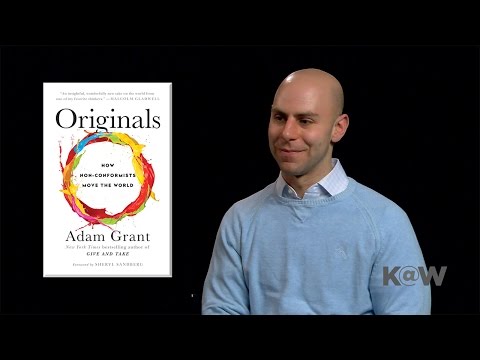
- I'm Adam Grant we're here with Peter teal co-founder and CEO of PayPal the first outside investor in Facebook as
- well as a legendary investor and entrepreneur in Silicon Valley he's the author of 0o to1 an extraordinary new
- book and we're thrilled to find out for starters Peter why is competition for losers well this was the headline of the
- Wall Street Journal excerpt of our book The the chapter title in the book itself
- said uh all happy companies are different so it was a slightly milder form of that but uh but it was this
- provocative idea because we always think competition is for winners and a winner
- is someone who's better at competing is more intense at competing uh that you know it's like you're in a high school
- sports team and you learn to compete against the people um you're up against and the Really talented people are the
- ones who compete the best um but what happens when you compete is you always just are focusing on the people around
- you on what people are already doing what's deemed valuable by other people and you often lose sight of building
- things that are one of a Kind different truly valuable and zero to1 companies are companies that have not been built
- before you know the next Bill Gates will not start an operating system the next Larry Page won't start a search engine
- the next Mark Zuckerberg won't start a um a uh a social networking company if you're copying these people you're not
- learning from them if you're competing against these people if you think you're competing with these people you're
- actually trying to copy them and again you're not learning from them wow so on the flip side of that then you argue we
- should actually think about monop is a good thing why well it it is certainly um from the point of view of a founder
- or entrepreneur you want your company to always be a monopoly you want to be um offering something to the world that no
- one else is offering and that therefore you'll have some really healthy profit margins around around your business so
- from the inside I would argue Monopoly is always a good thing and that's what every entrepreneur should should attempt
- to uh to build uh from the point of view of society as a whole I think monopolies
- deserve their bad reputation uh when things are static so if it's like the Parker Brothers board game where you're
- just reshuffling the Deeds or if it's like the post office or something like that where the Monopoly is just a rent
- collector or a toll collector that's bad but when it's something Dynamic like Apple computer building the first
- smartphone that work you have people lining up around the block to buy it that's a monopoly that does not create
- artificial scarcity but that's creating something new and that's doing something
- that's good for society as well so if you put these ideas together um is the suggestion then that that Mark Zucker
- shouldn't have started Facebook given that Friendster and Myspace were already out there that Larry and Sergey had alav
- Vista and S geves and others to compete with so Google shouldn't have existed well it's always um it certainly is
- always a question what um you know what dimension is is really new and and really different I would argue that with
- uh with Google and the search business uh it was the um page rank algorithm it was a way to automate search and
- computerize it that was quite new and that fundamentally transformed search into this uh vastly bigger
- um space than anyone had thought it was in the 90s in the preg Google 9s um and in a similar way I would say Facebook
- was the first one to really crack the code on making personal identity real you one of my friends Reed Hoffman went
- on to start LinkedIn in the '90s it started a company called social net so they already had social and networking
- in the name and their model was that uh you know we'd have these avatars on the internet and maybe I'd be a dog and
- you'd be a cat and then we have these questions how would we get along with each other and so there were all these
- virtual world simulated reality social networking plays but they were fundamentally about people being
- different from who they really were Facebook was the first one to really capture real identity so so sometimes
- companies are iterations on things where there's just a fundamental breakthrough
- in one really key Dimension so tell me a little bit about why you think software has been so
- lucrative and and why have we seen so much progress in digital technology recently well there's sort of a lot of
- reasons for this but this certainly has been the the last 40 50 years uh we've had enormous innovation in the world of
- bits somewhat Less in the world of atoms clean tech energy more generally uh Transportation biomed a lot of these
- other areas seem to have been a lot tougher um one of the things that I think is true of uh of any great company
- is you have to uh build something that is valuable to the world and you have to capture some fraction of what you create
- so you have to create X doll in value and you have to get y% of X and uh and X and Y are these totally independent
- variables in most cases Y is about 0% and this is a actually disturbing element in the history of innovation
- that a lot of innovators discovered things but weren't able to get anything you know Tesla was outc competed by
- Edison even though Edison had a inferior technology or uh the Wright brothers came up with a first airplane but they
- didn't get to be rich and of course in The Sciences it tends to be even worse if you're Einstein you come up with
- General general relativity you don't get to be a billionaire you don't even get to be a millionaire um and so there is
- something um there it's it's so it's always this question of how do you actually capture some of the value of
- what you create I think there is something very unusual about software businesses where so many of them um have
- this Monopoly like character that enables people to capture a tremendous amount of value and and I think that's
- that's sort of this very underexplored dimension of it you know the marginal cost producing software zero so you have
- these incredible economies of scale and that's sort of a classic uh Monopoly natural monopoly business it's really
- interesting it makes me wonder what's going to come next so if you think 20 30 50 years down the road is there going to
- be a next digital Revolution and where will that be well I think it's a safe it's a fairly safe bet that the digital
- Revolution just keeps going you know it's been it's been going for 40 50 years it's the contexts have gradually
- shifted from you know uh Hardware semiconduct conductors to software internet mobile internet and and so I
- think but I think in the space broadly is is a very good place to look and and and while we've constantly explored
- looking at you know all sorts of other technological verticals uh space biotech genomics um energy uh the bulk of our
- focus is still on software for this reason so let's talk about the people behind the software one of my favorite
- lines in 0o to one was that you didn't really trust a tech CEO wearing a suit well it's uh it was in the context of a
- lot of the clean tech companies in the '90s where you had these sort of uh people who they had a certain look to
- them where they and they sort of looked and and again it's always fact specific there're no hard and fast sartorial
- rules but in Silicon Valley if you were wearing a suit it looked like in a pitch
- meeting it looked like you were uh bad at sales and worse at Tech uh and so it had sort of that uh very specific
- meaning really interesting so you wouldn't make the broader statement that we should just leave Suits out of
- business Al together it depends totally on the context so these things are always always very context specific uh
- there are you know I think there definitely definitely one of the people rules that I find to be uh very true is
- that uh these companies often work well if the people have known each other for a long time or there's some some good
- prehistory so when I whenever I um talk to people who founded a company I often like to ask the prehistory question when
- did you meet how long have you been working before you started the company a bad answer is we met at a networking
- event a week ago and because and we started a company because we both want to be entrepreneurs um and a good answer
- is we were you know in college together for four or five years working on this thinking about this and you know I'm
- more on the business side and the other other person's more on the tech side or something like that and this was one of
- the the secrets behind the the PayPal Mafia that you were part of uh did you know back then that it was so critical
- to start a company with people that you knew well and trusted well it's it's I I
- don't think you need to know all of them super well but it certainly helps because you know what people's strengths
- are you know what people's weaknesses are you can be somewhat more honest in conversations you have with people and
- then it does it does lead uh you know you have all these crazy ups and downs in these businesses and you you don't
- want things to blow apart on one of the lows so you also make a statement that uh that you are not a lottery ticket
- what is that about well there's always this very important question in business you know what is the role of chance um
- and how much is everything just a matter of uh luck one way or the other uh and it's a very hard question to answer
- because we can never run this experiment uh twice but I I think it's always a good sense to have to to sort of to tack
- a little bit against this this chance idea and this luck idea uh certainly as a venture capitalist when I've invested
- in businesses uh if I treat them as lottery tickets where okay I don't know if this is going to work maybe it works
- maybe it won't I'll give them some money um you know once you do that a bunch of
- times you've already psyched yourself into losing money and and and I found that I do much better when I have really
- high conviction and willing to put put a lot of capital behind an idea uh whereas
- when I'm saying that it's a lottery ticket what I'm off what often is really going on is that I'm actually too lazy
- to really think about what some of the strengths and weaknesses of of a given business are and so so even though there
- is such a thing as luck and it's it's it's quite important in some ways I think we exaggerate its importance and
- often um when we use the word luck uh we should instead just be thinking a little
- bit harder and if you think that you've been lazy the rest of us have a lot to worry about by comparison but if you um
- if you think about this this idea of luck um in in the book you actually say in a way you are playing a lottery
- ticket because on average the most successful investment in a fund will outperform the rest of the funds and so
- how do you reconcile that with the lottery idea well that's that's not so much a lottery ticket as it is that you
- do have the these very extreme outcomes where some of these companies end up being vastly more successful than others
- and there's sort of this very unequal distribution not all companies are created equal and they're sort of more
- unequal than our intuitions about this this often are so I think of the the lottery ticket part is just is the
- company going to do well will it work or will it fail so I think you know there's
- some companies that do reasonably well some do a lot better than others so I I as long as they all succeed that's
- that's fine as an investor but I think it's also important to keep in mind that some do a lot better than others and
- this this changes one's thinking in a lot of ways so for example uh you might have um you would have been better off
- as the hundredth person at Google than the CEO founder of most venture-backed startups in Silicon Valley uh and and so
- so it's possible because these outcomes are so wildly uneven that we slightly overvalue people starting companies and
- we undervalue asking is there a really valuable company you should try to join join instead that's an interesting
- connection back to the Monopoly discussion because maybe one Mis interpretation of your Monopoly idea is
- that everybody should go and try to start a company that no one's building in reality you're recommending that a
- few of us do that and the rest maybe think about joining that company it's uh it's important well if you have a great
- idea uh you should go ahead and start it but you shouldn't you shouldn't start a
- company for for its own sake and certainly there's there's always a sense suspicion when that the fourth online
- pet food company the 10th thin film solar panel company are are not quite as original and groundbreaking as as people
- might advertise them to be so talk to us a little bit about how you think about when you want to actually be involved as
- a Founder versus an investor I'm thinking of paler as an example where um many people know it now as a killer app
- that's being used to fight terrorism there you co-founded in other cases you've invested and taking a little bit
- more of a backseat role when you decide to jump in full well I'm I'm mostly most
- work as an investor these days uh I think that uh I do think that um and palent I'm chairman which is sort of a a
- board level involvement but not uh not sort of a day-to-day showing up at the office every single day working some
- operational managerial capacity I think in most cases you're either sort of Allin or or not and it's it's not really
- possible to do these companies part-time and um and as an investor you always have to have a certain sense of humility
- that you know once you WR write that check you only have very limited control over over what you can do so you have to
- think really hard when you write those checks I would hope so anyway now when you think about your your investing
- career is there an investment that you regretted the most looking back and maybe learned the most from well sort of
- the the somewhat odd one that I always give as an answer to that is that the biggest mistake I made uh in the last
- decade or so was uh not doing the series B round at Facebook so I invested in summer of 04 the series a round uh then
- there was a a you know much higher valuation about 12 times the per share price eight months later which was the
- series B and I actually thought about it pretty hard but on paper my stake was already really
- big uh but it it was it would have really been a a good uh good investment to make you know the the uh there were
- more than 12 times as many users so on on sort of a per user basis it was perhaps actually lower than the first
- round and so there are all these intuitions we have um about these these companies that are quite tend to be
- quite off um things change can change very quickly they can change for the better in ways that are very dramatic
- and very underestimated and sometimes they also change for the worst maybe nothing has changed in a year and that
- itself is a change for the worst because you only have a certain amount of time during which you have to accomplish what
- you're going to accomplish it's like this option that sort of is running out of time let's take this back to the book
- then uh you were teaching a class at Stanford law school and there was a student Blake Masters who was taking
- notes which went massively viral at what point did you decide I want this to be a
- book and why yeah it was a it was a class actually undergraduate in the computer science department Blake was at
- the law school the time sat in on the class he he took the notes they went viral we had about 300 400,000 people
- read them on the Internet and and we concluded wow there's so much interest in this there's no reason we need to do
- this just in Stanford or just in Silicon Valley let's try to um distill all these
- thoughts into an even more crisp form uh and the best form we came up with was was to actually write a book and that's
- what we did the book is full of of some statements that are at best uh provocative but I think everyone in many
- cases would find them to be even a little bit contrarian how often do you believe everything you write versus
- you're pushing an argument to its an extreme but maybe questioning how far you'd go on it oh I I believe everything
- I say so I guess then as a follow-up question when you think about how to best get people to adopt opt some of
- your more radical ideas uh is there a point at which you don't want too many people to follow them so if we were to
- take for example the idea of of starting a monopoly we said not everybody should
- do it uh when you have people dropping out of college perhaps to uh to think about joining your fellowship um again
- it's for 20 people are you designing some of these ideas just for a subset as opposed to for the majority well I I I
- don't believe that there's a one-sized fits-all approach so I think on on um you know I don't think everyone should
- go to college I don't think everyone should drop out of college and start a company uh and uh and I think in terms
- of what we do with our lives with our careers uh there's there's no one right answer um I think my you my critique of
- our society and culture is that things have gotten way too tracked people get tracked from the time they're three or
- four years old testing Mania tracking Mania and um and it makes people somewhat better at
- the things are being tested on but then I think it also has this uh un fortunate
- narrowing effect on on on our whole country that uh that's probably not not the best way to be I think that's
- actually a great segue to the last question I wanted to pose which is you were on one of those tracks you went to
- law school you were working in the financial world and you managed to get off how how did you decide to make the
- leap well I sort I sort of think of myself as having had a rolling quarterlife crisis in my 20s where where
- it was where uh there were all these in my eth grade yearbook already one of my friends said I was going to go to
- Stanford as a sophomore in four or five years years and that sort of happened went to law school did the Wall Street
- Law Firm Wall Street bank and uh and it was it was a very strange Dynamic where from the outside everyone wanted to get
- in on the inside everybody wanted to get out and uh and you were forced to I really had to rethink what did I really
- want to do what was I really passionate about and then moved back to California and uh in the in the tech boom in the
- late '90s got involved in that and ended up starting PayPal but uh but I think you know if I had given advice to my
- younger self um I might I might still go to Stanford I might still go to law school but I'd ask far more questions
- why was I doing it was I doing it just for status and Prestige or was I doing it because I was really substantively
- interested great thank you Peter thanks for having me [Music] Adam [Music]
Brief Summary
Peter Thiel discusses competition, monopolies, and innovation in entrepreneurship with Adam Grant.
Key points
- Competition is for Losers. Peter Thiel argues that competition can distract from creating unique, valuable companies.
- The Value of Monopolies. Thiel discusses how monopolies can be beneficial for entrepreneurs and society.
- The Role of Luck in Business. Thiel reflects on the importance of understanding luck versus skill in entrepreneurship.
Episode highlights
- Competition is for LosersPeter Thiel argues that competition can distract from creating unique, valuable companies.“Competition is for losers.”0:15Oct 3, 2014
- The Value of MonopoliesThiel discusses how monopolies can be beneficial for entrepreneurs and society.“Monopoly is always a good thing.”1:27Oct 3, 2014
- The Role of Luck in BusinessThiel reflects on the importance of understanding luck versus skill in entrepreneurship.“You are not a lottery ticket.”8:19Oct 3, 2014
Tension
40/ 100Low tension