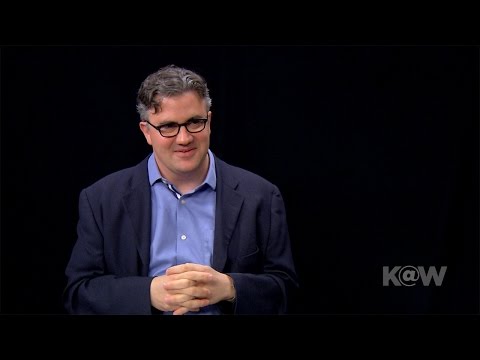
Obama's Top Economist Tackles Climate Change, Wage Stagnation
Ask about Knowledge at Wharton
Episode Description
The benefits of the Obama Administration's climate change policies far outweigh the costs, says Jason Furman chairman of the President's Council of Economic Advisors. More: http://knlg.net/1yK6B5y 📂 Public Policy
Read the full transcriptHide the full transcript
- the chairman of the president's Council of economic advisors Jason Ferman joins us today to talk about climate change
- and the administration's policies for addressing it thank you for being here with us thanks for having me uh about a
- year ago a little more than a year ago June 2013 uh President Obama announced his
- plans for addressing climate change over the second half of his administration um what's been happening
- in the ensuing 15 months and um is he is the administration on track with what they hope to accomplish um we've been
- working really hard since the president first announced that climate action plan
- and that plan has three parts which involve almost all the agencies in the federal government the first is to
- reduce the amount of carbon we emit the second is to be able to better deal with
- the changes that climate change will bring because we can slow it but we can't stop it and third is to better
- enlist the World in that effort and if you look at just the last week um you see things in a lot of those different
- areas last week we had a number of companies at the White House talking about how they could phase out their use
- of hydrocarbons increase their use of solar and this week the discussion at the United Nations will help advance that
- third prong of the climate action plan engaging with the rest of the world recently 12 States mostly coal producing
- states have sued the EPA uh claiming that the rules which I believe the administration would like to uh impose
- on uh air emissions greenhouse gas emissions uh would affect the coal fired plants in these states uh drastically
- causing some of them to close there's been protests among uh by coal miners uh for example um and
- so these are these are charges which U sort of the mirror image of that are the states that are feeling that this the
- either pollution or Andor greenhouse gases are sort of wafting over state lines into their territory and are
- trying to put a a stop to that so where where does this all stand I mean this is really
- about jobs and climate change and uh tradeoffs and that kind of thing I'm an economist not a lawyer so let me give
- you an economic perspective although I should say that the lawyers I talk to think this is clearly in the statute the
- Supreme Court um basically has said that in the past but um it's very much sound
- economic policy and it's consistent with what we always try to do in environmental regulation which is look
- at the costs and look at the benefits electricity is responsible for 32% of our greenhouse gas emissions that's
- larger than any other source of greenhouse gas emissions most of those emissions are coming from coal fired
- power plants when we look at that we think there's a number of things you can do to improve you could have more
- efficient Coal fire power plants you could shift to a transition fuel like natural gas you could instead build um
- capacity in Renewables or you could use um less electricity and the combination of those four tools means that we could
- bring our emissions down and we could bring them down in a very coste effective way the benefits of bringing
- them down are many multip of the cost both direct health benefits like reductions in asthma and premature death
- and then longer term benefits from mitigating some of the potentially worst impacts of climate change okay um so the
- standard argument oftentimes when you discuss environmental issues is that there has to be some kind of a trade-off
- between uh the the good effects that might come from from these kinds of things uh and the
- the negative economic effects so it's not to say there aren't economic effects you're saying that the that the the good
- that is produced outweighs it but how do you think about trading these things off
- because there would be some jobs lost or maybe there's jobs created somewhere else um but you know obviously U there
- are some winners and losers even if as you argue the winners might be outweighing the losers MH right so first
- of all I'd look at the costs and the benefits and here the benefits are in the range of 50 to 90 billion dollar per
- year and the costs are in the range of eight or9 billion dollar per year so it's many multiple benefit um to cost
- ratio I would then um you know note that there's a lot of ways in which this will
- help the economy and create jobs whether that's in natural gas or Renewables and
- you see jobs booming in those sectors of the economy I certainly think that preventing asthma premature death
- respiratory illness all of that actually can can help make people more productive
- and help the economy the IMF has a recent study that has um documented that and finally most importantly there's the
- economic costs of inaction those are really large and they're the more we delay the more they are we wait extra
- decade the costs go up about 40% we wait extra decade and don't do as much so the temperature goes up an extra
- degree Centigrade the costs go up by the equivalent of 100 50 billion for the United States so there's a lot of cost
- um you know to inaction when uh projections are made for the growth of alternative energies a
- lot of times you see kind of simple straightforward projections um solar energy will likely increase by a certain
- amount you sort of see these straight line projections and it it strikes me a lot of times that that that doesn't take
- into consideration unexpected breakthroughs although there's maybe likely to be some
- breakthroughs even if we don't know what they're going to be by definition and also that you can reach a Tipping Point
- so some are arguing that that's what's that's the point that we're at now so solar energy costs per dollars per watt
- of electricity generator have been dropping something like 5 to 7% per year for 30 years almost in a predictable way
- um to the point now that it's getting very close to parity in in terms of cost with fossil fuels uh what's your view on
- on this is are we likely to see a sudden and dramatic increase uh in in reductions in cost that would cause
- people to want to use these alternate sources more uh and what is your growth projection for uh alternative energy use
- over the next couple of decades right so in the last few years we've seen wind um
- power produced by wind grow three-fold and solar grow um tenfold and I expect they're going to continue to grow
- rapidly um I'm not the best person to predict just how rapidly but what I can tell you
- is if we have the right public policies in place that would help and those public policies are appropriate because
- you have an externality here which is other forms of um Power produce carbon which creates a worldwide harm um
- Renewables don't and in the face of that externality policies like the production
- tax credit we have in the tax code the investment tax credit that the those two benefit wind and solar and the clean um
- Power plan for existing power plants lot of states are going to figure out how they want to adopt that rule and
- implement it and I think many of them will create incentives for Renewables so I think all of this will help provide an
- impetus to um accelerate the work on Renewables okay I would be remiss if I had the chairman of the president's
- Council of economic advisors here and didn't ask him what you see coming ahead for the economy so in terms of GDP
- growth over the next two three four quarters what what do you think is going to happen uh we've seen growth uh speed
- up in the second quarter the indications are good for the third quarter I'd never
- want to venture a quarter by quarter forecast but one of the things I think we have going for us and it's one that I
- hope we don't interrupt um and mess up is we've had a somewhat more predictable fiscal environment with less of the type
- of uncertainty that hurt the economy in the past and a more neutral fiscal policy without the types of large fiscal
- contractions that were helping to go against our growth before I think if we can continue that then there's every
- reason to believe the private sector can continue to make um you know its contributions to Growing our economy and
- bringing the unemployment rate down and on a percentage basis for GDP what kind of I don't have a particular forecast
- for you but we're still um in the phase of growth where we get extra growth by bringing our
- unemployment rate down putting more people to work and adding to our growth rate um after we're fully
- recovered then growth will only come from expanding the economy's potential which depends more on the types of
- Technologies we have at our disposal the the quality of the capital Investments we're making but still right now um
- we're we're you know in the final stages of the cyclical recovery and that will be boosting growth in the term there's
- been an interesting release of studies recently from the oecd organization of Economic Development World Bank the ILO
- International labor organization they're all looking at this question of wage stagnation which has been a problem in
- the US uh but also around the world so in a nutshell the idea is that a lot of companies or economies are having
- relatively decent productivity gains but those gains are not flowing much down to
- workers whose wages haven't increased much if at all uh for a very long time and that uh has not only an effect on
- the workers but it also has the effect of dragging down uh the potential of the economy if if uh people don't have
- enough money to spend so what's what's your view of that particularly in in the US what are some of the causes what
- could some of the solutions be for that well I'd love to spend an hour with you on that topic I think if you look at
- Family incomes um there have been three important things that have happened first um productivity growth matters a
- lot and it isn't as fast as it was in the 50s and 60s it's a lot faster than the 70s and 80s but it still hasn't uh
- you know it still could be faster the second is the big increase in inequality that we've seen since the late
- 1970s and the fact that a lot of the gains in the economy are going either to higher earners or to um the business
- side of The Ledger and the labor share of income has been falling since about 2000 and then the final issue is one
- that I don't think is fully appreciated but even against those two forces family
- incomes continued to rise in the 70s 80s and 90s and that's because there was pressure on wages but a lot more
- households had two earners rather than one as women um came into the workforce and droves now that that which was
- helping to compensate and offset some of these other ch es has stopped and women's labor force participation has
- basically flattened out and started to fall that means that we're feeling the productivity growth and the inequality
- you know even more than the ways in which it was masked in the 70s 80s and 90s um which is creating I think a very
- serious challenge for the typical fam's income and one that I think needs to be the central focus of Economic Policy um
- not one that has a onep part agenda or even a three-part agenda it's more like uh as many parts of an agenda as you can
- you can throw at the issue because it's a big one what what are just some of the
- potential tools that could be used uh to address this problem in your view I think we need to expand our growth rate
- we can do that with immigration reform business tax reform investing in infrastructure improving education
- expanding trade then I think we need to make sure that more of the benefits of those growth are shared across the board
- um the minimum wage is one particularly powerful tool we have to do that another
- one is expanding the earned income tax credit for workers um without children or non uh custodial parents and um you
- know but I think we just need to keep working on you know every aspect and you know I'm not one the person who says um
- let's just focus on distribution let's focus on growth I think we need to focus on both I think a lot of the instruments
- we have um working on both of them uh simultaneously thanks very much for joining us thanks for having
- me and
Brief Summary
Jason Furman discusses climate change policies, economic impacts, and the growth of renewable energy under the Obama administration.
Key points
- Climate Change Action Plan. The administration's plan focuses on reducing carbon emissions, adapting to climate change, and global cooperation.
- Economic Impact of Climate Policies. The discussion highlights the economic benefits of climate action versus the costs of inaction.
- Wage Stagnation Issues. Exploration of wage stagnation and its impact on the economy and families.
Episode highlights
- Climate Change Action PlanThe administration's plan focuses on reducing carbon emissions, adapting to climate change, and global cooperation.“We've been working really hard since the president first announced that climate action plan.”0:35Oct 9, 2014
- Economic Impact of Climate PoliciesThe discussion highlights the economic benefits of climate action versus the costs of inaction.“The benefits are in the range of 50 to 90 billion dollars per year.”4:28Oct 9, 2014
- Wage Stagnation IssuesExploration of wage stagnation and its impact on the economy and families.“A lot of companies are having decent productivity gains, but those gains aren't flowing down to workers.”9:50Oct 9, 2014
Tension
40/ 100Low tension