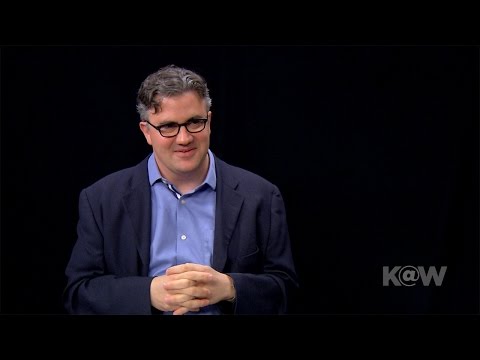
Penn Wharton Budget Model's Kent Smetters on Social Security Tax Cuts
Ask about Knowledge at Wharton
Episode Description
Penn Wharton Budget Model Faculty Director and Wharton School Professor Kent Smetters joins Dan Loney to talk about Social Security. Penn Wharton Budget Model research estimates that eliminating taxes on Social Security benefits would reduce federal tax revenue by $1.5 trillion over 10 years and accelerate the Social Security trust fund depletion from 2034 to 2032. The policy would primarily benefit current retirees and higher-income individuals while leading to lower wages, reduced capital accumulation, and a 2% decrease in GDP over 30 years. Younger generations, particularly middle- and lower-income workers, would experience overall financial losses due to increased debt and economic slowdowns.
ABOUT THE PODCAST The Wharton Business Daily podcast features interviews with top business leaders, innovators, and renowned Wharton faculty about the latest news, fascinating trends, and issues impacting both consumers and the business world. Episodes are recorded at the Wharton School.
#socialsecurity #taxes #taxpolicy #fed #monetarypolicy ----- The Wharton School of the University of Pennsylvania is committed to sharing its intellectual capital through Knowledge at Wharton, the school’s online business analysis journal.
Launched in 1999, Knowledge at Wharton offers free access to:
- Articles, podcasts, and videos highlighting Wharton faculty research and analysis of current business trends - Interviews with book authors from Wharton School Press - In-depth series of curated content like Wharton Executive Education’s Nano Tools for Leaders - A searchable database of more than 10,000 articles covering all aspects of business - A weekly newsletter that delivers Knowledge at Wharton insights directly to your inbox
Visit the Knowledge at Wharton homepage: https://whr.tn/3qUpSBE Subscribe to the Knowledge at Wharton YouTube channel: https://whr.tn/3DEAgAU
Read the full transcriptHide the full transcript
- one of the ideas that President Trump has talked about recently is the possibility of removing the paying of
- taxes on Social Security benefits but new research by the pen Warton budget model shows why the concept may have
- some issues pleasure to be joined here in Studio by Ken SMS who's faculty director of the pen Warton budget model
- great to see you again good to be here all right so let's dig into the research and some of the concerns that may be out
- there from going down a path of removing taxes right I mean it's certainly a popular idea whenever you tell people
- they can keep more of their money but ultimately someone has to pay for it and right now the idea is not really funded
- anyway there's no pay for for it so what we estimate is that it would uh basically reduce uh federal tax revenue
- by about 1.5 trillion over 10 years and it would increase federal debt therefore
- quite a bit over 30 years by uh about 7% and furthermore uh that tax revenue actually gets dep positive into the
- Social Security trust fund under current law and so we estimate the trust fund currently is is going to deplete in 2034
- and that would get uh pushed up now to 2032 right and and I guess when you're talking about the removal of those taxes
- the money that would be there if you're looking at at who get Social Security benefits the people who get more
- benefits to begin with would see a greater impact uh on their on their bottom line here that's right and the
- way it works is kind of convoluted in that is not all benefits get taxed it actually depends on how much benefits
- you get ass summed with your other nonsocial security income during retirement and only if that total income
- goes above a certain threshold um that that's a fraction of your Social Security benefits get taxed and so it is
- um the case that those income tax brackets are still the same the normal income tax brackets those get indexed
- for inflation over time but the qualification of whether or not your benefits get taxed they don't get
- indexed for inflation that was part of the trickery behind all of this but nonetheless it raises tremendous amount
- of tax revenue and and so the rural beneficiaries of this given that lower and middle income class people are often
- not paying these taxes to begin with the real beneficiaries tend to be higher income there are a lot of areas which I
- found interesting to to kind of delve into one of which that you bring up is the potential impact around the
- incentives to save and also to work as well right um this is not just your normal debt where you know yes 1.5
- trillion over 10 10 years at one time that would be like huge number now you know uh people talk about two three four
- trillion dos over 10 years but it it's this type of debt not only reduces uh Capital formation but there's kind of an
- additional effect and that is if um I know I'm going to get larger benefits in retirement I don't have to save as much
- myself for a retirement and they I also don't necessarily have to work as long um and things like that so there's
- macroeconomic effects that go beyond just a normal debt story you talk about a moment ago in kind of a tenure window
- but you also look at this from a 30-year perspective as well and the impacts would play out over that period also
- that's right and so one of the problems with a lot of uh what we call Budget scoring in Washington DC is that it
- looks at the 10e window and there's all sorts of games that can be played with that when we talk about entitlement
- programs uh we usually want to look out further in time but on top of that um you know all fiscal policy should be
- looking Beyond 10 years but especially in the case of Social Security Medicare and programs like that we should be
- looking Beyond and what this will do is uh certainly uh produce more and more debt over time uh decrease people's
- incentive to save into work and so we're estimating within 30 years uh this this
- just this provision alone will reduce the size of the economy by about 2% uh that is GDP will fall by about 2%
- relative to where otherwise would have been in 30 years so as fiscal policies go it's it's a pretty big loss safe to
- say then when you're looking at that 30-year window that the impacts on people who may already be or close to
- being in that category of accepting Social Security benefits now would see a much different impact than somebody who
- would see those benefits say in 2054 that's right so when we think about who are kind of the winners uh uh today um
- there's definitely anybody who's close to retirement um or within retirement uh they're definitely going to be a winner
- here because uh they uh already saved their money they did most of their labor Supply um and all of a sudden they just
- get this tax break I mean and there's no real incentive effects for them in terms
- of working more saving harder or things like that in fact the incentives are again just the slightly the opposite but
- for the most part not too much incentive effects for them it's really the future
- generations and so what we calculate even though there's a lot of winners today anybody who is Young today um it
- doesn't matter if they're high income Med medium income or even low income low-income households would even be
- worse off under this and the reason why is that a lot of those low-income households would not have paid social
- security benefit taxes to begin with uh because their income is going to be too low but they're going they're going to
- suffer from the macroeconomic consequences in terms of lower wages simply because you're going to have less
- Capital that's built up in the economy a smaller economy and lower w wages and so
- it's that lower wage effect that's is is really going to be dominating uh for them so this is this is really kind of a
- trickle down effect uh to the entire income distribution you also mentioned in the research that there would also be
- obviously a negative impact around GDP as well yeah so we estimate that uh GDP uh the size of the economy essentially
- will be about 2% lower than what otherwise would have been 30 years uh average wages will be about 1.8% lower
- Capital key ation over 4% lower um and so I yes some of the this is driven by the higher debt uh about 7% higher in 30
- years but a lot of this is not just the debt but it's the fact that households now have less incentive to save for
- retirement uh and they work as long uh during their during their pre-retirement years and that would kind of lead to I
- would think kind of an uneven distribution of the benefits because of how much you're paying into it and how
- much people in the next 30 years would be paying into it as well that's right so certainly for younger people uh today
- it is true that the um some uh let's think about middle income class person who's just kind of entering the
- workforce uh uh today they're going to we estimate that they're going to lose about $10,000 in terms of uh uh total
- kind of value um over their their lifetime someone who's born you know 20 years from now they're going to lose
- even more more around $22,000 that's kind of for a middle income class person a lower income class
- person or lower uh the lowest income class they're still going to lose between 10 to
- $1,000 in the future it is true some higher income uh class people you think would benefit because they have lower
- benefit taxes but they're going to lose um potentially yes they don't they actually lose a little less than the
- middle uh uh income class because they benefit some from this tax reduction um but they also still hurt uh get hurt
- overall if they're younger is just from the uh the lower wages and so that we estimate they're going to lose about
- $155,000 the importance of this also is partly because of the discussion we've been having in recent years about social
- security about the trust fund and trying to make sure that you have this as a component moving forward maybe this is
- part of the reason why the Trump Administration is is talking about this but still it becomes an ever important
- conversation that we're going to continue to have in the years ahead yeah and but the way that Trump
- Administration is talking about this if we're going to not tax Social Security benefits is it's going in the opposite
- direction of trying to create solvency in Social Security it's actually taking money away from uh the social security
- system and so it's going to hasten the trust fund depletion date by about two years so in 2032 we're only talking
- about seven eight years from now um we were talking about uh uh the trust fund depletes now that point it's not true
- that benefits just go to zero but benefits will drop by about a quarter so uh you're going to get paid about 75
- cents on the dollar that you were owed and the downstream impact then for retirees they have to probably in many
- cases live much different Lifestyles than maybe they thought they would have because of that cut that's right and so
- it's not necessarily they can make up all that saving today and um maybe they can delay their retirement a little bit
- but that's going to be you know another life style uh a change that they maybe were not expecting and so uh they're
- going to have to definitely make some changes now people say well you know Congress will figure this out well we're
- already on this explosive debt path without this change Congress hasn't figured that out the White House hasn't
- figured that out and so um you know this is moves us even one more step in in the
- opposite direction in terms of uh Shing up the nation's uh solvency K great to see you again thanks very much great to
- be here thanks for having me thank you Kent SMS who is faculty director of the pen Warton budget model
Brief Summary
Ken Smiley discusses the economic impacts of Trump's tax removal proposal on Social Security benefits and its long-term consequences.
Key points
- Trump's Tax Proposal on Social Security. President Trump's idea to remove taxes on Social Security benefits could lead to significant federal debt increases.
- Impact on Future Generations. Younger generations may face severe economic consequences from proposed tax changes.
- Trust Fund Depletion Date. Changes could hasten the depletion of the Social Security trust fund by two years.
Episode highlights
- Trump's Tax Proposal on Social SecurityPresident Trump's idea to remove taxes on Social Security benefits could lead to significant federal debt increases.“It would reduce federal tax revenue by about 1.5 trillion over 10 years.”0:52Mar 15, 2025
- Impact on Future GenerationsYounger generations may face severe economic consequences from proposed tax changes.“Young people today will lose about $155,000 due to lower wages.”8:06Mar 15, 2025
- Trust Fund Depletion DateChanges could hasten the depletion of the Social Security trust fund by two years.“The trust fund depletion date could move up to 2032.”8:50Mar 15, 2025