How to Integrate Work, Home, Community and Self
Ask about Knowledge at Wharton
Episode Description
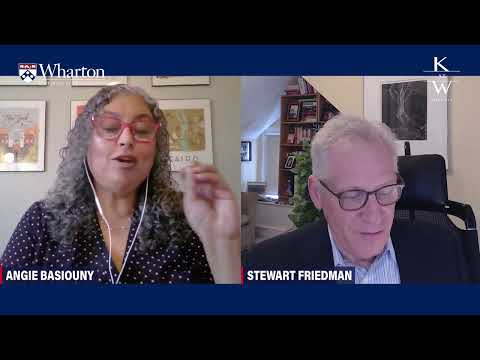
While people in the business community hear a lot about the importance of work/life balance, it's often unclear exactly what that phrase means or how one achieves it. Stewart Friedman, founding director of Wharton's Leadership Program and the Work/Life Integration Project, thinks he has an answer. In his new book, titled Total Leadership: Be a Better Leader, Have a Richer Life, Friedman describes the four domains of people's lives -- work, home, community and self -- and what individuals can do to integrate these domains and improve their leadership skills at any stage in their careers. 📂 Leadership
Read the full transcriptHide the full transcript
- [Music] this podcast is brought to you by knowledge at Warton please visit knowledge. won. up.edu for more
- information additional support for this podcast comes from Wharton Executive Education for more information on
- Wharton's new leadership programs including creating and leading high- performing teams and high potential
- leaders accelerating your impact please visit executive education. won. up.edu while people in the business Community
- hear a lot about the importance of work life balance it's often unclear exactly what that means or how one achieves it
- steuart fredman founding director of Wharton's leadership program and the work life integration project thinks he
- has an answer in his new book titled total leadership be a better leader have a richer life fredman describes the four
- domains of people lives work home community and self and what individuals can do to integrate these domains and
- improve their leadership skills at any stage in their careers we asked Stu to tell us more about the thinking that
- went into this book to start out can you give us a brief description of the theme
- of total leadership the theme of the book yes well the basic idea is that uh you can integrate the different parts of
- your life in ways that you probably didn't think about before you went through the steps that I kind of take
- you through in this book which is my course my Wharton course brought to life in the form of a book uh so the the big
- idea is that it's possible to create value for the different parts for work for home for community and for your
- private self the domain of mind body and spirit in ways that you probably didn't
- think about before um and it doesn't have to be a tradeoff so much as you think most people operate in
- a world of uh thinking about sacrifice as a necessity uh that you've got to give up something in one part of your
- life in order to achieve success in another part well now that's probably always going to be true to some extent
- what I've discovered in developing this course and refining it over time and doing research on the impact of it is
- that uh those those trade-offs are uh are not as necessary as we often think and and what it takes to get past that
- sort of trade-off balance mentality is leadership and so the book kind of takes you through the process of developing
- the leadership capacity you need to integrate the different parts of your life to perform better in all of them do
- you have a sense of of how many people aren't satisfied with their lives the way they're on now I mean is there a
- need for this huge you know new look at how to integrate these four aspects of your life well I you know I think the
- the idea uh the aspiration to to live a full and meaningful life and to be successful in in life has has been
- around since the dawn of time um what's interesting uh in what I've observed over the last two decades or so since
- I've been going after this issue in my in my work and my teaching my research my practice is that um certain things
- have changed that make this I think a more pressing issue today than than it was say 20 years ago like what well the
- digital Revolution is is certainly one uh the the uh the 247 365 opportunity to be engaged in work rated activity has
- made it um uh has made life a lot more stressful for many people and and the and the way
- you create and maintain useful meaningful boundaries between the different parts of your life the
- different roles that you play has become a really pressing issue uh because most
- of us grew up without the technologies that now are ubiquitous and so the the the the psychological and social skills
- required to use these tools uh are ones that we just never learned as kids so we were having to
- develop the these skills in order to keep up with the the technological uh advances that that have
- made that have promised Liberation but for too many people have resulted in slavery yeah so how you break out of
- that is is a part of what we have to learn what about the fact that companies are so Global these days and so much
- time is taken up distant travel which can be not just time consuming but exhausting well uh one of the ways in
- which people experiment and and we'll probably get into this later in the conversation uh in in terms of what
- people do to better integrate the different parts of their lives to perform better in all of them is uh is
- is to reduce travel and and use new technology to better able manage you know the demands of their time and
- location uh so uh while for many people living in a global uh economic Marketplace causes greater strain
- because of the assumption that you've got got to be in many different places on Earth to get work done uh the good
- news about the Advent of the digital Revolution is that well maybe you don't have to actually be there to get done
- most of what you need to get done uh so I think it's both it cuts both ways and I think you know part of
- the uh the opportunity here and the learning that's that's required is that we um use these tools the communication
- tools that are available to us now more intelligently um and that requires some experimentation and and learning how to
- use use them in a way that works for you and for the important people in your life including those people at work um
- and family there there have been a lot of Articles and and speeches and and probably even books on work life balance
- including the need to be involved not just in work and in your family life but in the community and in you know
- personal projects that give you a lot of satisfaction action so how is this book
- different from everything that's out there well there's a lot of talk about work life balance for some of the
- reasons we just described uh people are feeling stress they're they're not able to devote the time and attention that
- they need to the things that matter most to them uh there's a couple of ways in which I think this approach is is
- different um first it starts with the notion that you can find ways of creating value improving performance in
- all four domains what I call a four-way win work home community and self by making
- intelligent choices about how you um use your time and attention uh that don't necessarily
- require uh a tradeoff so most of the work life balance approaches um the conversation that that is current is um
- it comes from the point of view of uh the employee making uh demands on their employer for more
- freedom more uh available time to to do things outside of work and that's the wrong
- approach uh what leaders do when they try to create change when they aim to make sustainable change change that
- lasts uh they enlist the people around them in whatever it is that they're trying to get done that's new by having
- those people will see the benefits for them so in the total leadership approach uh what you do is you find out first you
- you spend some time on what I call being real what's most important to you you write about that you think about your
- core values your vision of the kind of leader you want to become and the world you want to create and the Legacy you
- want to leave talk about that with others to get clearer about what really matters to you then the second piece is
- what I call being whole and there you identify the performance expectations of the most important people in your life
- at work at home and in the community so you list who are the four or five most important people or groups what do they
- expect of you what do you expect of them and then you talk to those people you prepare for and engage in what I call
- stakeholder dialogues yes imagine having these conversations over a concentrated
- period of time with the most important people it's a that cause this is the the Peak anxiety point in the in this
- process because everyone is do I really have to talk to these people about this stuff and in nine out of 10 occasions
- what happens is that people come through that process with really new insights about how the different pieces fit
- together and what other people actually expect of them because most business professionals most of our
- listeners probably have the following problem what they believe others expect of them is actually greater than what
- those people really expect of them and you discover that Gap when you have a good conversation and well what's the
- implication of that of clo of of getting a a more clear and realistic picture of what other
- people expect of you and if it's true and and believe me it is true that people expect less of you than you think
- well you can then reallocate your time and attention more intelligently and that's what people do in the experiments
- which is the third phase be Innovative where people take on small steps intended to produce a four-way win now
- to finally answer your question about what's different here in in the the leadership
- piece when you engage in these stakeholder dialogues you find out a lot more about what other people are
- interested and what their real interests are in terms of what they need from you
- and what you need from them and it's on the the basis of knowing more about what's really important to you what's
- really important to them you can then design smart experiments that really do satisfy their
- interests and that makes it much more likely that when you create uh an experiment to produce value for
- them and for you that it actually does and it's entirely customized to you so the last point I'll make about the work
- life balance movement and its failure is the a problem of one size fits allism let's call it which is uh a not uncommon
- problem in many HR areas where for the sake of um equality there's a standard policy that
- is implemented in a way that is universally applicable when everyone's life is different and everyone needs
- different things in terms of how to integrate the different pieces so it it's got to be customized and so this
- approach is built on your assessment of what matters who the most important people are in your life and experiments
- that fit your situation so this this process clearly can't be done in a vacuum then there's a lot of interaction
- with others getting feedback giving feedback feedback Etc correct sure yes now as a business what's in this for for
- the business community in terms of you know increased productivity or increase profitability well it's it's all about
- improved performance in all domains and so we've measured uh and and done research on hundreds of people going
- through this process to look at what's the impact in terms of people's individuals performance at work as well
- as at home and in the community as well as for themselves in terms of their own Spiritual Development their emotional
- health their physical health and what we find is that um satisfaction in all four
- domains improves particularly in the self- domain and I can explain more about why that is
- but at the same time performance also goes up not as much as satisfaction goes up but performance also goes up in all
- four areas now this comes as a result of people doing these experiments and devoting actually a little bit less time
- in terms of hours per week to their work so let me repeat that people are spending less time working but they're
- performing better and they're more satisfied across the board now why is that again it's because they're they're
- using their time and attention more intelligently they're doing more the things that matter to them and to the
- people around them so the results are um positive from a business point of view you get better energy better focus uh
- and greater productivity we have some other numbers to report Financial outcomes cost
- savings um and productivity improvements as well how important is it or is it important to have U mentors or Heroes in
- your life in this process do you have people do you do you recommend or do you suggest that people can perform better
- if they actually identify people they admire and would like to be like or is that not part of this process well it is
- uh one of the first exercises that I ask people to do in the B real section the opening you know what's important
- there's a lot of different ways of of uh getting at that issue of what what do you really care about and one of the
- most effective ways is to write about somebody that you admire uh and and then say what it is that you admire about
- them uh many people write about family members but some will choose historical figures or just friends uh it's a useful
- foil for just contemplating you know again your own values um but you also identify the issue of
- mentorship um on my way over here I was reading an email on my BlackBerry from somebody who had come gone to a workshop
- that I did at the uh the US Olympic Committee at Olympic University back in the fall and she wrote to me and said
- you know as a result of doing your exercise I identified mentors in each different domain and I'd never actually
- done that before and I just wanted to tell you this is now like five or six months later that that changed my life
- to think about and to and to cultivate important relationships in each domain was really important to this to this
- person um and it is for many and becomes an important point of focus in their work in in this program
- what are some of the tools in the book that you offer to sort of to to apply these leadership principles and
- lessons well uh the some of the exercises that I've described here are part of the sort of toolkit I think the
- the most critical that people um report to me are as the sort of longest lasting
- uh skills that they uh both learn and continue to apply over time and I and I do stay in touch with alumni and many of
- them come back to class to serve as guest speakers or as alumni coaches for participants as they're going through
- the program I think the biggest one is they that people learn how to innovate in ways that make sense for
- their whole lives so this whole process really is one of being a smart experimentor a an intelligent innovator
- and so the the skill that seems to last most of all uh like some of these experiments fail you you design an
- experiment let's say it's to exercise four days a week and it turns out that you just can't get it done for whatever
- reason um you you collect data about what worked and what didn't and what the impact was uh of what you did um but
- typically when I have people do experiments there are three uh that I ask I ask students to do or program
- participants and usually one works really really well one is pretty good and one kind of blows up and all of them
- carry lessons in them you know why why was this a better experiment than the other one what people tell me uh months
- and years later is that they became better at implementing change about driving change and that's that's I think
- the key skill uh because they're designing experiments that are again well conceived and well crafted and
- they're also encouraged to again align their interest with the people around them them and and so they are they're
- more effective in leading change which is of course the the most important thing that that leaders do is is to
- create change what what's the main reason that people give for not wanting to undertake this process because it is
- as you've described that it's time consuming it's a little risky uh you you have to involve other people who may or
- may not be as interested in doing this as you are right so what what's the push back you get from people who say it's
- not for me well it isn't for everyone um and and there are shorter versions of it
- so I I'll be doing a talk at a at a company tomorrow where uh it'll be 300 people in an hour and a half and uh it's
- a very different process than a four-month Enterprise of you know meeting regularly and doing all this
- work outside of the the sessions I think the big one is uh the big push back is that
- uh some people just don't want to look inside yeah you know and and and and spend the time thinking
- about their what really matters to them and how they're actually living because it's either they're just not ready
- because they're not mature enough they haven't thought about it enough although I find that
- undergrads many really do powerful work in this uh they're ripe for the questions um but some find it either too
- uncomfortable to explore the gap between what matters and and how they're actually right yeah so what's the main
- takeaway that you want people to get from your book I think the the main idea uh and
- the reason I'm I'm so enthusiastic about uh what I've observed as a result of people undertaking this um Enterprise
- this this practice if you will is uh is a greater sense of uh control and freedom in living in ways that are uh
- consistent with what you're passionate about what you really care about and and I find that when people do that when
- they take even a small step that's under their control that's that's intentional
- that's in a direction that they choose that they uh that they feel better about their lives and about the people that
- they're affecting with their with their actions on on a daily basis and that's just very gratifying to see and and I
- think the the reason that I'm uh excited about is that it's possible for just about any body to do that if you're
- willing to make the uh the small investment that's required great thanks to it's been very interesting well thank
- you Robbie sure I've enjoyed it thank you for more information please visit knowledge. won. up.edu
- [Music]
Brief Summary
Steuart Friedman discusses work-life integration and leadership from his book "Total Leadership," emphasizing customized approaches for personal and professional satisfaction.
Key points
- Total Leadership: A New Approach. Steuart Fredman introduces his book, Total Leadership, focusing on integrating work, home, community, and self.
- Breaking the Trade-Off Mentality. Fredman challenges the notion that success in one area requires sacrifice in another.
- The Impact of Digital Revolution. Fredman discusses how technology has changed work-life integration, creating new challenges.
- The Four-Way Win. Fredman explains how to create value across four domains: work, home, community, and self.
- Customized Leadership Approaches. Fredman highlights the importance of tailoring leadership strategies to individual needs.
Episode highlights
- Total Leadership: A New ApproachSteuart Fredman introduces his book, Total Leadership, focusing on integrating work, home, community, and self.“The basic idea is that you can integrate the different parts of your life.”1:21May 28, 2008
- Breaking the Trade-Off MentalityFredman challenges the notion that success in one area requires sacrifice in another.“Those trade-offs are not as necessary as we often think.”2:34May 28, 2008
- The Impact of Digital RevolutionFredman discusses how technology has changed work-life integration, creating new challenges.“The digital Revolution has made life a lot more stressful for many people.”3:42May 28, 2008
- The Four-Way WinFredman explains how to create value across four domains: work, home, community, and self.“You can find ways of creating value improving performance in all four domains.”7:01May 28, 2008
- Customized Leadership ApproachesFredman highlights the importance of tailoring leadership strategies to individual needs.“This approach is built on your assessment of what matters.”11:28May 28, 2008