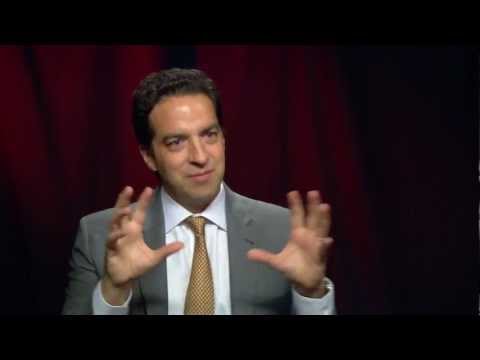
Leadership: Arthur O. Sulzberger, Jr., Chairman, The New York Times Company
Ask about Knowledge at Wharton
Read the full transcriptHide the full transcript
- [Music] [Music] uh Arthur welcome to the Wharton School uh going to begin to ask you about uh
- your time with the New York Times as publisher of the new York Times and chairman of the New York Times companies
- as you look back on your year as publisher and owner and chairman what decision what action what
- purchase what divesture looking back on your time at the top uh of what are you most proud of all the decisions the
- major decisions you have reached well thank you Mike first of all it's a pleasure to be here so thank you for
- this um and let me start by saying that the decision I'm most proud of I haven't
- made yet so that's my hope good very good um but I think as I look back at the time that I've had uh so far in the
- leadership of the New York Times and the New York Times company what I am most proud of is
- our uh the speed with which we began to address the digital Revolution and that we have worked very hard to build our
- digital muscles journalistically and from a business sense and why times uh all of our various apps our iPad app
- um and the continuing Evolution and that was something that we took on very early
- in in in in this Evolution um so it wasn't something we shied away from we have made mistakes
- we've had successes we continue to evolve as we must but I think what I'm most proud of is that my colleagues and
- I stood up to that right away and acknowledged it and embraced it Arthur quick follow up on that we're still in
- the middle of that Revolution we are hopefully in the middle but my guess is we're still at the beginning and I may
- be closer to the start than the end as you look ahead what do you anticipate that Revolution is going to look like
- for the New York Times let's make it five years out well I've I've learned to not do those kinds of projections uh
- because I've been um caught uh being wrong in the past um and that's right in fact one of the I think one of the
- greatest challenges that this has meant for the management structure and decisionmaking is not to say that's
- where we're heading because what we've discovered over and over is this is a very twisty Road and if you think you're
- going that direction and the road curves left you're going to be in trouble so it's flexibility and being comfortable
- with that the ambiguity of that so having now said all of that what uh I see most exciting is the chance for
- international growth digitally um we recently launched a website in Chinese it's our first um foreign language
- website it's one of a number that you'll be seeing over the next few years um and
- what we're discovering is for that people are engaging with us in very exciting ways and I'll give you just one
- example if I might if you look at our usage outside the US of the website the biggest countries outside
- the US are and this will shock you England Canada and Australia obvious right English if you look at our usage on the
- iPhone and this is before we move to a Chinese language site China was the largest use of the New York Times
- outside the US and if that doesn't tell you that our information the quality of our news the
- quality of what we offer is not incredibly valuable worldwide I don't know what can so
- Arthur this may actually take us back to the digital Revolution but when you think about your your leadership
- experience can you tell us a little bit about the toughest decision that you've ever made and sort of how you walked
- through it and then maybe anything you would have done differently with with hindsight well it doesn't take us there
- are two tough decisions I mean part of my job is news and part of my job is business so I sometimes have to look at
- it from both ways from a news perspective um it was our decision to to publish this the story saying that the
- Bush Administration was illegally wiretapping United States citizens I mean the Bush Administration was very
- vehement in in the fact that this was going to have a very hard effect on on the country and on the security of our
- nation um to the point that we met at their request with the president and his some of his staff at the White House and
- they made their pitch um at the end we concluded that it was in fact right to publish that story but that was not an
- easy decision um I think in fact it played out that it was the right decision um on
- an uh on the business side uh I think the hardest challenge I faced was when we discovered that one of our
- journalists had been um writing lies and making up stories and uh and really that
- goes to the core of what we are the core is the brand promise of the New York Times and whether you get it in print or
- whether you get it digitally or whether you get the Mind mail edition of The New
- York Times at the end of the day it's got to be about the quality of our content and the trustworthiness and so
- when the Jason Blair event happened in 2002 um and that really threw so much into question and that was probably the
- hardest leadership challenge I faced th those are great examples and and I guess
- just to dive into either one of them a little bit more they're both big values questions how did you think through sort
- of what to do in in either one of those situations well um obviously for the for
- the one involving the story I had uh some very uh some colleagues who were very plugged in
- to through the story who had their own sources within the security administration as did did I who um and
- having heard out the president and his team and just the followup we did over the next
- few days you know it's just about at the end of the day you know we just were not
- convinced and we'd held the story for a year by the way before we made the decision to publish it so it was not as
- though we were just got story and said go we held it for a year and then learn more and learn more and learn more and
- decided no they're not telling us the full story and that's when we finally made the decision to go so it was
- constant in investigative journalism over and over and over for Jason Blair that whole event I wish I'd move faster
- honestly that was my M that was our mistake um we there were some earlier warnings we could have listened to uh
- about what he was doing that we didn't hear quite as well as we should have um so I think it was in a way you know just
- being willing to move faster and more aggressively we're going to take you back even further in your early career
- you graduated from tus University you worked for another newspaper came into the New York Times you were a Frontline
- reporter assistant editor editor now you're the publisher as you look back on your experiences and maybe a mentor or
- two which experience maybe which Mentor really stands out in shaping the kind of
- person you are now and the kind of leadership that you exercise well let's start with the fact
- that my best Mentor was my father um my father um Like Me grew up in the family that has controlling interests of the
- New York Times company um his father had been publisher um and he knew a lot about the road that I was going to be
- traveling uh he was always gentle he was always kind uh he pushed me when I needed to be pushed but he did in a kind
- and loving way um so I think uh I I'm grateful for for him and all that he gave me
- um outside of that one um I would uh point to an organization not to a person Outward Bound Outward Bound has taught
- me more lessons about myself about how to think about who I am and about how to work with teams of people under
- conditions of pressure and stress in a fruitful way that allows you to really build a team set a goal and work on
- achieving that goal more than anything in my life and that has been perhaps the single best mentoring experience I've
- ever had along that line you've written about being with an Outward Bound group on What's called the Via Fara in the
- Italian elps there and you got stuck at nighttime so just to pick up on that as one experience help you that's a very
- funny it's been a while since I thought about that but yes you're right um well that was a perfect example we had a a
- group of of guests that we'd invited on a uh 4-day Outward Bound Trek in the the
- in in the Italian Alps of farata um the first day we were moving way too slow a lot of these were people new to these
- kinds of experiences being at altitude being clipped into a wire and knowing that if for any reason you slift and the
- wire came out you were going to fall to your death just small things like that um and when the dark fell and we started
- to run out of water and other things we uh broke ourselves into small teams and just said look now this is the time
- where we break down to groups of five and I led one of those teams because I've been involved many years um and we
- had other team leaders and we just took and we said our goal is to take care of ourselves um and one of the great
- lessons of of Outward Bound and I actually had to use it on this particular trip was when the slowest
- person is keeping you from going getting to where you need to go the worst thing
- you do is yell at them because that only slows that person down further what you
- really do you reach into their pack and you take something heavy out of their pack and you put it in yours and that's
- the fat way to get that person to move with the group that's great that's a really nice metaphor for leadership and
- um it it connects very nicely actually to to one of our other questions which is if if you look back on maybe what you
- thought leadership was about early in your career and your current view of of what leadership entails how has it
- changed over time well it's changed in um uh a number of ways uh I grew up in an environment in in my work environment
- uh where we had daily deadlines and you filed for that deadline and um when that
- was done you went home and you were done for the day um and it was there was a nice
- systematic way to it and the paper would land on the door and you'd be off and now I'm in a world where you file you
- must file the story when the story is ready if it's ready at 2:47 p.m. you got to get it up on the web we hold stories
- back now and we put them up at different times in the day because we want someone
- waking up in Paris to have a different experience than the person who woke up in New York
- to have some new news and the same around the world and we own the international Hill Tribune and so we've
- got a worldwide view um which means it there's that you've lost some of the certainty of life and you've got to
- embrace that uncertainty and with that comes experimenting and recognizing that if
- you're don't experiment if you're you're just going to fall further and further behind an experiment means you're going
- to fail one of my colleagues famously said if if everything we do succeeds we're not trying hard enough and that's
- that's to get one culture in a more stable environment to embrace that culture and the environment we now live
- in that's been one of the the great challenges and pleasures of of my job as a quick followup on that how do you sort
- of differentiate between you know sort of productive failures that allow you to learn and failures you can't tolerate
- okay um failures you can't tolerate really have to go back to the core promise of the New York Times quality
- journalism we cannot tolerate failures of qu of quality journalism which doesn't mean we don't make mistakes of
- course we're human Enterprise that's why we have a correction box that's why we have a public editor that's why we have
- a standards that are we're human but there are certain levels of mistakes you cannot allow or else it's going to
- deflate the brand in in a way that's unacceptable on the more on the business side uh early early on a number of years
- ago we made a first attempt to charge on the web time select it was called it focused on our editorial content and in
- particular our oped page colist Tom Freeman and Marine D Etc um didn't work and after a year and a half we said done
- pull the plug on that and four years later when we were coming back and saying should we start charging for the
- New York Times on the web boy did the people who didn't think we should start charging throw that in our
- face don't you remember time select don't you remember time select now we finally made the decision after a lot of
- study to charge but and it has been far greater success than than anyone had predicted uh including our own uh
- internal numbers um but there's a you know you've got to keep trying but sometimes you're going to fail I've
- got a question on the flip side of thinking about leadership you run a multi-billion dollar
- Enterprise you have a worldwide brand you're an extremely rapidly changing industry you have a very strong board of
- directors you're publicly traded you have to work with those in the equity Market got a couple thousand people
- coming to work for you every day taking that all into account and looking back on how you thought about leadership some
- years back what in your own experience turns out to be not true about how to lead is there I think what turns out not
- to be most not true is just make the decision leaders make decisions blue red yes no I no I I I
- think in this environment leaders bring groups of people together and and there's got to be a collective Buy in
- now that doesn't mean everyone has to agree that's nonsense but there I I really do believe
- strongly in the power of debate and discussion um and teamwork and teamwork um and that's the the big lesson for me
- a quick U anchoring of that you've made tough decisions on running Wikileaks materials you've already referred to a
- couple other decisions very difficult just talk if you would about one of those decisions and who you put in the
- room to make that decision with you well I think the biggest one and um it is is
- the decision to move to a pay model on the web um there was Massive Internal debat on this one I mean there were
- people who absolutely were committed to the thought that if we did this we would
- be just destroying ourselves digitally we'd be C carving ourselves away from the digital ecosystem there were other
- people who said firmly that look we've got to create a model because the move is shifting from advertising to
- circulation we're seeing it impr print we've got to se in digital and it took us a long time to get to where we had to
- get to but without that discussion and without that debate we would not have come up with the structure we came up
- with the porous wall in other words 20 started as 20 free stories a month if you came in through
- search you came in if you came in because you shared a story with somebody you were able to to come in that model
- which I think really did protect us from being being thrown out of sort of the Google driven digital
- ecosystem uh or the Facebook driven um but still allowed us to begin to build a very powerful pay model that was that no
- we would not have come to that if we had not engaged in a real dialogue great and
- this this is also I think on a similar theme but we're interested in advice for for current and Future Leaders so you
- know if you're going to help people think about whether it's leading an effective debate and dialogue or whether
- it's other key skills you need to learn as Leaders what are the most important pieces of advice you would share listen
- uh is one of the big ones find find colleagues that you value embrace them um one of the things I tell uh people is
- um if you find if you're new to an area there's nothing like grabbing people and
- taking at the lunch you're going to establish a relationship with people outside the office that is going to pay
- off very much inside the office so build a build a group of people who who you value you trust you listen to which
- doesn't mean you don't have to occasionally say yeah we're going to do it this way you
- do but more often than not you'll be getting the kind of value the quality information you need to make the right
- call Arthur by way of closing is there a question we should have asked you about
- leadership that we didn't touch on anything else that comes to mind no I think we've covered this very well we've
- done it great I think so but thank you good I want to thank you for joining knowledge of Wharton today and it's good
- to have you in our news so Arthur thank thank you for coming just print the name
- right okay okay that's an old tradition that you're fond of we'll get it right thanks
- a lot you appreciate itks super [Music]
Brief Summary
Arthur Sulzberger Jr. discusses leadership lessons and pivotal decisions from his time as publisher of The New York Times.
Key points
- Digital Revolution Embraced. Arthur reflects on the New York Times' early adaptation to digital changes.
- Tough Decisions in Journalism. Arthur shares insights on the hardest decisions he faced as publisher.
- Lessons from Outward Bound. Arthur discusses how Outward Bound shaped his leadership style.
Episode highlights
- Digital Revolution EmbracedArthur reflects on the New York Times' early adaptation to digital changes.“What I'm most proud of is the speed with which we began to address the digital Revolution.”1:15Feb 20, 2013
- Tough Decisions in JournalismArthur shares insights on the hardest decisions he faced as publisher.“The hardest challenge I faced was when we discovered that one of our journalists had been writing lies.”5:32Feb 20, 2013
- Lessons from Outward BoundArthur discusses how Outward Bound shaped his leadership style.“When the slowest person is keeping you from going, the worst thing you can do is yell at them.”10:56Feb 20, 2013
Tension
45/ 100Some tension