Inside Time’s Best Inventions and Innovation Selection Process
Ask about Knowledge at Wharton
Episode Description
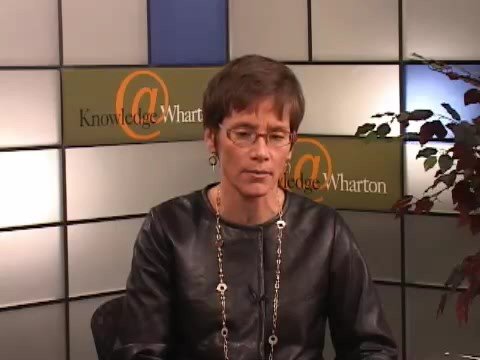
ABOUT THE EPISODE Emma Barker Bonomo, Editorial Director at Time, joins Barbara Kahn and Americus Reed to discuss how the magazine curates its annual Best Inventions list, highlighting the criteria, trends, and global significance behind the most impactful innovations of the year.
ABOUT THE PODCAST Marketing Matters is hosted by Wharton marketing professors Barbara Kahn and Americus Reed. Each week they discuss marketing and advertising trends, consumer behavior, data and analytics, the latest in retail marketing, brand-building, and much more with their expert guests. Episodes are recorded at the Wharton School.
#timemagazine #mediatrends #inventiontech #marketingpodcast #marketing2025 ----- The Wharton School of the University of Pennsylvania is committed to sharing its intellectual capital through Knowledge at Wharton, the school’s online business analysis journal.
Launched in 1999, Knowledge at Wharton offers free access to:
- Articles, podcasts, and videos highlighting Wharton faculty research and analysis of current business trends - Interviews with book authors from Wharton School Press - In-depth series of curated content like Wharton Executive Education’s Nano Tools for Leaders - A searchable database of more than 10,000 articles covering all aspects of business - A weekly newsletter that delivers Knowledge at Wharton insights directly to your inbox
Visit the Knowledge at Wharton homepage: https://whr.tn/3qUpSBE Subscribe to the Knowledge at Wharton YouTube channel: https://whr.tn/3DEAgAU
Read the full transcriptHide the full transcript
- Hello and welcome. You're listening to Marketing Matters on the Wharton podcast network, our weekly podcast where we
- analyze the latest in advertising, marketing, customer behavior, retailing, new product launches, branding. I'm
- Barbara Khan, the Patty and JH Baker Professor of Marketing, and I'm joined by my co-host, Americus Reed, the
- Whitney M. Young Jr. Professor of Marketing and the brand identity theorist. Hello, Americus.
- >> Hi, Barbara. So uh you know we are coming uh towards the end of uh 2025 and uh uh I was recalling one of my students
- in class asked me uh what is the definition of innovation and business innovation is defined according to the
- interwebs as the process of implementing new ideas, products, services or processes to create value, solve
- problems, increase efficiency and gain a competitive edge ultimately driving growth and boosting bottom line by
- meeting evolving customer needs. So, I was thinking about, you know, as we think about the big picture of 2025,
- there's probably a lot of innovation that happened out there that we need to talk about and to sort of celebrate in
- terms of some of the great things that have happened. And I was wondering if you had anything for me that we could
- jump in and sort of deal with that particular issue today. >> Yeah. And given it's the end of the year
- and a lot of media likes to make lists, we decided to go to the media and in particular we have with us today Emma
- Barker was the editorial director at Time and she oversees major projects that they do such as Times 100 most
- influential companies and Times to your point best inventions. and she's been recognized by lots of different
- companies including the Gerald Lobe Awards. And the reason I picked that one out in particular, although she has a
- long list, is because I think that's given by UCLA, and I used to be at UCLA, and I used to be on the comm on the
- committee that uh chose some of the award-winning journalists who wrote in business and marketing. So anyway, Emma,
- thank you so much for being here. >> Thanks for having me. So, um, Emma, is it true that you guys do all these end
- of the year lists at the, you know, to celebrate December and the beginning of January and you have a lot of lists or
- they're just a few lists or >> So, Time is kind of famous for lists because we've had the time 100 for a
- long time. Uh, person of the year is a very short list but has become a little a slightly extended list and that's been
- happening for almost a hundred years. Um, and so we're sort of known for our lists. We do them throughout the year,
- so it's not just an end year thing, but we do do most of them annually. Um, and yeah, every every fall we do best
- inventions each year. And this year is our biggest ever list. Uh, there's just constantly more and more uh, innovation
- happening in the world that we feel like we need to recognize. So let's save some drama before you tell
- us what they are and tell us a little bit about the process like how do you decide these?
- >> Yeah. So we do have an application process. Um companies can apply for their products and ideas and really
- that's just a way for us to be able to sort through the tons and tons of cold pitches we get. Um, and so we take
- applications, uh, and then we do our own research throughout the Time newsroom. The
- different desks are pitching things. You know, the health team pitches medical innovations, the tech team is pitching
- AI stuff. It's across the board. Um, and so we get a lot of pitches from reporters as well. And then myself and a
- small team of editors combs through them all. And really, as you know, we're looking for
- >> mainly news news newsworthiness. So, we're looking for products that really moved the needle this year. Um, it's a
- little different than some things like CES or things that are a little earlier stage. We're really looking for things
- that are like changing consumers lives today or this year. Um, and uh, yeah, so we're really impact is huge
- for us. global impact um is what we're looking for. And it's a really big mix of of B2B product ideas. You know, one
- year we had a new shape. I don't know if you remember this. It was a couple years
- ago, but mathematicians discovered a new shape that that had uh >> oh dear >> could be could be um uh repeated, you
- know, into infinity. Uh and that was on the list. Um, and then all the way down to really basic consumer products that
- are just smartly designed or or had a big moment this year. >> How important is design? How important
- is beauty or something like that? Or is it functionality that you prioritize? >> Yeah. Well, we do we separate into
- sectors and so everything has its its moment. Um, I think when it comes to beauty, um, we're really looking for,
- um, like standout innovation where with scientific backing. So, there's a lot of
- kind of wellnessy things that maybe aren't quite the right fit for time. Um, >> I meant beauty in terms of beautiful,
- like aesthetics. >> Oh, aesthetics. Yeah, design is huge. >> Yeah, the design category is is one of
- our most popular categories actually in terms of readership. Um, and what you know, we get stats on what people click
- on and what people look to buy. And um, >> interesting. >> And design is top of that. People are
- always really excited about that. And when we're looking at design, we're looking at, you know, things we'll put
- in the design category maybe wouldn't have stood out in a separate category, but are just fun to look at or really
- smartly designed. Um, that >> Oh, that's an interesting thing. Also, you have it set up so people can
- immediately buy it. Yeah, we have um we do have uh buy now links on products that are available for
- purchase. There's also a lot of things, you know, you're not going to buy a John
- Deere tractor on the internet. Um >> I don't know. I might do that. [laughter] >> Why not?
- >> I mean, the affiliate kickbacks on that would be incredible, but [laughter] but um but no, it's mostly the beauty
- stuff and the design stuff sells. Uh people are really clicking on that as a gift guide type thing.
- Interesting. [clears throat] Let me ask you this, Emma. So, you know, one of the
- things that we were talking about earlier is this notion of innovation acceleration
- >> as you you there's a big history here with time looking at this over multiple
- years if not hundreds of years, hundred years you said. And so are you noticing that the amount of what you define as
- global impact is actually something that is increasing as a function of the speed
- of adoption or the speed of traction that happens with respect to these these kinds of innovations that you're
- celebrating. Is that something is that a trend that you've been noticing in the last let's say 10 to 20 years?
- >> Yeah, definitely. Um so we've been doing best inventions specifically for 25 years. It started in 2000. Um but
- obviously time has been covering innovation for our entire 101year history. And um I think the biggest
- change we've noticed is yes in terms of speed of adoption but ability to have global impact even if you're a small
- company or a small product. Um mainly that's a social media thing and an internet thing. Um, you know, we have
- companies or products that are made by a single inventor, like a man in his garage, um, that have made the list
- because, um, you know, they really took off online or, um, or on social media and and just, uh, blew up. And so, um,
- it's a lot easier, I think, for smaller companies and smaller innovators to, uh,
- to make these kind of lists now. So, let me ask you, what's your favorite one? Not not the number one, but your
- personal favorite one on this list [clears throat] >> from this year. >> Yeah. >> Uh, okay. This is this is a going to
- reflect on me personally, but um [laughter] my my favorite one is called Heat It. It is a little device that you
- can plug into your phone. It heats up to a scientifically determined temperature
- that um neutralizes bug bites. Um and then you put the So you plug it into your phone, you put the other end on
- your bug bite and it stops the itch. Um >> which I think is just brilliant. And I
- am a permanent target of mosquitoes. So I >> Oh, me [laughter] too. >> Yeah. >> And then as a click link, I got to go
- click on that. Yeah, actually that one people ordered a lot of um and it's not very expensive. It's pretty pretty low
- priced. And there's another one that's really fun um that came from a Japanese company. This was in the design category
- actually. I think that it's a very cute little cat um sculpture that perches on the edge of a cup or a bowl and it blows
- on your soup or your hot beverage for you, [laughter] which I just think is adorable.
- >> That's Emma. I I did not know I needed that, but as the moment you said that, I
- have to have that now. [laughter] >> Well, I need the mosquito bite one. Absolutely. Without question.
- >> Yeah, that's pretty cool. >> So, yeah, that's exactly what I was looking for. Like kind of weird ones.
- And on the rest of them, do you order them or is it is there like a one, two, three, or is it just um
- >> Yeah, so we try out certain ones. Um, usually we we also have a really wide range of uh reporters that work with us,
- freelance reporters that work with us on this. Um, and so when we assign it, so sometimes they'll try it out, sometimes
- we'll call one into the office. We um photograph a good number of them in our studio as well. So we bring them in for
- that. Um, and then some just aren't able to move. We've done we've [clears throat] done things like a huge
- observatory in you know South America and that's the kind of thing that we're not going to be able to try out but
- we're going to interview an astron astronomer about uh how they use it. Um so it really varies but definitely the
- consumer stuff we're all we're always trying out. Um and we of course return everything.
- >> No, but what I mean is is there an order? Is there like is there like this is the top one the best new invention or
- >> No, it's not ranked. It's not a ranked list. >> It's definitely not ranked. Yes, I
- should know that. >> Although in its in its in its uh original state, this list was ranked. We
- did used to have invention of the year. >> Um and I believe the year it came out,
- 2007, the Apple iPhone was the invention of the year. And then we would have others on the list. It was a much
- smaller list. Um and uh yeah, so they used to they used to name that. I think it became more
- >> difficult and we wanted to just be able to you know draw attention to a wider
- range of products. >> Yeah. So if you look at your 25-y year hall of fame, there's the iPhone was
- that in 20 2007. Then you had uh YouTube in 2006. That's kind of an interesting one. And then you had the Tesla um the
- and then I see here the James Web Space Telescope. So, that was a great one. >> Yeah, that was in 2022. And the Roomba,
- you know, that's kind of >> that one I think just went out of business. >> Yeah, they're back in the news because
- they just filed for bankruptcy. >> Oh, okay. >> Sadly, [laughter] but they really
- spurred the entire robot vacuum space, you know, like that was that was not a thing. Um, and now pretty much every
- every home cleaning company makes a some sort of robotic vacuum. So they I think
- they had big impact despite despite not having a strong business model apparently.
- >> And then you had one that turns out to be quite political. The mRNA vaccine was
- one of your >> So that was in 2020 that was one of your hall of fame selections. So that's kind
- of interesting. And I don't know if you know but that was developed here at Penn. So we're quite proud of that.
- >> Yeah. We've there's a really strong history in best inventions of um the biggest medical innovations of the year
- um and featuring a lot of those. The first year in 2000 we had some um really interesting medical innovations
- including uh something that um stops tremors. It's the it was the first implant uh that they would implant to
- stop tremors in people with Parkinson's. And actually just this year we featured
- a new version of that same product that has now been improved upon for 25 years.
- Um so it's come come full circle. >> Interesting. And let me ask you this Emma because there is discussion of you
- know the return of manufacturing let's say in this country. So I'm I'm just curious are there are there examples on
- the list of uh innovations in that space in sort of the B2B space where you know
- different ways to or different products let's say that are more enterprisebased.
- What are some of the the standouts in that space? >> Yeah certainly. I mean, >> in terms of American manufacturing, we
- always have John Deere stuff on here, and they're a really big American manufacturer, and so I think they really
- speak to that story. They've been really pushing um the innovation in the agriculture space. Last year, they had a
- um fully electric and connected tractor, which was really interesting. Um and really, you know, pushing that that
- boundary. Cool. [laughter] >> Yeah, >> a connected tractor. I'm just I'm wondering what that means.
- >> Stats. You have to track your stats. I I can only you know it it does things like
- connects to the cloud so that you can monitor your >> your uh tractoring >> your tractoring your agricultural needs.
- [laughter] >> Yeah, >> that's interesting. That's interesting because it's sort of like that's really
- interesting, right? taking the the science and all of the all of the potential elements of the ecosystem that
- would allow you to optimize your farming and your agriculture and bringing that data into this product to be able to
- react in different ways that will be able to optimize your crops or or whatever. Is that kind of the idea?
- >> Yeah, absolutely. Yep. And they're one of very few companies I would say that
- is still doing most of their manu all of their manufacturing I believe in the in
- the US. Um which is really interesting. Um so they always come rise to the top. There's a lot of action in the sort of
- fulfillment center space where it's you know either robots robotics that can you
- know pack or or deliver items more more smoothly. Um we've featured some of these humanoid robots that Amazon is
- triing in their warehouses. So a lot of warehouse um technologies whether that's
- um yeah fulfillment delivery or just uh specific you know kind of sorting tools things like that that use AI and
- robotics. >> So if we look at some of the ones on this year's also it looks like on the
- cover you featured the figure AI's figure 03. What exactly is that? >> Yes, it is a humanoid robot. Um
- >> Oh, dear. >> It is a humanoid robot. And actually, it's the second year in a row we've had
- a a humanoid robot on the cover. Uh last year we had um a different robot that was doing more factory work. Um that was
- doing things like what you see in Amazon where it's, you know, sorting packages,
- doing that kind of stuff in a fulfillment center. Um there have been a few companies that have have branched
- into that and Figure is one of them. It's actually working in a BMW factory um right now. Um I forget if it's West
- Virginia or Virginia somewhere out east. Um and actually working on the floor, you know, 10 hours a day assembling
- cars. Um and that's sort of in a trial period. So that's sort of been done. But what made us really interested in Figure
- and the Figure 3 specifically is that Figure is one of the first companies that's targeting the home for humanoid
- robots. Um. Mhm. >> Yeah. [laughter] We all shudder. >> I'm excited. Actually, I'm not sure what
- [laughter] he's going to do, but I want him to do it. >> Yeah. I don't know. I I've seen this
- movie. >> Well, you know, see the CEO, um, Brett Edcock has he talks about this. He has
- several of the robots in his home. They're they're there with his young kids and they're doing laundry and
- washing dishes. >> Doing laundry, cleaning the floors. That's what I want. Oh, man. I know.
- Very interesting. So, we've we found that really interesting and it that poses a threat to a whole new area of
- job replacement, which is domestic work. >> Um, and you know, that that has pros and
- cons. It could take a huge burden off of parents and and >> you know, anyone with a home, I guess,
- but largely women who do home work at home. And then, uh, but then it could also, you know, take away jobs from
- people like housekeepers and nannies and things like that. So, um, just huge implications there and and they just
- introduced that new robot this fall. >> Jeez, that's so interesting. >> And just to sort of just to sort of make
- sure I understand this, Emma, >> help me understand that. So, humanoid just means that it's moving more and
- more to the the technology and the robot itself is moving more and more to uh essentially replicating humanlike
- movements, things like that. Is that what humanoid actually means? It's sort of like you're almost going to get to a
- point where you don't recognize the difference. >> I don't know if that's the goal. Um
- >> I I saw Bladeunner. I watched this movie. It's one of my favorite movies and the replicants. I mean, I tell you,
- you know, they had to come up with a test to figure out, you know, do they have an emotional response or not. And
- so, >> no, >> I'm getting nervous. Emma, >> I don't know if the total human replication is um is the goal, but
- essentially a humanoid is just it has a human form. It has arms. It's bipeedal. it has a head. Um, and uh, you know, I'm
- also kind of interested in in why companies go for that. I think it's probably especially in the home. Um, our
- homes are so set up for a human body. You know, the cabinets are up high where you reach the fridge opens this way. And
- so I think you kind of need that that >> way of movement in order to navigate a home.
- >> Interesting. Interesting. the but if you if you look at the figure three I mean
- its face is just a black >> oh dear [laughter] >> the black pad in the sink >> this is not instilling confidence
- >> it's just a black screen it's a black screen >> this is the screen >> and it is eerie um
- >> but uh yeah they're definitely not trying to make it actually look like a human yet so
- >> interesting that's interesting the reason I'm asking because I was recently Emma in a uh and you can tell me if this
- is on a list at but a driverless car called Whimo. >> And it was odd to me that the steering
- wheel in the seat in the front was still intact because there's no one sitting there, but yet the the steering wheel is
- turning. And we were sort of saying like, you know, you don't have to have that space there. There doesn't need to
- be a steering wheel. Uh and one of my colleagues was like, actually, you do because you want to create familiarity
- and you want to create a sense of more of a sense of safety, let's say. Yes. because it's something you're used to.
- And maybe that's the same idea here, which is a humanoid, you know, or a designed that looks like a humanoid is,
- you know, you're almost hardwired to kind of accept it more because of how it moves and because of you because maybe
- you have this connection with, you know, humanness. >> Yeah. But in a way, Mo, there's no
- person sitting there that >> Yeah. Yeah. Yeah. No, but but and that's the thing. It's sort of like that's the
- thing that freaks you out. But, you know, this interesting kind of idea of like, you know, maybe it's some comfort
- to see the the steering wheel turning and I don't know. >> I think so. >> Maybe it's a poltergeist thing. I don't
- know. But if you had knowing that if you had to jump into the front seat and steer, you could.
- >> Yeah. That's what that's the part of it. That's good. Yeah. >> Yeah. Yeah. >> Not the part with nobody turning it and
- it's just moving. That's not That's not >> No, I think there is an element to that.
- The familiarity, the comfort of wanting to speak, you know, especially if it's going to be voice commanded, wanting to
- be able to speak to something that looks familiar to you and isn't too foreign. That said, we're already totally
- accustomed to speaking to smart speakers. So, >> fair. >> I don't know if people really care about
- that, but I I'm sure a lot of um research has gone into this um in terms of what people want to talk to. Um,
- >> does the is the driverless car technology making the list or is that sort of old hat by now?
- >> No. No. So, Whimo had a huge year this year. They were on the cover of our time
- 100 most influential companies. Uh, their two co-CEOs um were on with their they expanded into
- I don't have the exact number because they're announcing new cities every day, but um
- >> one >> tons of cities. They they just announced that they're launching in London, which
- is a huge launch for them. They they did LA last year, which was their biggest city yet.
- >> And I know they're testing in New York, which is a little bit scary. >> They're testing in New York, but that is
- where the driver's seat comes in. When they test, they're mapping the city, but they have a driver sitting behind the
- wheel just >> as as protection. I see. Um I see. So that only gets removed when they get
- clearance to actually operate driverless. >> Gotcha. Gotcha. And my understanding
- there is that all of Tell me if this is uh incorrect, Emma, that all of the cars
- are Jaguars. Is this true? Currently, I believe that's the case. Okay. >> Currently, they are, which is a huge um
- the biggest barrier to Whimo is profitability. They are bleeding money and that's the reason they're doing very
- well, but their cars are super expensive. They have incredible safety statistics, but part of that is because
- they have so many sensors on every car, which is great, >> but also so expensive.
- >> Yeah. Like that's what I heard like in some of those cities where they're running, they're not cheaper than taxis
- or anything. They may >> they're not, but um I think you know I was in San Francisco
- um earlier this year and they seem to be you know not drastically different from
- an Uber in pricewise. Um, but I'm curious, what did you think of your your first Whimo ride?
- >> You know, I had a bunch of colleagues with me, Emma, and we were all a little
- freaked out, but uh, it was kind of cool. And we were sort of thinking back to that first Uber ride.
- >> How many people were in the car? >> Uh, let's see. One, two, three, four of us.
- >> Wow. So, >> someone was in the front seat. >> Someone was in the front seat and there
- were three of us in the back. And, uh, >> Wow. >> Yeah. I and I was recalling, Emma, to
- your point, the very first time I got into an Uber, uh, with some students in San Francisco that they dialed this
- thing up and the car pulls up. Yeah. >> And they're like, "Come on, professor. Let's go to the bar." And I'm like, "No
- way, man. I'm not getting in that car with a stranger that just pulled up." And now it's like completely ubiquitous.
- So, to your point, Emma, you know, for Whimo driverless cars, that kind of thing, the more it scales up, that's the
- profitability question as well, but also just this the familiarity and the trust
- issue. widely speaking across consumers. >> Well, they've done something really interesting which is this sort of the
- opposite what of other Silicon Valley companies which is this very slow roll out. They've been operating for years
- and years and um you know a lot of them start Phoenix is sort of their um their trial area. That's where I saw them in
- Phoenix. >> Yeah, that's sort of their trial area. They always launch new stuff in Phoenix.
- Try it out. >> Nothing happens in Phoenix. >> It's [laughter] fine. >> Nice and safe. just a little hot but uh
- >> um yeah and then they you know they expand it to different cities slowly one by one and sort of gain this corporate
- trust and um something that we found in our reporting for that cover story was that they're largely being very you know
- welcomed by the local communities with open arms which is not something that we've seen with a lot of other
- technologies usually there's an initial kind of push back to something that Um and um
- >> yeah, people are really I most locals in cities where they have this like it which is was surprising to us.
- >> So let me look I'm looking over the list this year and I see one of my favorite
- things which is the Aura Ring. >> Oh dear. And you have here the Aura Ring 4. So is that a specific model of the
- Aura Ring that >> and before you answer that Emma I have to give you some uh information on
- Barbara. Uh, she I think she usually wears about four wearables. Is that correct, Barbara?
- >> It's my [laughter] favorite. >> Wow. >> But I like I do like um my others. You
- have an Aura Ring now? >> I do. I have my watch. I have my Fitbit. Yeah. >> Nice. Aura Aura is really taking off.
- Tell us about it, Emma. >> But why is it Aura Ring for? Is it something? >> That's just the That's just the newest
- one. They've added some sensors. They track new biometrics. So, they've really just expanded the offering of that. Um
- but that is that particular recognition is a little bit of a lifetime achievement. Aura is kind of amazing.
- They came out of nowhere with a single product. Um and they have totally revolutionized the the um wearable space
- to the point that you know major companies like Apple and um other wearable makers are filing you know
- patents. There's always rumor that they're going to do a ring and filing patents that are sort of seen as um
- trying to replicate what Aura has built, which is really amazing for a company that does one specific thing and is not
- Silicon Valley based. >> Yeah. And I love that point to sorry to interrupt Barbara, but just really
- quickly the big one of the big issues that they solved was the real estate problem. Yes. Right. In the sense of,
- you know, you only have two wrists and you know, where are you going to put this thing? You could go all the way up
- your arm. >> Yeah. But but yeah, but I mean the idea that Well, two things to your point,
- Barbara. Two things. One is what us normal people, we're not [laughter] we're not going to necessarily do that,
- but but perhaps. But and then the other idea of a modality, Emma, that pulls in potentially the fashion piece,
- >> I think is really really interesting as well. You know what I mean? So in some
- sense that innovation fashion plus solving a little bit of the real estate problem and then providing because my my
- whole thing was like can you get the same kind of quality of metrics if the thing is on your finger and the answer
- apparently is yes. Yeah. Really good. In fact they're better in some sense because you know like when you go to the
- doctor this is where they get your blood you know your pulse and things like that. That's actually quite We don't
- have that much time left, but there's just one more product on this I wanted to ask you about just cuz it's so weird
- to me. You have a whole milk formula on on this. >> Yes. Okay. So, this is I don't know if
- you either of you guys have kids. Um I do. >> This is a space that is a little more
- US-specific. A lot of these products are global. Um this product specifically is
- um you know uh Europe and most of the rest of the world has a lot stricter uh regulations on what is in infant
- formula. Um and this has become a big sort of battleground issue in the US of what's in infant formula how is it based
- is it actually what's best for infants. Um, and largely it's seen that that whole milk is superior to uh skim milk
- or lower fat milks for for babies. Um, in terms of brain development and other things, a lot of the US formulas are
- skimm milk based. I assume because they're cheaper, but I actually don't totally know why. Um, and a lot of them
- will have additives. Some of them have high fructose corn syrup. They have actual like sugar in them. So, there's
- been this sort of blowback. And I don't know if this is a little bit of the sort
- of wellness beat uh a little bit of the maha movement happening here, but there's been this real blowback against
- additives in food in general. And so a lot of attention has been drawn to what is in baby formula in the US. And um so
- a a couple of these startups have have launched these um formulas available in the US that meet the European standards.
- And this is uh one of the only formulas that is available in the US that is only
- uh based on whole milk which I we thought was pretty interesting. >> What an innovation. [laughter]
- >> Interesting. >> Yeah. Simple but effective. >> Yeah. I mean I bet each one of these has
- an incredible story, but unfortunately we're out of time. Um Emma, thank you so much for joining us today and bringing
- us this interesting list of innovations. And where can our listeners go to find the entire list and all the stories and
- find out more about this process? >> So the whole list is on time.com/bestinventions.
- It's also we have a special issue that's on newsstands right now that has all the
- the uh issue u all of the inventions in it. Um it just says time best inventions
- so you'll know it when you see it. Um and it's uh all across the world so uh yeah you can find it anywhere there's a
- news stand. >> Wow that's so cool. Thank you so much for being with us. Yeah. >> And thank you all for listening today.
- We'll be back next week. Till then, this has been Marketing Matters on the Wharton podcast network. I'm Barbara
- Khan here with America's Reed.
Brief Summary
Emma Barker from Time discusses the Best Inventions list and highlights innovative products for 2025.
Key points
- The Definition of Innovation. Innovation is about implementing new ideas to create value and solve problems.
- Emma Barker on Year-End Lists. Emma Barker discusses Time's famous year-end lists and their significance.
- The Impact of Design. Design plays a crucial role in product selection, often driving consumer interest.
- Humanoid Robots in the Home. The rise of humanoid robots poses new implications for domestic work and job replacement.
- Whimo's Driverless Cars. Whimo had a huge year, expanding into new cities and gaining recognition.
- The Aura Ring Revolution. Aura Ring has transformed the wearable space, prompting major companies to file patents.
Episode highlights
- The Definition of InnovationInnovation is about implementing new ideas to create value and solve problems.“Innovation is defined as the process of implementing new ideas.”0:38Dec 20, 2025
- Emma Barker on Year-End ListsEmma Barker discusses Time's famous year-end lists and their significance.“Time is kind of famous for lists.”2:25Dec 20, 2025
- The Impact of DesignDesign plays a crucial role in product selection, often driving consumer interest.“Design is huge. It's one of our most popular categories.”5:31Dec 20, 2025
- Humanoid Robots in the HomeThe rise of humanoid robots poses new implications for domestic work and job replacement.“Humanoid just means that it’s moving more and more to replicating humanlike movements.”18:02Dec 20, 2025
- Whimo's Driverless CarsWhimo had a huge year, expanding into new cities and gaining recognition.“They were on the cover of our time 100 most influential companies.”21:30Dec 20, 2025
- The Aura Ring RevolutionAura Ring has transformed the wearable space, prompting major companies to file patents.“They have totally revolutionized the wearable space.”26:11Dec 20, 2025
- Whole Milk Formula InnovationA new infant formula based on whole milk meets European standards, sparking interest.“This is one of the only formulas available in the US that is only based on whole milk.”29:24Dec 20, 2025