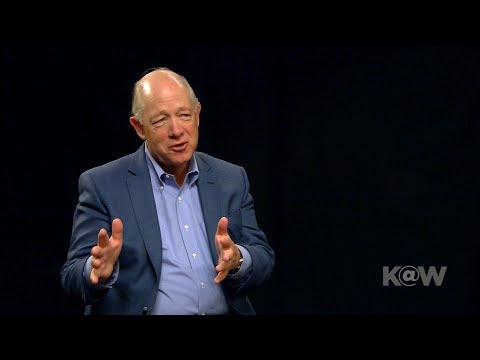
Knowledge@Wharton Interview with Lord Barker
Ask about Knowledge at Wharton
Episode Description
In the wake of the COVID-19 pandemic, policymakers have a “once-in-a-lifetime opportunity” to lead the way towards a low-carbon future, says Lord Greg Barker, executive chairman of En+ Group and former member of U.K. Parliament. 📂 Leadership 🏷️ COVID-19
Read the full transcriptHide the full transcript
- welcome to our listeners and viewers and the United States and around the world welcome to our knowledge at Wharton and
- Wharton Leadership Conference events as you know by signing up to this that we have a series of presentations from
- leaders from around the world and around various parts of society and business talking about issues associated with
- leadership and today it's great pleasure to have with us the right honorable Lord
- Baker of Barker battle I Greg bunker it's pleasure to have him with us he was elected a member of parliament in 2001
- after that during the Cameron government was minister of state or energy and climate change and is currently
- executive chair of the N Plus groups and energy company based in Russia and around the world's great pleasure to
- have you with us Greg welcome thank you Peter I'm really flattered and honored to be here maybe the first thing to do
- we want to get into the climate change topic in just a minute though is you will be I'm pretty sure the only Lord on
- our seminar program could you just tell listeners who are not familiar with this
- UK institution a little bit about how one becomes a lord well his Larry yeah well it's a it's a honorific title like
- sir so it carries a title but his talk but historically not only did carry a title but it also entitle you to sit in
- Parliament and there was a House of Commons which was elected and then a House of Lords where everyone who had
- inherited a title was able to sit and together they passed laws together with the moment over the centuries the power
- of the House of Lords steadily declined and then in the 1960s in the 20th century they introduced something called
- the life peer which was a very British way of changing a historic institution to reflect the modern times while
- keeping a semblance of history about its so nowadays following a series of reforms the most
- which was under Tony Blair the majority of of Lords in the House of Lords and I use that phrase and to mean both women
- and men and the majority are actually appointed by the gut by the government of the day so there are about seven
- hundred members of the House of Lords and about six hundred of those have been appointed over the years because the
- appointment is for life so you enjoy the dignity and style of a lord in the historic sense but you don't pass it on
- to your your eldest son or your heir as he would have done historically there are still about a hundred hereditary
- peers in the in the House of Lords so the Duke of Wellington for example still sits in the House of Lords and a number
- of other people with famous historic titles that you would recognize but there isn't the role of the Lords is a
- revising chamber the power clearly rests with the House of Commons and the it is
- supposed to and I think largely does reflect a very broad degree of people from different walks of life different
- experience different experts although there are a lot of former professional politicians like myself who have gone on
- to do other things but this is still a way that they can contribute yeah well one of the ways you've been contributing
- in a very important topic is the topic of climate change in your roles and before that but afterwards as well and
- recent op-ed piece a week or so ago I think in the Financial Times and making the case that we should take climate
- change more seriously and address it I wonder if you say a word just about your experience in pushing those arguments
- forward which started a while ago maybe just a little bit about why that was important to you and and what were the
- difficulties in trying to advocate for climate change well I went into politics in 2001 and
- had a background in business when I went in and was given a piece of advice on entering politics and not really knowing
- many of the people in the in the Westminster corridors to find a subject do SWAT up on it and to make yourself
- useful particularly given that I was elected in 2001 as a Conservative member of parliament at a time when we were in
- deep opposition and Tony Blair looked like he was set to rule for the rest of the century so there was no no hurry to
- get ready for government though I took that opportunity to join the parliamentary environmental Audit
- Committee just at the time that climate change was coming up the political agenda globally it was the time that Al
- Gore for example was writing an inconvenient and published and Inconvenient Truth and I remember that
- having a real impact on me and it prompted us as a committee to launch our own investigations into the issue of
- climate change and to me it became a really fascinating all-consuming subject because it included the economy it
- included the way we live it includes softer things like education and it is an international issue it's not
- something that is just affecting domestic politics but also it was an issue which demanded innovation it
- demanded a full response across a suite of policy measures and that not everyone
- was taking it seriously though I the more I read the more convinced I became that this represented probably the
- greatest long-term threat not just our country but the planet faced so it it became inescapable that I would want to
- be involved in that as I understand it your efforts to push this to the front of the agenda we're not always the
- easiest things to do can you tell us a little bit about what was difficult about trying to in continues to be
- difficult about trying to get attention for this topic and and how do you make progress on there sure and well when I
- first started talking about this in the early 2000s a lot of people in the British Conservative Party thought I was
- a complete crank mildly eccentric or even that I was some sort of socialist in green clothing and that really
- prompted me not just to explain the problem of climate change but also to make an authentic conservative
- pro-business case for why we should be taking action not only just to appease my conservative colleagues because I
- genuine believed that we needed to marshal the dynamism of the free market economy and send it in a direction that
- would that would find climate solutions and that I've always been fundamentally optimistic that solutions could be found
- I've never been one of these hairshirt doom and gloom climate mongers but certainly it was a battle early on
- people wouldn't just debate whether or not we had the right solutions but would debate the actual science in half my
- career was spent arguing with very respectable climate deniers and that was a real challenge thankfully that has now
- passed I think 2015 was a real seminal moment I think that was a laugh time when I was on the BBC effectively
- debating with somebody who really didn't think this was an issue that should be taken seriously now the whole world
- seems to have moved on and the question is not if climate change is happening not if mankind is responsible but what
- should be the nature scale and pace of response and that's a much better place to be in and also we've had a huge
- degree of success which often goes uncelebrated and one of the biggest achievements of my political career I
- mean wasn't all down to me I played a small part but something that I was very proud proud to be involved in was the
- passing of the cross-party Climate Change Act in the UK in 2008 the first climate
- change act anywhere in the world and it unilaterally committed the United Kingdom to reducing carbon emissions by
- then by 80% by 2050 from 1990 levels and you know people said you can't do this this is impossible you'll ruin the
- economy and what's happened at has over successive years we were able to grow the economy in the UK quite impressively
- in the early part of this decade and at the same time reduce emissions in fact the UK has now ready to missions by 86
- percent emissions are now haven't were last time that low in the late 19th century there were over halfway of
- meeting that original goal of 80% reduction and Theresa May Prime Minister Theresa May before she left office
- actually moved the goalposts up to a hundred percent so we've still got a long way to go but we have made real
- progress in large part due to the phasing out of coal and the creation of an entirely new industry in the UK of
- renewable energy you've argued in the Financial Times last week that the middle of this corona virus pandemic
- around the world and the shutting down to the economies but also the efforts to pour more money in through the public
- sector that this is an appropriate moment to really take a big step forward with respect to climate change tell us a
- little why what's in what's that argument like to say this is the time to really make an effort well in the face
- of this unprecedented pandemic certainly unprecedented in my lifetime every business leader first and foremost is
- focused on the short term health and welfare of their employees I a executive chairman of the N+ group and worldwide
- we employ over a hundred thousand people not just in Russia but in Europe in Africa in Central America so we have a
- global footprint and we feel a great sense of responsibility to our employees and
- we're seeing cave 19 hit at different times right the way across the different regions and jurisdictions that we
- operate in though that's our number one focus but if I could quote Fleetwood Mac
- for a moment you can't stop thinking about tomorrow and you know if you're a business leader you've got to be capable
- of doing more than one thing at a time and so in as well as responding to the immediate health and safety needs of
- employees we've got to think about the longer-term impacts and you know as Winston Churchill said never let a good
- crisis go to waste and that is really now what we have to do you know there is a serious opportunity with huge amounts
- of government money being poured into global economy but policymakers to insist that that investment is child in
- certain ways that we once and for all kick the highly polluting environmentally damaging carbon intents
- industries and business practices of the last century or more and we use this as
- a real opportunity to have a step change towards a low-carbon more sustainable future and there are different ways in
- which different industries different countries can approach that but we do have to see this as a once-in-a-lifetime
- opportunity to make that change I think you make a great point about the importance of trying to get people to
- think future rather than focus on just the current problems how do you do that when you have the arguments with other
- businesspeople or political leaders about taking climate change seriously you really are trying to argue that they
- should think longer-term what do you think has been persuasive in trying to get people to think longer
- term about this and not just be so focused in the world of business let's say on their quarterly performance or
- their immediate political concerns how do you get them to think long term well I think in order to have license to
- talk about the future and to posit your ideas for that route map to the future you have to at least be competent in
- dealing with the present though it cannot be instead this is non either-or agenda so you have to show that you are
- able to deal with the very real challenges in the here and now and and that's never been more critical than
- when when facing this this pandemic but as I said it's it's not an either/or agenda so if you can do that I think
- that does also by you go to talk about the future and if you're going to do that I think you have to be very clear
- and this goes to sort of certain leadership lessons you have to be able to clearly articulate and communicate
- what it is you want to see not just speak in Wooley management speak or or popular you know hashtags you have to
- have a clear idea and a route map of actionable points and one of the things that frustrate frustrates me and
- increasingly in in recent times has been the willingness of companies big business to set long-term goals which
- are absolutely needed and after all I was involved in setting a climate change act which that set targets all the way
- up to 2050 but effectively its CEOs setting setting goals for their successors or their successors successor
- to meet while actually doing very little in the near-term that they are going to
- be held personally accountable for though it's really important that you have a credible route map and a credible
- plan as well as just talk about the future in an abstract way before we began the broadcast today we were
- talking my colleague Mike you seen was asking me a little about David Cameron your colleague and leader in
- Parliament's and his leadership style could you tell us a little bit about his effectiveness he seemed to be quite
- effective in leading in this kind of context a little about what you saw with him
- David had a or has a natural Authority and we came into the House of Commons to get together very small cohort in 2001
- and it was immediately apparent to me that he stood head and shoulders above the other members of parliament and so
- when there was an opportunity for a new leader to be put in place in 2005 without hesitation I encouraged him
- along with others to step up even though he was relatively young and relatively new on the scene it was very clear that
- he had the x-factor for leadership again who was he's you know incredibly articulate to see him at the
- despatch-box he was able to put into words and craft the sentences under pressure
- infernal in a way that very few people are able to do but he was also a very serious administrator I mean I had a you
- know a first-class degree from Oxford and had a fine brain but I've seen plenty of more intelligent people
- or more academically qualified people not be able to convert that intelligence into in a political effectiveness and
- David was able to marry the both I remember seeing him in Cobra Cobra Azhar the UK version of The Situation Room
- and I was on a hostage international hostage crisis and in the room it's not it's not the same as the cabinet within
- this Situation Room you would have the heads of the Army Navy the special services top diplomats intelligence
- services and key ministers from a relevant departments depending on what the nature of the crisis was and David
- would enter exactly on time 11 o'clock tip down and immediately called the meeting to order and crisply worked
- through the agenda a lot of politicians I've come across cross always have to try and prove that they're the most
- intelligent or important person in the room despite the fact that they hold the highest office David had an you know
- were always very thoughtful and listened to the lead I see you had absolutely no doubt as to
- who was in charge and a clear direction and a clear course that he was setting so and he was a very agreeable person to
- work with that David Cameron uses or in public was very very similar to the David Cameron in private and which you
- know a lot of politicians are not like that there are lot of politicians that have a terrible public image and in
- private their delightful conversely there are some very popular politicians who are in nightmare in private but
- David was very consistent and I will remain a huge admirer of his I'd like to share the podium here with my colleague
- Mike Hughes theme who is director of our Center for Leadership and co-host of the
- series and our Leadership Conference Mike has been looking at questions from the audience but also I think has his
- own questions too so Mike can we go over you from it thank you Peter and thank you learned Barker for being on our
- program very interesting discussion we're getting a good number of questions in I'm going to begin with one of my own
- but then bring in some of the questions that our listeners are indeed forwarding
- in the FT op-ed piece that you wrote you use a phrase build back better build back better I find the phrase really
- appealing and then thinking about its application now in the coronavirus moment how do you see the UK the US
- other countries building back better and who's going to drive that so there it is
- what do you think well ultimately I think we're going to build back better because the people of the UK of the US
- and around the world are going to demand that we do we live in a new democratic age now where everyone thanks to social
- media has a voice and I think there is an increasing clamor that we don't just go back to business as normal now in my
- own line what does build back better mean I lead the world's largest producer of low carbon aluminium to put that in
- some sort of context the average Tarn of aluminium can make up to 16 or 18 tonnes of carbon to
- produce because it's so energy intensive but because my group uses hydropower are
- also the world's largest private sector hydropower company because we use that to make aluminium instead of being 18
- tons of carbon for a ton of aluminium it just takes two point six tons so it's really important when can rupture
- project if you're using these in tax dollars to invest in renewable energy in electric vehicle charging points
- electric vehicle manufacturing sustainable housing that you don't just use the materials like aluminium that
- lend themselves to that application but you use low-carbon aluminium that you think about the consequences not just of
- the thing you're building but the whole supply chain in order to make it a more circular economy and create more
- sustainable outcomes and I think having sustainability and climate action at the
- forefront of our mind as we embark on these bill bringing back the economy is a once-in-a-generation chance we knew no
- one would have wished for this pandemic but it's a fact now we have to rebuild the economy so let's not waste this
- opportunity to build back better I didn't invent that phrase it was originally conceived to talk about
- resilience when building after a natural disaster but I think it lends itself to
- I think not just a national mood but a global mood post pandemic how we really need to build something better and you
- know and can assure people who've you know made huge sacrifices during this pandemic that it hasn't you know just
- been for a short term an effort that actually something better is going to come out of this huge collective effort
- great thank you on that I'm gonna draw in a question now from one of our viewers that is directly related to what
- you described they're building back better and that is how do we know when a in this case by the question we have in
- front of us a particular company is doing that or not what are what are one or two metrics
- that you would look at both if if you're a business executive at that company but
- also if you're in Parliament looking at that company to know if they are indeed coming back sustainably or not really
- good question and the answer is it's quite hard actually because you know business is not as transparent as they
- should be in my own sector I've been arguing since last year when I took up this role that we should all be all the
- major manufacturers of aluminium should be declaring the carbon content of the metals that they produce because there's
- such a huge discrepancy Chinese aluminium 18 tonnes of carbon our aluminium made with high drone of we're
- not the only producer but you know is 2.6 tonnes of carbon so huge discrepancy but there's you have to really dig to
- find that and it's the same in many other industries as well that information is not readily available I
- would like to see much better green labeling though it was on products on consumer products and carbon
- transparency for commodities so that when vehicle manufacturers when people building public buildings or a large
- infrastructure projects that it's very clear what the carbon content and also the wider sustainability beaches of
- those projects are and you know people have been talking sustainability for some time now I think this is the time
- when we've got to convert that talk into tangible actions and we've got to be accountable for them and the only way
- that businesses can be accountable for their actions is to have greater transparency and greater disclosure on
- the sustainability and carbon content of either their products that they make or
- the services that they offer I learned mark well one more question from again one of our viewers here
- directly related as well and that is bringing in the topic in and inequality which is worsening both
- in the UK and the u.s. in the last several years and building back better what are your thoughts on how to ensure
- that in coming back from the current crisis we don't it further exacerbate the inequalities which now are appearing
- both in heightened poverty rates for example but also in the politics of the moment so what is your thinking I'll
- just sum that up about building back better while not worsening and hopefully improving the extent to which we have
- equity and equality in both of our countries well I think this is a time for strong leadership and it's time for
- politicians to think outside the box and maybe even outside strict party lines and in previous pandemics in his plane
- the survivors have actually been left better off for example if you go back to the Middle Ages and the Black Death
- after that pandemic though many people were killed that there was actually a shortage of labor and the living
- standards of the peasants of the of the of the of the labouring classes actually
- rose in there in the couple of centuries afterwards as a result of the need to compete for labor but now what we're
- seeing is that an actual fact far more jobs have been destroyed in our economy than and thankfully them people have
- been and that there are going to be huge numbers of people around the world who will have their livelihoods threatened
- or their jobs taken away and that does require new thinking and recognizing that this is an entirely new set of
- circumstances and it requires a really strong policy lead from politicians it requires collaboration and partnership
- and collaboration and partnership with business as well and clear sets of goals I think politicians have to be very
- clear to the public what it is that they are trying to pinch marks of success and
- also be honest about what can't be achieved because you know we're not going to be able to just bounce back
- better immediately and there will be casualties of this terrible pandemic economic
- casualties and we have to make sure that we dupe them up as well as well as you know identify the Sun rise industries
- and the areas that will benefit from you know an agreement recovery Lord Barker thank you on that we were about two
- minutes away from a station break so to speak so I'm going to very briefly thumb
- up a couple of points I've been taking notes and then mention our next president presenter on this particular
- series though from Lord Barker who's long been active in business and politics my point number one is don't
- let the fact that you're in business prevent you from getting into politics or the other way around if you have an
- opportunity to lead don't be shy about taking that leadership to another institution whether business to politics
- or from a community group to another kind of institution number two build back better and this goes back to the
- reference to the the famous quote from Winston Churchill don't let a crisis go to waste and holding back better it is a
- moment to take the crisis we're all ready for change and indeed let's bring everything back better than it was
- before and then number four if we're going to build back better under the circumstance we do have to have a plan a
- strategy the Devils in the detail and so in general of course we want to come back better but I think the leadership
- of the future is going to entail of necessity building back better in specific ways whether its climate change
- or whatever it may be so Peter Capelli thank you for getting this particular event underway here and
- guiding our discussion but Lord barker lured Barker thank you for being with this and I just want to let everybody
- know that is still tuned in here this is a series of presentations by people who
- had been signed up for our annual Leadership Conference our next guest on June 4th will be lore lorry rider Kirk
- he was the chief executive officer of selling these corporate that's a fortune 500 firm it's in
- materials and chemicals got six or seven billion dollars of revenue to worry about about 8,000 employees and we're
- going to hear from her directly about how she has guided her company through the events of the present so
- thank you everybody for joining the program and best wishes to you be safe and be healthy thank you very much
- you
Brief Summary
Lord Barker discusses climate change advocacy, leadership, and building back better post-pandemic.
Key points
- Climate Change Advocacy. Greg Bunker shares his journey in advocating for climate change since 2001.
- Building Back Better. Bunker discusses the importance of sustainable rebuilding post-pandemic.
- Transparency in Carbon Content. Emphasizing the need for manufacturers to disclose carbon content for sustainability.
- Building Back Better. A call for strong leadership and innovative thinking to avoid worsening inequalities post-crisis.
Episode highlights
- Climate Change AdvocacyGreg Bunker shares his journey in advocating for climate change since 2001.“This represented probably the greatest long-term threat not just to our country but the planet.”6:08Jun 8, 2020
- Building Back BetterBunker discusses the importance of sustainable rebuilding post-pandemic.“Let’s not waste this opportunity to build back better.”21:06Jun 8, 2020
- Transparency in Carbon ContentEmphasizing the need for manufacturers to disclose carbon content for sustainability.“We need greater transparency and disclosure on sustainability.”23:46Jun 8, 2020
- Building Back BetterA call for strong leadership and innovative thinking to avoid worsening inequalities post-crisis.“This is a time for strong leadership.”24:52Jun 8, 2020
Tension
45/ 100Some tension