Meme Stocks Explained & Analyzed with Bloomberg's Matt Levine
Ask about Knowledge at Wharton
Episode Description
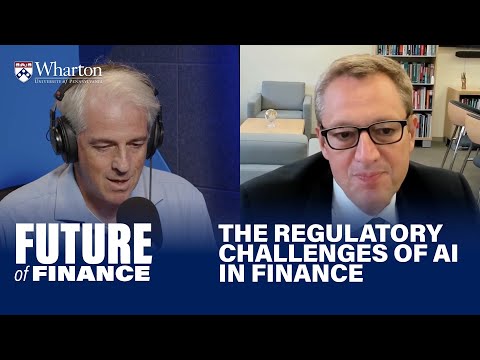
"New Phenomena in Behavioral and Social Investing": Episode 2 of 4 in our "Future of Finance" series, hosted by Wharton School finance professor Itay Goldstein
Amidst the headlines of GameStop and AMC stock surging thanks to viral social media posts ("meme stocks"), it’s important to consider how anomalies like these can happen in the first place.
In this episode of our four-part "Future of Finance" series, Goldstein dives into behavioral finance, or the psychological influences that can affect market outcomes. He’s joined by Matt Levine, columnist at Bloomberg, who offers his expertise in this conversation and helps navigate the social trends that lead to global market events.
----- The Wharton School of the University of Pennsylvania is committed to sharing its intellectual capital through Knowledge at Wharton, the school’s online business analysis journal.
Launched in 1999, Knowledge at Wharton offers free access to:
- Articles, podcasts, and videos highlighting Wharton faculty research and analysis of current business trends - Interviews with book authors from Wharton School Press - In-depth series of curated content like Wharton Executive Education’s Nano Tools for Leaders - A searchable database of more than 10,000 articles covering all aspects of business - A weekly newsletter that delivers Knowledge at Wharton insights directly to your inbox
Visit the Knowledge at Wharton homepage: https://whr.tn/3qUpSBE Subscribe to the Knowledge at Wharton YouTube channel: https://whr.tn/3DEAgAU 📂 Finance & Accounting;Technology 🏷️ Future of Finance
Read the full transcriptHide the full transcript
- Itay Goldstein: Hello, everyone. We are doing a miniseries of podcasts here at the Wharton School on the Future of Finance. And today
- we are going to explore a new phenomenon, behavioral and social investing. Of course, behavioral investing is not a
- new phenomenon. We have known about it and talked about it for a long time. The new element that has come into it more
- recently, is social investing, how behavioral investing is assisted by social media and the desire of people to participate
- in a social phenomenon, kind of like a cultural phenomenon. And we saw different episodes of this with meme stocks, starting
- from GameStop and AMC and others. And we have the best guest to dive into all this. This is Matt Levine, who is a
- columnist at Bloomberg and the author of the very famous "Money Stuff" newsletter. Hi, Matt.
- Hi, thanks for having me. - It's great to have you. And I'm here, Itay Goldstein. I'm a
- Professor of Finance at the Wharton School, and currently the Chair of the Finance Department, and I will conduct
- this conversation with you, Matt. Looking forward to hearing from you. So in your May 13 issue of "Money Stuff", in which,
- by the way, you generously link to the Wharton MBA curriculum, you ask the audience, is this just how life is now? So I will
- turn it over to you. Is this the case? Are we going to expect more of these Gamestop sagas, or is this just a unique
- phenomenon? My gut is that it is more the former, that this is kind of the way life is now. I think that Gamestop was sort of a proof of
- concept. But really ultimately, Bitcoin and crypto were a bigger proof of it. That something like social investing can work.
- I mean, sometimes the way I think of it is that for most of the history of financial markets, people thought of, like, the stock
- market as this sort of social gambling game, where you were trying to out-guess the other person. And then there was a—
- almost a brief blip of, like, scientific finance, where people thought, "Oh, stocks are worth the present value of their
- future cash flows." And we've now kind of gone back to the old system where stocks are worth what you can get someone else to
- pay for them. And people realized that you could harness social media technologies to collectively influence the
- prices of stocks. And I think that that just kind of remains true. I don't think you'll see Gamestop again. Like, the real
- insanity of that was kind of because it was the first time and because it was such a novelty. But the basic idea of,
- like, memes can drive the prices of financial instruments seems pretty, like, well established in crypto by this point, to the
- point that it's like, not even newsworthy. And it's, you know— it continues to reverberate through the stock market.
- So this is very interesting. So basically, what you're saying is that our models of finance where the value of a stock is going to
- be determined by the present value of future cash flows—you say this is a blip on the timeline of financial markets?
- And people used to think about it in less scientific terms, and this is what we're going to see going forward?
- You know, I'm probably exaggerating when I say that. I mean, I think that one thing that the Gamestop episode taught
- you is that, you know, there's good reason to think that the present value of future cash flows of an asset sets some sort
- of like floor under the price of the asset, because if it goes to zero, then someone can go buy it and extract the cash flows
- themselves. But I think people sort of developed this, like, rational system, where they assumed that the present value
- of the cash flows was also a cap on the value of the asset. And, like, that's just— there's no real reason for that. And if, you
- know, a lot of retail investors want to bid up a thing for years at a time, then I think what you learned in Gamestop was
- that there's not really a clear corrective mechanism, right? It's not like short sellers can come in and force the price down
- to a rational level. And, I don't know. That's like the— that, to me, is the lesson. Like, there's— that there's not a corrective
- mechanism in the short or medium term for just a meme-driven price. Right. And it's very interesting that you draw the parallel to
- Bitcoin and crypto assets. Because, you know, when we talk about Bitcoin in the classroom, we say that there is really no
- clear way to price them. So there is really no way to tell what is the right price for Bitcoin. So you think basically
- that Bitcoin and other cryptocurrencies are maybe the central phenomenon, and Gamestop was
- maybe one other example of that? I kind of think that, yeah. I kind of think that, like,
- GameStop being a stock that moved, like a coordinated social movement for a few months was really interesting. And, like,
- sort of brought it to— closer to the financial mainstream. But that's also true in a less silly but more important way of
- Bitcoin, right? I mean, like, you know, when you talk about, like, how you value Bitcoin, it is, like— any, any— any sort of
- legitimate— any real effort to value it is going to be based on its social adoption, right? If people buy it, then it's worth a
- lot of money, and if no one believes in it, then it's not worth a lot of money. And that is the sort of core of what
- happened in GameStop, right? Where, like, GameStop was also a company. But like, the sort of real meme-driven stuff was— was
- about just, like, the— its popularity in the— in the— in a social investing universe.
- I think that Bitcoin is the clearer illustration of how strange this is, and how, like, enduring it is,
- right? I mean, Bitcoin has— has had a five-figure valuation for years now. Its— its social adoption is enough to drive the
- value in a way that it wasn't really for the— for the long term, for GameStop. Yeah. So, you know, when we talk about it as economists, we would
- think about it as kind of a coordination problem, where if everyone thinks it's valuable, it will be valuable. If no one
- thinks it's valuable, it will not be valuable, and then it can kind of end up anywhere in terms of price. And you're right, we—
- And Bitcoin is sort of like, self consciously that, right? It's like, it's meant to be a currency, right? So it's like,
- sort of everyone understands that it's a coordination problem, whereas there's no reason for Gamestop to work that
- way. It just did for a while. Right. Yeah, exactly. And this is, I think, where the deviation
- is. That with GameStop, there is a way to price it that is not based on coordination. With Bitcoin, there isn't. But the
- fact that this migrated into Gamestop and AMC was really the new thing, and maybe the very interesting element here.
- So, you know, diving a bit deeper into that, what do you think are the sort of psychological and social triggers that were behind the
- AMC and Gamestop saga? How would you characterize them? I do think that there is— there is a cultural moment that is
- somewhat pandemic-driven, right? I mean, people were— a lot of people were stuck at home. They had a lot fewer entertainment
- options. They were sort of turning to the internet for entertainment because, you know, sporting events and television
- shows were canceled, and, like, live events were canceled. And so it was easier. You know, there's like, a lower bar for
- entertainment. So like, going to a message board and talking about trading Gamestop options was relatively more entertaining
- than— than it would have been at any other time. And it was just, like, a real— you know, it fed on itself in the
- sense that, like, people were having fun trading GameStop. Gamestop went up. This
- got attention. Gamestop went up more, and then it became like a truly insane event where people were making, you know, 10,000%
- returns in a couple of days. And so that attracted a lot of people, right? It was a combination of, like, people
- were making a lot of money very quickly, and also they were just very evidently having a lot of fun doing it. That attracted a
- lot of people. So, like, one thing that happened in Gamestop is that the stock went up a lot. But another thing that happened
- is that the number of users of the Wall Street Bets message board went— went from like, you know, under a million to
- like, 8 million people in a couple of days. And that just, you know— it was a— in a time where people were starved for
- entertainment and starved for, like, social interaction. That was a very fun place to be socializing. And like, the coin
- of socializing there was you buying and holding GameStop. Right. So this is all sort of pandemic era driven, as you say.
- But then when you saw this coming back in May of this year, what were you thinking?
- One thing I was thinking is, this can't work as well again, just for, like, entertainment reasons, right? It's just not as
- fun the second time. And it wasn't, right? I mean, like, people were interested in it. And, you know, what happened is
- that— that Keith Gil, the sort of like "influencer" who was the main driving force behind the first Gamestop rally— I'm not sure
- that's true. He was the mascot of the first Gamestop rally. He came back to Twitter to sort of tweet inscrutable things, and to
- sort of try to get the band back together. And people were interested, and the stock shot up, and Gamestop was able to do an
- at-the-market stock offering. But it was never— it didn't have anything like either the financial or the cultural
- impact that it had the previous time, right? I mean, it just— the stock did not go up that much. And it got attention in, like,
- the financial press. But it was, you know— the sort of original Gamestop rally was, you know— it was on <i>Good Morning</i>
- <i>America</i>. It was, like, the biggest news story in the world. Keith Gill coming back was like a financial niche news story.
- Right. So, you know, when we analyze financial markets, we tend to think about retail investors and institutional investors. And the
- usual thinking is that institutional investors are going to be more sophisticated. They are the experts. They have
- time, they have money to do the research, and at the end of the day, they will know how to pick the stocks. And then the retail
- investors, those who are maybe more naive, they don't have the financial resources to make the right investment. At the end of
- the day, they might be taken advantage of. This was not exactly how things played out in these episodes. So, did these
- episodes lead you to reconsider the way you're thinking about institutional versus retail investors?
- I think that it suggests that retail investors have more power than you would have expected, right? It— like, I have read for
- years, people saying— you know, on Reddit or whatever— people talking about gamma squeezes, right? Like saying, if we all
- buy call options, then that will force the price of the stock up, and dealers will have to hedge their call options by buying
- more stock, and then the stock will keep going up, and the dealers will have to buy more to keep hedging, and the stock will
- sort of spiral up infinitely. And I would read that and say, okay, like, there's no, you know, perpetual motion machine.
- But also, like, how big of an impact on a big liquid stock, can retail call option buying have? And the answer is, like,
- much more than I expected, right? It's just that you think of, like, retail investors as being, like, dispersed and kind of
- random, right? Because they're— they're— you know, traditionally, don't have access to a lot of information. But
- they're also just, like, individuals with small accounts. And one thing that you learned in the Gamestop saga is that
- retail investors can kind of coordinate around one thing, where they're all buying the same call options at the same
- company at the same time. And then the stock really does go up. And the stuff about gamma screws is— that sort of like
- looks like an urban legend— turns out to be kind of true some of the time. So I think that has been an interesting
- shift where retail investors, like, just have the power to move markets in a way that nobody really expected. And you
- see that in, like, institutional investors being much more cautious about short selling. And particularly, like, you know,
- vocal activist short selling, because they worry that if they go after a company, they short a company, some— you know, some
- retail investors on a message board will say, you know, "Let's go after that hedge fund." And like, it turns out that if they
- all do that, then, like, it can have a material effect on the hedge fund. You know, your question— you talk about, like,
- you know, retail investors being less sophisticated and having less access to information. I don't know that, like, the retail
- investors, like, in the long run, look particularly smart from the Gamestop episode, right? It's not like Gamestop is killing it
- in their business. I think there's like, interesting effects where, like, GameStop and AMC were able to raise so
- much money and sort of, like, get some runway from their retail involvement. And like, that has interestingly shifted
- the dynamics of the underlying businesses. But, like, ultimately, I don't know. Like— like, you know, the hedge funds
- who were shorting GameStop— I don't know. The hedge funds shorting Gamestop at, like, $14 maybe they were wrong. But the hedge funds
- short in Gamestop at, you know, $80 seem right, but they also got blown up. And I don't think that, like, this is a story of
- retail investors being better analysts of companies than professional investors. But I do think it's a story of, like,
- retail investors coordinating in a way that is much more impactful on the market than anyone really thought.
- Yeah, I completely agree. I mean, it's not that they did the underlying analysis, but it is that when they come together,
- they managed to move markets in a way that puts institutional investors in a bind, in a way that they didn't really expect.
- So I think in that sense, it's a little more subtle than the traditional story we had about retail versus institutions.
- Yeah. You know, I read a lot about, like, market structure and about, you know, like— like like, high frequency trading
- firms, market making to retail traders. And like, everyone's model there is that retail traders are— I'm sorry, I shouldn't
- say everyone's model. The popular perception is that retail traders are sort of random noise traders, where,
- like, they'll buy a stock or sell a stock, but there's no, overarching coordination among retail traders. And so you
- can, like, make a lot of money market making to retail traders, because, like, they are, like, you know, buying at the— at the—
- at the offer and selling at the bid, and not— not like, predictive of prices. And you see in— like, I don't really know
- how market makers did in this. I think they did very well for the most part. But like, you see in this that retail trades are,
- like, much more predictive than people would have thought, right? Like that they are— that there is a— like, a
- directionality to retail trades, where, like, if one retail trader— like, sometimes, if one retail trader buys a stock, that
- is a sign the stock is going to keep going up, because a lot of other retail traders are going to buy it. And that's just like
- an interesting shift where, you know, like, a retail trader is not an atomized individual buying stock, sort of like
- independent of all other retail traders. There is, like, this ability for retail traders to coordinate.
- Right. So you mentioned the fact that AMC and Gamestop were able to raise capital out of this increase in stock price. And at
- the end of the day, you know, for example, in the case of AMC, this led them to avoid bankruptcy, which I think was a
- real concern at that point. And I think this raises a very interesting question. Because at the end of the day, if this just
- stays in the financial market, some people make money, some people lose money, you know, you can say it's okay. People go to the
- financial market at their own risk, and they should be prepared to lose money. But when this kind of spills over to the
- real economy in the way that it did here, because you have a firm that is able to raise more capital and stay in business,
- even though maybe shouldn't have, then I think this raises deeper questions. Are you worried about that? That firms
- are using this phenomenon? I sort of put myself in the shoes of the CFOs, and think, well,
- how could you not, right? I mean, how could you not try to raise money here? I also think that, you know, it's an interesting— I
- mentioned earlier the idea that there's no mechanism to cap the price of a company at its, like, cash flows, right? Like, there's
- no mechanism for, if retail investors all want to buy a stock, there's no mechanism to prevent the price from going to,
- you know, as high as they want. But of course, there is, which is, the company can sell the stock, right? And you see a
- little bit of that in some of the meme stock episodes, where, like, if the price gets too high, the company is going to
- hit the bid, and then the price will come down to a more reasonable level. In part because, like, there'll be more
- supply. But also, in part because, like, it sort of deflates the social phenomenon. If, like, if everyone's like,
- "Oh, we're buying and holding," and then the company's like, "We're a seller at this price." It's like, sort of bad for the meme. But,
- you know, I think it's probably bad if financial markets are allocating capital on retail wins. So it's not that bad,
- right? Like, there— there are other like, forms of gambling and— and— that are probably, you know, equally expensive. And you—
- like, there's something interesting about AMC, right? Because, like, on the one hand, their business was struggling,
- and they got a lifeline from meme stock investors. On the other hand, like, those meme stock investors were not driven by,
- like, pure irrationality. They were driven by, like, nostalgia for movie theaters, right? And their business was struggling,
- in part, like— there were other problems, but in part because they were in a pandemic where they couldn't show movies,
- right? So the idea that, like, these retail investors, driven by nostalgia, were sort of bridging them through a difficult
- business period— like— like, it doesn't seem that bad, right? It seems like, in some ways, like— the retail investors, like, made
- a sort of, like, rational allocation of capital there. I do think that you can look at some of these— there is, like, a
- real cynicism to some of the capital raising off of meme stocks. But at the same time, like, you know, the most cynical
- looking of— well, I shouldn't say that. One very cynical looking trade was when Hertz raised money from meme stock
- investors while it was in bankruptcy, which is just a crazy thing to do. But also, like, it emerged from bankruptcy
- with equity value, and those meme stock investors made money. Which is, again, like— it's a pandemic-driven thing where,
- like, the business crashed and then recovered, and the meme stock investors sort of bridged them through the pandemic. There
- are other cases. I mean, Bed Bath and Beyond is a case where they raised money from meme stock investors all the way to
- zero in a way that looks really cynical and looked really like a transfer of money from retail investors to, essentially, bond
- holders. But I don't know how big of a misallocation of capital it was, because they did go back to pretty short order.
- No, you're making good points here. I mean, I think it is clear that this meme stock phenomenon can help firms go
- through a bad time. Whether this is good or bad, it's not— it's not clear. It depends on whether the underlying stress was
- efficient or not. And yeah, certainly there was some business proposition behind AMC staying alive. So in that sense,
- maybe— maybe the investors did them a favor. If your model is that, like, the retail investors doing this are
- are just always, like, systematically less rational than institutional investors who'd normally fund companies,
- then, yeah, this is bad. I think that model is like, you know, largely correct, but it's not like— it's not like, so
- obviously correct, right? I mean, institutional investors make mistakes too. Yes, absolutely. I would be the first one to agree with
- that. So if you are a regulator sitting and watching all this, what are your main takeaways? What do you think should be done
- to make financial markets more orderly? I'm sympathetic to the actual response of regulators, which
- was kind of that this is all fine. Embarrassing, but fine. Like— like, when the Gamestop thing originally happened, there
- was a lot of interest in whether there was some sort of, like, secret coordination pump and dump, where the people on Reddit
- touting Gamestop were like, secretly, you know, doing something nefarious. And it doesn't ever look like that was
- true, right? It just looked like they liked the stock. There was maybe an awkward amount of coordination, an awkward amount
- of cheerleading. But, like no one was lying, really. And that's like, the main thing that the SEC is concerned about, is, like,
- people misrepresent— misrepresent things, or lying. This strikes me as like, kind of an emergent phenomenon of retail
- traders, and one that, like, kind of can't be regulated away, because it's like— you know, if people want to put their money
- on this thing, then— then they're allowed to. Now, you see, like— you know, there's tinkering at the edges, right? I
- mean, the— like, one thing that came out of this was— was the move to T+1 settlement, which is a really arcane
- response to the Gamestop saga. But like, you know, basically the Gamestop, like, phenomenon led to increased credit risk of
- clearing, because everyone was buying the stock at, like, you know— this incredibly volatile stock at, like, increasing
- prices. And so that led to, like, hiccups in the system of, like, stock settlement, where, like, Robin Hood was getting giant
- margin calls from the clearing house. And so the— the SEC subsequently moved to T+1 settlement to kind of like tamp
- that down. Another response you saw is that the SEC sort of expressed very clear skepticism about companies raising capital
- off meme stock things, and they sort of demanded that companies put a lot of, like, dire warnings in their prospectuses when they
- did these offerings. But of course, when you do a retail at- the-market offering, zero of your investors read the
- prospectus. So it doesn't really matter. I don't know that there's much that they can do. And I do think that, like,
- again, this was, like a thing that happened during the pandemic as a sort of, like, entertainment substitute. And
- you look at what entertainment options are available to people these days, like, it's a lot of gambling. And so, like, I'm not
- sure that, like, investing in Gamestop options is— is that much different or that much worse than, you know, betting on
- sports. And so, like, the regulators are in a bit of a bind. I think it's very embarrassing for the SEC to have
- this occur, because they would love for financial markets to just look more orderly and rational and less like an insane
- entertainment product. But people are coming to the stock market for a lot of reasons, and one of them is clearly entertainment.
- Right. Yeah, and I think they will have a problem thinking about the stock market as a casino. They would like it
- to be a place where allocation of capital is being done, and I think this is why they look at it,
- and are a little worried by that. I think that's right. But I also think, like— the SEC has such a bias and
- mission in favor of retail investors. And that includes letting retail investors do what they want, right? I mean, like,
- if your goal is efficient allocation of capital, you might be sort of skeptical of a lot of retail investor decision making, right?
- You might be like, "Everyone's got to put everything into index fund, and only professionals can trade stocks." But that's, like,
- not the American way. And— and I think that there is a bias towards letting retail investors do what they want, even if the
- SEC is sure it's bad for them. I also think that, like— I talked about Hertz. The SEC stopped the Hertz equity offering, and that
- offering, like, turned out to be a good idea for the people who were buying it, right? I mean, like, the stock— in the sense that
- the stock went up, right? So the SEC, like, doesn't always know what is irrational for retail investors.
- Yeah. So, you know, to close our conversation, I want to ask you more broadly where else do you think we are going to see
- episodes like this? And I want to bring up something that is related, but also different in many ways. And this is the
- Silicon Valley Bank that, you know, had the biggest bank run in history, and it was also driven by social media. Of
- course, you know, this is not the stock market. It's a bank, people pulling out deposits. But at the end of the day, there
- were some similarities because of the contagion that happens through social media. So do you see some connection? Where do
- you think we are going to see more action along these lines? Yeah. I mean, SVB— I think SVB is interesting because, like,
- SVB collapsed because of a bank run. And the people doing that bank run were largely, like, very sophisticated, well
- connected, you know, sort of VCs and tech startups who are like, you know, largely the depositors there. And people talk about it
- being a social-media-driven bank run. But I think a lot of, like, my gut sense is that a lot of what happened there was not
- happening on, like Twitter, but on, you know, private text messages or just like, phone calls between VCs, right? So
- it's not exactly social-media- driven. It's like, a fast, tech- intermediated sort of traditional rumor mill. The
- interesting bank run, from a social media perspective, was like— Credit Suisse, before it collapsed— like, not the day
- before it collapsed, but in the months leading up to its collapse, there were a lot of like, you know, Redditors trying
- to take down Credit Suisse. And I do think that, like, the possibility of coordinating a bank run on social media is
- interesting. It is, as you say, like, the inverse of the— of the of the, you know, meme stock phenomenon. Where, you know, if—
- if people on social media can get together to drive a stock up, they can get together to drive it down. And
- in general, you know, as I said at the beginning, like, the— you know, cash flows are a floor on a stock price, right? And like,
- you can't really come together to drive the stock price of, like, Tesla to zero. But you kind of can with a bank, because
- banks are so like, perception- dependent. And if you have a bank run, then, like, the bank really can go to zero. So I do
- think that, like, the possibility of using social media to coordinate a run on a bank is like, you know,
- something that occurred to people after GameStop. And something that, like, kind of sort of tentatively played out a
- little bit in Credit Suisse, although I think ultimately it was not, like, the causal problem with Credit Suisse.
- In terms of more generally, like, where does this go in the long term? I mean, I
- think that— the two things I'd point to are, again, crypto is just like— people have developed a better understanding of the
- social dynamics of investing. And like, that's going to get— just keep being reused in crypto. And then the other thing I'd point
- to is Donald Trump's SPAC, right? Which is— you know, GameStop is a real company. Like, you know, like, you could
- have a range of opinions on how much money Gamestop will make selling video games in ten years, right? Donald Trump's, you know,
- Trump Media Technology Group is like a real, like, teeny nub of a company, right? It's got a social media site that doesn't
- seem to bring in very much revenue. It talks a big game about, like, getting into streaming video and other
- things, but it's like, not clear what they're doing. And on its very, very small revenue and sort of, like, minor, like
- small, negative net income, it has, like, a multibillion dollar valuation. And it's just very clear that the people
- buying it are not buying it because they're, like, doing financial analysis, but because they are trying to get behind
- Donald Trump in some way. And I think that, like— I don't think he'll be the last person to make use of this phenomenon, right?
- And I do think that, like Gamestop kind of proved out the possibility here. And then Trump Media Group capitalized on it.
- Okay, lots to think about. Thank you very much, Matt, it was a pleasure talking to you about all these issues, and I think we
- should all stay tuned to see what's next. All right. Thank you very much. Thank you.
Brief Summary
Matt Levine discusses the rise of social investing and its implications for finance, focusing on meme stocks and retail investor influence.
Key points
- The Rise of Social Investing. Exploring how social media influences behavioral investing, especially during the pandemic.
- The Cultural Impact of Meme Stocks. How the pandemic created a unique environment for meme stocks like Gamestop and AMC.
- Retail Investors' Unexpected Power. Retail investors coordinated to influence stock prices in ways previously thought impossible.
- Emergent Retail Trading Phenomenon. The rise of retail trading is reshaping financial markets, challenging traditional regulations.
- Gamestop vs. Sports Betting. Investing in Gamestop options is compared to gambling, raising questions about market motivations.
- SEC's Bias Towards Retail Investors. The SEC's mission to protect retail investors may lead to unintended consequences.
Episode highlights
- The Rise of Social InvestingExploring how social media influences behavioral investing, especially during the pandemic.“Gamestop was sort of a proof of concept.”2:01Nov 18, 2024
- The Cultural Impact of Meme StocksHow the pandemic created a unique environment for meme stocks like Gamestop and AMC.“People were starved for entertainment and social interaction.”9:06Nov 18, 2024
- Retail Investors' Unexpected PowerRetail investors coordinated to influence stock prices in ways previously thought impossible.“Retail investors can kind of coordinate around one thing.”12:34Nov 18, 2024
- Emergent Retail Trading PhenomenonThe rise of retail trading is reshaping financial markets, challenging traditional regulations.“This strikes me as like, kind of an emergent phenomenon of retail traders.”22:01Nov 18, 2024
- Gamestop vs. Sports BettingInvesting in Gamestop options is compared to gambling, raising questions about market motivations.“Investing in Gamestop options is not much different than betting on sports.”23:40Nov 18, 2024
- SEC's Bias Towards Retail InvestorsThe SEC's mission to protect retail investors may lead to unintended consequences.“The SEC has such a bias and mission in favor of retail investors.”24:33Nov 18, 2024
- Social Media and Bank RunsThe potential for social media to coordinate bank runs presents new challenges for regulators.“The possibility of using social media to coordinate a run on a bank is interesting.”27:48Nov 18, 2024