Increase Charitable Giving with This Research-Backed Tip
Ask about Knowledge at Wharton
Episode Description
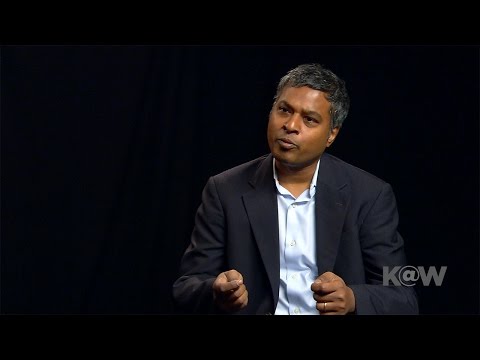
EPISODE OVERVIEW Charitable giving goes up when donors are asked to express themselves through their choices, according to research from Wharton’s Jonah Berger. This episode is part of a series on “Charitable Giving.”
PODCAST OVERVIEW Every day, business scholars answer pressing questions in their research - but what do their insights mean for you? In this podcast, Wharton faculty dive into what inspired their studies and how their findings resonate with the world today. Learn how research insights translate into knowledge you can use, with host Dan Loney.
Learn more at http://whr.tn/rippleeffect
#charitablegiving #fundraising #givingtuesday #donations ----- The Wharton School of the University of Pennsylvania is committed to sharing its intellectual capital through Knowledge at Wharton, the school’s online business analysis journal.
Launched in 1999, Knowledge at Wharton offers free access to:
- Articles, podcasts, and videos highlighting Wharton faculty research and analysis of current business trends - Interviews with book authors from Wharton School Press - In-depth series of curated content like Wharton Executive Education’s Nano Tools for Leaders - A searchable database of more than 10,000 articles covering all aspects of business - A weekly newsletter that delivers Knowledge at Wharton insights directly to your inbox
Visit the Knowledge at Wharton homepage: https://whr.tn/3qUpSBE Subscribe to the Knowledge at Wharton YouTube channel: https://whr.tn/3DEAgAU
Read the full transcriptHide the full transcript
- Jonah Berger: Vote by donating for this cause or that cause, or even for one specific cause. Vote with your preferences. Do
- you like this thing better, or that? It increases people's likelihood of donation,
- and increases the amount donated overall. Dan Loney: How does this potentially impact how an
- organization has to think about the process of trying to draw out those donations from the public? Is it any different for
- a group, rather than an individual? - Welcome to <i>The Ripple Effect</i>, the podcast that takes you on a journey through
- the minds of Wharton faculty. I'm your host, Dan Loney, and in each episode, we'll be diving deep into the inspiration behind
- the groundbreaking research that Wharton professors have conducted and exploring how their findings resonate with the
- world today. - Well, charitable giving can have a variety of reasons behind it, but research by author and Wharton School
- Marketing Professor Joanna Berger says that when there are dueling preferences at play, there's a potential for a higher
- level of pro social giving. And Jonah joins us right now to discuss his work. Hi, Jonah, great to have you back.
- Thanks for having me. - Talk about this component of dueling preferences and how important it is to this process of pro social giving.
- You know, we often— nonprofits and even individuals often ask others for help. They say, "Hey, will you donate money?
- Will you donate time? Please, help us." Obviously, helping these organizations, helping these causes, is really
- important, but people don't always do it. And so one question we had is, could there be a way to encourage
- individuals to give more? Whether it's donating their time or their money. And we were inspired a little bit by
- something that you may have seen in your own life a lot more recently, at least in the past five years or so. Which is, walk
- into a coffee shop, and rather than simply asking you for tips— you know, tip the barista if they did a good job— the coffee
- shop might say, "Hey, vote with your tips. Do you like <i>Star</i> <i>Wars</i> or <i>Star Trek</i>? Do you like dogs or cats? Do you like— which
- ice cream do you like better, vanilla or chocolate?" And while in that situation, it can seem a little trivial, a little bit
- silly, we wondered if similar approaches might be helpful to getting people to donate. What these approaches do is they
- don't only ask people for money, they give people opportunity to express their preferences. Hey, you're not just asking me to pay
- you for doing a good job, but you're asking me which thing I like better. And so we were wondering, would people be more
- likely to donate, to give, to do things, if doing those things was an opportunity to express
- their preferences to others and the world? And so seemingly, by having that component of self
- expression, it probably builds a connection between the two— between the two elements that are in the transaction.
- Certainly. And I think the bigger idea is, you know, people love expressing themself, right? Think about how much money
- people spend on cars, clothes and houses and other things that will allow them to express their identity. Similarly, people love
- talking about their preferences, right? People love talking about where they went on vacation, or what they bought or things that they
- like. And so people have an ingrained value of self expression. And what our research shows is that people
- actually would be willing to pay to get this opportunity to self express. When asking people for donations, for example, rather
- just asking them to give money, asking them to give money in a way that gives them a chance to express their preferences, vote
- by donating for this cause or that cause, or even for one specific cause, vote with your preferences. Do you like this
- thing better, or that? It increases people's likelihood of donation and increases the amount donated overall.
- How does this potentially impact how an organization has to think about the process of trying to draw out those donations from the
- public? Is it any different for a group rather than an individual? You know, I think as an organization, we are often
- trying to get people to give more. To give more time, to give more effort, to give more resources. But it's challenging
- to get people to do that. And so the simple takeaway from this research is, look, if you're a nonprofit trying to increase
- donations, asking people to donate and express their preferences, giving them this preference duel as a way of
- doing it is a way to increase donations. And sure, you can ask about things that are related to your cause. So if I'm the World
- Wildlife Fund Foundation, for example, World Wildlife Foundation, "Which animal do you like better?" is certainly relevant to my cause.
- But you can also ask things that aren't necessarily relevant to your cause. You can ask people which baseball team they prefer
- or which sport they like better, or which season they prefer. People like expressing themselves and so giving them
- opportunities to do so can can increase and create benefits for companies and organizations.
- You mention in the research about identity playing an important role in developing these pro-
- social behaviors as well. How does that occur? Well, this is exactly what we're talking about, right?
- People like having particular identities, but they also like expressing those. They like both
- expressing them to others, signaling those identities. "I want to show you that I'm a sports fan or that I'm knowledgeable
- about a particular topic." But also even for themselves. Even if no one else is going to see it, I like expressing myself.
- Because it helps me understand and express who I am. And so identity plays a big role here. If we're not giving people an
- opportunity to express something that connects to their identity, it's probably not going to work. If we give people a
- preference, a dueling preference, between two things they don't care about— I don't know. You know, which— which type
- of mulch do you like better? Most people don't care about mulch. I'm sure some people do, but most people don't. They're
- probably not going to vote. They're probably not going to be more likely to donate, because it doesn't really have anything
- to do with them. It doesn't touch on their identity. But if we ask them a question that touches on their identity or
- something they care about— which political candidate do you like? Which sports team do you prefer? Are you a cat person or a dog
- person? All those things are— people— things that people care more, that connect to their identities. And so they're more
- likely to pay to express those preferences. And so then, when you're doing the field test on something like— like tipping, I
- guess it really is trying to find out the best approach to draw a response from the consumer.
- Certainly, you know, if we're in Philadelphia, for example, which is your favorite
- team? You know, the Eagles or the 76ers? But if we're down in North Carolina, it's like, do you like Duke, or UNC?
- When we're out in California, maybe it's, are you a Cal fan or a Berkeley fan, are you a Stanford fan? It's
- understanding your audience and the things they care about and that are important to them, and creating these opportunities to
- make choices that allow them to express them. And so for those organizations involved in this, this is almost a little bit of—
- you talk about always wanting organizations to give. Well, that's a little bit of the— kind of the upping the ante
- philosophy in terms of the level of donations that may be— may come your way. Yeah. And I think, you know, when we think about donations
- there are two questions. Are people going to donate at all? And how much are they gonna donate?
- And— you know, it's important to encourage both of those things to occur. You know, am I suggesting that for huge gifts, for— you know,
- million dollar gifts— giving people the opportunity to express their preference is gonna play a big role? Probably
- not, right? Somebody who's giving a million dollars to a cause is going to care a lot about the cause. They're gonna
- need a lot of time to think about it. But for smaller donations, whether it's tips to the barista, or whether it's
- supporting a social cause that we care about, if I'm on the fence about whether to donate or not, or I'm trying to understand
- how much to donate, connecting it to my identity and giving me opportunity to express that identity
- is going to make me more likely to donate. What do you think this type of research means,
- then, for charitable giving in general, longer term? You know, I think with any strategy, you have to be a little careful in
- that if it's overused, if people— it's too familiar, where it feels like it's not authentic, it's— it's not going to work. And
- so if every single nonprofit starts using this particular type approach, it's probably gonna eventually— its effectiveness may
- die out. That's— at least in the short term, given that not everybody's using this, it can be a great way to boost things,
- at least into the near and immediate future. - But would you expect that because different people would be involved in different
- organizations, that there would be some nuanced difference in how individuals in different organizations or different
- groups would approach this? Oh, certainly. I mean, as we talked about, it's got to be something that relates to my identity. It's
- got to be something that I care about. And so when applying this strategy, I need to think about, well, who is my audience? What
- do they care about? And how can I pick a preference or a choice that is relevant to that?
- Jonah, always great to talk with you and get your insight. Thanks very much. Thanks for having me.
- You got it. Jonah Berger, Wharton School Marketing Professor. - Thank you for listening to <i>The Ripple Effect</i>.
- We hope you found this episode informative and engaging. Don't forget to subscribe and leave us a review
- so that we can continue to bring you the best insight from the Wharton School.
Brief Summary
Jonah Berger discusses how expressing preferences can boost charitable donations.
Key points
- The Ripple Effect Podcast Introduction. Join Dan Loney as he explores the minds of Wharton faculty and their groundbreaking research.
- Dueling Preferences in Donations. Jonah Berger explains how expressing preferences can increase charitable donations.
Episode highlights
- The Ripple Effect Podcast IntroductionJoin Dan Loney as he explores the minds of Wharton faculty and their groundbreaking research.0:23Nov 19, 2024
- Dueling Preferences in DonationsJonah Berger explains how expressing preferences can increase charitable donations.“Vote with your preferences. Do you like this thing better, or that?”3:24Nov 19, 2024