How Do Efforts Like Wharton's Wellness Empowerment Project Improve Financial Health?
Ask about Knowledge at Wharton
Episode Description
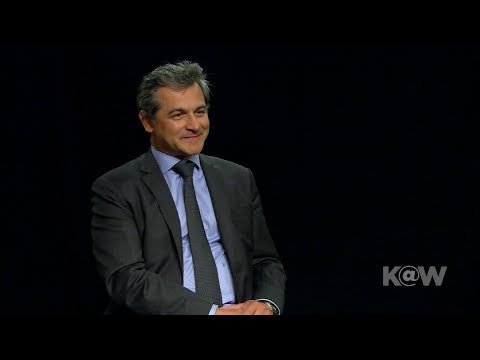
We often categorize one's finances and health as two separate concerns. However, as highlighted in the Wharton Wellness Empowerment Project, the intersection of these components can foster equity and enhance community well-being. In this podcast, join Wharton Chief Diversity, Equity, and Inclusion Officer Renita Miller and Penn Medicine Vice Chair of Clinical Operations Joshua Levine to explore how financial education can promote wellness within communities.
Topics and questions covered: 00:00 - Introductions 0:45 - How the Wellness Empowerment Project began 3:45 - Community engagement 4:40 - Connection between finance and wellness 6:52 - Impact of socioeconomic status and health 8:06 - Importance of financial literacy in building communities 10:00 - Reaching local communities 13:29 - The project's prospective Impact on healthcare
Wharton Business Daily airs Monday-Friday from 10 AM - 12 PM ET on SiriusXM Channel 132, featuring emerging trends, top business leaders & Wharton’s renowned professors. Learn more: http://whr.tn/businessdaily
#wellness #financialliteracy #financialliteracy #financialeducation ----- The Wharton School of the University of Pennsylvania is committed to sharing its intellectual capital through Knowledge at Wharton, the school’s online business analysis journal.
Launched in 1999, Knowledge at Wharton offers free access to:
- Articles, podcasts, and videos highlighting Wharton faculty research and analysis of current business trends - Interviews with book authors from Wharton School Press - In-depth series of curated content like Wharton Executive Education’s Nano Tools for Leaders - A searchable database of more than 10,000 articles covering all aspects of business - A weekly newsletter that delivers Knowledge at Wharton insights directly to your inbox
Visit the Knowledge at Wharton homepage: https://whr.tn/3qUpSBE Subscribe to the Knowledge at Wharton YouTube channel: https://whr.tn/3DEAgAU
Read the full transcriptHide the full transcript
- Dan Loney: Well, the Wharton School is working in conjunction with Penn Medicine on a wellness empowerment project. It's
- designed to provide a broad range of wellness resources to our community here in and around the Penn campus in the West
- Philadelphia section of Philadelphia. Part of that discussion will include focusing on finance and financial
- education to help members of the community. We're joined here in studio today by Renita Miller, who is Chief Diversity Equity
- and Inclusion Officer here at the Wharton School, and also Dr. Joshua Levine, who is Chief of the Division of Neurocritical
- Care at Penn Medicine. Great to have you both with us today. Thanks for your time.
- Thank you. I guess let's— this is such a unique idea to bring forward. Josh, let's start with you and how this really came about in
- the first place. Well, you know, it came about a couple of years ago when I was serving, and still serve, as the Chair of the Neurology
- Department's Community and Social Action Committee, or CASA. And this is a group of neurologists who are really
- passionate about community service. And we had lots of meetings where we were dreaming both big and small, and had a
- lot of passion. And it quickly became clear to us that for some of our more ambitious projects, we needed to— a source of funding
- for it. And we pursued traditional ways of obtaining funding within the university and the medical system, but
- really found that people were having trouble wrapping their heads around raising funds for community outreach. And so we
- racked our brains. We actually had a retreat, and we had an epiphany that the financial experts on campus— and perhaps in
- the world— are sitting in our backyard, at the Wharton School. And so I reached out to Nancy Rothbard at Wharton, Professor
- of Management and Deputy Dean, and I really just sort of cold- called her and said, "Hey, this is who I am, and this is what my
- idea is, would you be willing to chat with me and guide me?" And she was very gracious, and said yes. And we sat down together,
- and she was excited by what we talked about. And she pointed me to the then-new Chief Diversity Officer, who's sitting with me
- here in the studio, Renita, and to Ken Shropshire, who is serving as Senior Advisor to the Dean's Office in the area of
- equity and opportunity. And once we met, I think it was just meant to be. We were both very excited about the potential for
- collaboration, passionate about the same sorts of things, and decided to try out a collaboration by partnering on
- pulling off the first community fair event, which occurred around Juneteenth of last year.
- - Yeah. And, yeah. And to Josh's point, we were super excited about the opportunity to collaborate. And when we had
- that first conversation, it really was about, how could we both, in our respective schools, contribute to a meaningful
- conversation and bring those resources and expertise to the community? And from that, the Wellness Summit was born. And
- then we eventually, now in our second year, evolved into the Wellness Empowerment Project. Because it is fully encompassing
- as it relates to financial and health, equity and wellness. - What I found interesting— and this is actually something we
- talked about before we even started doing this, is, this is unique partnership when you think about the entities that
- are within kind of university framework. Obviously, medicine and finance coming together, but not thinking about research that
- would be done within the university. But this is designed, really, for looking at the community in and around the
- university itself. Absolutely, and I think to Josh's point, one of the things that we recognize is that we both have a heart for service,
- and we have a heart for serving in our community. And we are like— we are at these amazing institutions that have these
- incredible resources that the community can benefit from. And— and Wharton has a history of community engagement around
- financial literacy. And so what we were doing was bringing this to a new sort of area as it relates to the Wellness
- Empowerment Project, and saying, you know, how can we bridge this— this economic gap, in many— in many ways.
- - I think at times, maybe we don't even necessarily associate— when we think about wellness, we're obviously thinking about our
- physical well being, maybe our mental well being. We don't think about the connection that financial
- components may have in terms of getting to that— that end point. - Yeah, you know, they're really inextricably linked
- together. And you know, Penn basically sits in an area that has a low socioeconomic status population. And it's a
- population that experiences many health inequities, and these are linked to worse health outcomes. And there's abundant research
- showing that socioeconomic status has a really profound impact on health outcomes across the lifespan. And, you know,
- research consistently shows that lower socioeconomic status is associated with poorer health, increased mortality. And there's
- this health-wealth gradient. Which basically means as wealth increases, health improves. And so we don't see these as really
- separate. They're all part of holistic wellness. I think in order to be well, you have to be physically and mentally well and
- financially well, and they're all linked together. And so we saw this as a nat— a natural partnership. - Yeah, we
- were really excited about just this unique sort of union and collaboration, because oftentimes these conversations
- are happening separately. And so this was an opportunity to say these things are so— to the point that Josh made— inextricably
- linked. And so how can we have that conversation together within, and sort of our community, and working in
- partnership with them to to have the conversation so that those linkages are— are salient, and the resources are— are prominent
- and accessible? - Well, I think it's interesting because you think about physical, mental
- well being. - Yeah. And the component of, in many instances, for many people, how financial issues do play a role towards
- the negative side of a person's health. Yeah, you know, I think that if— if you are, you know, in a lower
- socioeconomic bracket, you have an increased risk of chronic diseases like heart disease, diabetes, cancer. You have a
- higher mortality rate and a shorter life expectancy. For mental health, there are higher rates of depression and anxiety
- and, believe it or not, a greater risk of Alzheimer's disease. And that's why at our health summit, our Wellness
- Fair, we're going to be highlighting various medical conditions that are particularly relevant to our local community,
- like Alzheimer's disease, traumatic brain injury and other things that preferentially affect communities that have
- lower socioeconomic status. And I think that socioeconomic status dictates, in large part, access to health care. There are
- more barriers to accessing care, less preventative services, and lower wage workers have less access to health insurance, paid
- time off, flexibility. And so I think all of these things contribute to worse health outcomes. -Well, and
- I think, Renita, there's an even larger discussion going on right now about the component of financial literacy and how it
- can help build stronger communities. When you think about, you know, some areas here in Philadelphia or other
- countries, other cities as well, the need for better financial literacy, financial education, is vital to be able to build your
- cities up as you're— as you're moving forward right now. Absolutely You know, just having access to that education, to your point,
- is vital. It leads to greater outcomes as it relates to, you know, home ownership, entrepreneurship, education, all
- of those things play a significant role in— in just having access to financial literacy education, financial
- wellness programs. And I want to just take a moment and highlight some of the work that is actually happening here at
- Wharton around some of these topics. There is a class that is currently taught through our Global Youth Program around the
- essentials of personal finance. We have Professor— a Wharton Professor, Keith Weigelt, who's doing amazing work with a
- program called Bridges to Wealth, which we're going to have as an exhibitor at our at our summit next week, in that
- he's going to be sharing more about, you know, bridging the wealth gap. And so all of these things, that education, it has
- ripple effects, if you will. It has significant impacts on the ability for people to show up in their communities, to serve
- within their communities. To— to thrive as small businesses in their communities. And so we want to support the community in
- which we live, to ensure that our communities are continuing to thrive. But how important is it to meet the community, the people in that
- community, out there in their locations, rather than— -Yeah. — really bring them in here on campus. - Yeah. We—
- we have felt very strongly about this, to the point where, you know, we have this summit outside of the park, which is
- near Penn Presbyterian. But we were very, very— this was very important to us. We— we did not want to have it on campus
- because we wanted to make it as accessible as possible to the community. We want them to know that we are walking with them,
- that this is not something that we're, you know, imposing on them, or we're saying that, you know, we know better. But we
- want to— you know, we're trying to create an environment where we're building trust with the community, and also that
- accessibility. So we're really excited about the fact that it is, you know, at a park within the community. And we hope that
- that continues to help us to build those connections. Are we talking about, Joshua, a time, then, realistically, where—and
- part of the discussion also going on in our communities is the issues of access to health care in general. Are we talking about
- really kind of a similar scenario where the impact of lack of financial education or not having the understanding to
- a degree is similar to what we're seeing about not having that access to health care? And both are providing quite the
- challenge for many people in low income— income communities? I think that's exactly right. You know, there are many, many
- parallels, and they really go hand in hand. And, you know, just to sort of agree with and add to what Renita said, I think
- one thing we feel very strongly about is that if we're going to reach our community, we need to partner with them. And what that
- means is not talking at them or talking to them, but talking with them. And there's no better way to do that than meeting them
- in person, or sometimes over the radio, where they can call in and we can talk to them and give advice. And I think that
- although Penn sits in West Philadelphia, it could be an intimidating institution for many of the people that live
- here, and we want to break down that intimidation and really get out there and find out what our community's needs are by talking
- with them. - I would imagine, then, having this partnership, Renita, but moving
- forward, you're talking about an institution like Wharton and also like Penn Medicine being able to leverage the expertise
- or the networks that they have to be able to continue to build relationships with the community, not just in this
- specific area, but in many other areas down the road as well. Absolutely. We have so much to offer. We have so much expertise here at
- this institution, with our faculty, with our staff, with all of the various programs that exist and the incredible
- resources that are available here at Wharton and at University of Pennsylvania. And we feel like, and we hope, that
- this is just the beginning of how we can begin and continue to think about these cross-school collaborations and how they have
- an impact within the community, within the institution itself and for the broader community as well.
- - Joshua, how do you think this impacts the medical side? Well, you know, I think Penn Medicine has a deep sense of
- responsibility to its local community. And access to health care, as we discussed, is a— a major, major problem across the
- nation, and our community is no exception. And I think this sort of a venue embodies Penn Medicine's ideal of community
- service and reducing health inequities that exist. And so, you know, I think basically, you have two of the world's greatest
- institutions here in West Philadelphia, and why not share access to both of those with our own community? Penn Medicine
- gets patients from all around the world, but I think our— we feel our biggest sense of obligation is to the community
- that we serve. The local community. Great to have you both with us today. Thanks very much for your time.
- - Thank you so much for having us. - Thank you. Thank you. Renita Miller, Chief Diversity Equity and Inclusion
- Officer here at Wharton School, and Joshua Levine, who is Chief of the Division of Neurocritical Care at Penn Medicine.
Brief Summary
Wharton and Penn Medicine collaborate on a project addressing community wellness through financial education and health equity.
Key points
- Wellness Empowerment Project. A collaboration between Wharton and Penn Medicine to enhance community wellness through financial and health education.
- Community Engagement. The initiative emphasizes meeting the community where they are, enhancing accessibility and trust.
Episode highlights
- Wellness Empowerment ProjectA collaboration between Wharton and Penn Medicine to enhance community wellness through financial and health education.“It is fully encompassing as it relates to financial and health, equity and wellness.”4:46Nov 20, 2024
- Community EngagementThe initiative emphasizes meeting the community where they are, enhancing accessibility and trust.“We did not want to have it on campus because we wanted to make it as accessible as possible.”11:43Nov 20, 2024