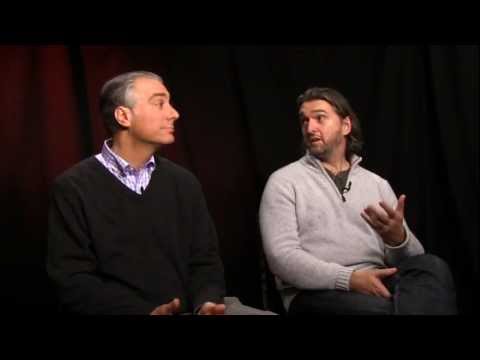
Must-read Wharton Faculty Authors: How Successful People Think | Katy Milkman— Ripple Effect Podcast
Ask about Knowledge at Wharton
Episode Description
EPISODE OVERVIEW Wharton’s Katy Milkman uses science to unlock the secrets of how to make lasting behavioral changes, which she shares in her latest book.
PODCAST OVERVIEW Every day, business scholars answer pressing questions in their research — but what do their insights mean for you? In this podcast, Wharton faculty dive into what inspired their studies and how their findings resonate with the world today. Learn how research insights translate into knowledge you can use, with host Dan Loney.
Topics and questions covered: 00:00 - Introductions 1:25 - Discussing the book “How Successful People Think” 3:16 - The mindset of New Year’s Resoluitions 8:02 - The ‘Mary Poppins Approach’ 11:28 - Combatting ‘Flakeout’ 15:00 - Understanding laziness 18:36 - The power of habits 21:06 - Exciting work in behavior change
Learn more at http://whr.tn/rippleeffect.
#behavioralscience #behavioraleconomics #behavioralchange #habits #healthyhabits ----- The Wharton School of the University of Pennsylvania is committed to sharing its intellectual capital through Knowledge at Wharton, the school’s online business analysis journal.
Launched in 1999, Knowledge at Wharton offers free access to:
- Articles, podcasts, and videos highlighting Wharton faculty research and analysis of current business trends - Interviews with book authors from Wharton School Press - In-depth series of curated content like Wharton Executive Education’s Nano Tools for Leaders - A searchable database of more than 10,000 articles covering all aspects of business - A weekly newsletter that delivers Knowledge at Wharton insights directly to your inbox
Visit the Knowledge at Wharton homepage: https://whr.tn/3qUpSBE Subscribe to the Knowledge at Wharton YouTube channel: https://whr.tn/3DEAgAU
Read the full transcriptHide the full transcript
- [Music] I called my friend Kevin Volpe a star Economist and medical doctor who helped
- build one of the most successful applied behavioral economics research groups in
- the world I wanted Kevin's perspective why did he think we'd been so unsuccessful at making Behavior change
- stick Kevin offered up some Unforgettable words of wisdom when we diagnosed someone with diabetes we don't
- put them on insulin for a month take them off of it and expect them to be cured in medicine doctors recognize that
- chronic diseases require a lifetime of treatment why do we assume that behavior changes any different welcome to the
- ripple effect the podcast that takes you on a journey through the minds of Wharton faculty I'm your host Dan Looney
- and in each episode we'll be diving deep into the inspiration behind the groundbreaking research that Wharton
- professors have conducted and exploring how their findings resonate with the world today we'll be covering a diverse
- range of topics bringing you the latest insights and knowledge that you can apply to your life into work so get
- ready to dive into new ideas with the ripple effect well great to be joined by Katie Milkman
- Wharton School professor of operations information and decision she's also co-director of the behavior change for
- good and author of the book how to change the science of getting from where you are to where you want to be Katie
- always great to talk to you have you been always great to talk to you too Dan I've been great I hope you have been as
- well I have been all right so take us first into the book itself and and really the kind of the Genesis of why
- you wanted to write about this yeah I'd be delighted to you know this has been the focus of all my research
- the the topic of how do we create positive behavior change it's the reason that Angela Duckworth and I co-founded
- the um Behavior change for good initiative at Wharton and Penn and at a certain point I felt look I've collected
- enough insights and knowledge that there's real value to share with the world if we can put it all together in a
- digestible format and explain here here are the things we've learned that can help people make the positive changes
- they want in their lives and that can help organizations steer their employees and customers towards positive behavior
- change and really we're talking about Behavior changes that can occur at any point in
- the course of the year in a course of a person's life it really kind of you know
- we're constantly kind of looking at these potential moments in our lives throughout the course of our our time
- here absolutely right so there there's everything from making a change related to my health maybe I want to get in
- shape or start eating differently uh maybe I want to quit smoking or I want to quit drinking right so those are all
- health behavior changes that are important uh to changes around my finance I might want to start investing
- I want to set aside something for retirement I want to cut back on spending so there's Financial changes
- and then of course changes with your productivity at work the way that you interact with your family uh every kind
- of change that you can think of really is what we study and this book is designed to help people achieve it for
- themselves or help others achieve those kinds of changes well obviously one of the ones that you talk about and a lot
- of people talk about ends up being around New Year's and the resolutions that we make uh that we're gonna do this
- we're gonna do that and maybe we hold them for a couple of days after and then things kind of dissolve take us into
- that mindset of of people making those resolutions and either following through the on them or not being able to
- yeah absolutely so first of all let me just say that I am actually a big fan of New Year's resolutions I think that that
- is that makes me unusual because most people write them off and say you know this is a whim most of them don't
- succeed uh why would we do this I've done research with uh former Wharton PhD student Heng Shen Dai who's now a
- professor at UCLA's Anderson School on what we call the Fresh Start effect along with Jason Reese also we're an
- affiliate and what we have shown is that there are moments in our lives like New
- Year's that give us the sense of a new beginning and a fresh start and that make us feel separated from our past
- failure so on January 1 you can look at things that you didn't achieve in the last year that you meant to get around
- to you know I wanted to learn Spanish I wanted to figure out how to really be on
- time regularly at my meetings I wanted to eat healthier and I didn't and I failed but that was the old me and this
- is the new me so they create this sense of dissociation and it's not just yours like I said that's the most famous but
- at the start of a new week the start of a new month um following birthdays following holidays that we associate
- with Fresh Starts so think Labor Day not Valentine's Day what we see in data set
- after data set is that people at those moments set goals more often but as you point out many of those goals fail and
- so I think while it's exciting and promising that these are moments when people will be willing to bite off and
- attempt at change that they wouldn't normally pursue and that could be useful especially if it's a one and done type
- of change right make that important appointment uh to get a mammogram for instance or set up an auto deduction
- from my paychecks to go put money straight into a 401k those kinds of things right you can have one moment
- where you're feeling ready and it can have long-term consequences but for most things a moment of motivation is not
- enough to carry us forward and that's really what the rest of my book is about is I think one of the key barriers to
- successful change is that most of it is I oh I have a goal I'll just get there as opposed to thinking strategically
- about what are the obstacles I might face and let me make a plan that can actually tackle those obstacles goals
- and that's based in science and the reason I wrote this book is we now have a lot of evidence-based solutions that
- need to be tailored right if the reason you're for instance not going to the gym
- is you find it absolutely miserable then you need a different solution to get you
- there than if the reason is your life is too crowded to fit it in right so depending on what the barrier is you
- need different solutions but we have a lot to say about that and so once people start using the evidence they can make a
- lot more progress with those Fresh Start moments how much concern is there though
- if people try to make a change and don't succeed and they give up that that becomes kind of the pattern that they
- fall into more so than as you said kind of looking strategically at ways to be able to make sure that you do complete
- the task yeah it's a great question and I think it's a thing that we often worry about
- is sort of if you um look at you know what people say commonly they'll say things like oh you
- can't teach an old dog new tricks which might suggest that over the course of a lifespan it becomes harder to make
- change maybe after multiple failures we give up on ourselves for what it's worth
- in our research studies we always look at things like um you know we've we've developed an
- intervention to try to help people make this positive change and we look at does
- uh the effectiveness vary as a function of age and we very rarely see that it does we we rarely find actually a lot of
- we call it moderation a lot of variables a lot of features of a person that seem
- to say oh shoot this intervention only works for this type of of person so I actually am very optimistic that if
- people are willing to stand up and try again um they will they will be able to make
- progress and the Fresh Start effect does seem to apply pretty broadly as opposed
- to narrowly it's not as if it's only a phenomenon we see in our 20s or our 30s women once we've been fooled by enough
- New Year's resolutions that didn't work out we stopped making them so humans are
- shockingly optimistic and good at I think that's what the Fresh Start is really about right we keep telling her
- so we're good at sort of tricking ourselves into this time will be different but that probably is an
- Adaptive trait to be that optimistic and ready to try again all right I'll get up
- and start but I'll wait till after I do the interview before we start to do it all right I promise fair enough you talk
- also in the book about uh kind of the Mary Poppins approach to behavior change meaning what exactly
- one thing that I think is really fascinating and that that leads to this name is that uh this comes out of
- research by islet fishbach the University of Chicago and Caitlin Wooley at Cornell
- um what they've found is that most of us when we pursue change are our intuition
- is we should just take the most direct approach um the most effective efficient path to get to where we want to be so
- say you want to East your math test the first approach you'd take would probably
- be to say you know I'm just going to sit down and study and I'm not gonna I'm gonna block all distractions I'm going
- to do nothing else for the rest of the day that's how I'll get there or if you want to get in shape you'd say let me
- find the most painful workout I could do with the gym that will maximally burn calories but
- interestingly what they've shown in the research is this is a mistake a small subset of people take a different
- approach which is to actually try to find the most fun way to study for their math test maybe quizzing themselves with
- a friend or uh you know hopping it into a Zumba class and it while it may get you
- closer to your goal at a slower rate it actually ends up being better because you persist because you go back to the
- gym after a positive experience you'll study for the next test too after an enjoyable
- um first few minutes study or you'll you'll keep the studying going even late into the night if you found a way to do
- it that isn't miserable so this persistence is a really important part of success and we neglect
- the importance of fun so the Mary Poppins effect is really just a description of what Mary Poppins sings
- about in the in her famous um versus saying a spoonful of sugar makes the medicine go down she
- understood and communicated this when it comes to children that we actually need
- to find a way to make it enjoyable to pursue goals but it turns out that adults are wired the same way as kids
- maybe a little bit less uh it's a little bit less extreme we have a little bit more ability to exert self-control or
- prefrontal for uh cortex is more developed but just like kids we are present biased which means we care more
- about instant gratification than long-term rewards and rather than trying to work against that what we need to do
- is lean into it and try to find ways that we can make it more enjoyable in the moment to do the things that are
- going to help us achieve our goals in order to serve um the long-term benefit so it's a mistake to constantly be
- looking for the most efficient path to achieve your goal because you will quit at a higher rate than if you look for a
- path that you will find pleasurable and we've done research on a topic called Temptation bundling which is
- uh when you find a way to link something you find tempting with a chore that you
- would otherwise procrastinate on this is a way of using that Mary Poppins Insight a spoonful of
- sugar makes the medicine go down for instance you only let yourself exercise while indulging and watching your
- favorite low brow TV show on Netflix that's an example of Temptation bundling or you only
- um let yourself listen to your favorite podcast while you're doing household chores or you only get to eat a really
- unhealthy but delicious meal when spending time with a difficult mentee at work so those would be Temptation
- bundles and we found in our research that through Temptation bundling we can help ourselves achieve more it's another
- way of using this Mary Poppins effect so also take a little time and talk about this concept of the flake out that you
- talk about and really I I mean how you can try and go about combating it yeah flakeout I think is a vastly
- underestimated problem a lot of our goals they just don't stay top of mind and as a result we flake out on doing
- things that are are really important to us uh because we haven't structured Our Lives properly around them so we tend to
- underestimate the importance of this issue I'd say it's very closely related to forgetting
- um simply you know you meant to vote but oh my gosh it slipped off of your to-do
- list or um you meant to get uh That vaccine or get your annual checkup or take care of this important issue with
- an employee who's been struggling at work but you just flaked out on on bidding it into your schedule often it's
- one time but highly impactful decisions that we flake out on with major consequences and uh in general we find
- is that people underestimate this as a barrier to follow through on key goals but we can combat it using pretty simple
- tools from you know of course the most obvious being things like digital reminders and calendaring but some of
- the less obvious which I think are also important you can um actually get better results and there's
- wonderful research by Peter goldwitzer of NYU on the fact that simply making if then plans where and he calls them
- implementation intentions dramatically increase the likelihood we follow through so not just saying I plan
- to go to the gym or I plan to schedule this meeting but saying if it's 4 P.M on a Thursday then I'll be at the gym or uh
- every day after work I will schedule time for meditation by having the if then component we actually end up seeing
- dramatically higher follow through and there's some really wonderful research studies that have been done showing that
- we can use this as a tool to nudge people towards follow through on important behaviors like voter turnout
- vaccination I was involved in one effort about a decade ago where we ran a randomized controlled trial with a
- company that was trying to encourage people to come to an annual flu shot clinic where they'd be giving free
- on-site vaccines and what we found is sending a reminder that let people know the dates and times when they could come
- and the location of free vaccine clinics that is useful but we at no cost uh increase the effectiveness of that
- reminder by adding a simple prompt for people to write the date and time when they intended to show up and that that
- simple prompt to make a concrete plan led to about a four percentage Point increase in vaccinations and these are
- the kinds of things that I think organizations and individuals tend to think you know I don't need to write
- down my plan or prompt someone to Think Through the date and time why would that
- matter and yet making it more concrete works because um first of all that's the way memories
- are stored we need a cue that triggers the memory so the date and time serves as a cue when you see that date and time
- now you're much more likely to realize oh this is when I said I would do X because this is how memory is stored
- it's also more likely you literally put it in your calendar and you now get a digital or electronic reminder but again
- these are the kinds of things we've done experiments where we said to people will
- you pay us to get a reminder for instance to follow through on a behavior you intend to do in fact we even tried
- things where they were behaviors people would get paid to do and people said no no I don't want to be paying for a
- reminder and yet when we automatically sign people up for reminders and charge them for them we see higher earnings and
- and better follow-through than when people have the optionality because they underestimate the value of such tools
- and then there is the problem of laziness which I think we all at times kind of fall into for at least a little
- bit yes so we all have this issue and I actually like I like to say that it's a it's a a pro of the human operating
- system rather than a con so my background is in computer science and computer scientists know that the best
- algorithms are efficient lazy algorithms that take shortcuts rather than searching every possible solution so
- laziness is a good feature for a system to have built in that you look for the passive least resistance but when it
- comes to achieving goals it of course can be a problem if we are looking for the the fastest route to success
- um or the the simplest path so there's sort of two ways that laziness I think comes up in the human operating system
- and is important to keep in mind and think about if you want to build solutions that will help people achieve
- their goals the first actually has to do with a well-studied and pretty well known phenomenon which is that we
- succumb to defaults we are very susceptible to whatever is automatic so if you get a new computer it comes with
- a whole bunch of default settings right a default background default fonts size and so on and most of us just accept
- those and move on and PS that means it's important to set them wisely in ways that will set people up for Success
- um one of my favorite studies showing how important it is to set defaults that people will just passively accept
- because they're a bit lazy wisely was one that was done here at at the University of Pennsylvania in our
- medical system and it involved changing the way that drug prescriptions were automatically
- sent to pharmacies to prioritize sending generic drugs so that actually doctors if they wanted to prescribe a brand name
- drug let's say Lipitor which is chemically identical to its generic cousin um but much more expensive because it's
- a brand name drug if you want to instead see a higher rate of prescribing generics which all doctors and insurers
- agree is better there's higher compliance by patients when their drugs are cheaper and every and everyone saves
- money so what they did is they just made that the default so instead of the doctor having to remember to prescribe
- the generic they remember the brand name they type in Lipitor but unless they check a box saying no I really mean
- Lipitor not the generic the generic was automatically sent to the to the um Pharmacy that was filling the drugs and
- this overnight made ensured that Penn Medicine was one of the best hospitals in the area on generic
- prescriptions they went from something like 75 percent of drugs being prescribed as generics to almost 100
- percent and there was one um One Drug where this didn't work and was actually a drug where the generic and the uh and
- the brand name were different and there were chemical differences so you didn't see this bomb it's a really nice
- illustration but it basically says any time you can set a wise default that's really important for setting yourself up
- for Success so this for an individual could be something like I stock my pantry only with healthy snacks so that
- the default snack is something that's easier I set my um default website to be the New York
- Times as opposed to Facebook so I spend less time on social media so those are sort of personal defaults or
- organizations can have wise defaults that they set to try to support success in the workplace whether that's we by
- default don't have meetings from nine to ten you have to override something in order to make that possible so everyone
- starts with focused work um or or settings and computers settings with in terms of retirement savings
- defaulting everyone into enroll in a 401k so that that would be the first way so the other way in which defaults are I
- think important is that um we are have habit creatures of habit we build habits in order to
- um essentially short circuit having to think deeply about decisions right so it's very helpful not to have to think
- every morning about shampooing your hair brushing your teeth what you'll eat for
- breakfast you form some habits around that and as a result you just have a shortcut you don't have to process
- deeply oh what what will I do but habits can be harmful if they're not supporting
- your goals so there is a whole large literature on how do we intentionally form good habits and I think there's
- been some wonderful books that that cover this quite nicely like um the The Power of Habit by Charles
- duhigg Atomic habits um by James clear and good habits bad habits by Wendy wood the simple story is
- that as with animals humans are um sort of repeat when we repeat a behavior and are rewarded for it over time it becomes
- more habituated the more frequently you can repeat the set of actions it's almost like practice right this is how
- you learn the piano you sit down you practice you repeat we can do the same thing with habits trying to save or form
- a habit around exercise research shows that if we pay people to go to the gym eight times in a month as
- opposed to just once and then take payments away and look what happens after now there's no reward we see the
- people who are paid to go repeatedly habituate and continue to exercise at a higher rate than people who were only
- rewarded for going once even though there's no longer any reason to do it so the key idea here is if you have um the
- desire to form a habit you want to think of it like practicing a new skill you want to try to repeat it as frequently
- as possible find a way to reward yourself that might be through Temptation bundling making it fun or it
- might be by announcing to friends that you're doing this simply tracking your progress and and over the course of that
- repetition you're going to build something that starts to feel more habitual and become more natural you may
- want to piggyback it on something you already do having a a time for instance you know there's research showing that
- if you piggyback flossing habits on after you brush your teeth that's actually more effective than just saying
- I'm going to floss or trying to floss before you remember to to brush your teeth so tying it to something you
- already do can other also be a useful tool final question for you what areas then with all this work you've done in
- your career around Behavior change what still is out there what what are you looking at next that is kind of the next
- Hill to climb some of the most exciting work I think and behavior change that we've done and
- that others have done shows the power of our social networks and influencing our
- behaviors the people around us show us what's possible they show us how to achieve
- um and Signal what's appropriate there's some really wonderful research that's been done by Scott Carrell at the
- University of California showing that uh for instance the randomly assigned college roommate you get affects your
- grade because the person if if you end up with someone who is essentially a better student you end up
- hey they don't go out on Thursdays and Fridays they study like this and and you do too but someone who was less studious
- oh they do go out and party and maybe that's what I should be doing so we're really shaped by these random
- allocations of our compatriots and what I am looking at at the behavior change for good initiative in collaboration
- with Angela Duckworth who's my key partner in crime on this is how can we use that insight to build better social
- interventions that that help connect people with peers who have shared goals and help facilitate
- um pure interactions that that increase success so we're doing work right now in
- the space of Education around this to try to see if we can leverage purefx to improve student outcomes and reduce
- student Dropout from school um at the college level but we're also interested in in workplace pure effects
- and generally leveraging this power of of groups as opposed to Simply studying individuals and how we can help people
- um in isolation Katie always great to talk with you thanks very much for your time today
- thank you so much for for taking the time to speak it's always a pleasure on my end as well you got it Wharton's
- Katie milkman thank you for listening to the ripple effect we hope you found this episode
- informative and engaging don't forget to subscribe and leave us a review so that
- we can continue to bring you the best Insight from the warden School
Brief Summary
Kevin Volpe and Katie Milkman discuss behavior change, the Fresh Start effect, and strategies for achieving lasting change in this episode.
Key points
- The Ripple Effect Podcast. Join Dan Looney as he explores groundbreaking research from Wharton faculty.
- Mary Poppins Approach to Change. Katie Milkman explains how making change enjoyable can lead to better persistence.
- Fresh Start Effect. Katie Milkman discusses how New Year's resolutions can create a sense of a new beginning.
- The Power of Defaults. Setting personal and organizational defaults can significantly influence success. 'Defaulting everyone into enroll in a 401k is crucial.'
- The Importance of Habits. Habits can simplify our lives but can also be harmful if not aligned with our goals. 'Habits can be harmful if they’re not supporting your goals.'
- Social Networks and Behavior Change. Our social networks can greatly influence our behaviors and achievements. 'The randomly assigned college roommate you get affects your grade.'
Episode highlights
- The Ripple Effect PodcastJoin Dan Looney as he explores groundbreaking research from Wharton faculty.“Welcome to the ripple effect!”0:31Aug 15, 2023
- Mary Poppins Approach to ChangeKatie Milkman explains how making change enjoyable can lead to better persistence.“We neglect the importance of fun in achieving goals.”0:57Aug 15, 2023
- Fresh Start EffectKatie Milkman discusses how New Year's resolutions can create a sense of a new beginning.“These moments give us a sense of a new beginning.”4:02Aug 15, 2023
- The Power of DefaultsSetting personal and organizational defaults can significantly influence success. 'Defaulting everyone into enroll in a 401k is crucial.'18:29Aug 15, 2023
- The Importance of HabitsHabits can simplify our lives but can also be harmful if not aligned with our goals. 'Habits can be harmful if they’re not supporting your goals.'19:01Aug 15, 2023
- Social Networks and Behavior ChangeOur social networks can greatly influence our behaviors and achievements. 'The randomly assigned college roommate you get affects your grade.'21:30Aug 15, 2023